
Glossary · Complication
Astrolabe
A user-operated astronomical instrument for relating celestial observations to time and position; distinct from a watch complication.
Explanation
A planispheric astrolabe represents the celestial sphere by stereographic projection on a flat instrument. Its body, or mater, holds latitude plates; a rotating pierced rete acts as a star map. An alidade on the back supplies the sighting line. The user combines a measured celestial altitude with the appropriate plate and scales to solve a time or astronomical problem. It does not contain a clock movement that automatically advances the stars, and a sighting of the Sun must never involve looking directly at it.
Iranian examples illustrate both scientific function and decorated metalwork. Saint Louis 41:1926 is catalogued as made in Isfahan in 1715 by Mohammad Amin ibn Mohammad Taher and decorated by Abd al-A'immah. Oxford 45747, dated 1647/8 (A.H. 1057), names Muḥammad Muqīm al-Yazdī as maker and identifies a dedication to Shah Abbas II. These are individual records, not evidence that every Islamic-world astrolabe was Iranian or that all instruments with similar decoration came from the same workshop.
Component evidence matters. Oxford 37321 has four listed latitude plates and an alidade that the catalogue says does not appear original. The Smithsonian MA.316761 has five plates with differing engraved coverage. Preserve each accession's particulars rather than combining them into an imaginary typical instrument. A modern watch using astrolabe imagery or celestial displays is a different object type; shared visual geometry alone does not establish an unbroken mechanical ancestry.
A rete’s appearance and the catalogue’s component fields need to be read together. Oxford 37321’s historical summary lists zero stars, whereas Oxford 45747 lists forty-seven and identifies a bird-shaped Vega pointer. The zero-star field is retained as recorded, with its interpretation pending a closer component study; it should not erase visible decorative projections or become a universal definition of a rete. Exact component photographs prevent those distinct records being combined into a fictional standard design.
Sources & references
- https://www.americanhistory.si.edu/collections/object/nmah_997138
- https://www.slam.org/collection/objects/32416/
- https://www.mhs.ox.ac.uk/astrolabe/catalogue/browseReport/Astrolabe_ID%3D168.html
- https://www.mhs.ox.ac.uk/astrolabe/catalogue/browseReport/Astrolabe_ID%3d260.html
Where sources disagree, the disagreement is stated rather than resolved silently.
What to record
- Identify the accession before comparing similar instruments.
- Distinguish maker, decorator, dedicatee and later owner.
- Record the actual plates and replacement-component reservations.
Do not sight the Sun directly, manipulate fragile historic plates or infer complete originality from a front photograph.
In the object catalogue
Catalogued objects whose own source record mentions “Astrolabe”. The quoted line shows where; it is the seller’s or museum’s wording, not independent verification.
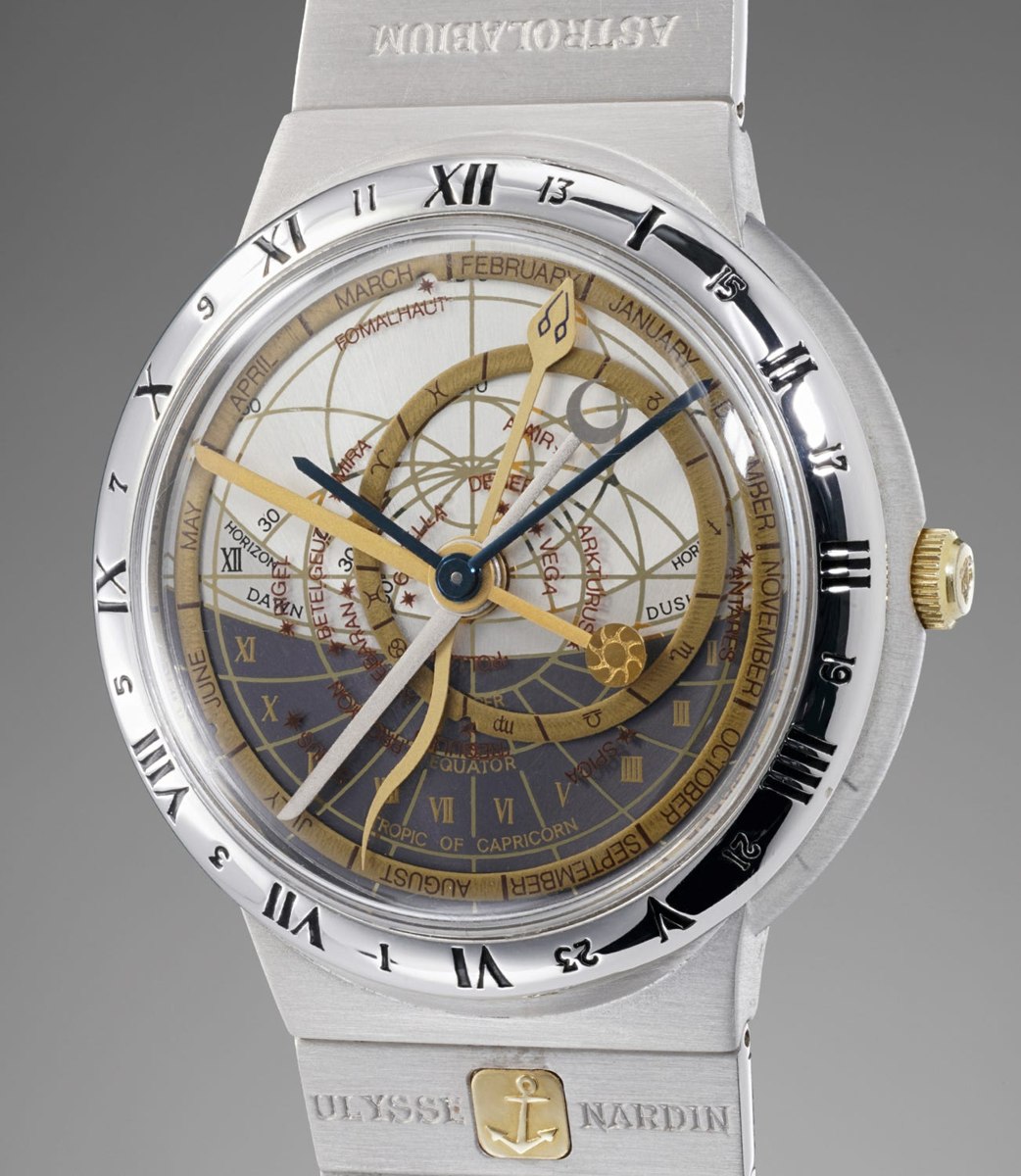
Wristwatch
Ulysse Nardin Astrolabium Galileo Galilei ref. 910-22
“This Ulysse Nardin Astrolabium Galileo Galilei, reference 910-22, is an astronomical wristwatch with an 18K white gold case, an integrated white gold bracelet, and a contrasting…”
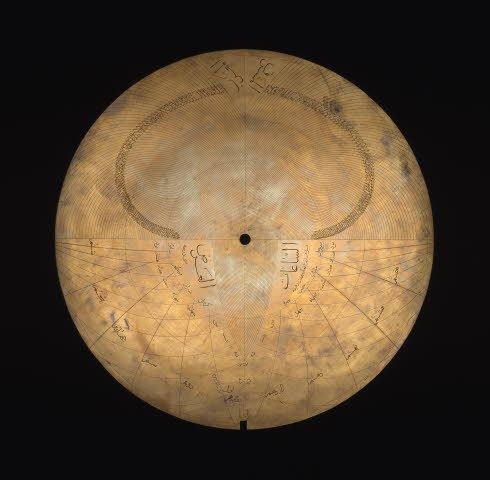
Tool
Safavid Brass Astrolabe Plate
“Safavid Brass Astrolabe Plate”
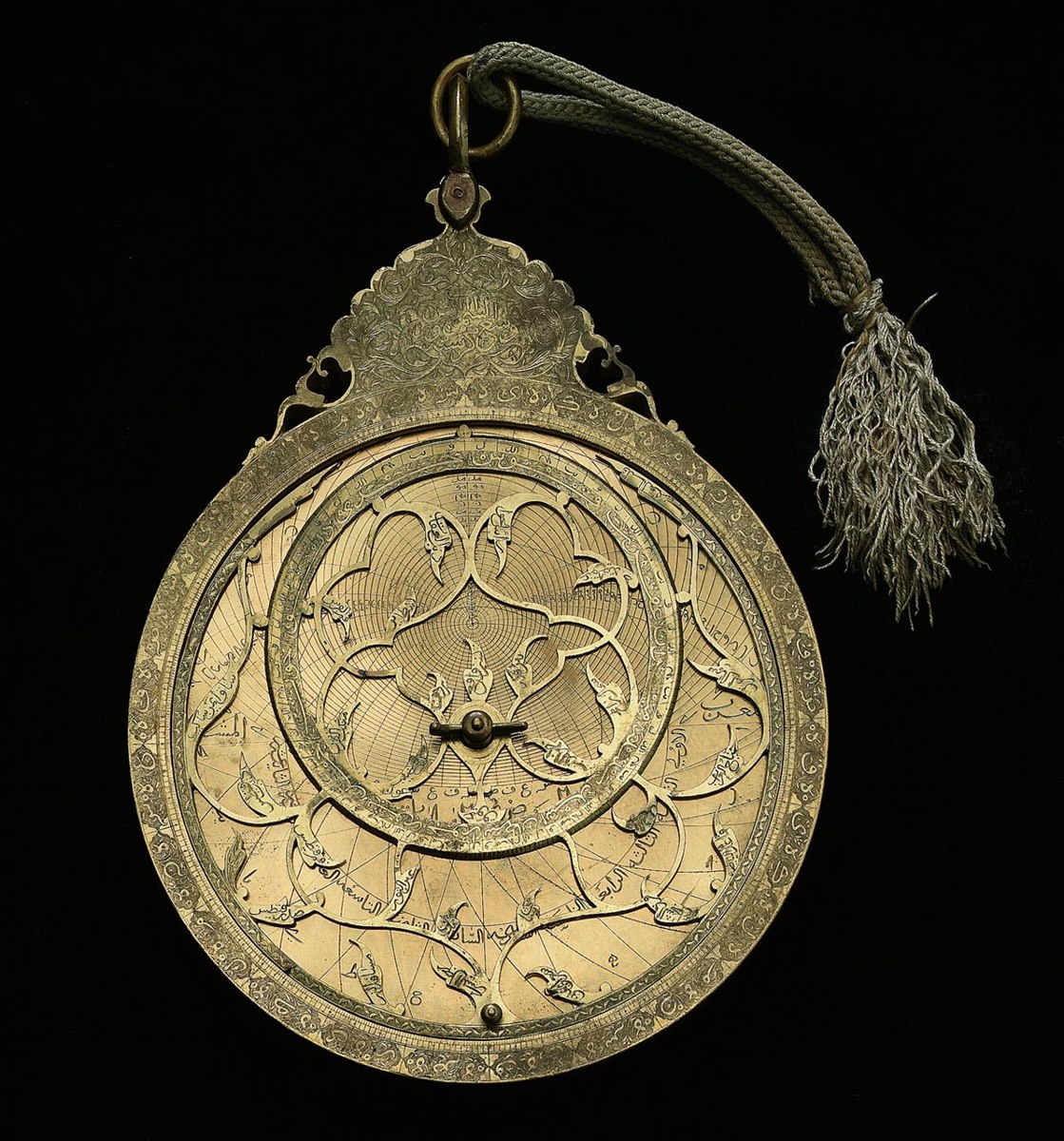
Tool
'Abd al-A'imma Gilt-Brass Astrolabe
“'Abd al-A'imma Gilt-Brass Astrolabe”
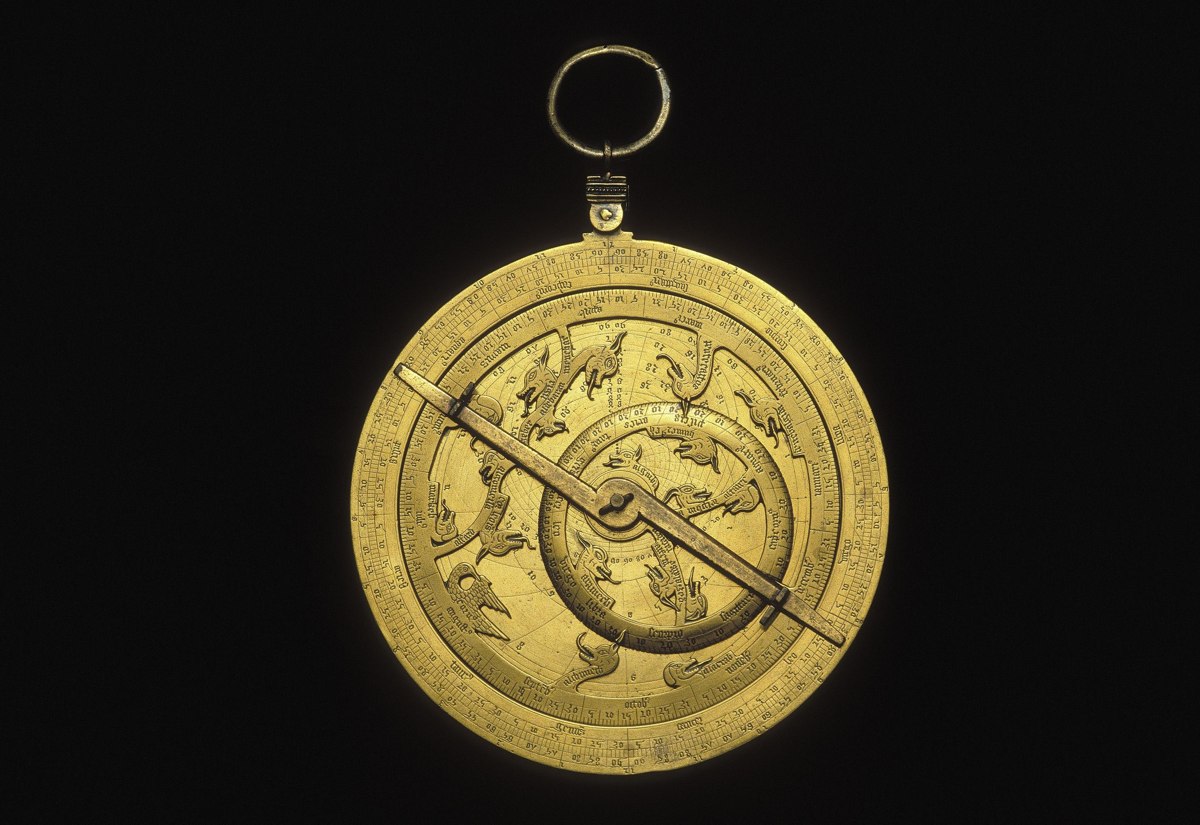
Tool
English Planispheric Astrolabe
“English Planispheric Astrolabe”
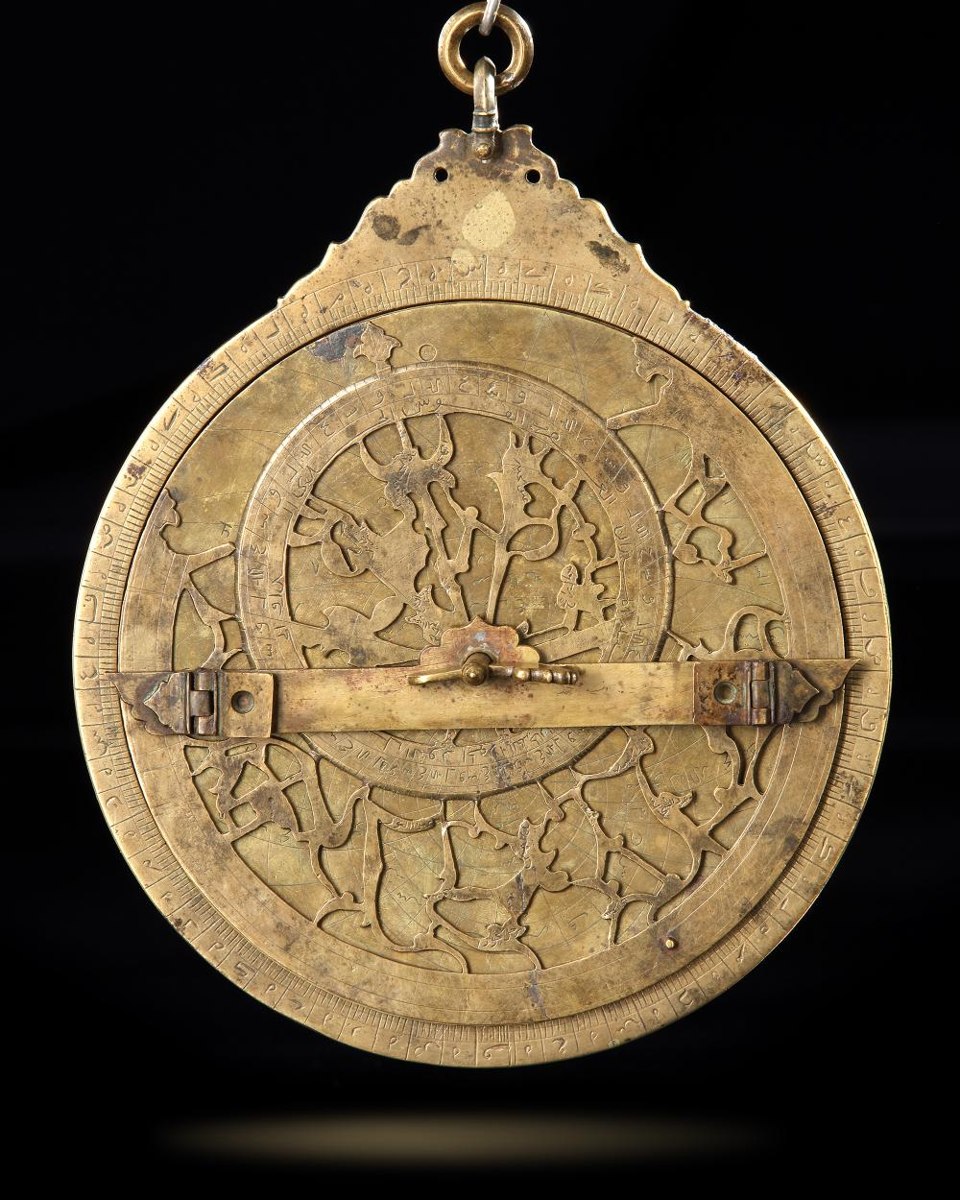
Tool
Persian Brass Astrolabe by Najm al-Din Muhammad
“Persian Brass Astrolabe by Najm al-Din Muhammad”
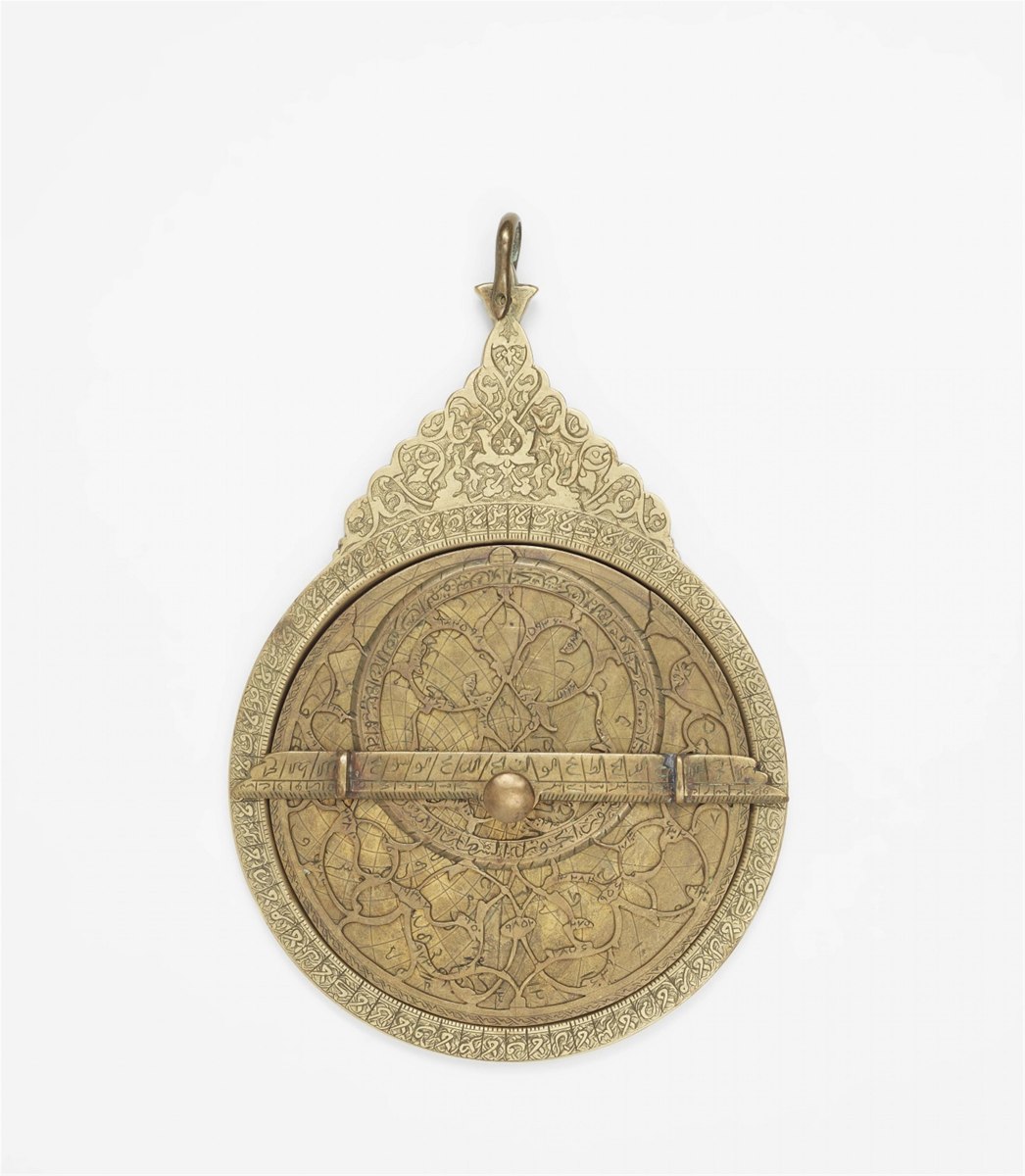
Tool
Middle Eastern planispheric astrolabe
“Middle Eastern planispheric astrolabe”