
Royal planispheric astrolabe · Persia (catalogue; workshop city not established)
Astrolabe for Shah Abbas II, Oxford inventory 45747
Partially verifiedThe Oxford catalogue dates this brass astrolabe to 1647/8, corresponding to A.H. 1057, and names Muḥammad Muqīm al-Yazdī as maker. Its place field says Persia, not a particular city. A name associated with Yazd or the prominence of Isfahan workshops is not sufficient evidence to assign this object to either city.
Technical facts
- Inventory
- 45747
- Date
- 1647/8 (A.H. 1057)
- Material
- Brass
- Rete stars
- 47 (catalogue)
- Back scales
- 10 (catalogue)
- Latitude plates
- Five; listed latitudes 22°–42°
- Royal dedication
- Shah Abbas II, named on the instrument
Historical significance
- The Oxford catalogue dates this brass astrolabe to 1647/8, corresponding to A.H. 1057, and names Muḥammad Muqīm al-Yazdī as maker. Its place field says Persia, not a particular city. A name associated with Yazd or the prominence of Isfahan workshops is not sufficient evidence to assign this object to either city.
- The catalogue describes the instrument as made for the Safavid ruler Shah Abbas II. Royal titles appear on the throne, and the ruler’s name is worked into the rete’s tracery. This is object-specific evidence for a royal dedication. It does not establish a complete subsequent chain of ownership or prove that the ruler personally used it.
- A back inscription is translated by the catalogue as ‘Composed by Faṣl Allah al-Sabzawārī’. Retain that wording beside the maker field rather than silently replacing the maker with the inscribed name. Different roles and ambiguous signatures need documentary interpretation; decoration, composition and instrument construction are not necessarily identical activities.
- The catalogue records 47 stars on the rete, including a bird-shaped pointer for Vega, and five plates with listed latitudes from 22° to 42°. Its back includes scales for altitude, trigonometric functions, a shadow square and azimuth of the qibla. These details explain why one instrument could address several observational and directional problems without a clock movement.
- The component report counts ten back scales and identifies a degree scale on the limb. It translates a mark worked into the rete as “Sultan Shah Abbas the Second” and categorises it as an owner’s mark. That is the catalogue’s interpretation of an inscription: it strengthens the documented royal association but does not independently reconstruct possession or use. A detached rete view helps locate the tracery and ecliptic without concealing the latitude plates beneath it.
- Front and back photographs document the same inventory number. Lewis Evans presented the object in 1924. The historical online catalogue is a detailed research resource, but neither its acquisition statement nor these images establishes current exhibition, original calibration or the condition of every concealed surface.
Reading this instrument’s evidence
| Feature | Recorded evidence | Limit of the claim |
|---|---|---|
| Identity | 45747 | A collection identifier, not a manufacture date. |
| Authorship | Muḥammad Muqīm al-Yazdī (catalogue maker); Faṣl Allah al-Sabzawārī named in a back inscription | Keep role and qualification; an inscribed name is not always the builder. |
| Place | Persia (catalogue; workshop city not established) | Do not infer a workshop city from language, style or a maker’s name. |
| Components | Five; listed latitudes 22°–42° | A catalogue or photograph is not a new completeness or calibration examination. |
Evidence checklist
- Match every view to this accession before comparing engravings.
- Separate original components, reported replacements and unexamined surfaces.
- Use the custodian’s latest record for display and access questions.
A user-operated astrolabe is not a self-running clock. Do not look directly at the Sun or handle fragile historic components to test a calculation.
Photographs
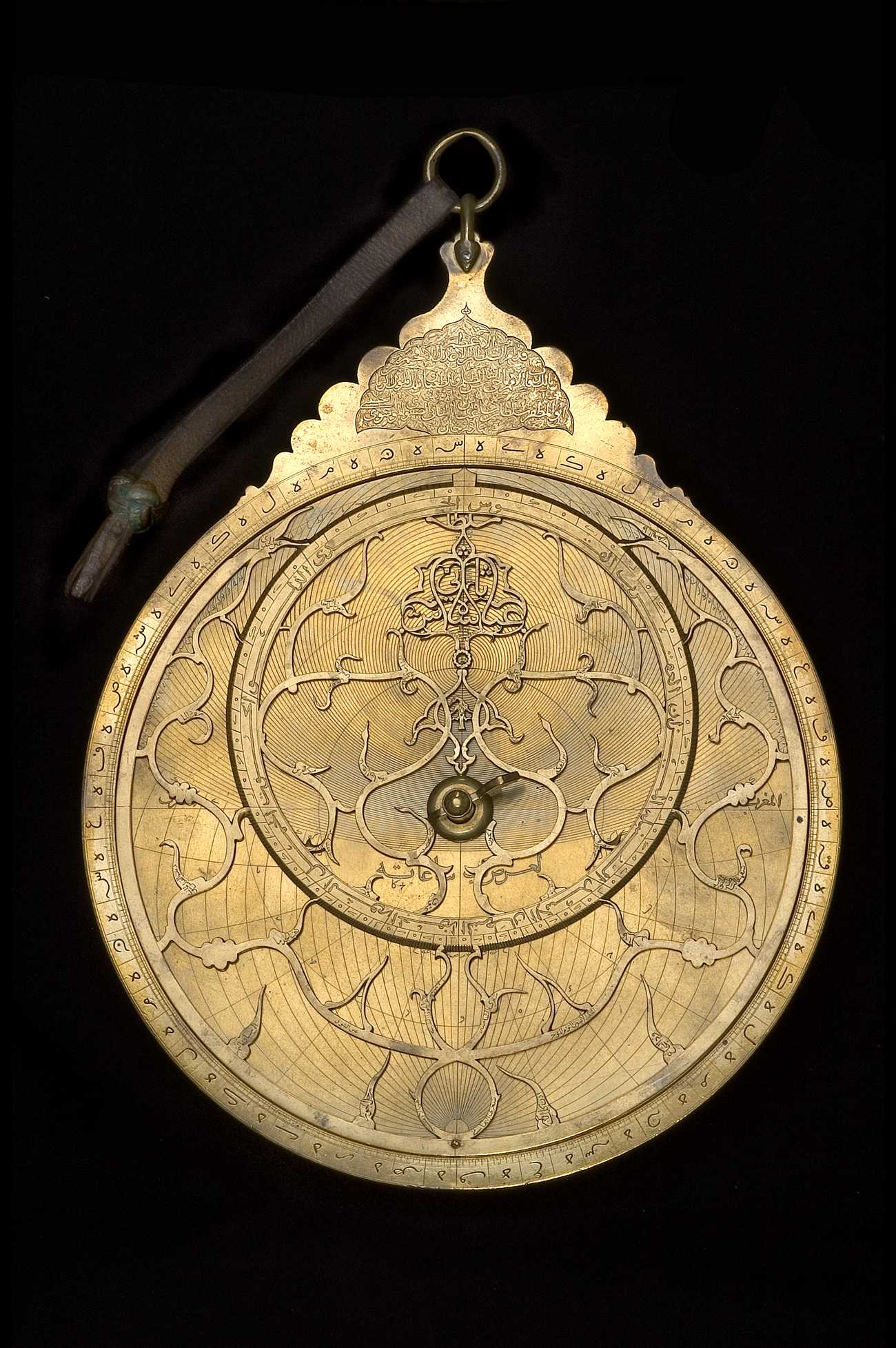
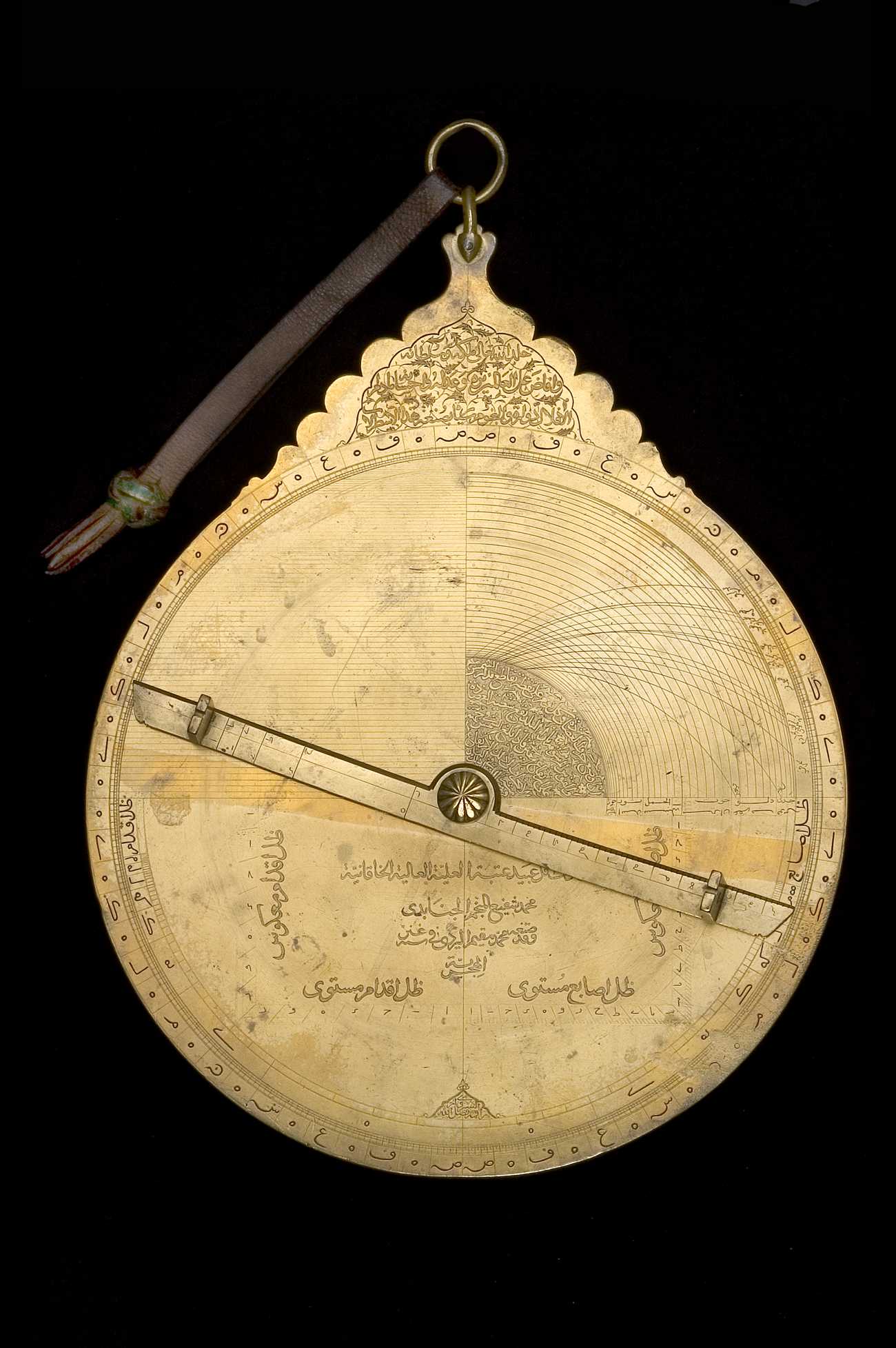
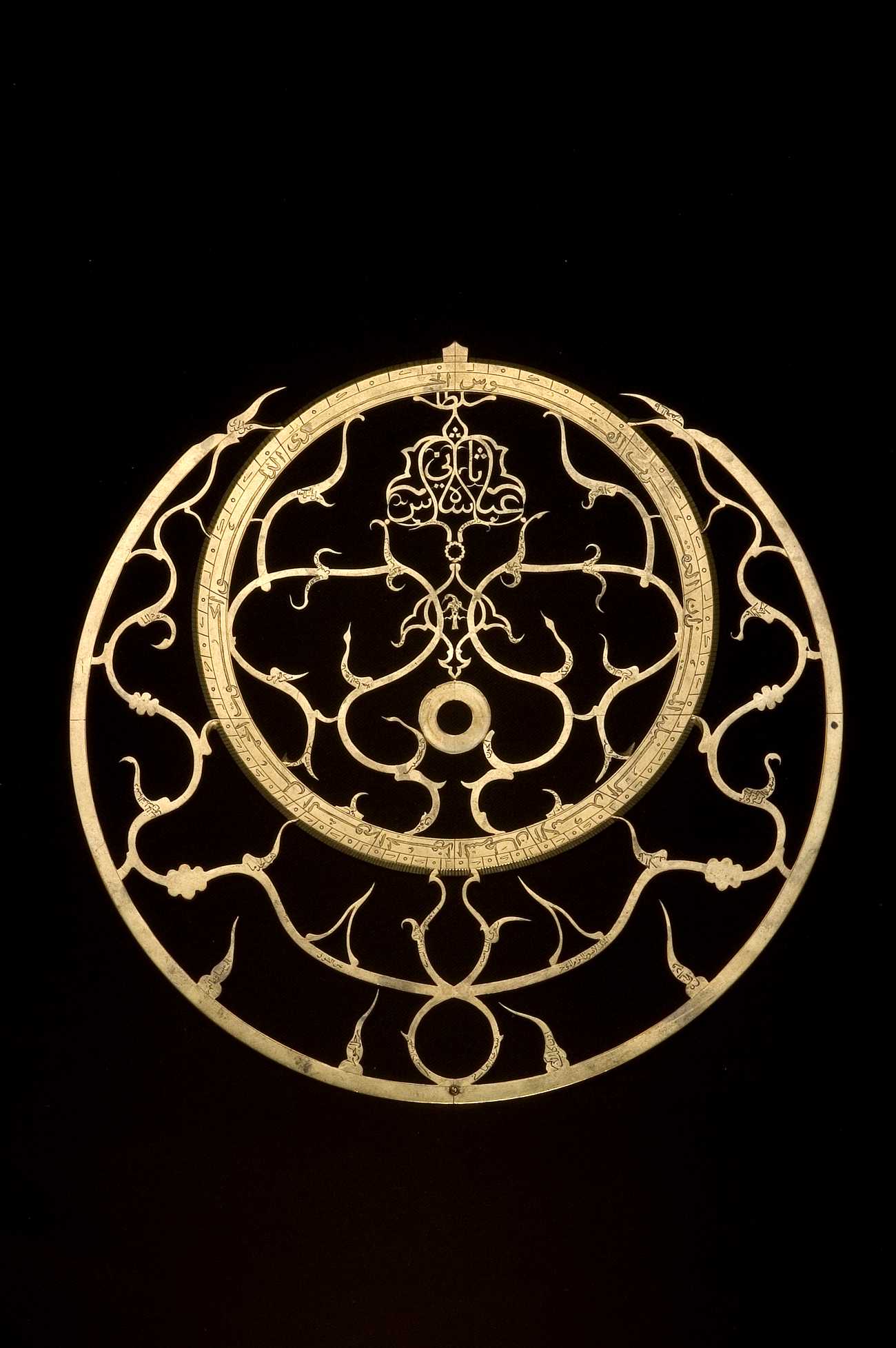
Photographs are illustrative examples of the type, not necessarily the exact object described. Verify details against the source file page.
Sources & references
- https://www.mhs.ox.ac.uk/astrolabe/catalogue/browseReport/Astrolabe_ID%3d260.html
- https://www.mhs.ox.ac.uk/astrolabe/
Where sources disagree, the disagreement is stated rather than resolved silently.