
Planispheric astrolabe · Isfahan, Iran
Abd al-A'imma astrolabe, Oxford inventory 37321
Partially verifiedOxford's historical astrolabe catalogue attributes inventory 37321 to ‘Abd al-A’imma, gives Isfahan as its place and dates it approximately to 1715. It transcribes the signature on the back as ‘Made by ʿAbd al-Aʾimmah’. This is a different object from Saint Louis 41:1926, whose record assigns that name to the decoration rather than manufacture.
Technical facts
- Inventory
- 37321
- Material
- Brass
- Latitude plates
- Four; listed latitudes 22°–38°
- Back scales
- 13 (historical catalogue)
- Rete star count
- 0 listed; component interpretation requires review
- Limb scale
- Declination
- Alidade
- Does not appear original (catalogue)
- Rule
- Not original (catalogue)
Historical significance
- Oxford's historical astrolabe catalogue attributes inventory 37321 to ‘Abd al-A’imma, gives Isfahan as its place and dates it approximately to 1715. It transcribes the signature on the back as ‘Made by ʿAbd al-Aʾimmah’. This is a different object from Saint Louis 41:1926, whose record assigns that name to the decoration rather than manufacture.
- The mater and limb are described as one-piece brass construction. A tab at the bottom prevents the latitude plates from rotating with the rete. The catalogue lists four plates with latitudes ranging from 22° to 38°. Those are this instrument’s listed plate latitudes, not a universal operating range for all Persian astrolabes.
- The back carries altitude, trigonometric, zodiacal and other scales, including a shadow square. Their engraved geometry allows calculations using a sighting or a selected angle; the instrument is not a continuously running watch. The front and back views are retained together because an exterior portrait alone cannot demonstrate the sighting assembly or catalogue signature.
- The historical catalogue lists a declination scale on the limb and thirteen scales on the back. Its summary also states that the rete contains zero stars, while the separately photographed rete has elaborate pierced forms and a labelled zodiac. Retain that as the catalogue’s recorded count, not a new assertion that every apparent projection has no astronomical function. A closer component study is needed to reconcile the count and visual details; the forty-seven-star count of Oxford 45747 must not be transferred to this accession.
- The catalogue explicitly states that the rule is not original and that the double-ended alidade does not appear original, noting a different sheen and construction. Keep that reservation attached to this accession. A replacement sighting component does not negate the whole instrument’s historical value, but it prevents describing every visible part as original.
- Lewis Evans presented the instrument in 1924 according to the catalogue. Oxford explains that this systematic online catalogue was completed in 2005 and that its general collection database may contain subsequent updates. The historical record establishes holdings, not current display or an independent conservation assessment.
Reading this instrument’s evidence
| Feature | Recorded evidence | Limit of the claim |
|---|---|---|
| Identity | 37321 | A collection identifier, not a manufacture date. |
| Authorship | ‘Abd al-A’imma (Oxford catalogue attribution) | Keep role and qualification; an inscribed name is not always the builder. |
| Place | Isfahan, Iran | Do not infer a workshop city from language, style or a maker’s name. |
| Components | Does not appear original (catalogue) | A catalogue or photograph is not a new completeness or calibration examination. |
Evidence checklist
- Match every view to this accession before comparing engravings.
- Separate original components, reported replacements and unexamined surfaces.
- Use the custodian’s latest record for display and access questions.
A user-operated astrolabe is not a self-running clock. Do not look directly at the Sun or handle fragile historic components to test a calculation.
Photographs
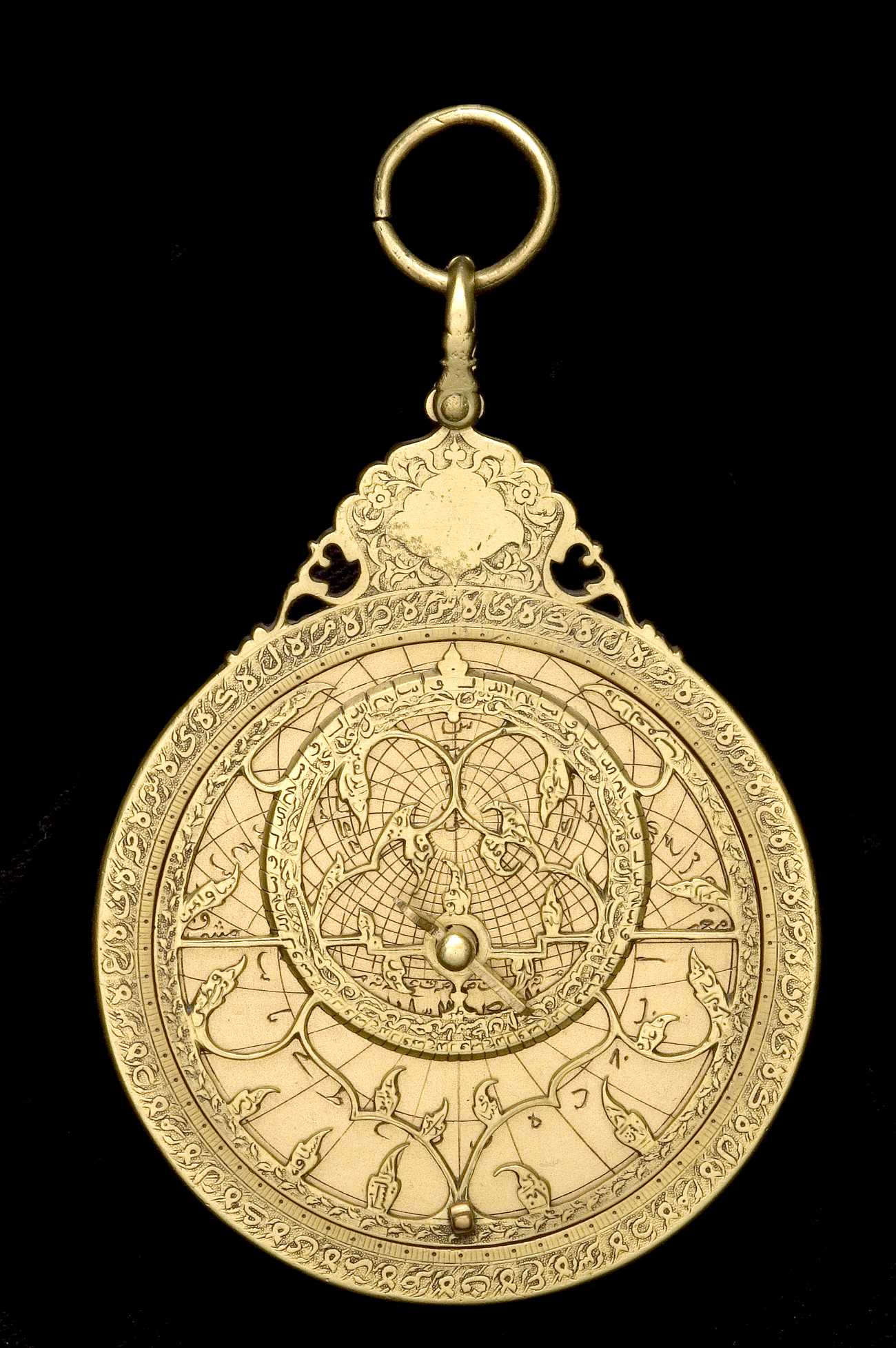
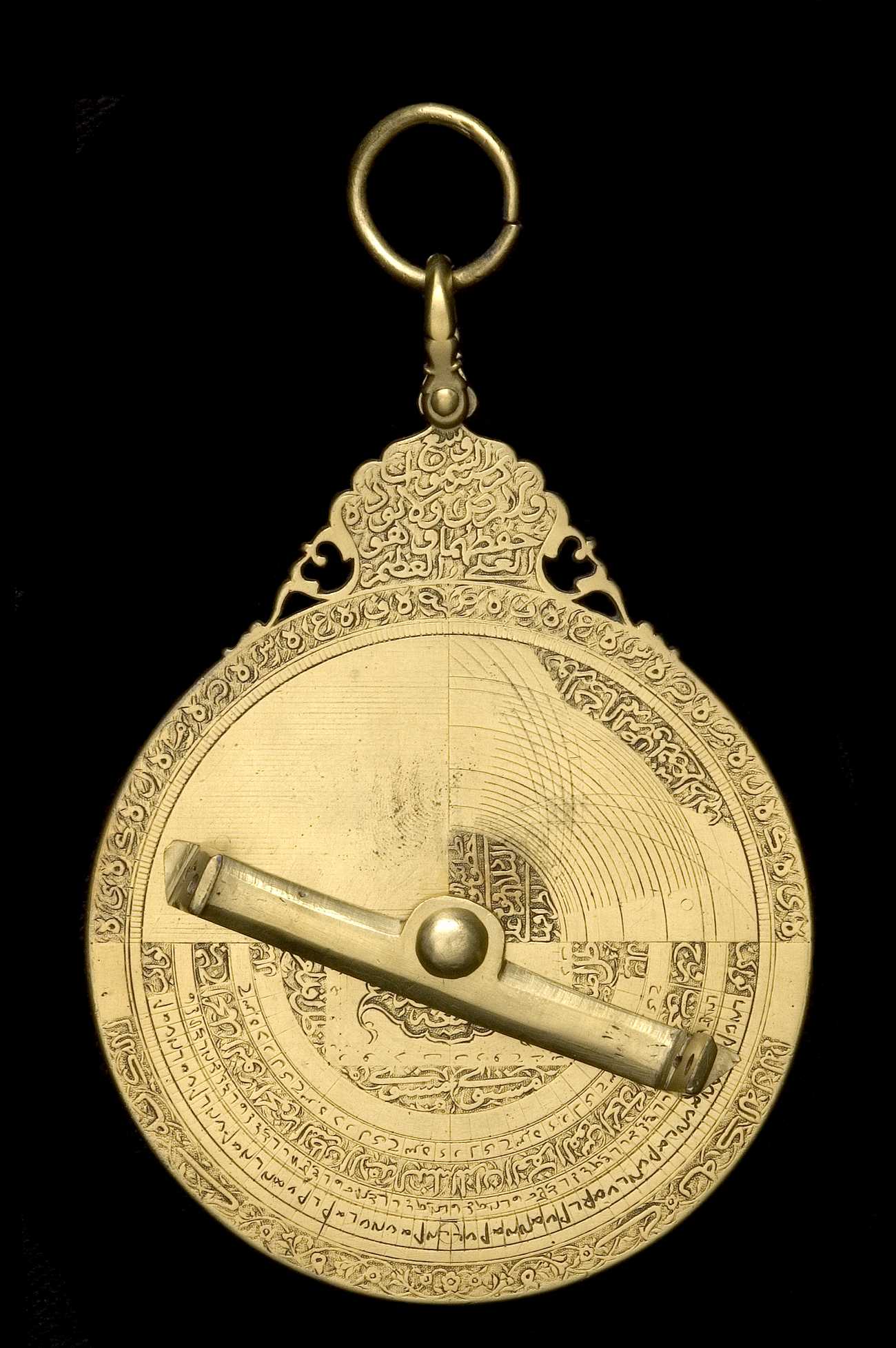
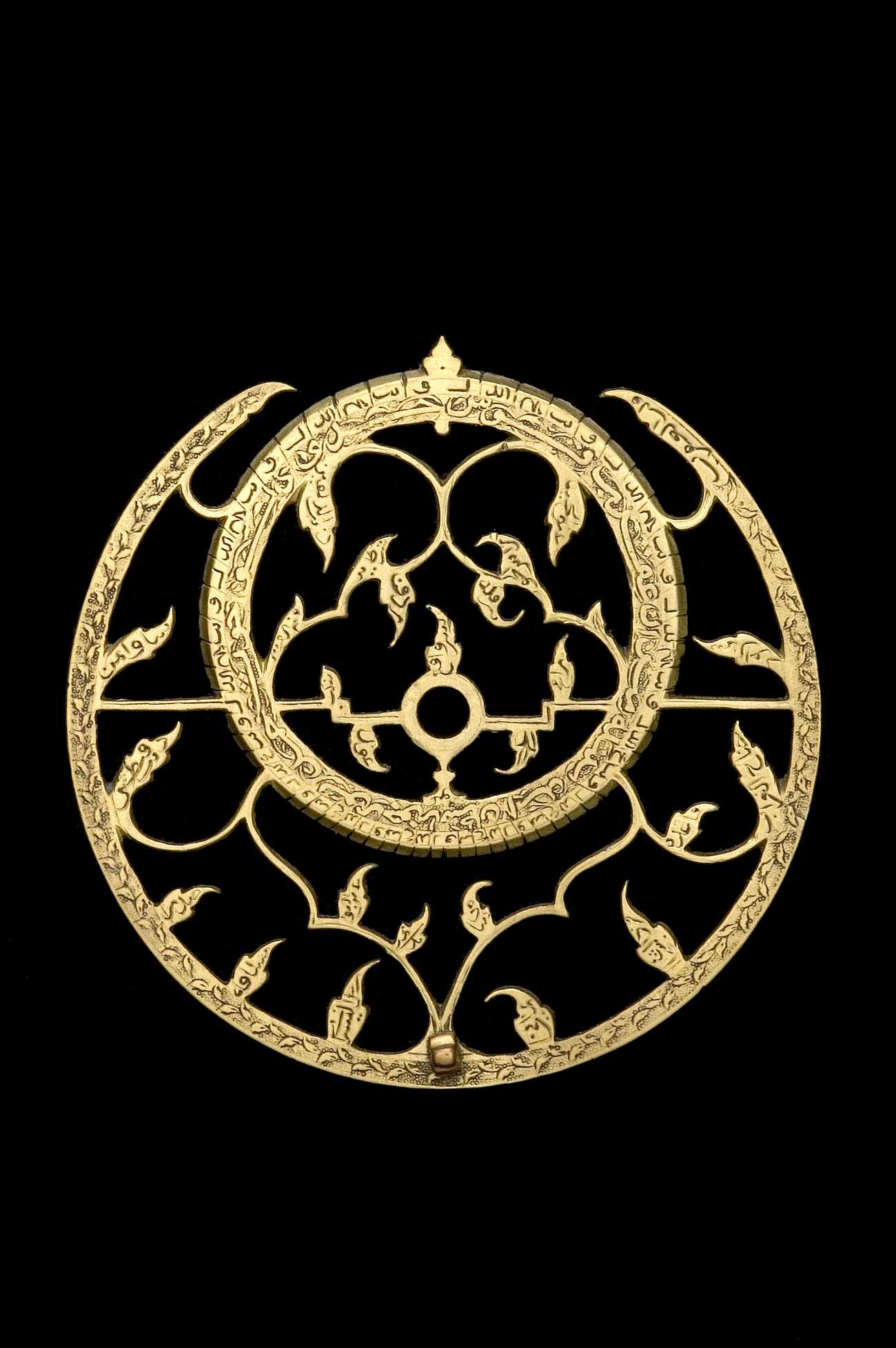
Photographs are illustrative examples of the type, not necessarily the exact object described. Verify details against the source file page.
Sources & references
- https://www.mhs.ox.ac.uk/astrolabe/catalogue/browseReport/Astrolabe_ID%3D168.html
- https://www.mhs.ox.ac.uk/astrolabe/
Where sources disagree, the disagreement is stated rather than resolved silently.