
Glossary · Mechanism
Ratchet wheel
A wheel in a winding system associated with a click that prevents reverse release of stored power.
Explanation
In a common going-barrel watch, the ratchet wheel is secured to the barrel arbor and is driven during winding. The click engages its teeth to resist unwinding through that route. The click spring positions or loads the click; wheel, click and spring are separate parts. Clock and fusee winding arrangements can place the retaining mechanism differently, so the familiar watch layout is not universal.
An automatic winding system can also contain reversers or other directional devices; those should not be called the ratchet wheel merely because they transmit motion one way. A slipping bridle at the mainspring's outer end has a different job from the click. A snap-back symptom or damaged tooth warrants examination, but neither wheel appearance nor winding feel alone establishes the full fault or the remaining spring load.
Sources & references
- de Carle, D., Practical Watch Repairing — technical further reading; exact procedures require calibre documentation
- Reymondin et al., The Theory of Horology — construction and terminology further reading
Where sources disagree, the disagreement is stated rather than resolved silently.
What to record
- Identify the winding route and barrel-arbor connection.
- Distinguish wheel, click and click spring.
- Record retaining-system damage without releasing power.
Do not lift a click on a wound movement; stored energy can be released suddenly.
In the object catalogue
Catalogued objects whose own source record mentions “Ratchet wheel”. The quoted line shows where; it is the seller’s or museum’s wording, not independent verification.
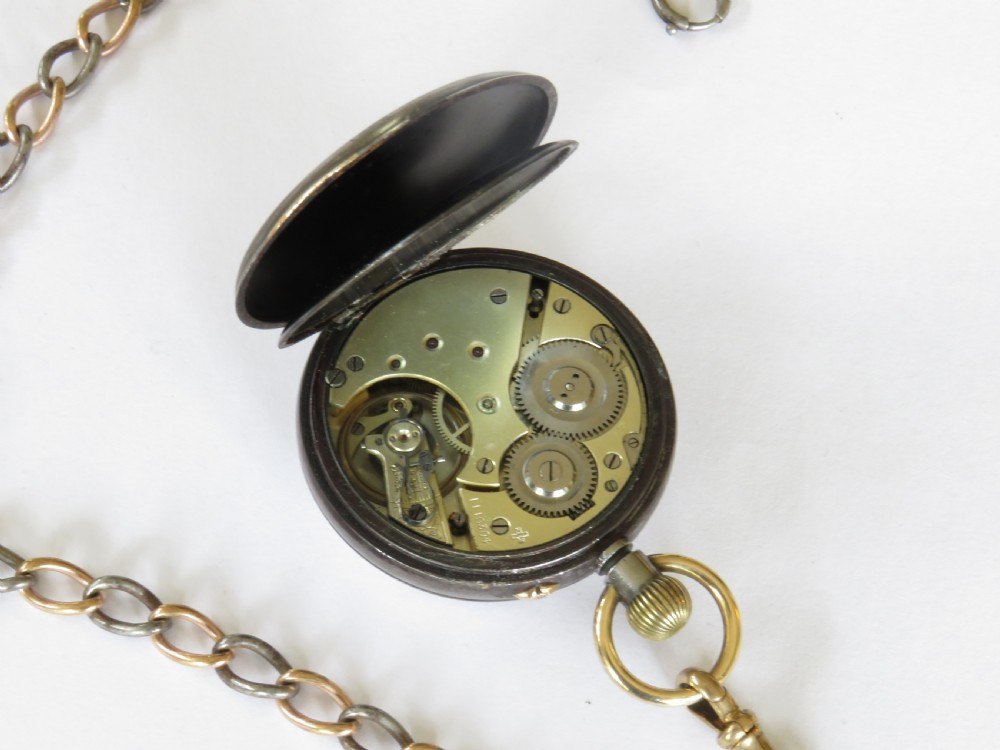
Pocket watch
Antique Eterna Schild Frères Gunmetal Pocket Watch
“Winding mechanism includes winding and ratchet wheels alongside an exposed balance wheel and regulator.”
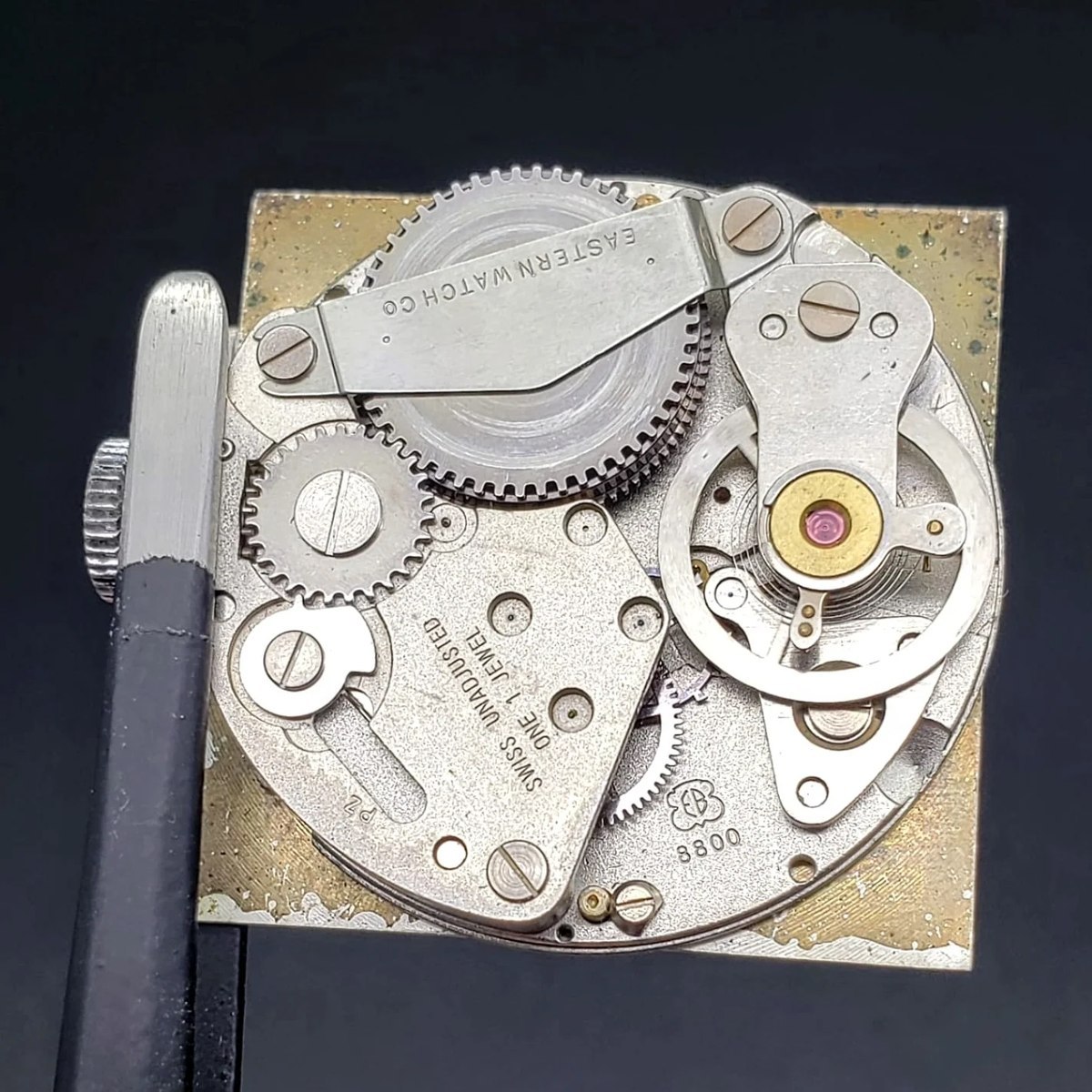
Wristwatch
Vintage Cimeqa wristwatch
“Ratchet wheel bridge stamped 'EASTERN WATCH CO' alongside a bridge engraved 'SWISS UNADJUSTED ONE 1 JEWEL'.”
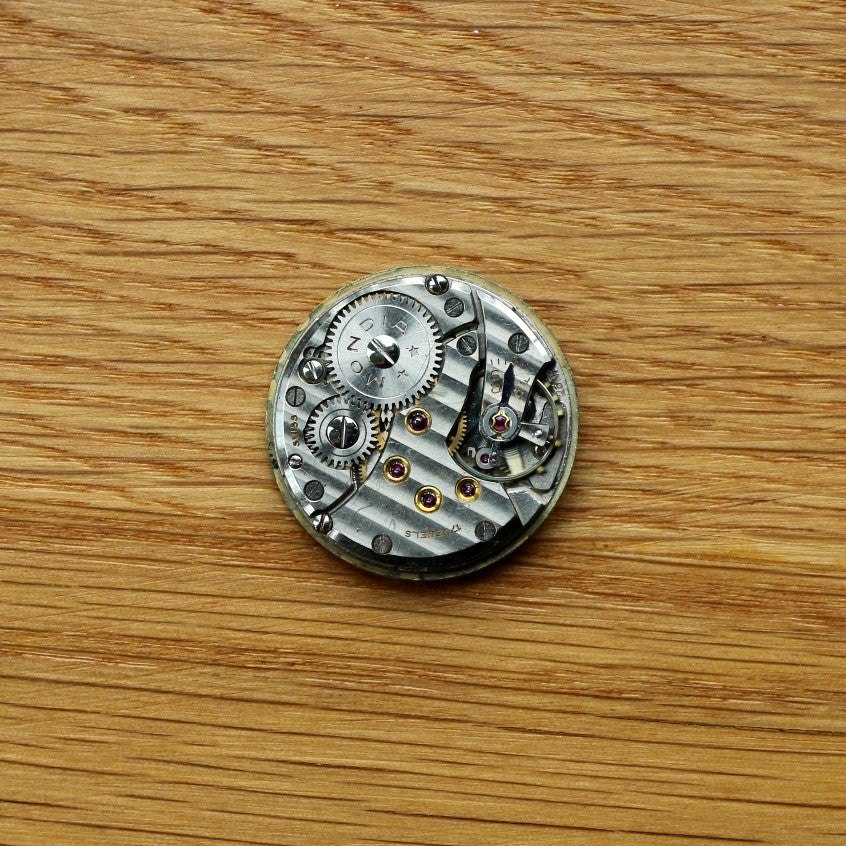
Movement
Mondia 17-Jewel Manual-Wind Movement with Dial and Hands
“This listing features a 28.5 mm Swiss manually wound Mondia wristwatch movement accompanied by its dial and hands, offered for spares, repairs, or project use. The bridge assemb…”
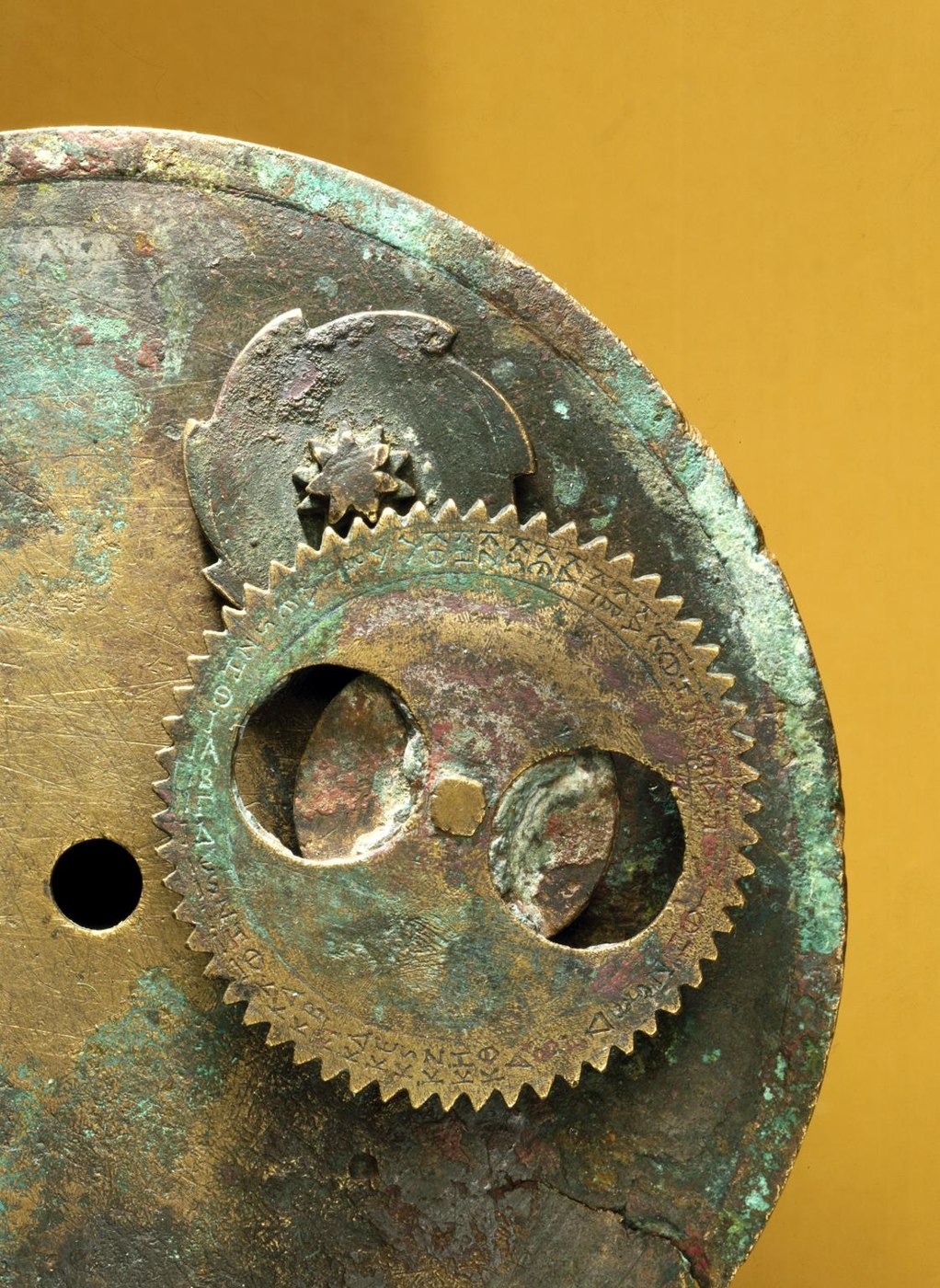
Tool
Byzantine sundial-calendar
“The mechanism includes a central arbor and a ratchet wheel system”
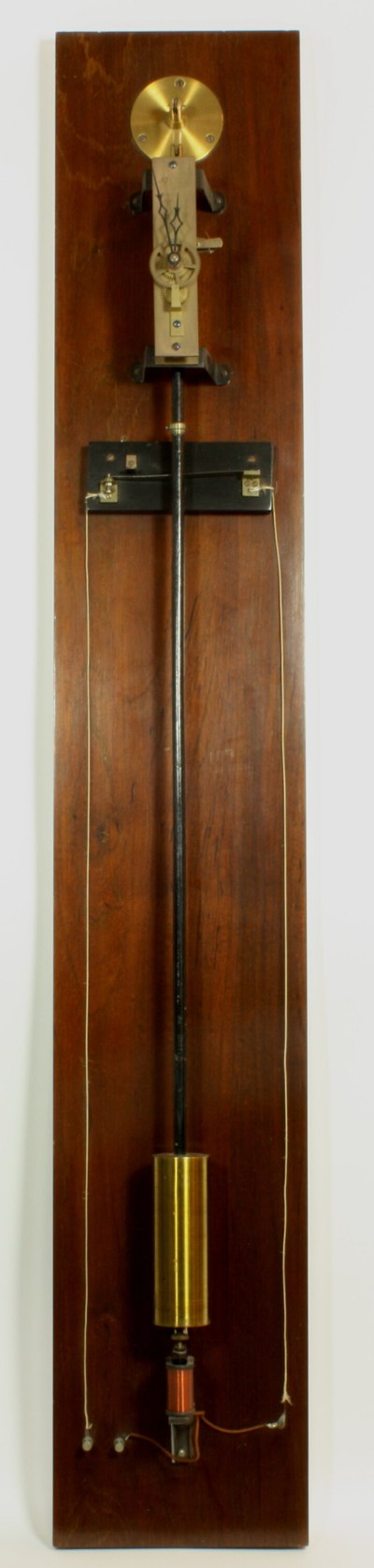
Clock
Impulse Clock by James Searle
“This electric impulse clock was produced in 1931 by James Searle in Melbourne, Australia. Commissioned by the Melbourne clock collector John Askew, the device serves to illustra…”
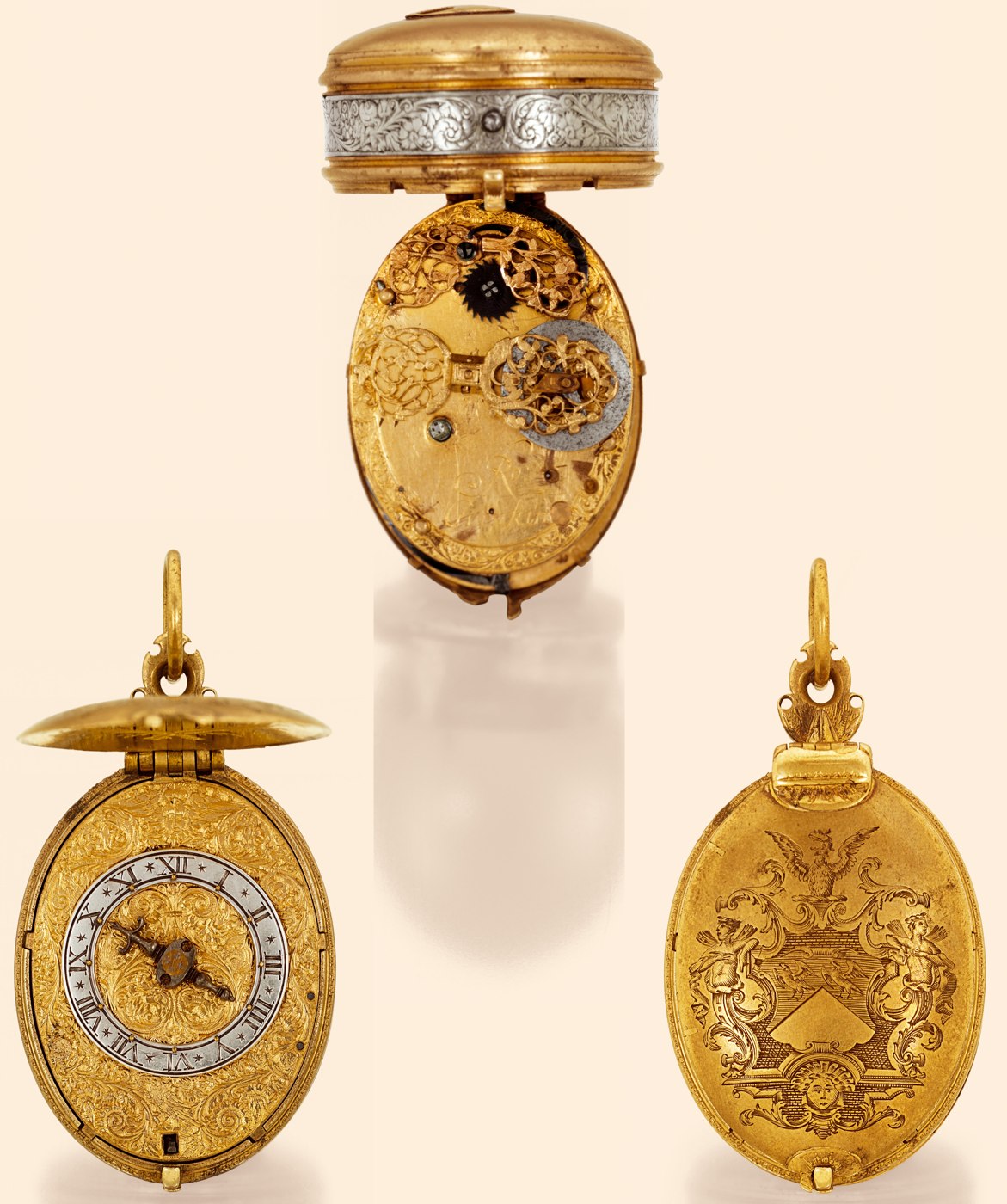
Pocket watch
Robert Grinkin Oval Pendant Watch
“This early 17th-century pendant watch is attributed to the London maker Robert Grinkin and dates to approximately 1625. It features an oval case construction with a silver band …”