
Glossary · Mechanism
Remontoire
A small intermediate spring or weight, rewound at intervals, that delivers constant force to the escapement independently of train torque.
Explanation
A remontoire isolates the escapement from variations in the going train's torque. The train periodically rewinds a small spring or raises a small weight; that store alone drives the escape wheel or impulse element. Because the escapement always works against the same small force, changes in mainspring state, train friction or wind on exposed hands do not reach the oscillator directly.
Gravity remontoires are associated with precision turret clocks — the double three-legged gravity escapement of the Westminster clock is the famous example — and spring remontoires with precision pendulum clocks and some chronometers. Rewind intervals range from seconds to minutes. A remontoire is a strong marker of precision intent, but its presence in a description must come from the movement's construction, not from a regulator-style dial or a maker's reputation.
Record the remontoire type and rewind interval where documented. Erratic behaviour at the rewind point is a service matter; the mechanism's timing is part of the movement's design and should not be altered.
Sources & references
- de Carle, D., Practical Watch Repairing — technical further reading; exact procedures require calibre documentation
- Reymondin et al., The Theory of Horology — construction and terminology further reading
Where sources disagree, the disagreement is stated rather than resolved silently.
Distinctions at a glance
| Form | Typical context | Limit |
|---|---|---|
| Gravity remontoire | Precision turret clocks | Not a clock gravity escapement by itself |
| Spring remontoire | Precision pendulum clocks, some chronometers | Not maintaining power |
| Rewind interval | Seconds to minutes by design | Not an owner setting |
| Absence of remontoire | Ordinary going train | Not evidence of poor quality |
What to record
- Identify spring or gravity form from construction evidence.
- Note the documented rewind interval.
- Keep remontoire observations separate from maintaining power, which acts during winding.
Do not wind or adjust a remontoire-equipped precision clock without its service documentation; the rewind timing is calibrated.
In the object catalogue
Catalogued objects whose own source record mentions “Remontoire”. The quoted line shows where; it is the seller’s or museum’s wording, not independent verification.
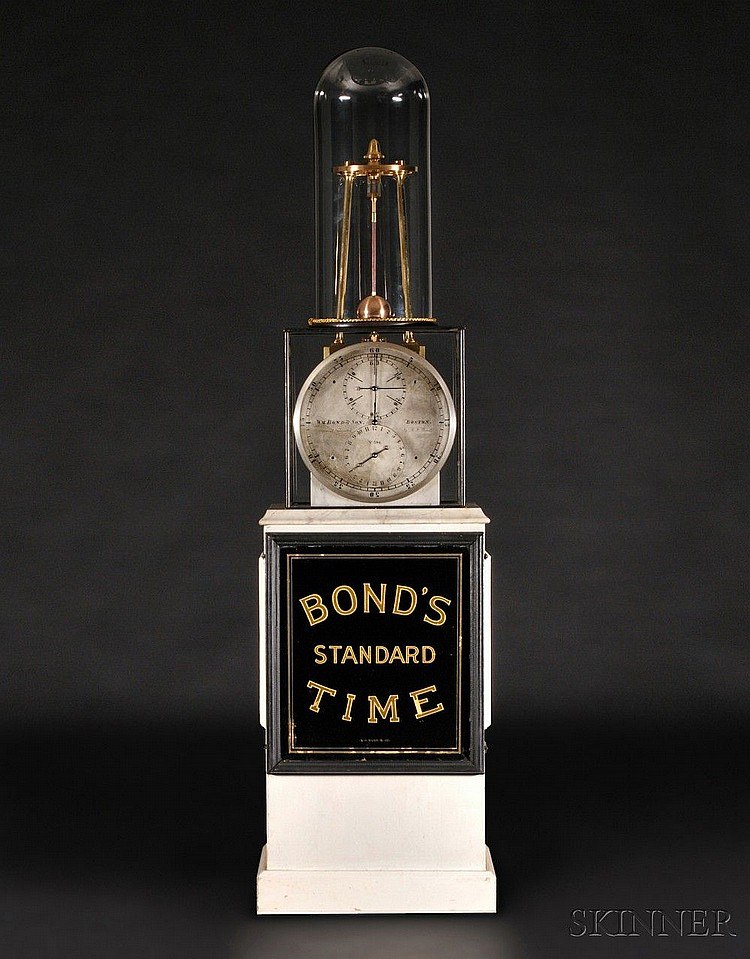
Clock
William Bond & Son Astronomical Regulator No. 396
“This precision astronomical regulator, numbered 396, was produced in 1868 by William Bond & Son of Boston. The movement incorporates a single-arm gravity escapement invented by …”
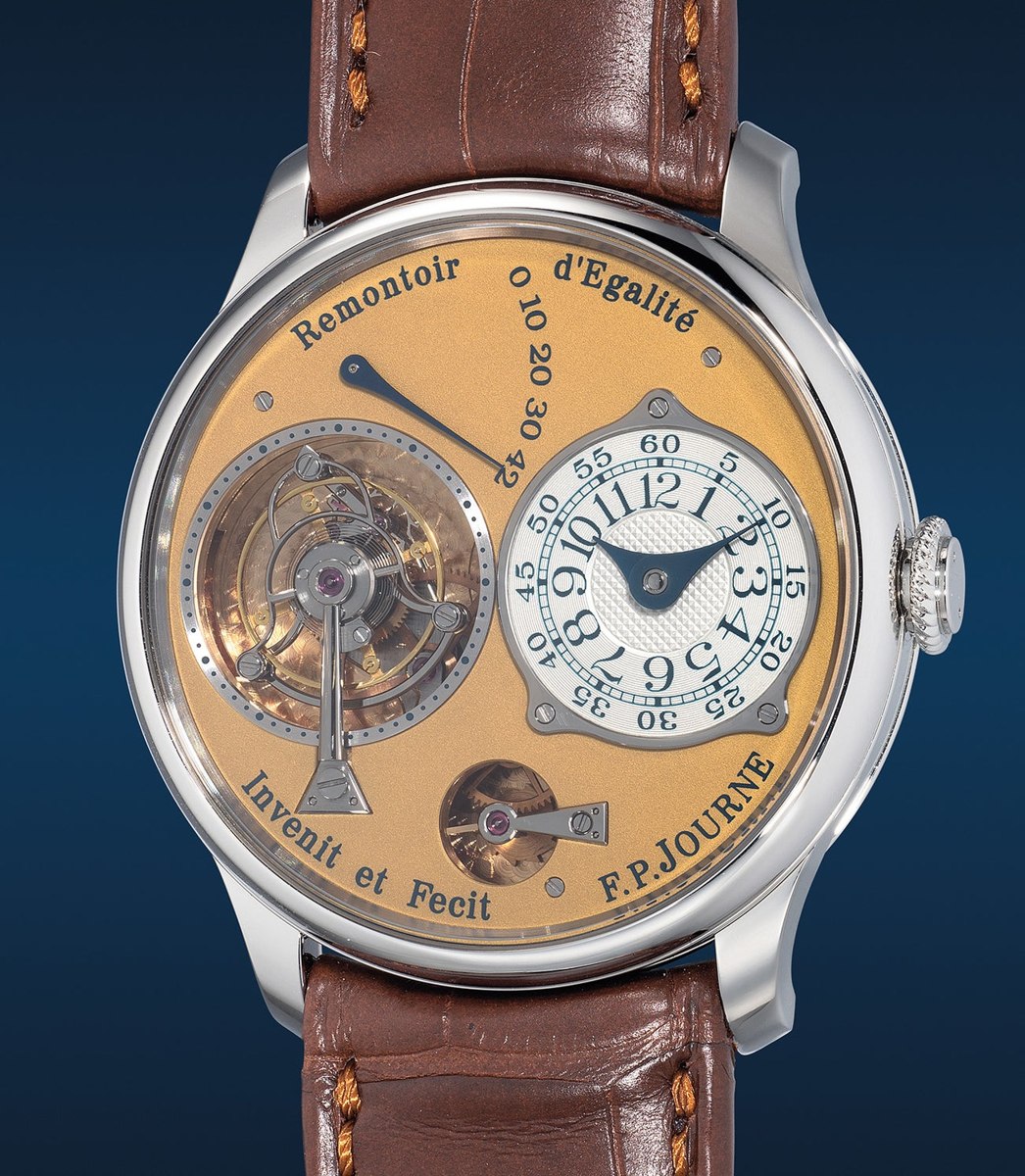
Wristwatch
F.P. Journe Tourbillon Souverain, 38mm Steel Set
“This F.P. Journe Tourbillon Souverain is a manual-wind stainless steel wristwatch produced circa 2015 as number 27 in a limited edition of 38 pieces, created to mark the discont…”
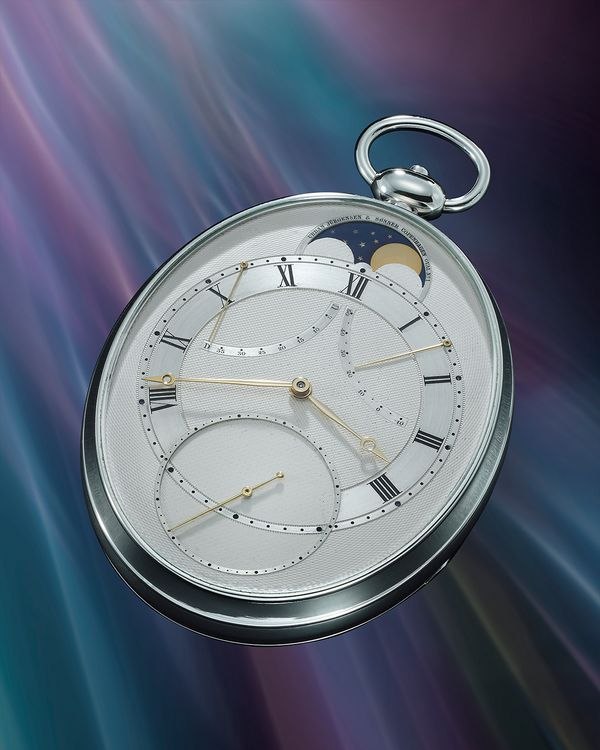
Pocket watch
Derek Pratt for Urban Jürgensen Oval Pocket Watch
“The Derek Pratt Oval Pocket Watch was conceived and handmade by English watchmaker Derek Pratt for Urban Jürgensen & Sønner. Begun in 1982 and completed around 2005, the source …”
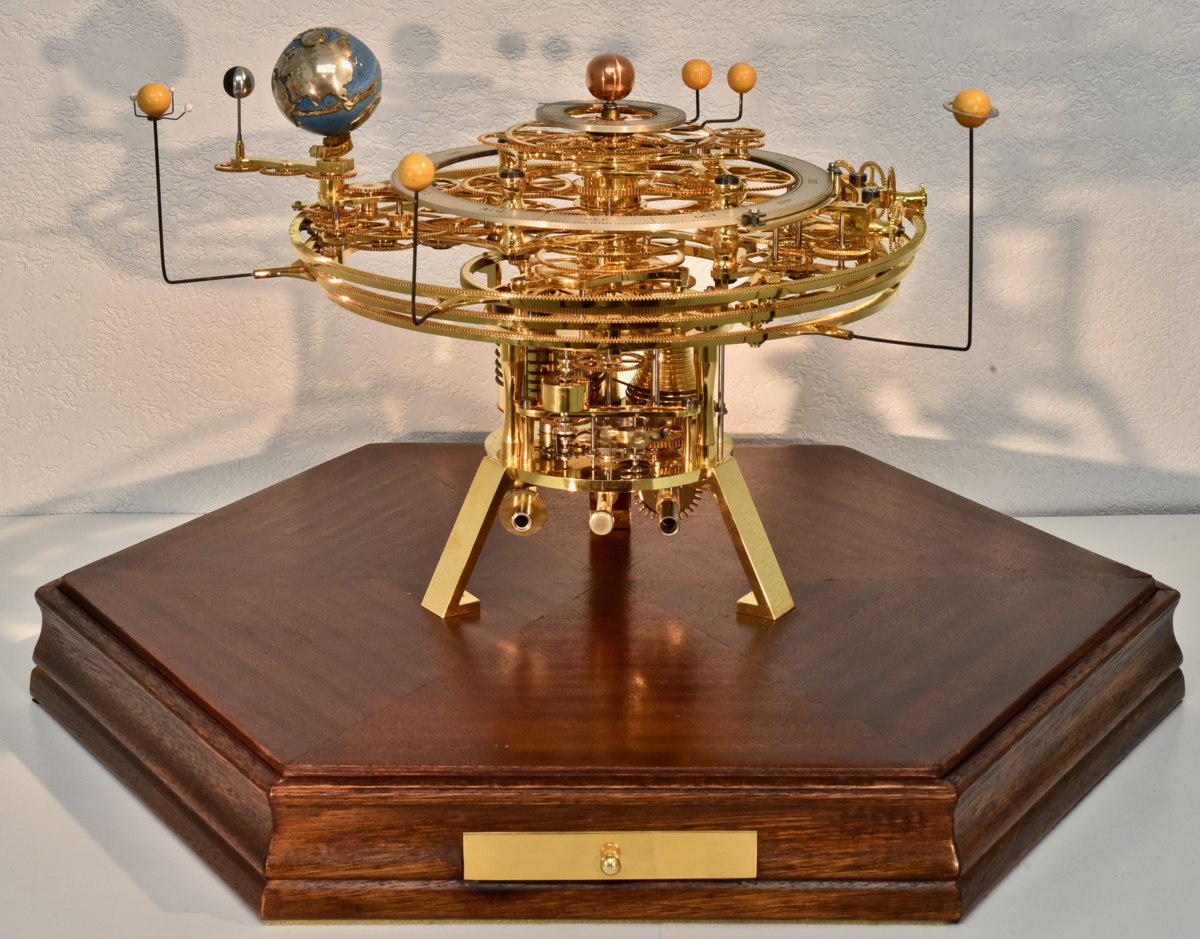
Clock
English Clockwork Orrery by Eric Watson
“This handmade English clockwork orrery was crafted circa 1982 by Eric Watson of Saddleworth, United Kingdom, and is reported by the dealer to be one of five made. Constructed of…”
Clock
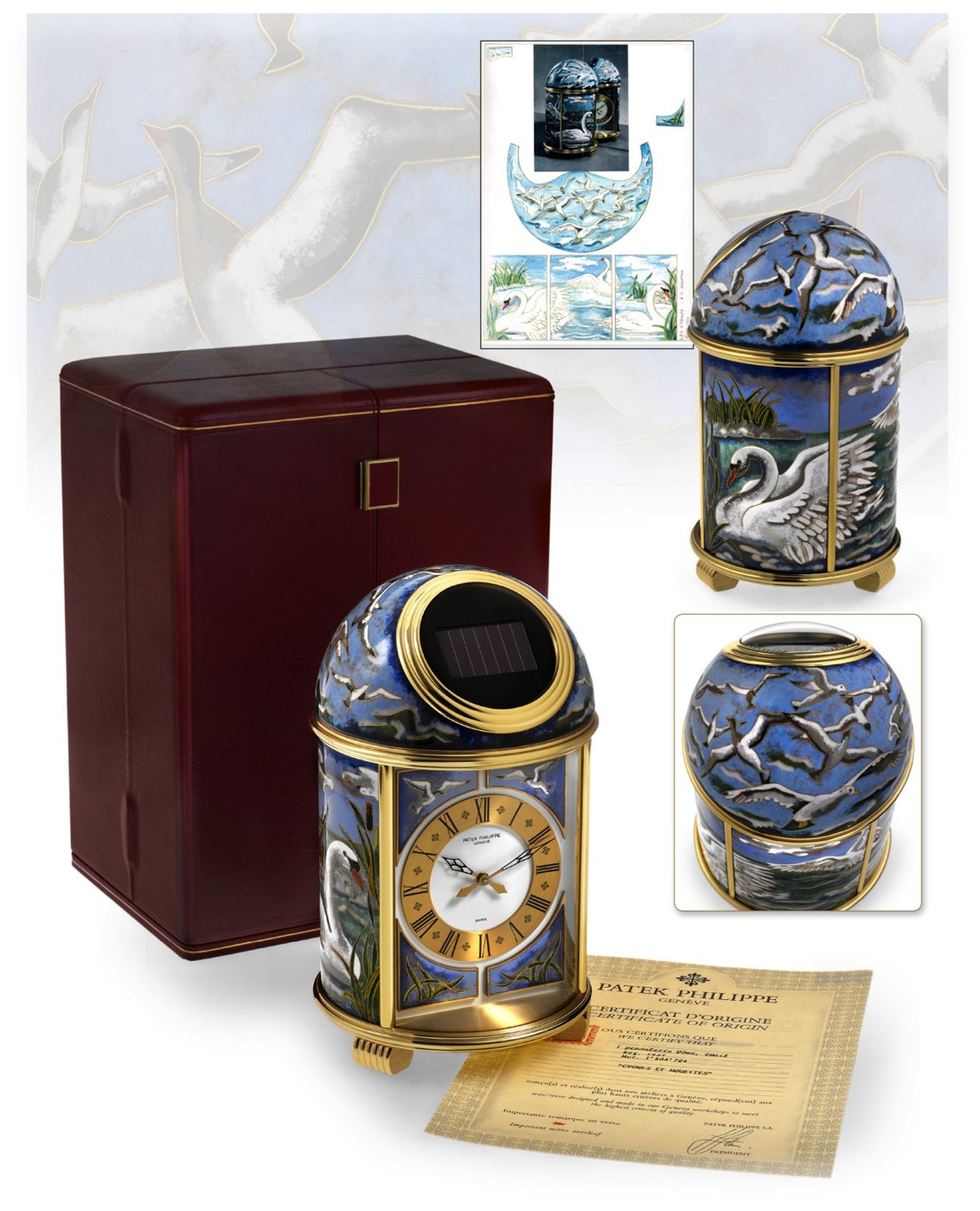
Patek Philippe Pendulette Dôme 'Cygnes et Mouettes', Ref. 1437
“This unique Patek Philippe Pendulette Dôme table clock, identified as reference 1437 and numbered 1804704, was produced in the late 1990s and sold in 2008. The enamel work is at…”
Marine chronometer
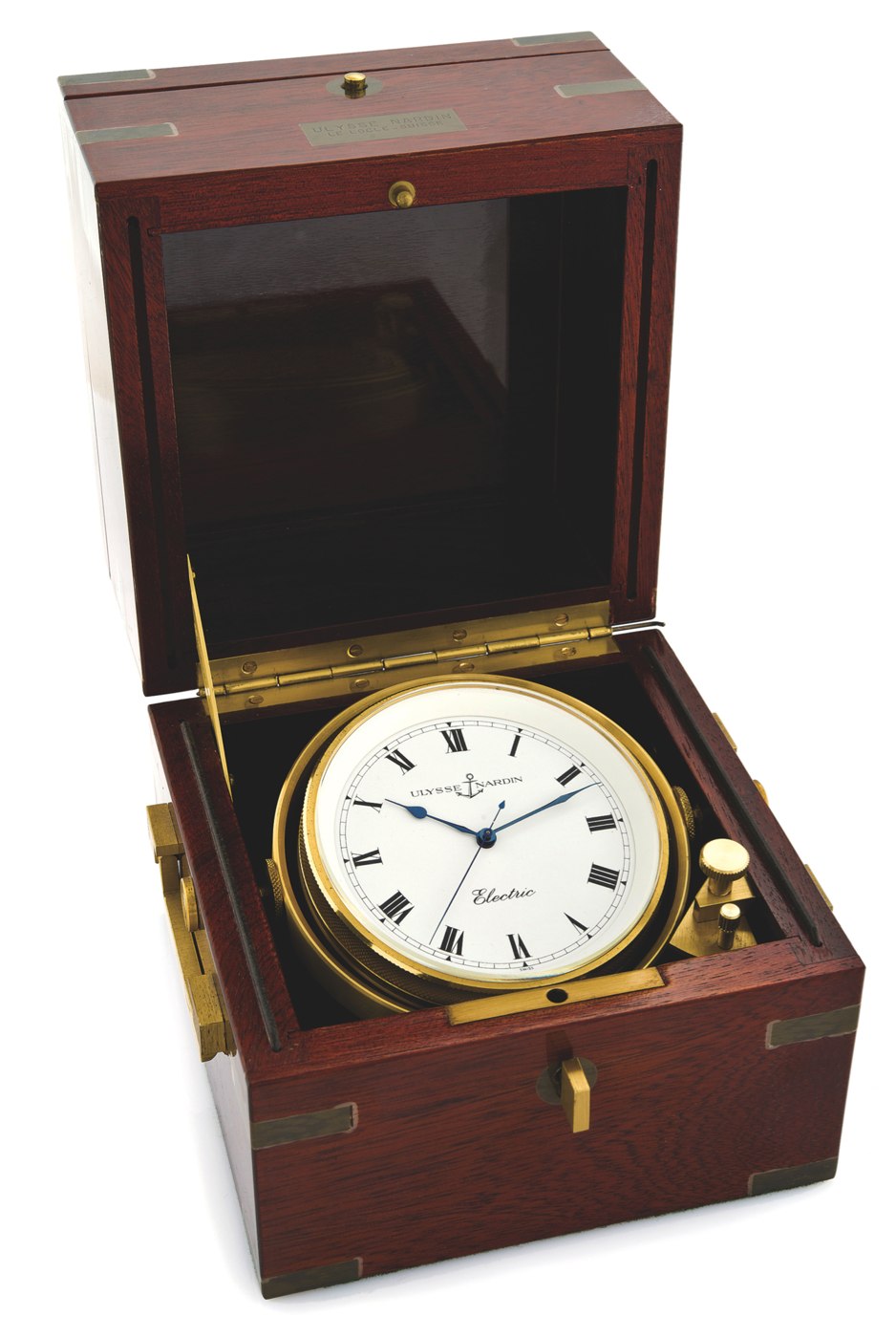
Ulysse Nardin Electric Marine Chronometer
“This Ulysse Nardin marine chronometer, identified by movement number 010497, was manufactured in the 1970s. Housed in a three-tier mahogany case, the instrument features brass-b…”