
Glossary · Mechanism
Rack and snail
A striking-train mechanism that counts the hour by a rack falling against a stepped snail cam.
Explanation
Rack and snail is the striking control invented by Edward Barlow in 1676: a snail-shaped cam on the hour wheel sets how far a toothed rack may fall, and the rack's teeth then count the strikes. Unlike the older countwheel, it cannot get out of sequence with the hands, and it made repeating mechanisms possible. It remains the basis of striking and repeating work today.
In the object catalogue
Catalogued objects whose own source record mentions “Rack and snail”. The quoted line shows where; it is the seller’s or museum’s wording, not independent verification.
Clock
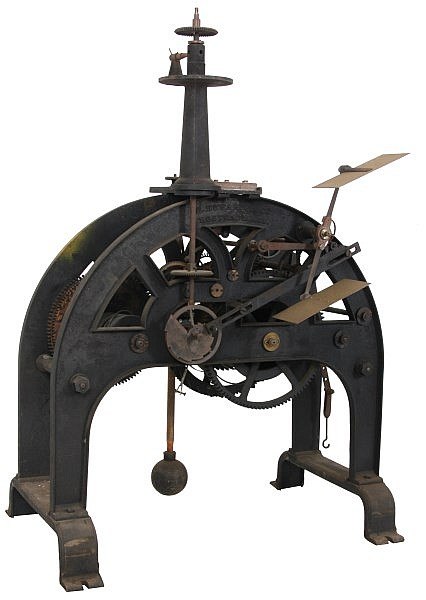
E. Howard Round Top Tower Clock
“This large tower clock mechanism by E. Howard & Co. of Boston, Massachusetts, features arched pierced cast iron side frames. According to the auction catalog, it is constructed …”

Clock
A Small French Striking Four Glass Clock
“Reported by the dealer to date to circa 1875, this French striking four-glass mantel clock is housed in a rectangular gilded brass case fitted with bevelled glass panels and sta…”
Clock
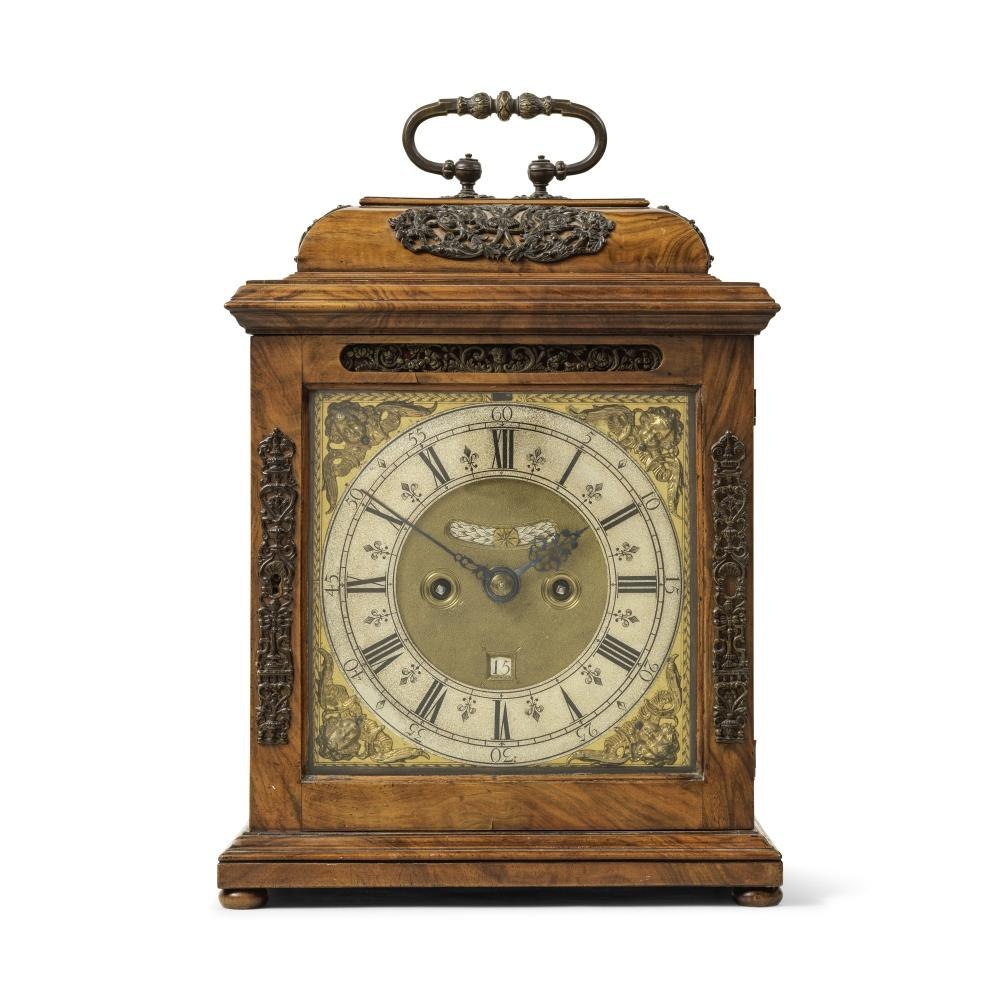
Table clock with calendar by Joseph Antram
“The clock features a twin fusee movement, originally constructed with a verge escapement and since converted to an anchor escapement. The movement includes five knopped pillars …”
Clock
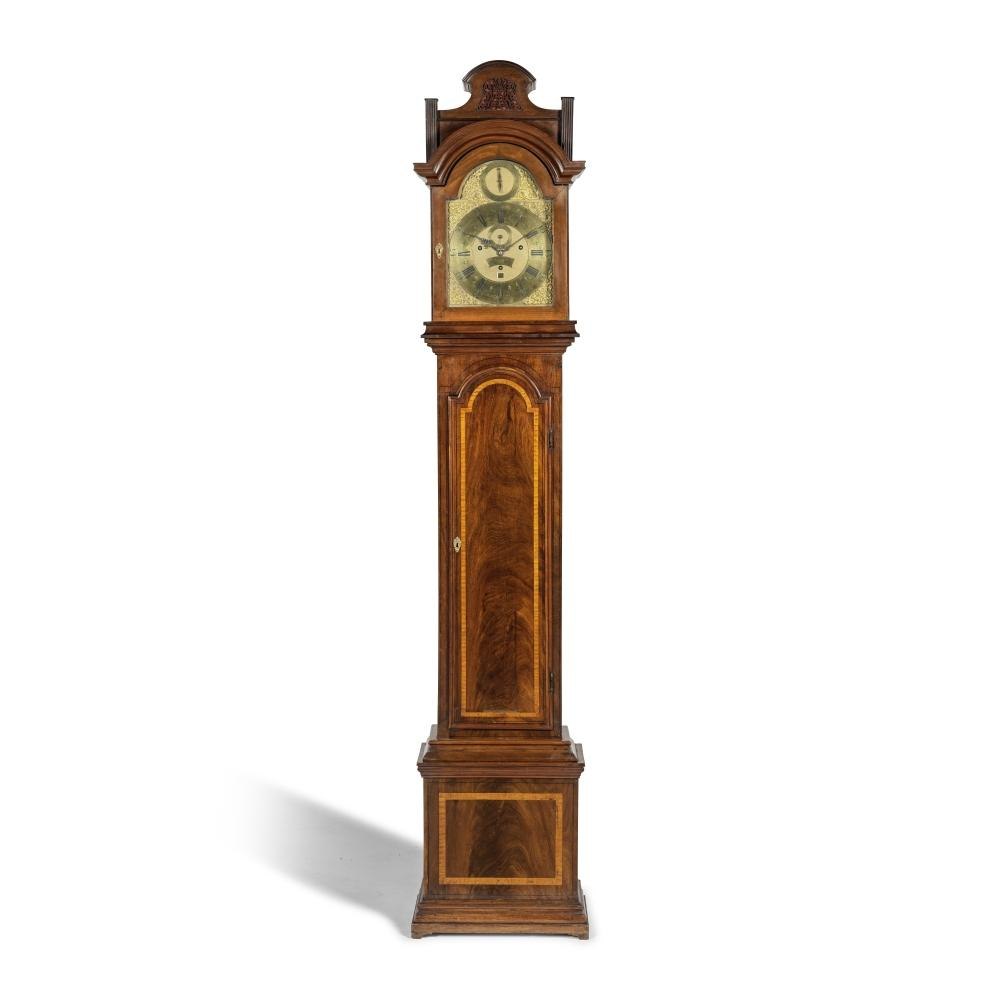
John Ellicott Longcase Clock
“This mid-18th century longcase clock features a movement by John Ellicott, London, housed within a case of later construction. The clock measures 250cm in height. Its 12-inch br…”
Clock
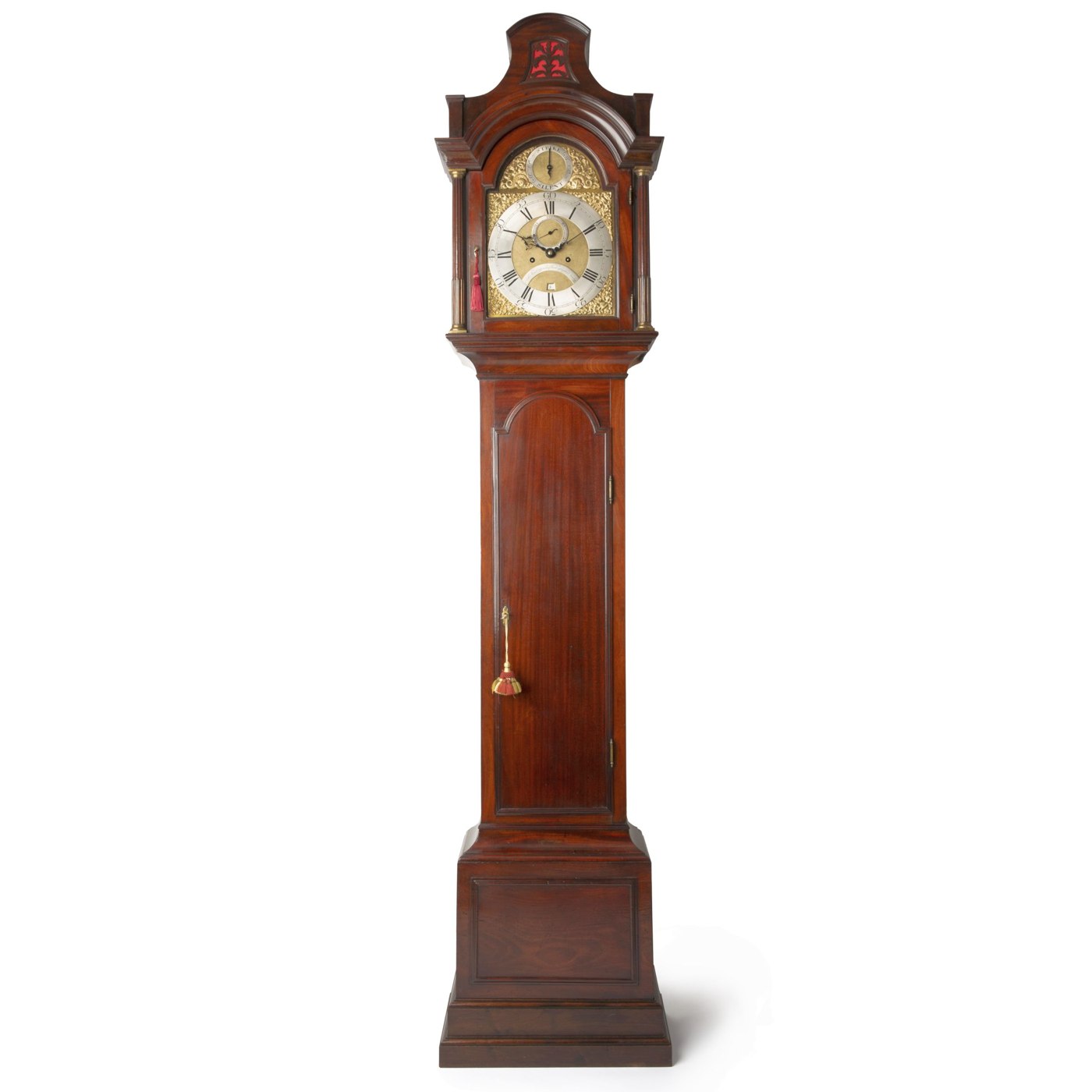
Mahogany Pagoda Longcase Clock by Anthony Marsh
“This mahogany longcase clock features a pagoda-top hood, a long, slim trunk, and an applied panel to the base. It is attributed to the London-based clockmaker Anthony Marsh, who…”
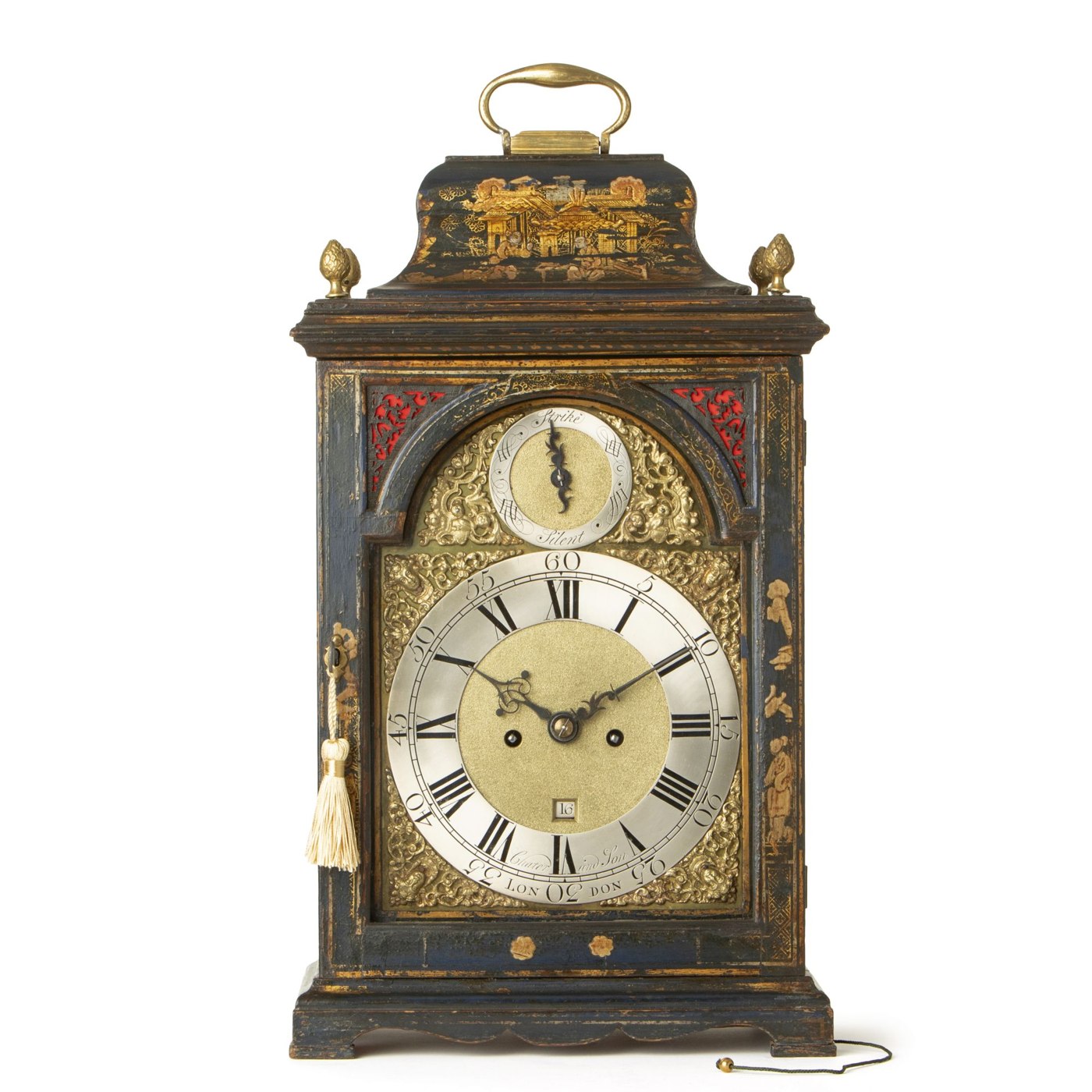
Clock
Chater & Son green and gold lacquered bracket clock
“This 8-day twin fusee bracket clock, dating to circa 1780, features a green and gold lacquered case with an inverted bell top. The clock is signed by Chater & Son, London on bot…”