
Glossary · Complication
Rack striking
A striking control that derives the blow count from a rack's fall against an hour-linked snail cam.
Explanation
In common hour rack striking, a rack is released and its tail falls against a step of the snail cam. The permitted fall determines how many teeth must be gathered before the sequence ends. A gathering pallet restores the rack progressively as the striking train runs. The snail sets the count, the train supplies power and the hammer sounds the blows: those are separate functions, not different names for one wheel.
Reading an hour-linked cam helps a rack system recover its intended count each cycle, unlike a count wheel whose position retains a separate sequence. That distinction does not make rack striking fault-proof. Incorrect hand position, displaced parts, poor gathering or other defects can still produce a wrong count. Nor does the mechanism permit arbitrary backwards hand setting. Follow exact instructions and allow an assessed clock to complete its strike before further setting, as Icon advises.
Watch repeaters and clock striking use related rack-and-snail principles but differ in their controls and sequences. Do not use a clock schematic to infer a watch's quarter or minute mechanism. Record the observed hour, blows and sequence separately from diagnosis, and identify hidden parts only from exact documentation or inspection. No universal invention date or current accuracy claim follows from identifying a rack.
Sources & references
- https://en.wikipedia.org/wiki/Striking_clock
- https://www.icon.org.uk/conservation-hub/caring-for-your-collections/clocks.html
Where sources disagree, the disagreement is stated rather than resolved silently.
Distinctions at a glance
| Part | Function | Not evidence of |
|---|---|---|
| Snail | Selects intended count | Present sound quality |
| Rack | Stores selected fall as teeth to gather | Unlimited safe hand adjustment |
| Gathering pallet | Restores rack progressively | Universal repair position |
| Hammer and bell/gong | Sound the blows | Correct count selection |
What to record
- Separate count selection, gathering, power and sound.
- Record indicated hour and observed blows together.
- Specify clock hour striking rather than a watch-repeater sequence.
Do not lift racks, force hands or repeatedly operate uncertain striking work; stored power can remain when the clock is stopped.
In the object catalogue
Catalogued objects whose own source record mentions “Rack striking”. The quoted line shows where; it is the seller’s or museum’s wording, not independent verification.
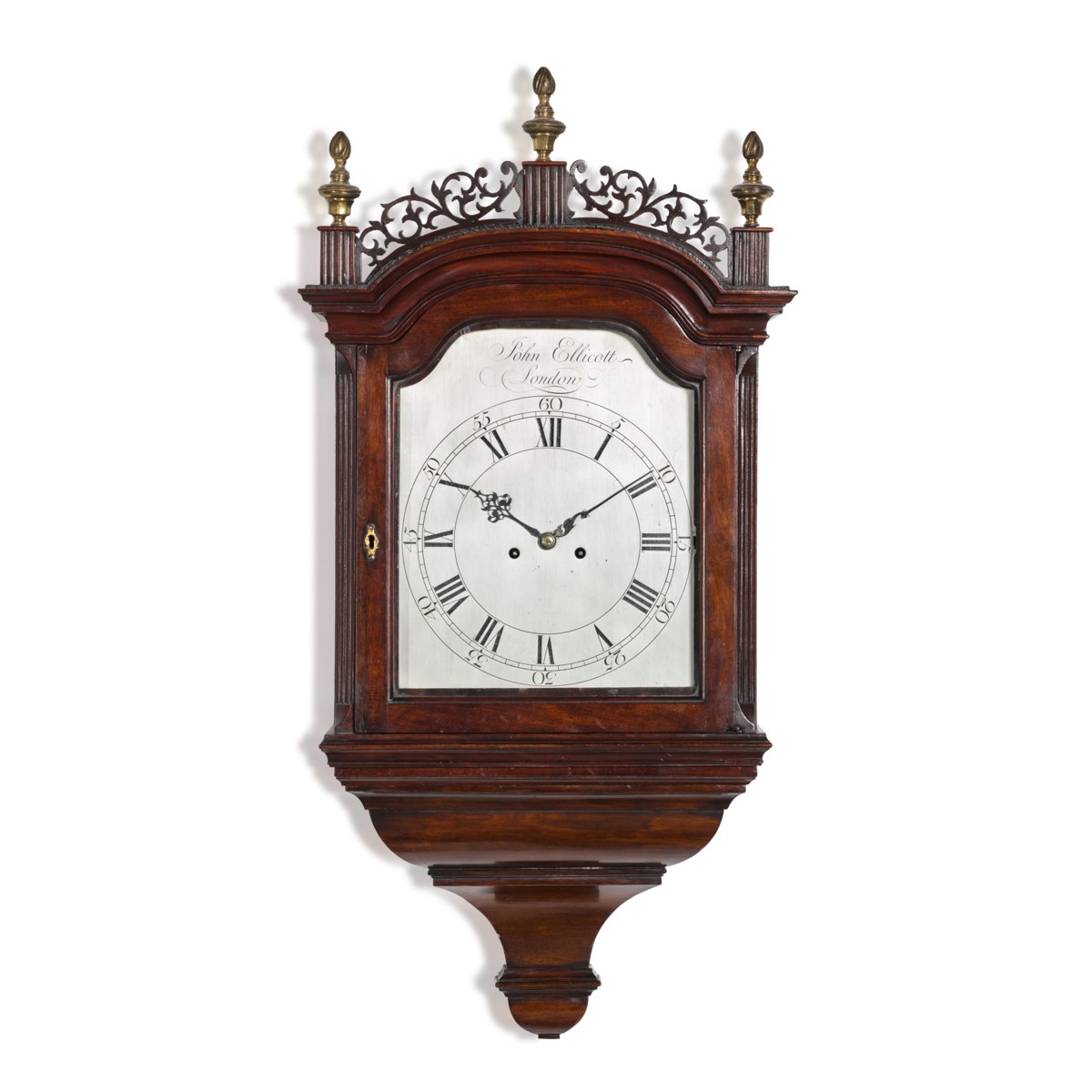
Clock
A George III mahogany hooded wall clock, John Ellicott
“This George III hooded wall clock, dating to circa 1760, features a 10-inch silvered dial signed 'John Ellicott, London' in the shallow arch. The dial includes Roman hours, oute…”
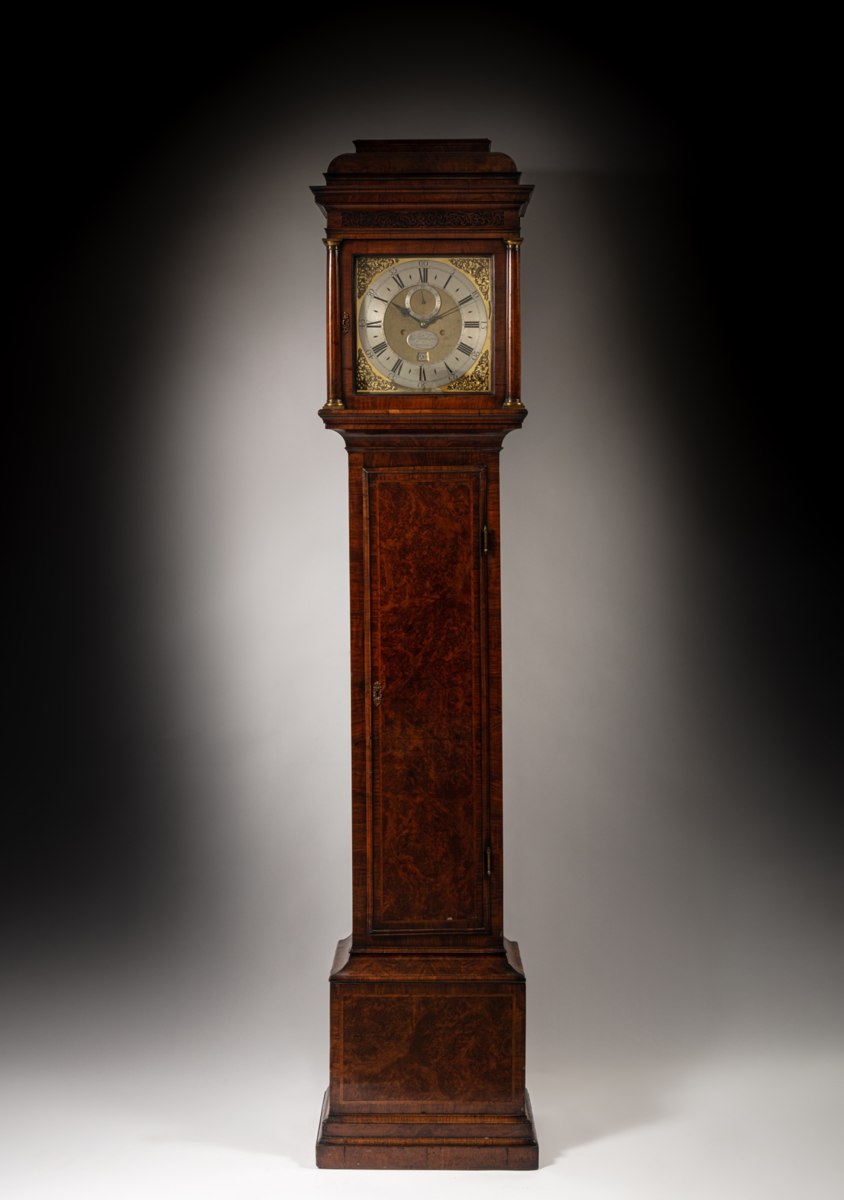
Clock
George Graham No. 679 George II Walnut Longcase Clock
“This George II walnut longcase clock was crafted in London circa 1730 and is attributed by Sotheby's to George Graham, marked with number 679. The walnut case stands approximate…”
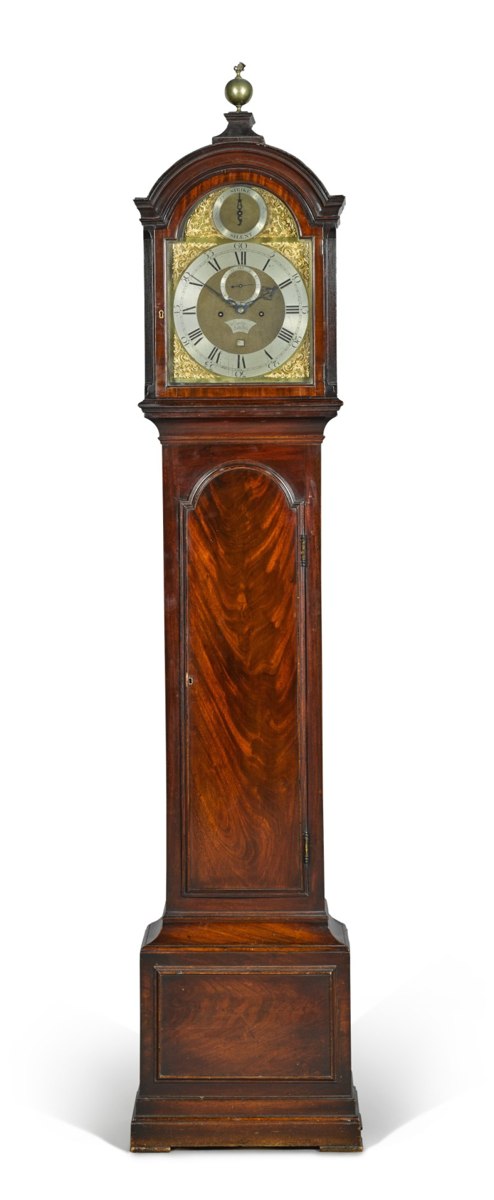
Clock
George III mahogany longcase clock, John Holmes
“This George III longcase clock is attributed to John Holmes in London, dated circa 1775. Standing 229 cm high, the mahogany case is constructed with an arched hood crowned by mo…”
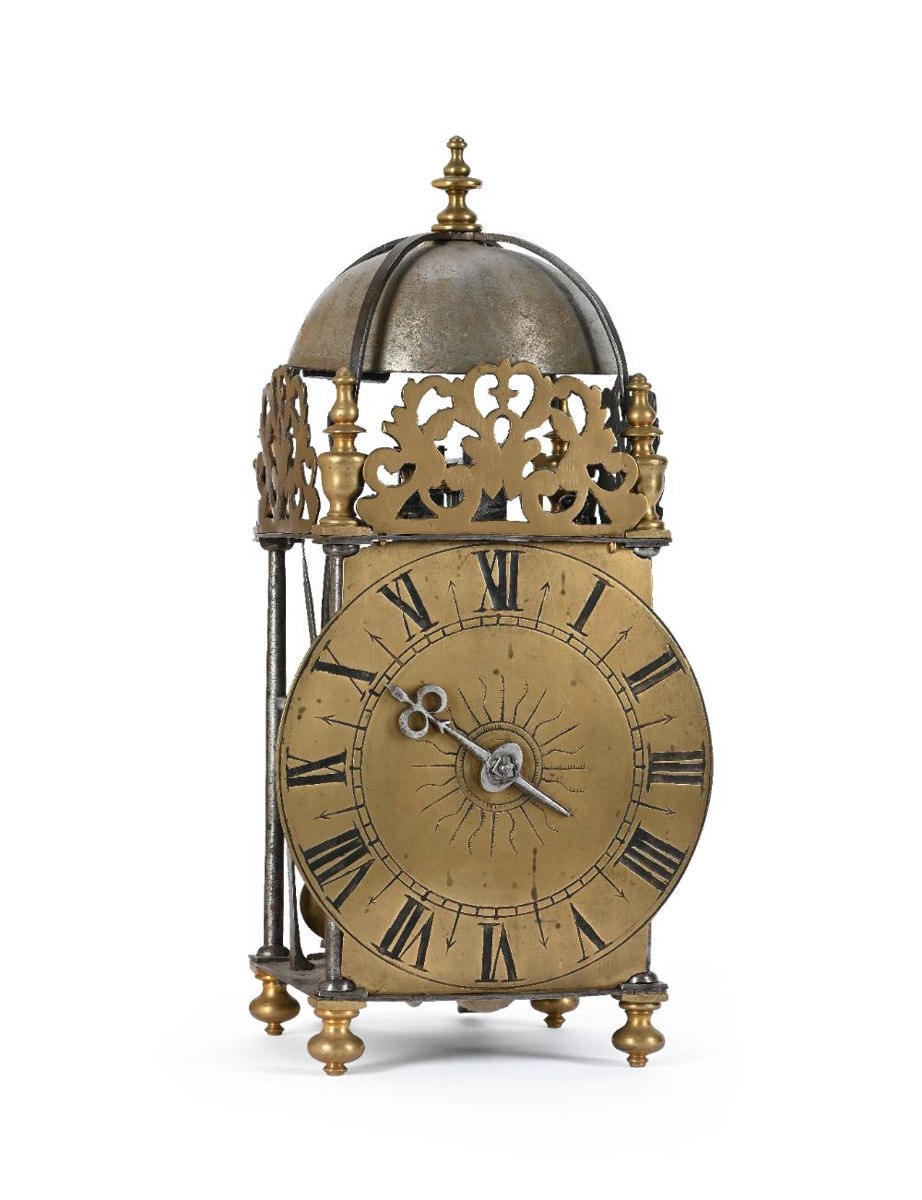
Clock
French Louis XV iron-framed rack-striking lantern clock with trip-hour repeat
“Striking Mechanism: Rack striking with trip-repeat”
Clock
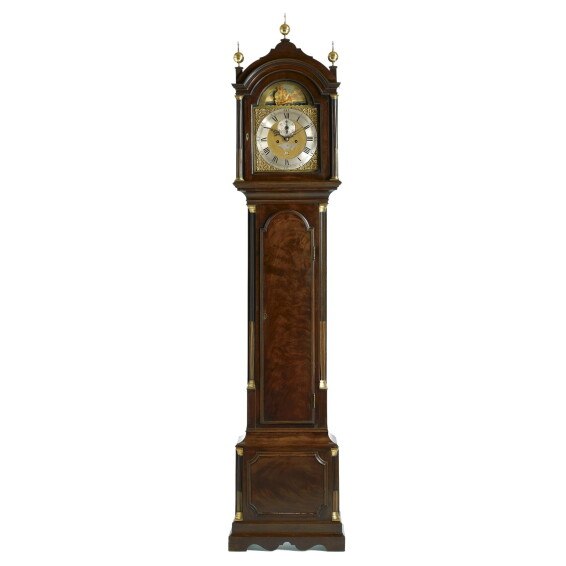
English mahogany longcase clock with ships automaton
“This English mahogany longcase clock is dated circa 1780 and measures approximately 245 cm high. The source reports a 30.5-cm brass dial with an engraved silvered chapter ring, …”
Clock
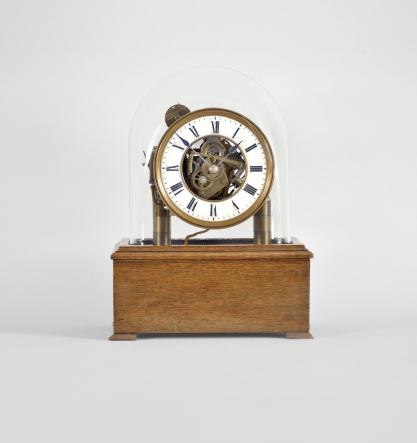
Eureka Clock Co. Ltd. striking electromagnetic '1000 day' mantel clock
“This striking electromagnetic '1000 day' mantel clock by the Eureka Clock Co. Ltd., London, dates to circa 1910 and bears serial number 196. Supported by two cylindrical brass p…”