
Glossary · Complication
Count wheel (locking plate)
A notched wheel or locking plate controlling the length of successive striking sequences.
Explanation
A count-wheel striking system uses a notched path and a detent or locking lever to determine when the strike train may stop. Between stopping positions, the mechanism continues its intended sequence. The wheel rotates in relation to the striking train rather than reading the present hour directly from a snail. Notch positions and the intervening travel matter; the count is not simply produced by progressively deeper notches, one depth for each hour.
Because wheel position retains its own sequence, indicated time and strike count can become out of agreement. A missed sequence or inappropriate hand setting may leave the next count displaced. That does not make every wrong count a count-wheel fault, and correction is construction-specific. Record the displayed hour, blows and recent handling history before asking a conservator to restore synchronisation. Do not force the wheel or repeatedly release the train yourself.
Rack striking derives the next intended hour count from a cam, while a count wheel retains a separate sequence position. Neither mechanism alone establishes quality, age or safe hand-setting direction. A chronograph hour-counting wheel is a recorder component, not this clock-striking locking plate. Photographs must distinguish those subjects; source captions and the visible mechanism are more useful than the shared word counting.
Sources & references
- https://en.wikipedia.org/wiki/Striking_clock
- https://www.icon.org.uk/conservation-hub/caring-for-your-collections/clocks.html
Where sources disagree, the disagreement is stated rather than resolved silently.
Distinctions at a glance
| Observation | What to retain | Limit |
|---|---|---|
| Notched path | Actual locking arrangement | Not a depth-per-hour scale |
| Strike sequence | Indicated hour and blows | Not a fault diagnosis |
| Recent hand setting | Exact operation performed | Do not repeat to test |
| Hour-counting watch wheel | Chronograph recorder context | Not a clock locking plate |
What to record
- Identify the actual notched locking path and detent.
- Keep wheel sequence separate from displayed time.
- Distinguish clock-striking control from chronograph recording parts.
Do not release a strike detent or turn a count wheel on a loaded movement; obtain construction-specific advice.
In the object catalogue
Catalogued objects whose own source record mentions “Count wheel (locking plate)”. The quoted line shows where; it is the seller’s or museum’s wording, not independent verification.
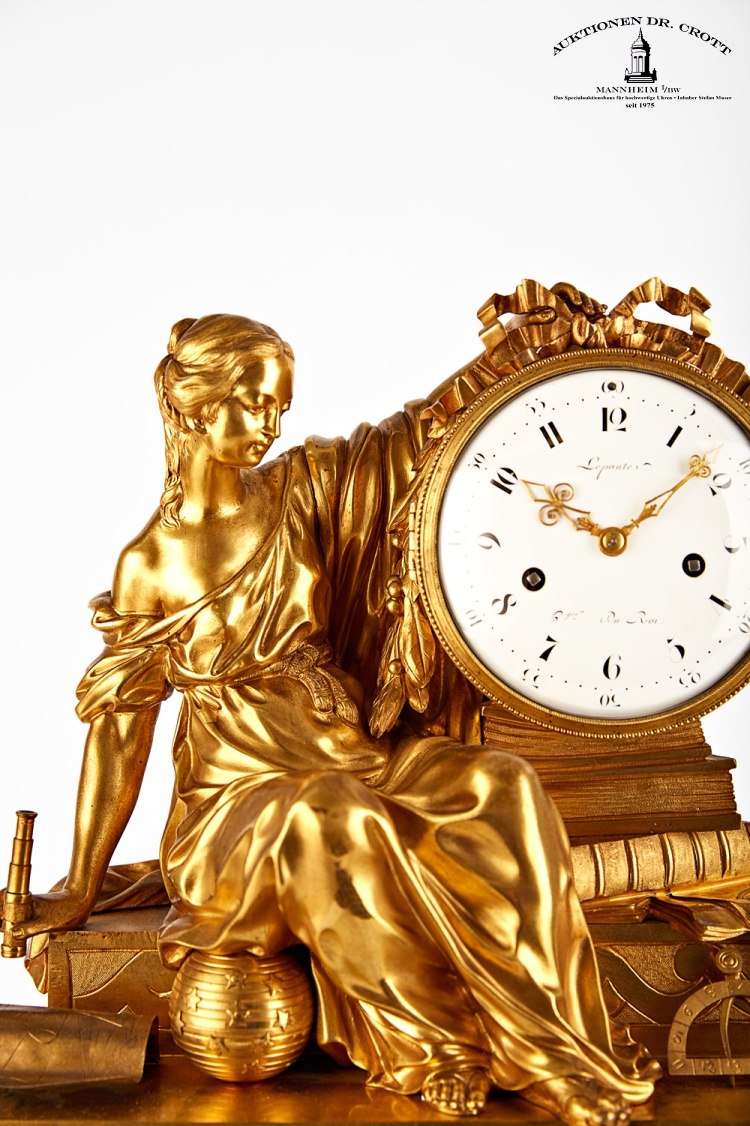
Clock
Lepaute 'Urania' Musical Mantel Clock
“This ormolu mantel clock, representing Urania, the muse of astronomy, depicts the draped muse holding a telescope beside a clock case resting upon stacked books. Accompanying sc…”
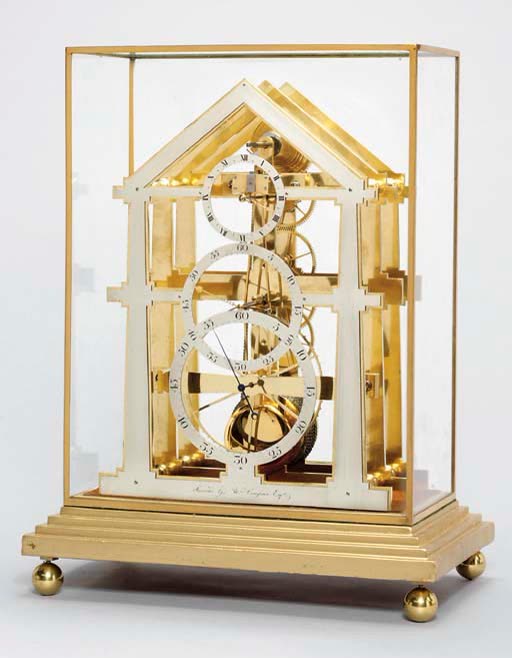
Clock
Regency brass skeleton timepiece to the design of Sir William Congreve
“This Regency brass skeleton timepiece is built to the design of Sir William Congreve with an extreme detached escapement, dating to the first quarter of the 19th century. The cl…”
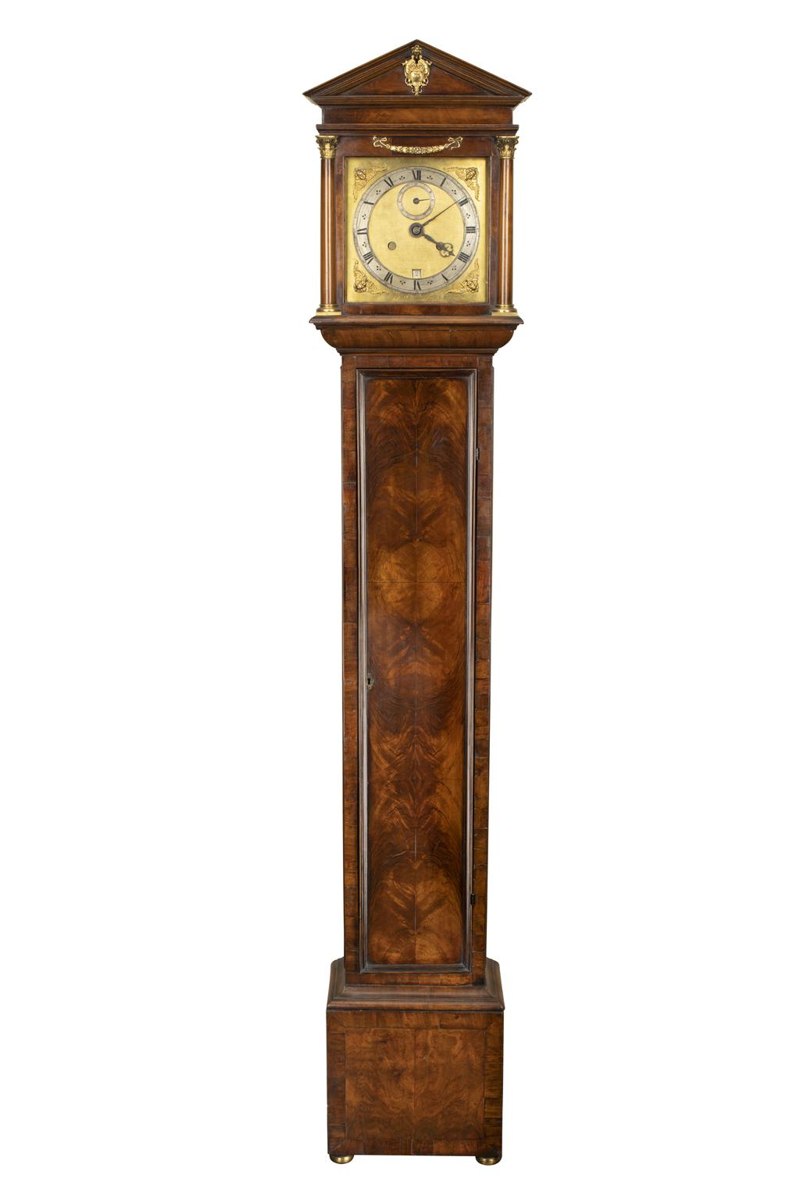
Clock
Longcase clock by John Fromanteel
“This English longcase clock by John Fromanteel was made in London circa 1665–1670 (dated circa 1668 by the museum) and is housed in a 20th-century reproduction wooden case. The …”
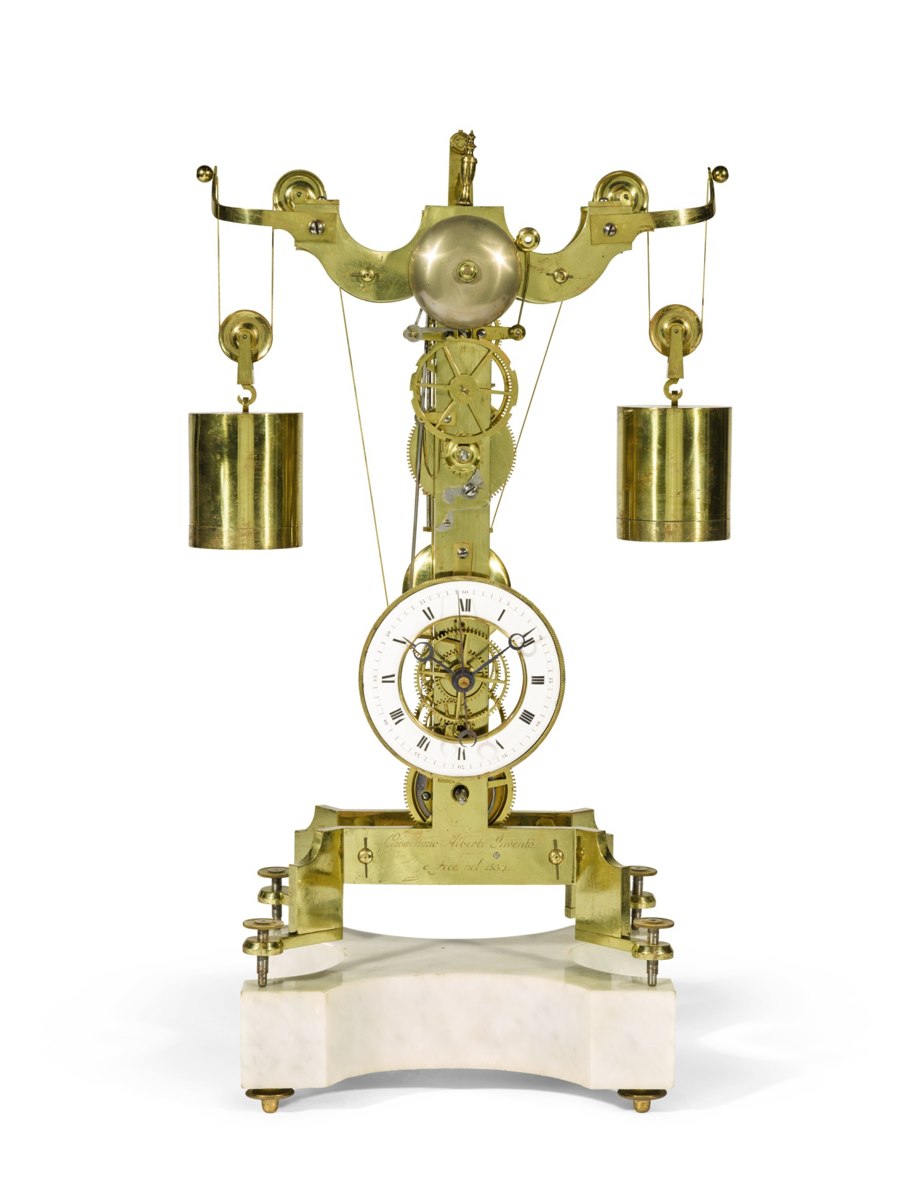
Clock
Gioachino Alberti brass skeleton clock with constant force escapement
“This Italian brass skeleton clock is documented as invented and made by Gioachino Alberti in Milan, dated 1834. The frame is engraved 'Gioachimo Alberti Invento, e Fece nel 1834…”
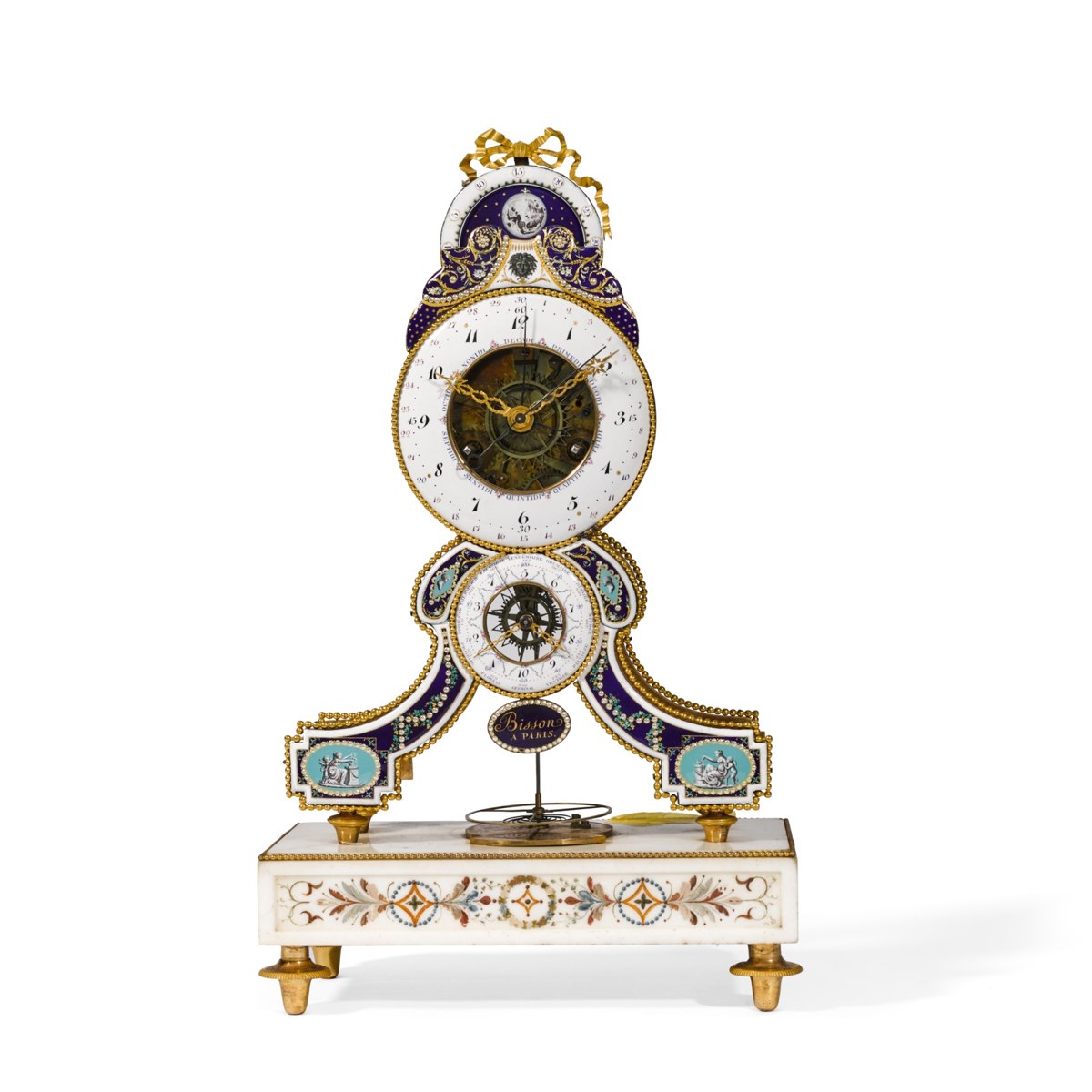
Clock
Directoire gilt-bronze, enamel and white marble skeleton clock
“Striking Mechanism: Outside count wheel striking on a bell”
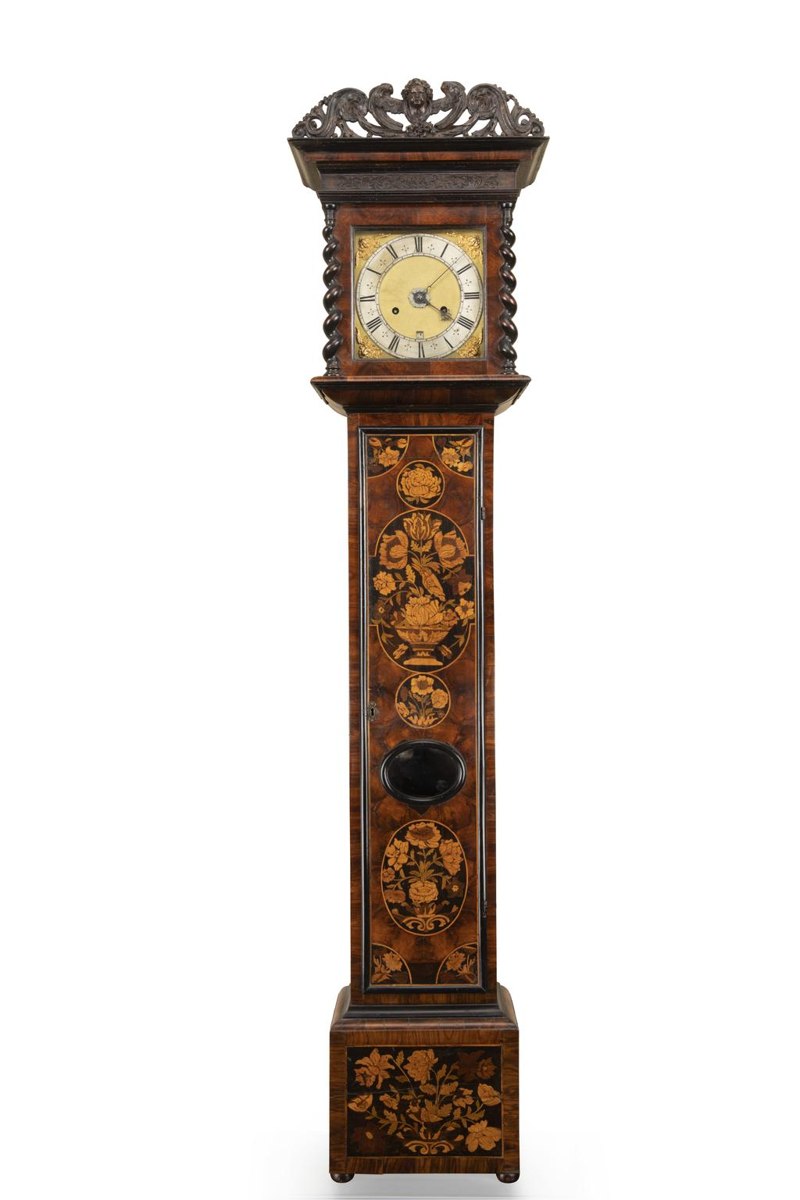
Clock
William Cattell Marquetry Longcase Clock
“Dating to circa 1675–1685 in London, this longcase clock is attributed to William Cattell. The case is veneered with bird and flower marquetry in walnut and olivewood 'oysters',…”