
Glossary · Mechanism
Maintaining power
An auxiliary device that keeps the train driven while the main power source is being wound.
Explanation
When a weight- or spring-driven clock or watch is wound, the driving torque on the train can fall to zero or reverse for the duration of winding. A precision timekeeper loses rate during that interval, and some mechanisms can even run backwards. Maintaining power supplies a small temporary drive so the escapement and balance keep working while the mainspring or weight is replenished.
The classic form is John Harrison's spring-and-detent maintaining power: a subsidiary spring, kept loaded during normal running, takes over the drive through a detent while the main spring barrel or fusee is disengaged for winding. Bolt-and-shutter and other variants exist on clocks. The device is a marker of precision intent — it is standard on marine chronometers — but its presence does not certify current performance, and its small spring and detent are delicate service items.
Record whether maintaining power is fitted, its type where documented, and whether it engages correctly during winding. A movement that stops or gains erratically around winding time may have a maintaining-power fault, but that symptom alone is not a diagnosis.
Sources & references
- de Carle, D., Practical Watch Repairing — technical further reading; exact procedures require calibre documentation
- Reymondin et al., The Theory of Horology — construction and terminology further reading
Where sources disagree, the disagreement is stated rather than resolved silently.
Distinctions at a glance
| Device | Acts when | Not the same as |
|---|---|---|
| Harrison spring detent | During winding of the main spring | Stopwork, which limits winding range |
| Bolt-and-shutter | During winding of a weight-driven clock | A remontoire, which acts continuously |
| Remontoire | Continuously, isolating the escapement | Maintaining power, which acts only at winding |
| No device fitted | Train may lose drive while winding | Not a defect in an ordinary watch |
What to record
- Identify the maintaining mechanism type from documentation.
- Note behaviour during winding in any rate record.
- Keep the device separate from stopwork and from the fusee in descriptions.
Do not operate the winding repeatedly to test maintaining action on an unserviced chronometer; the detent and spring are easily damaged.
In the object catalogue
Catalogued objects whose own source record mentions “Maintaining power”. The quoted line shows where; it is the seller’s or museum’s wording, not independent verification.
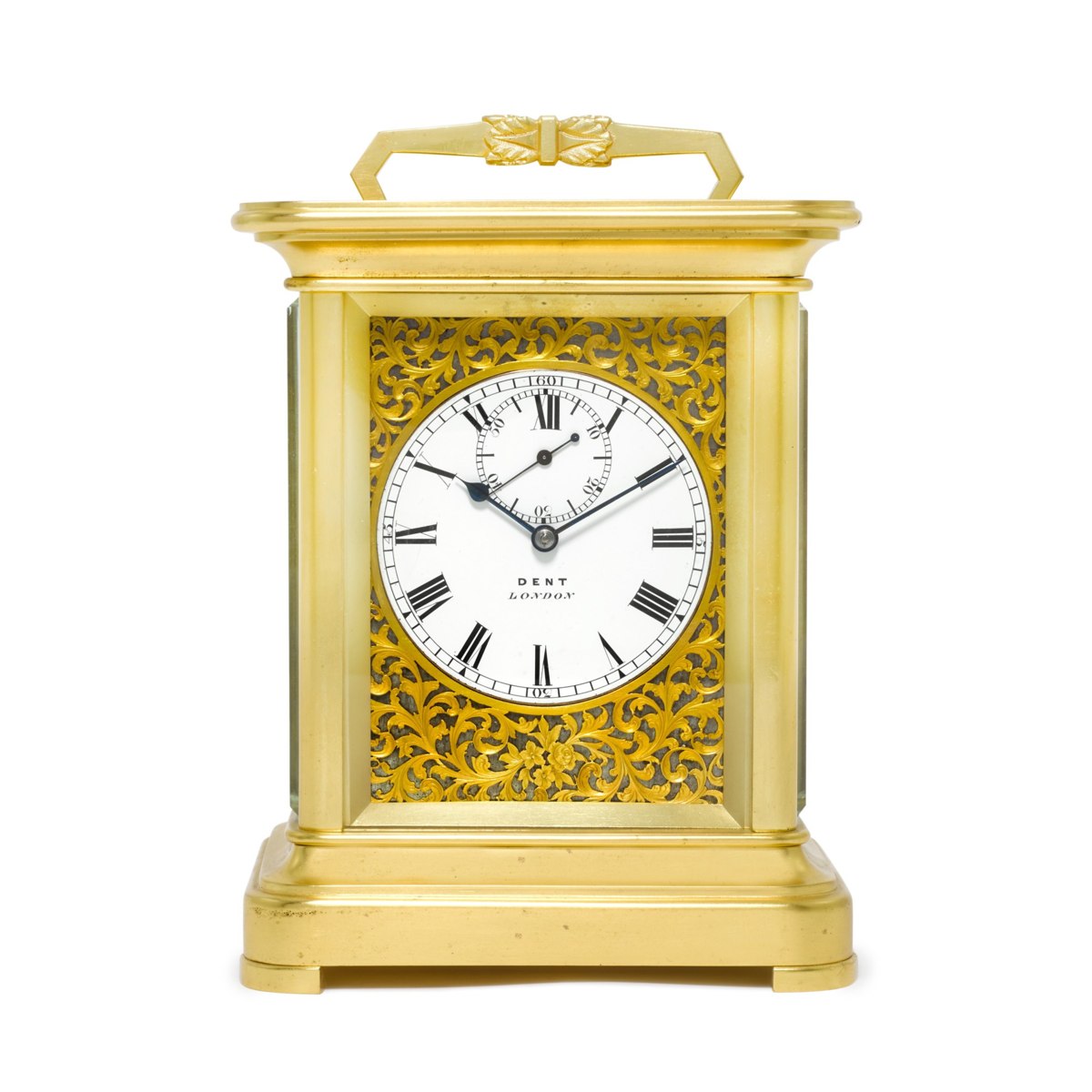
Clock
Edward John Dent Gilt-Brass Chronometer Carriage Timepiece, No. 693
“This mid-19th-century English carriage timepiece by Edward John Dent is housed in a gilt-brass moulded case featuring bevel-glazed panels, a sunk top, and a hinged carrying hand…”
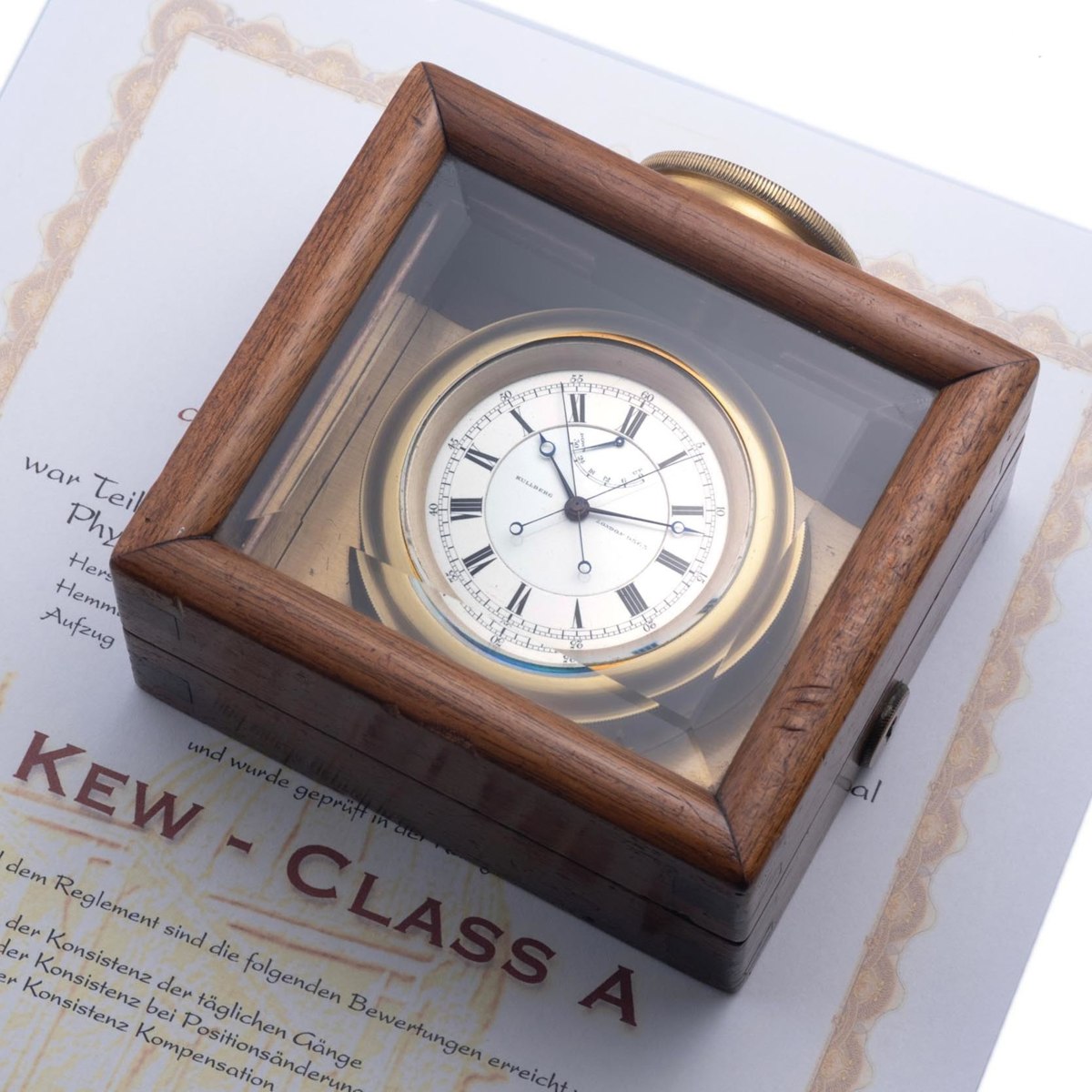
Marine chronometer
Victor Kullberg Spring Detent Deck Chronometer
“This manual-wind deck chronometer by Victor Kullberg features a split-seconds chronograph and an up-and-down 30-hour power reserve indication. Housed in a gilded brass case with…”
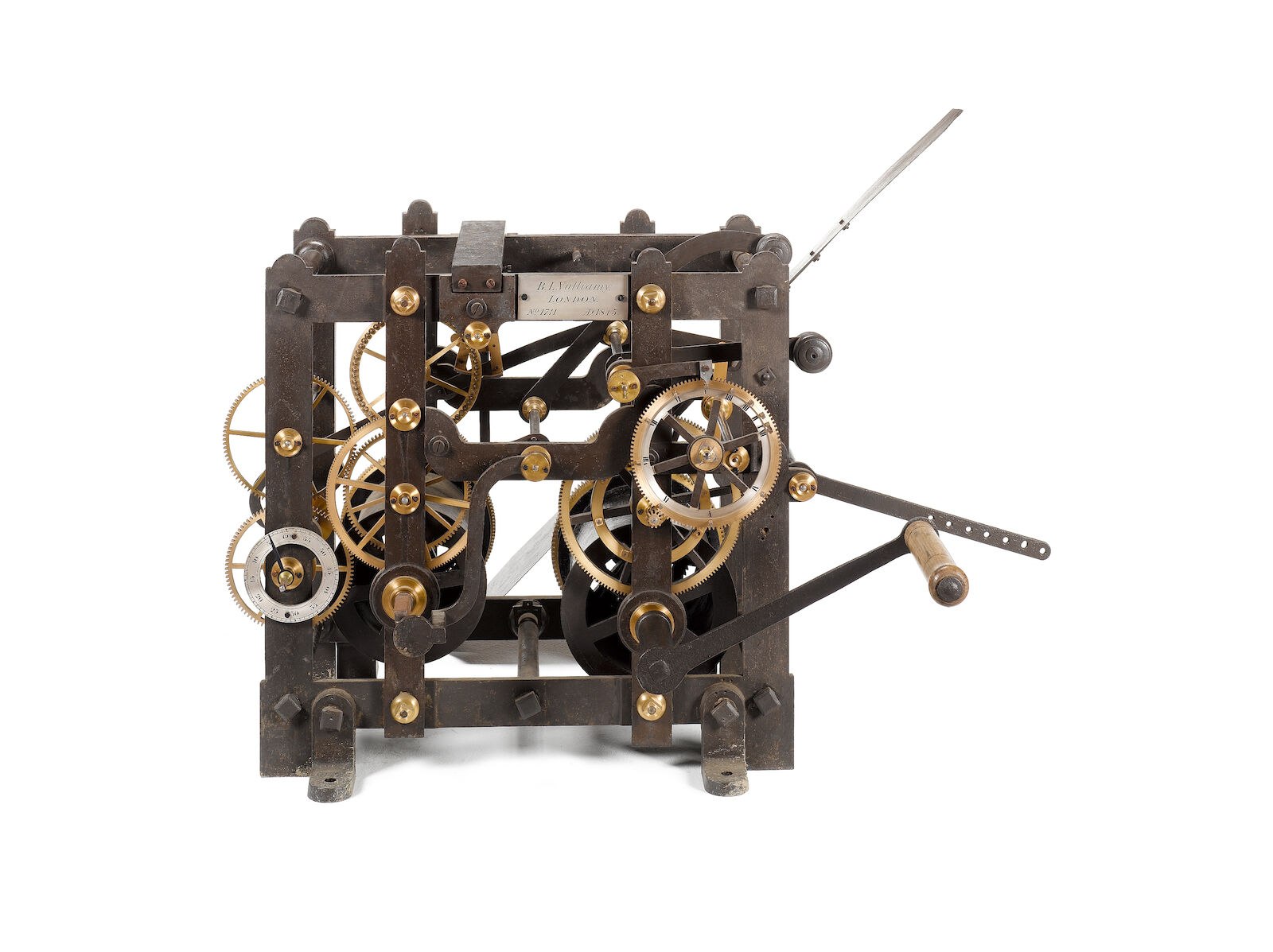
Clock
Benjamin Louis Vulliamy striking turret clock movement no. 1711
“This is a mid-19th-century striking turret clock movement by Benjamin Louis Vulliamy of London, catalogued under number 1711 and dated 1845. The mechanism is mounted in an open …”
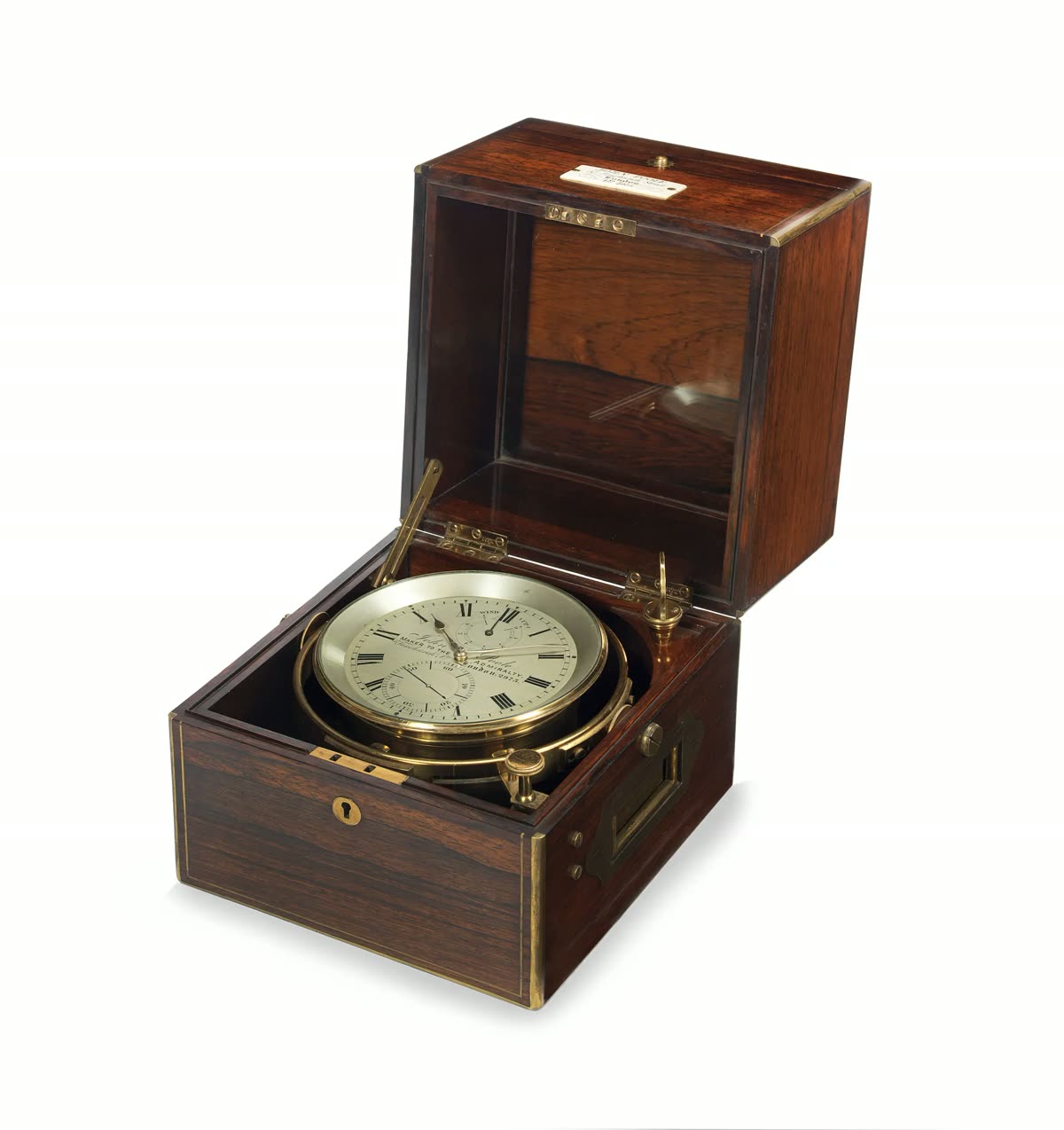
Marine chronometer
John Poole Eight-Day Marine Chronometer No. 2975
“According to the auction catalog, this eight-day marine chronometer by John Poole features an Earnshaw-type detent escapement mounted on a subframe with a blued steel helical sp…”
Marine chronometer
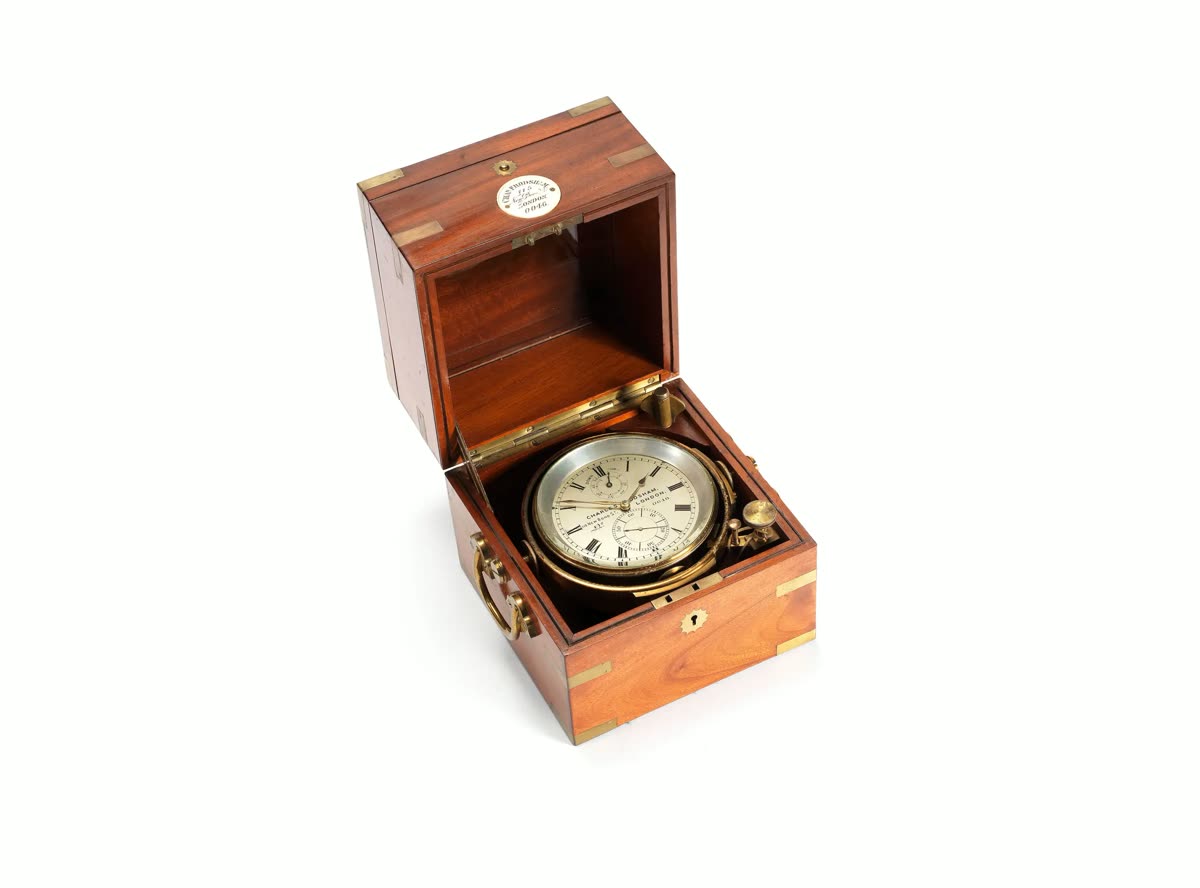
Charles Frodsham two-day marine chronometer No. 0040
“This late nineteenth-century marine chronometer is attributed by the source to Charles Frodsham, 15 New Bond Street, London, and marked No. 0040. The instrument features a four-…”
Clock
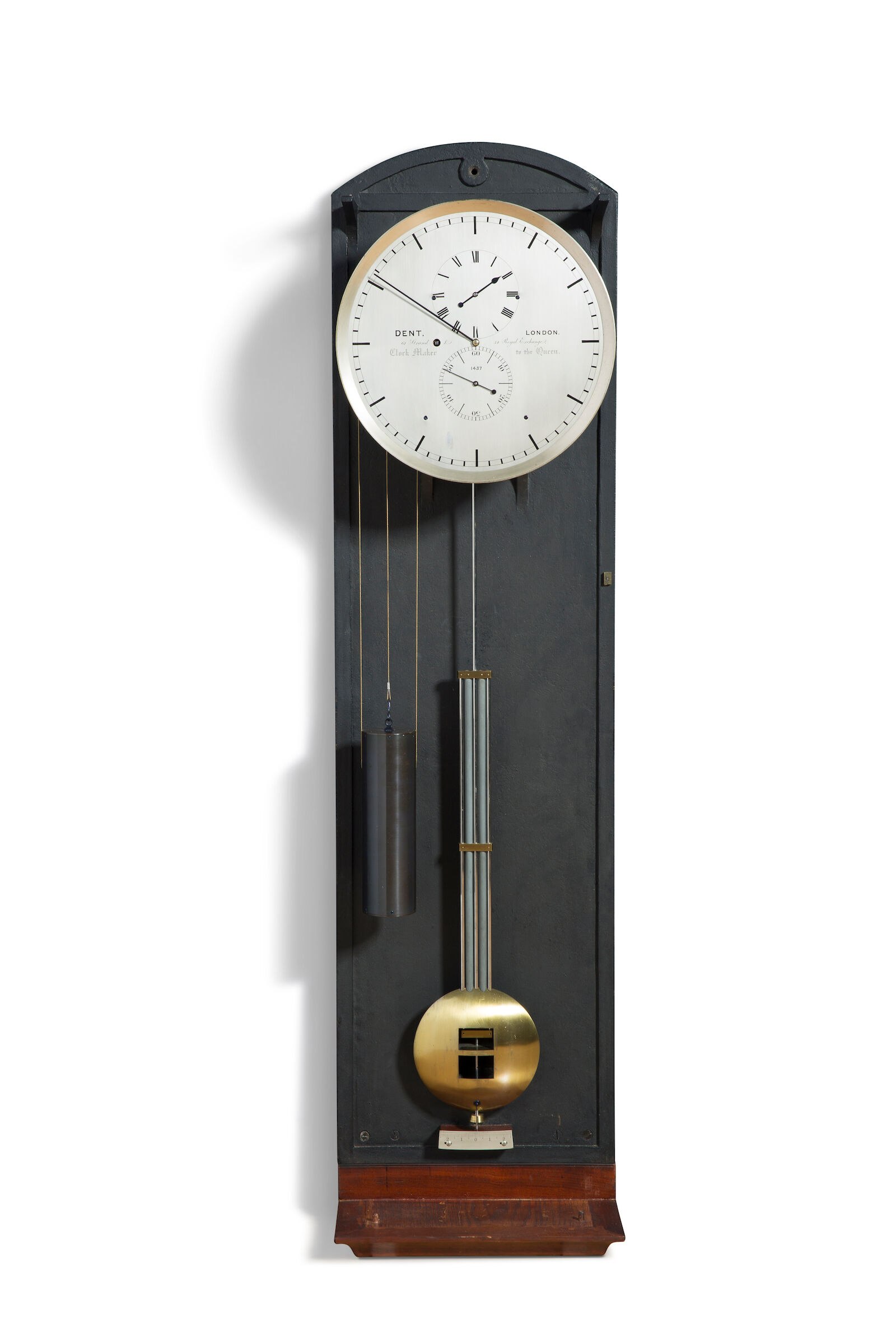
Dent Mahogany Wall Regulator with Dennison's Three-Legged Gravity Escapement, No. 1437
“This English precision wall regulator was manufactured by Dent, 61 Strand & 34 Royal Exchange, London, circa 1853, bearing serial number 1437. According to the source, the movem…”