
Glossary · Mechanism
Going barrel
A mainspring barrel whose arbor is fixed to the frame and whose barrel body drives the train directly.
Explanation
In a going barrel, the mainspring's inner end hooks to the barrel arbor and its outer end to the barrel wall. Winding turns the arbor to coil the spring; in running, the arbor is held and the barrel body itself rotates, its teeth driving the centre pinion or next wheel of the train. This differs from a fusee watch, where the barrel drives a chain onto a conical fusee, and from a fixed-barrel arrangement where the barrel is stationary and the arbor turns.
The direct drive is simple and compact, which is why it dominates modern watches, but torque falls as the spring unwinds. Historical answers to that fall include the fusee, stopwork limiting the spring's used range, and later spring alloys with flatter torque curves. A going barrel is not evidence of low quality: the great majority of precision lever watches use one. Condition concerns include hooking security, barrel-arbor wear, lid fit and correct lubrication of the spring and arbor bearing surfaces.
When recording a movement, note whether the barrel has teeth on its body, whether a fusee and chain are present, and whether stopwork such as a Geneva stop limits the turns. Do not wind a barrel whose click or ratchet condition is unknown; a slipping click can release stored energy suddenly.
Sources & references
- de Carle, D., Practical Watch Repairing — technical further reading; exact procedures require calibre documentation
- Reymondin et al., The Theory of Horology — construction and terminology further reading
Where sources disagree, the disagreement is stated rather than resolved silently.
Distinctions at a glance
| Arrangement | Drive path | Qualification |
|---|---|---|
| Going barrel | Barrel body turns and drives the train | Torque falls as the spring unwinds |
| Fusee | Barrel drives a chain onto a conical fusee | Chain and fusee condition are separate concerns |
| Fixed barrel with turning arbor | Arbor rotates to drive the train | Less common in watches; identify from construction |
| Stopwork | Limits the used turns of the spring | Not itself a power store |
What to record
- State whether the barrel body carries teeth and drives the train.
- Note fusee, chain or stopwork where present.
- Record hooking and arbor condition from documentation, not by forcing the winding.
A broken or unhooked mainspring can release violently; opening a barrel is specialist work with the spring restrained.
In the object catalogue
Catalogued objects whose own source record mentions “Going barrel”. The quoted line shows where; it is the seller’s or museum’s wording, not independent verification.
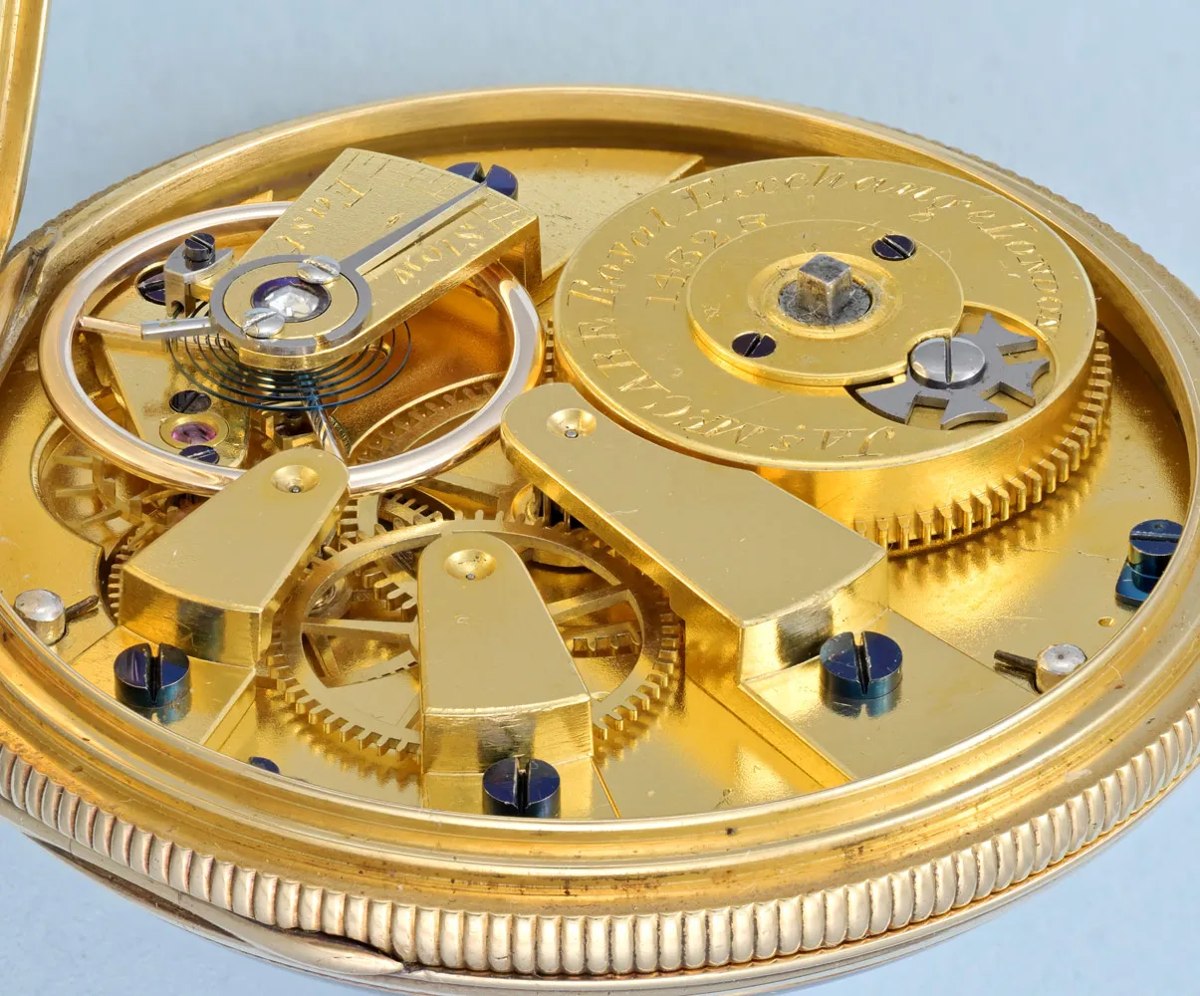
Pocket watch
James McCabe 1834 Gold Lepine Calibre Duplex Pocket Watch
“This nineteenth-century open face pocket watch features a keywind gilt Lepine calibre bar movement with a duplex escapement, crafted by James McCabe of Royal Exchange, London, a…”
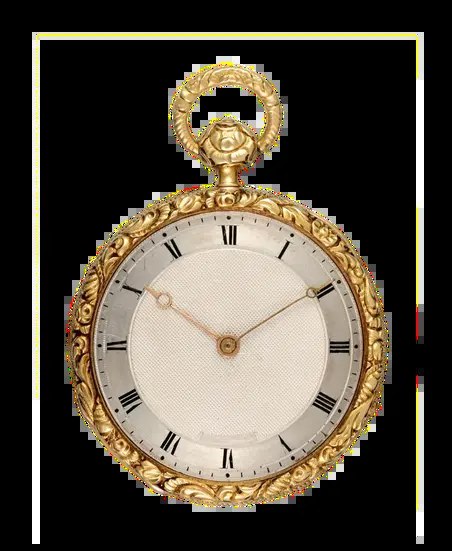
Pocket watch
J F Bautte et Cie Swiss Quarter Repeating Cylinder Pocket Watch
“Reported by the source as dating to circa 1830 and signed by J F Bautte et Cie a Geneve, this open-face pocket watch features a 36 mm 18-carat gold case with heavily chased and …”
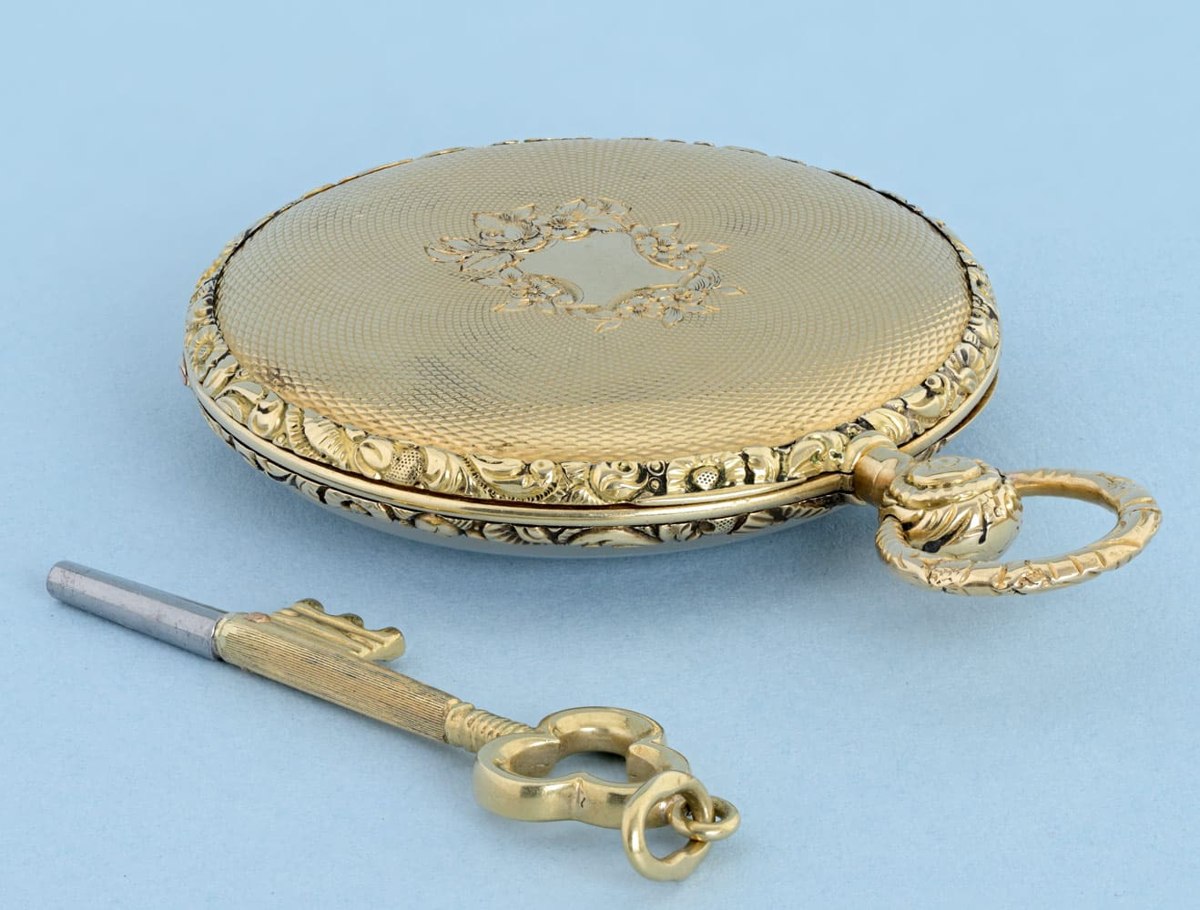
Pocket watch
Vacheron & Constantin Gold Quarter Repeating Pocket Watch
“According to the source, this Swiss open-face pocket watch dates to circa 1840 and is signed by Vacheron & Constantin, Geneva. The 42 mm 18-carat gold case features an engine-tu…”
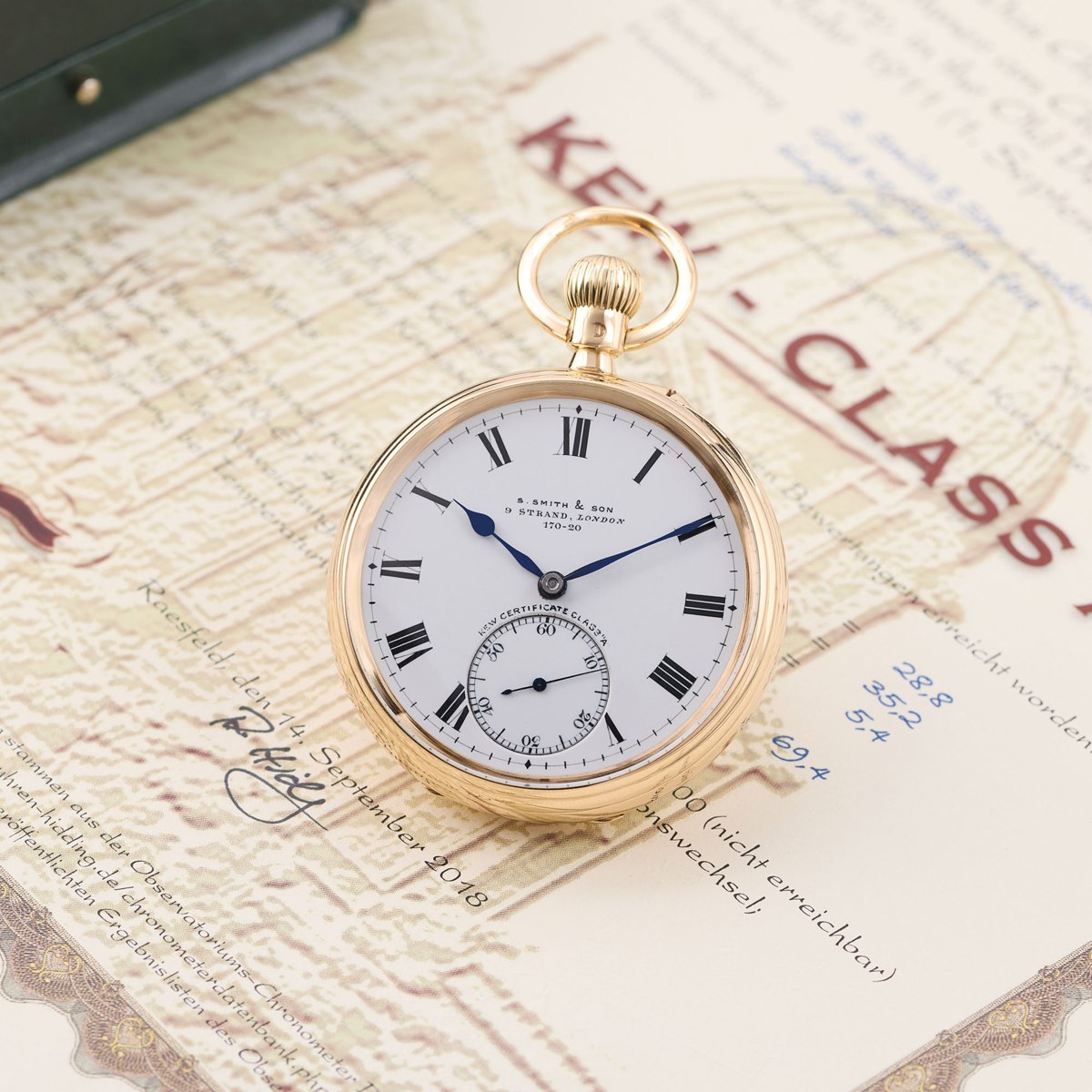
Pocket watch
S. Smith & Son Chronometer 170-20 Pocket Watch
“This is an open face pocket watch cased in 18K yellow gold by S. Smith & Son, dating to circa 1911. Measuring 50 mm in diameter, the keyless timepiece features a white enamel di…”
Pocket watch
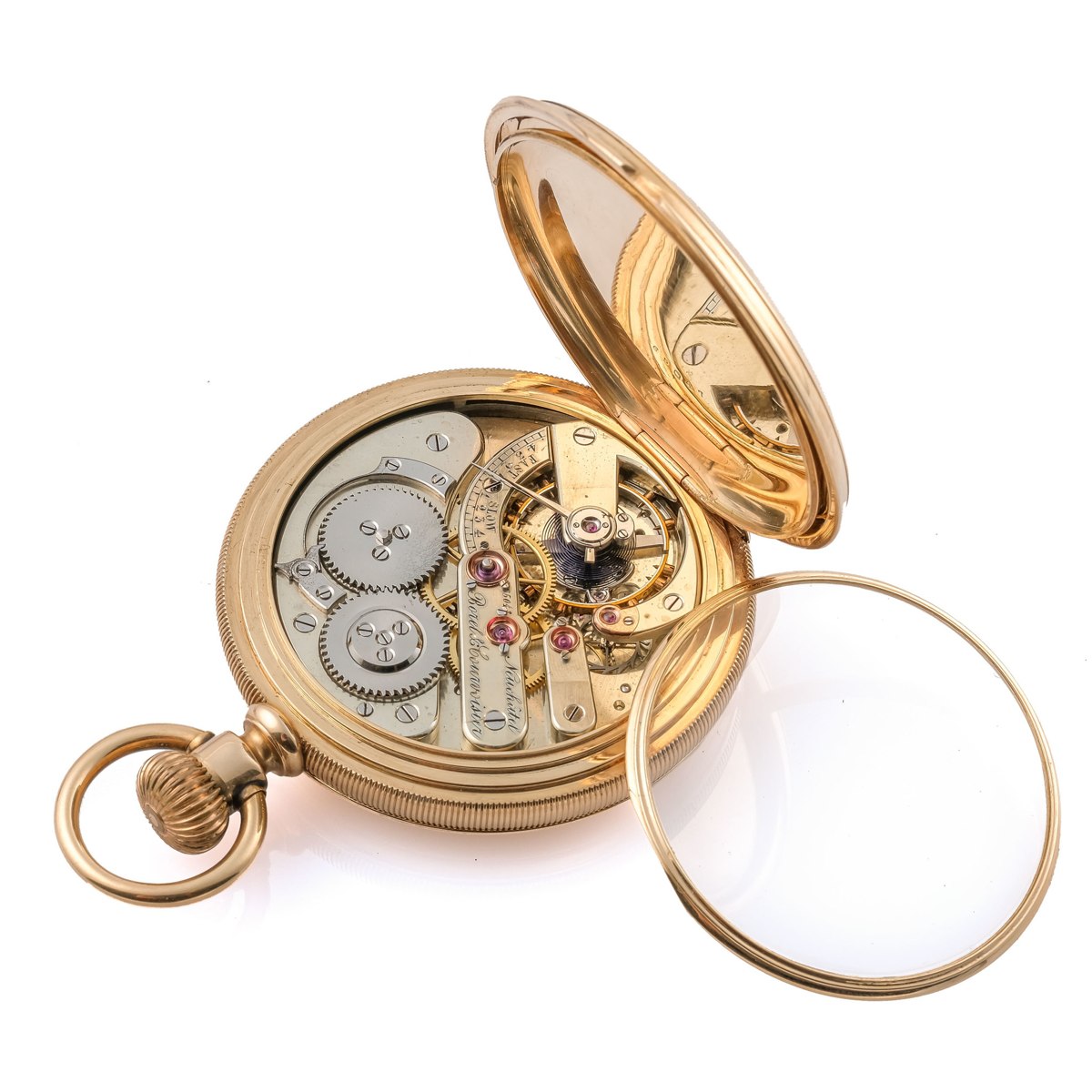
Borel & Courvoisier 18K Yellow Gold Hunting-Case Pocket Watch
“According to the auction catalog, this 18K yellow gold hunting-case pocket watch was manufactured circa 1880–1890 by Borel & Courvoisier, Neuchâtel. Measuring 53 mm in diameter …”
Pocket watch
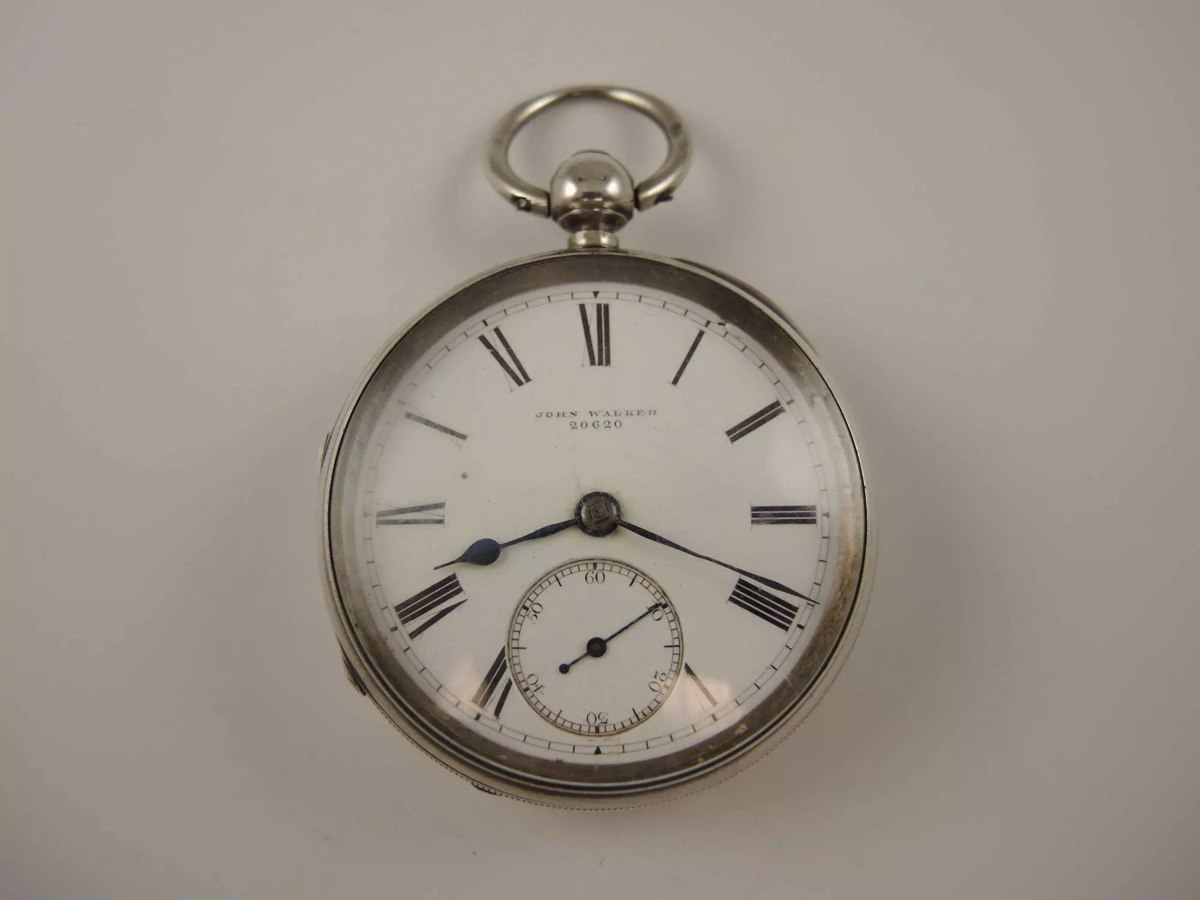
John Walker silver key-wound pocket watch
“This open-face pocket watch features a white enamel dial signed 'John Walker, 20620' with black Roman numerals, blued steel hands, and a subsidiary seconds dial at 6 o'clock. Th…”