
Skip to content
The Encyclopedia of Horology

Pocket watch · Pocket chronometer

Barraud Pocket Chronometer No. 10/5342

Partially verified

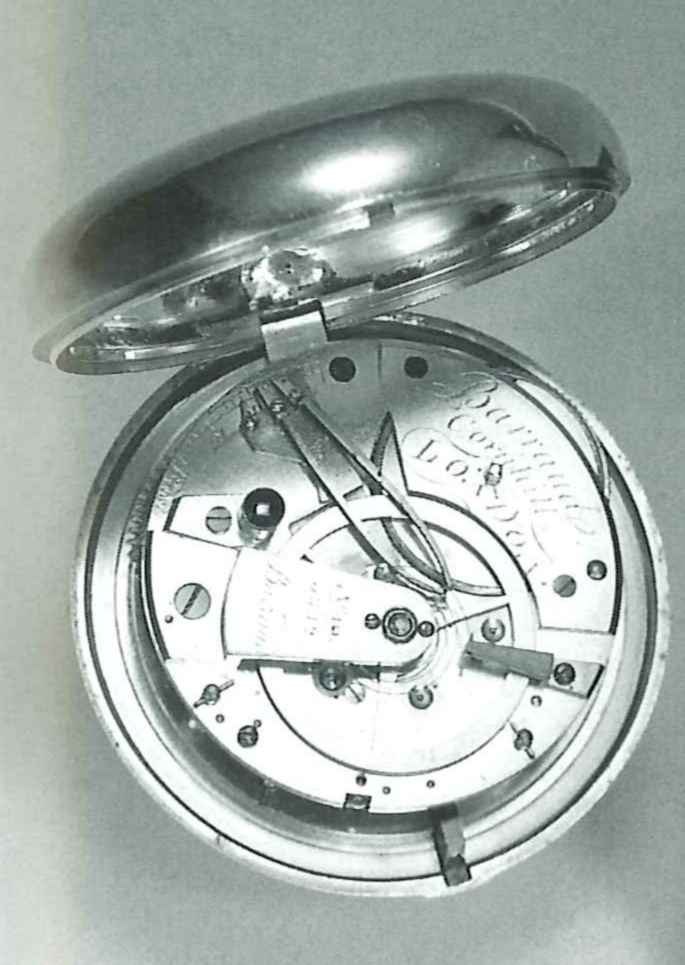
This silver pocket chronometer is signed by Barraud of Cornhill, London, and is hallmarked to the 1802-1803 period. The watch features a plain double-body silver case and is accompanied by a later protecting case. Its white enamel dial displays Roman numerals and includes a subsidiary seconds register. The movement is a gilt brass full plate construction, equipped with cylindrical pillars and a fusee with maintaining power. The technical assembly utilizes an Earnshaw type spring detent escapement. It is fitted with a plain three-armed gilt brass balance and a flat balance spring incorporating sugar-tong compensation. While sold by Barraud, research by C. Jagger suggests that these chronometers, particularly those with the specific sugar-tong compensation mechanism, were produced by Thomas Earnshaw. The piece measures 53 mm in diameter. Two chronometers of similar construction, No. 31/5815 and 32/5816, are referenced in the 1968 publication Paul Philip Barraud.

Movement of the Barraud pocket chronometer showing the balance and bridge.
Movement of the Barraud pocket chronometer showing the balance and bridge. — Antiquorum. Rights pending — permission not yet requested. Original source

Catalogue identity

Source
catalog.antiquorum.swiss
Category
Pocket watch · Pocket chronometer
Maker / attribution
Barraud, Cornhill, London
Reference
Not recorded
Catalogue / lot identifier
74
Source-reported date
1802-1803
Source-reported place
London, England
Source-reported serial
10/5342

Source-reported attribution and specifications are not independent authentication. A listing does not establish present ownership, current display, availability or permission to reproduce.

Object description

Case and Dial

The pocket chronometer is housed in a plain double-body silver case measuring 53 mm in diameter. The exterior is characterized by a simple design without ornamental engraving. A later protecting case is provided alongside the watch, serving to shield the primary silver housing.

The white enamel dial features a standard layout with Roman numeral hour markers. Positioned separately is a subsidiary seconds dial, which provides a secondary reading for the chronometer. The clear contrast of the white enamel with the dark numerals and hands serves the timekeeping function of the instrument.

Evidence for this section
  • “Double body plain silver case.”
  • “Later protecting case.”
  • “White enamel dial with Roman numerals and subsidiary seconds.”
  • “Diam. 53 mm.”

Movement Construction

The interior contains a gilt brass full plate movement. This plate structure is secured by cylindrical pillars, . Power is transmitted through a fusee system equipped with maintaining power to ensure consistent force during winding.

The escapement is an Earnshaw-type spring detent mechanism, known for its specific function in precision timekeeping. The balance assembly consists of a plain three-armed gilt brass balance, paired with a flat balance spring. This spring assembly incorporates a sugar-tong compensation mechanism, .

Evidence for this section
  • “Very fine gilt brass full plate movement with cylindrical pillars, fusee with maintaining power, Earnshaw type spring detent escapement, plain gilt brass three armed balance, flat balance spring with sugar -tong compensation.”

Attribution and Literature

While the dial and movement are signed by Barraud of Cornhill, London, external research suggests a more complex origin for the piece. C. Jagger notes that pocket chronometers of this specific configuration, characterized by the presence of sugar-tong compensation, were manufactured by Thomas Earnshaw.

This attribution is supported by literature published in 1968 titled 'Paul Philip Barraud'. Within this work, the author compares the present example to two other chronometers, numbered 31/5815 and 32/5816, which share similar technical specifications. This reference links the chronometer to the broader production context of Earnshaw-produced instruments sold under the Barraud name.

Evidence for this section
  • “According to C. Jagger, the pocket chronometers of this type, with sugar-tong compensation, sold by Barraud, were in fact produced by Thomas Earnshaw.”
  • “Two similar chronometers, No. 31/5815 and 32/5816, are illustrated in his book : Paul Philip Barraud , published in 1968.”

Open research questions

  • Does the movement bear any internal markings by Thomas Earnshaw?
  • What is the full provenance of the later protecting case?

Source evidence

Recorded claims and source quotations for Barraud Pocket Chronometer No. 10/5342
FieldSource-reported valueSource quotation
MakerBarraud, Cornhill, London“Barraud, Cornhill, London”
Serial number10/5342“No. 10/5342”
Hallmark date1802-1803“Hallmarked 1802-1803”
Diameter53 mm“Diam. 53 mm”
Escapement typeEarnshaw type spring detent“Earnshaw type spring detent escapement”
Compensation methodSugar-tong“flat balance spring with sugar -tong compensation”
Production attributionThomas Earnshaw“According to C. Jagger, the pocket chronometers of this type, with sugar-tong compensation, sold by Barraud, were in fact produced by Thomas Earnshaw.”

Visible details

  • Case is plain silver and double-bodied
  • Movement includes cylindrical pillars
  • Subsidiary seconds dial with Roman numerals
  • Gilt brass full plate movement

Research qualifications

  • Production by Thomas Earnshaw is suggested by C. Jagger rather than confirmed maker mark
  • The later protecting case is not defined as original to the chronometer

Photograph identity and source facts were screened before import; rights clearance remains pending.

Consulted source

Barraud, Cornhill, London, No. 10/5342, Hallmarked 1802-1803.

Reviewed 2026-10-26 · Record b90801c1f9

Terms in this record

Glossary explanations for terms named in this object’s record.