
Glossary · Regulation
Seconds pendulum
A pendulum with a one-second half-swing and a two-second complete period.
Explanation
A seconds pendulum takes one second to travel from one side of its swing to the other. Returning to the same side completes a two-second cycle, so its full-cycle frequency is half a hertz. Period and beat interval therefore describe different intervals. A diagram should identify which motion its timing label covers rather than label a complete back-and-forth swing as one second.
For an ideal simple pendulum at small amplitude, period depends on the square root of length divided by local gravity. A seconds pendulum consequently has an ideal length close to one metre under ordinary terrestrial gravity, not one exact universal length. A clock pendulum's effective length also involves its mass distribution and suspension. Measuring only the visible rod or assuming every longcase clock uses this period can give a misleading identification.
The name describes the oscillator's interval; it does not establish the layout of the seconds display. An escapement and train must have suitable ratios to drive a particular hand. Temperature, swing size and mechanical interaction can alter a real clock's rate, and a photograph cannot certify its present period or precision. Keep timed observations and the measurement interval with any performance claim; a seller's description is not a fresh measurement.
Sources & references
Where sources disagree, the disagreement is stated rather than resolved silently.
Distinctions at a glance
| Quantity | Seconds pendulum | Meaning |
|---|---|---|
| Half-swing | 1 second | One extreme to the other |
| Full period | 2 seconds | Back to the starting extreme |
| Full-cycle frequency | 0.5 Hz | One complete cycle every two seconds |
| Effective length | Approximately one metre | Depends on gravity and actual assembly |
What to record
- Distinguish a half-swing from a full cycle.
- Record the observed interval and timing method.
- Keep oscillator period separate from seconds-hand gearing.
Do not alter suspension or add arbitrary weights to force a pendulum to beat seconds.
In the object catalogue
Catalogued objects whose own source record mentions “Seconds pendulum”. The quoted line shows where; it is the seller’s or museum’s wording, not independent verification.
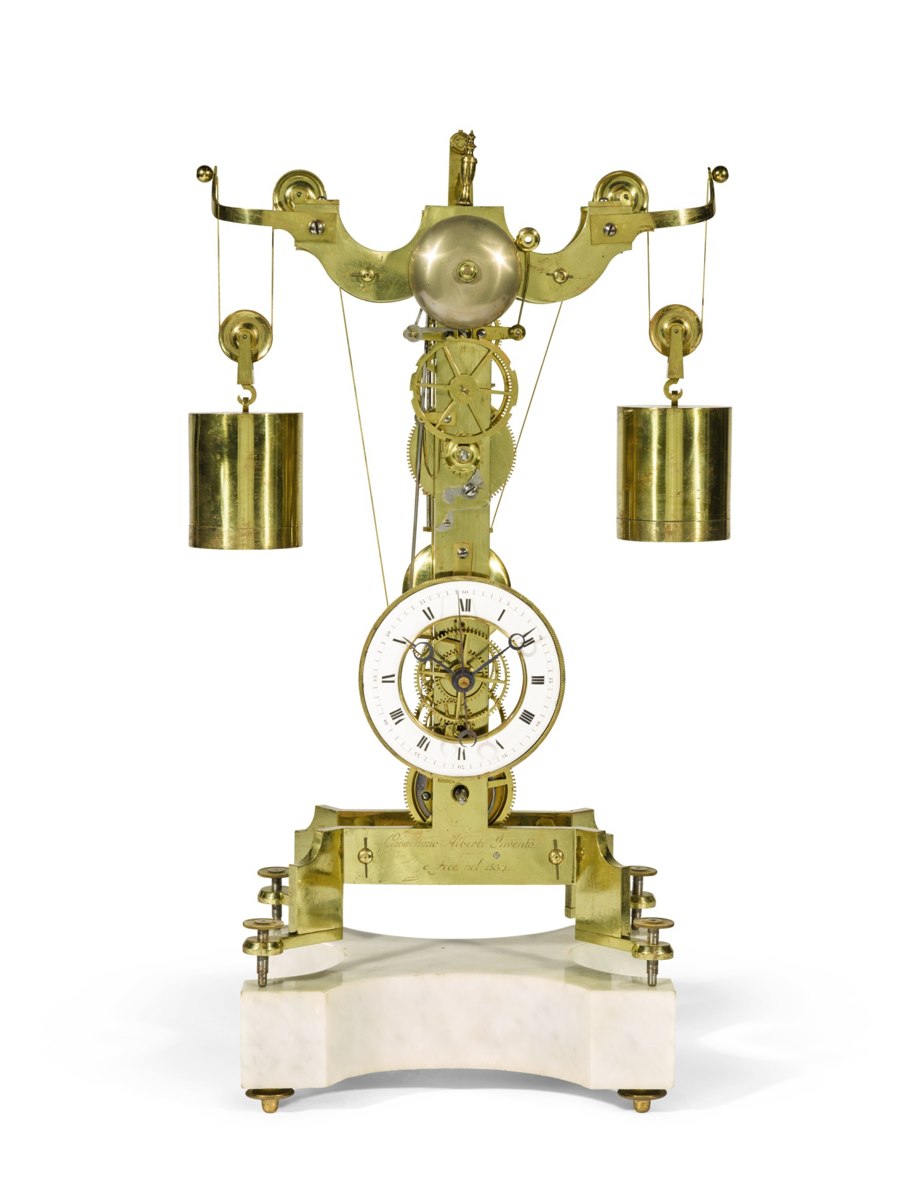
Clock
Gioachino Alberti brass skeleton clock with constant force escapement
“This Italian brass skeleton clock is documented as invented and made by Gioachino Alberti in Milan, dated 1834. The frame is engraved 'Gioachimo Alberti Invento, e Fece nel 1834…”
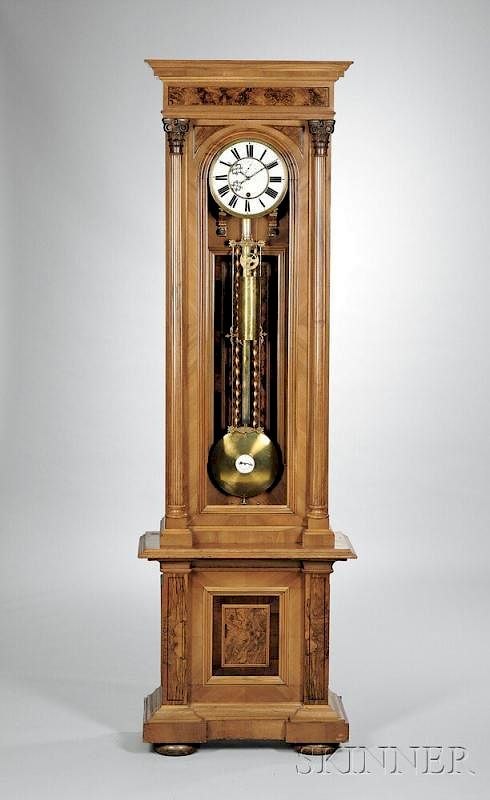
Clock
Floor-standing Vienna Regulator attributed to J. Schulz
“This floor-standing Vienna regulator clock, dated to circa 1880 and attributed by the source to J. Schulz, measures 79 inches in height. The flat-top mahogany-veneered case feat…”
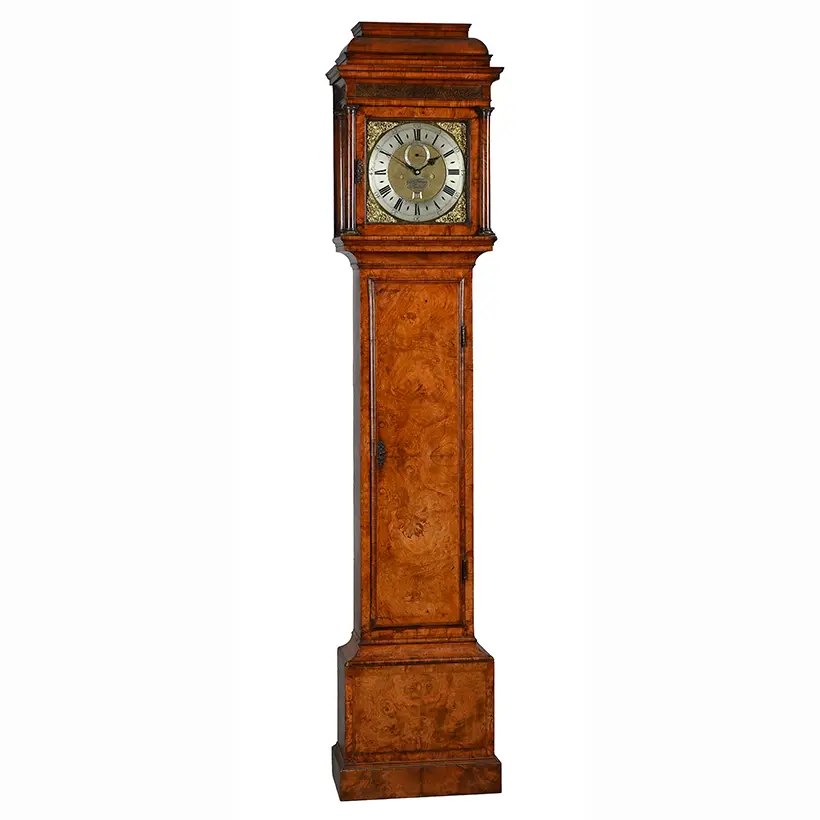
Clock
George Graham George I Burr Walnut Eight-Day Longcase Clock, No. 662
“According to the auction catalogue, this George I burr walnut eight-day longcase clock by George Graham dates to circa 1725 and bears serial number 662. The source states it fea…”
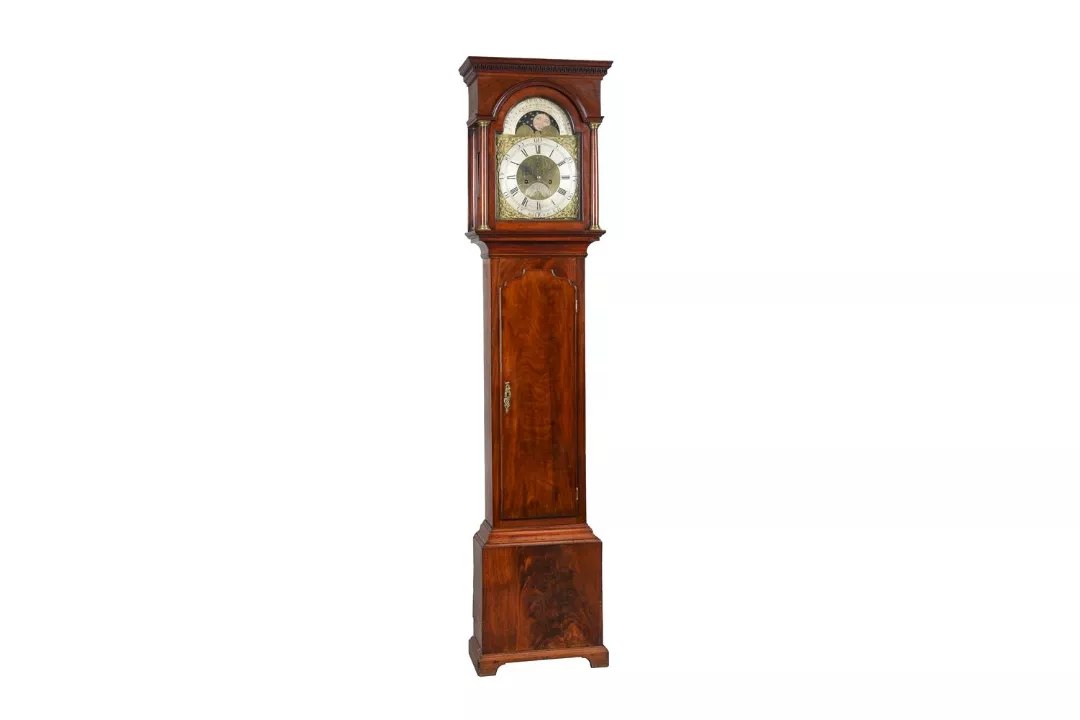
Clock
George III mahogany eight-day longcase clock with moonphase
“This George III longcase clock, dating to circa 1770 and signed by Thomas Bullock of Bath, features an eight-day, four-pillar movement with rack and bell striking alongside an a…”
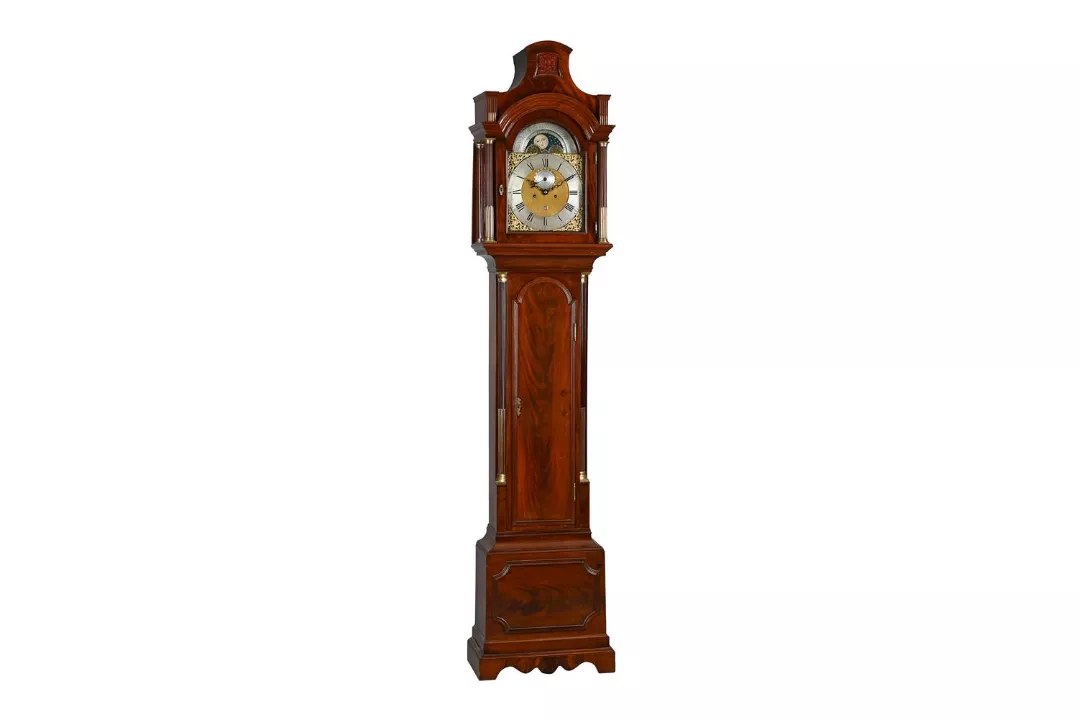
Clock
George III mahogany eight-day longcase clock with moonphase, James De Lasalle
“According to the auction catalogue, this George III longcase clock features an eight-day movement with five pillars, two trains, rack and bell striking, an anchor escapement, an…”
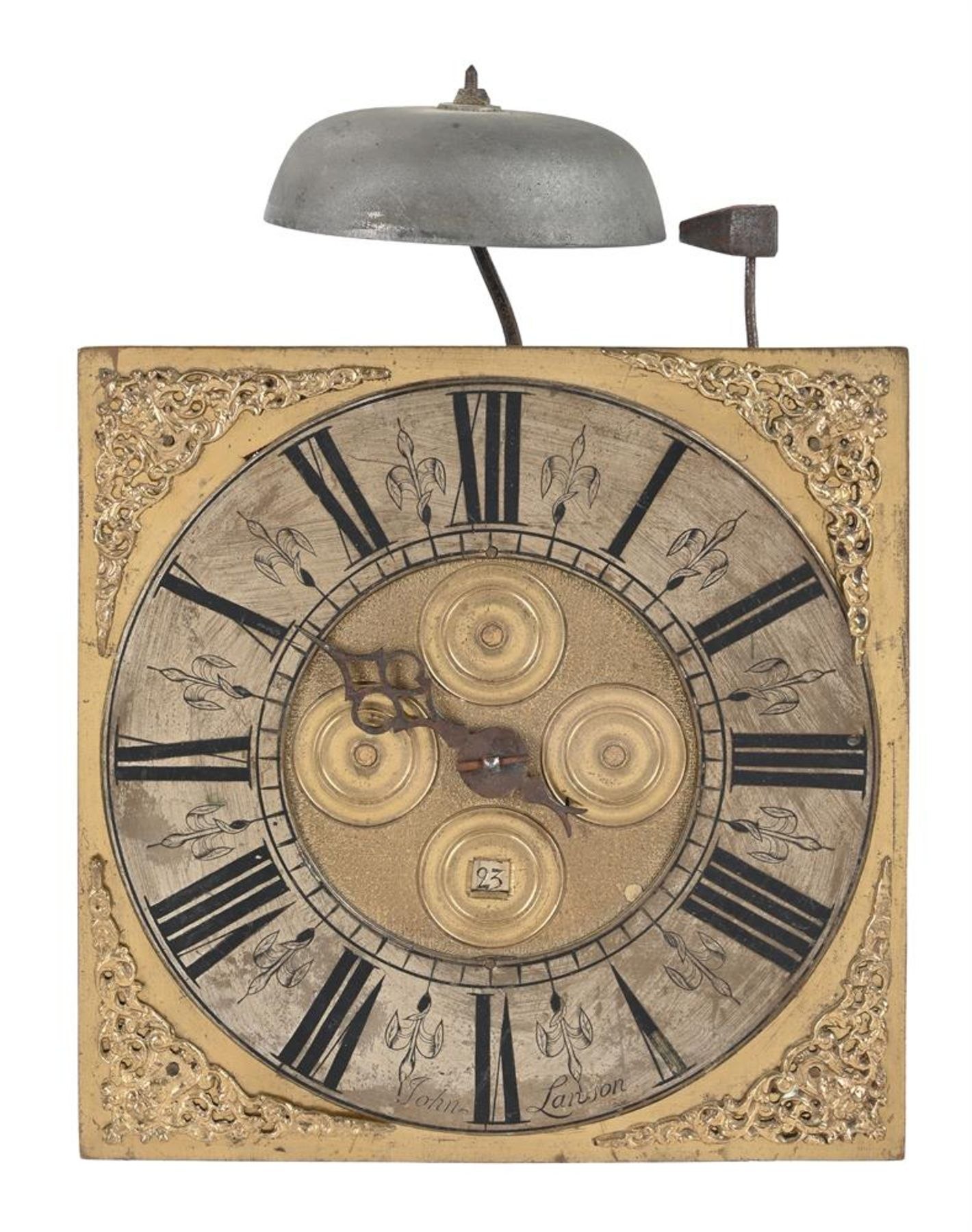
Movement
A George II thirty-hour longcase clock movement with eight-inch dial
“This George II period thirty-hour longcase clock movement, attributed to John Lawson of Keighley, is designed with an external countwheel striking train and an anchor escapement…”