
Glossary · Regulation
Rating nut
An adjustment nut that changes a pendulum bob's position to regulate rate in a common gravity-pendulum arrangement.
Explanation
A rating nut supports or positions the bob on a threaded part of the pendulum rod. In the familiar arrangement, moving the bob upwards shortens effective length and makes the clock run faster; moving it downwards lengthens effective length and slows it. Some clocks instead have a dial-side control, movable auxiliary weights or another regulating system. The visible nut is therefore not proof that every clock should be adjusted in the same way.
Keep physical movement and turning direction separate. Thread hand, viewing direction and construction determine which way a nut must turn. There is no general seconds-per-turn calibration across pendulums. Record the authorised change, time, reference clock and observation interval. Allow a meaningful interval before assessing the result, and avoid chasing rate with repeated adjustments under changing conditions. A timing error is not the same as uneven beat or a stopping fault.
Icon advises stopping and supporting the pendulum so it cannot twist during regulation. That guidance concerns an assessed clock and does not justify handling an unstable case or damaged suspension. Stiff threads, unexpected contact or a bob that fails to move with the nut require assessment rather than more force. Keep a record of replacement nuts or other altered parts; a supplier photograph establishes the illustrated part, not fit or originality in your clock.
Sources & references
- https://www.icon.org.uk/conservation-hub/caring-for-your-collections/clocks.html
- https://en.wikipedia.org/wiki/Pendulum_clock
Where sources disagree, the disagreement is stated rather than resolved silently.
What to record
- Record the actual upward or downward bob movement.
- Retain date, adjustment and comparison interval together.
- Identify alternative regulation arrangements before touching a nut.
Do not force a seized nut or twist the suspension; rate adjustment is not a remedy for a mechanical fault.
In the object catalogue
Catalogued objects whose own source record mentions “Rating nut”. The quoted line shows where; it is the seller’s or museum’s wording, not independent verification.
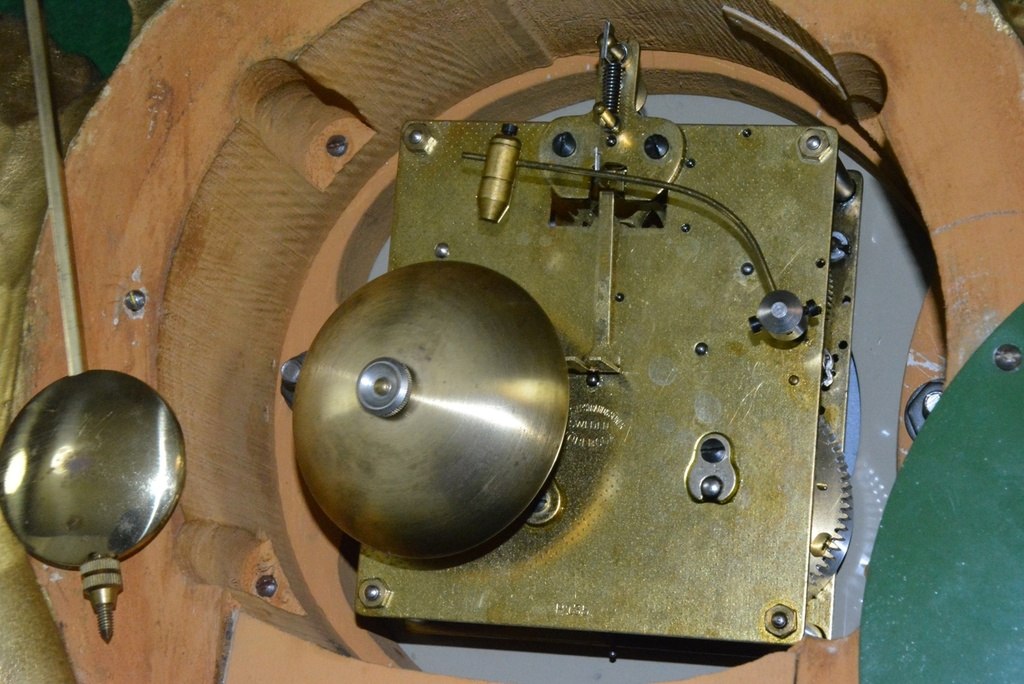
Clock
Westerstrand Cartel Wall Clock
“Brass pendulum with circular bob and threaded rating nut suspended to the left of the movement.”
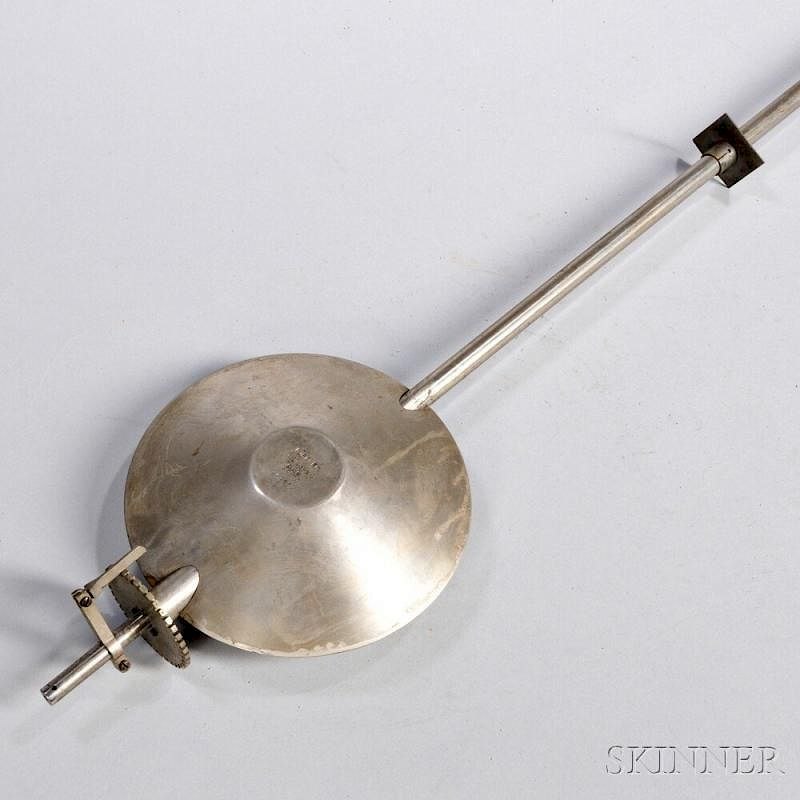
Component
Riefler Invar Pendulum
“According to the auction catalog, this precision clock pendulum was produced in Germany around 1920 by Riefler. It is constructed with nickel and iron alloy components and measu…”
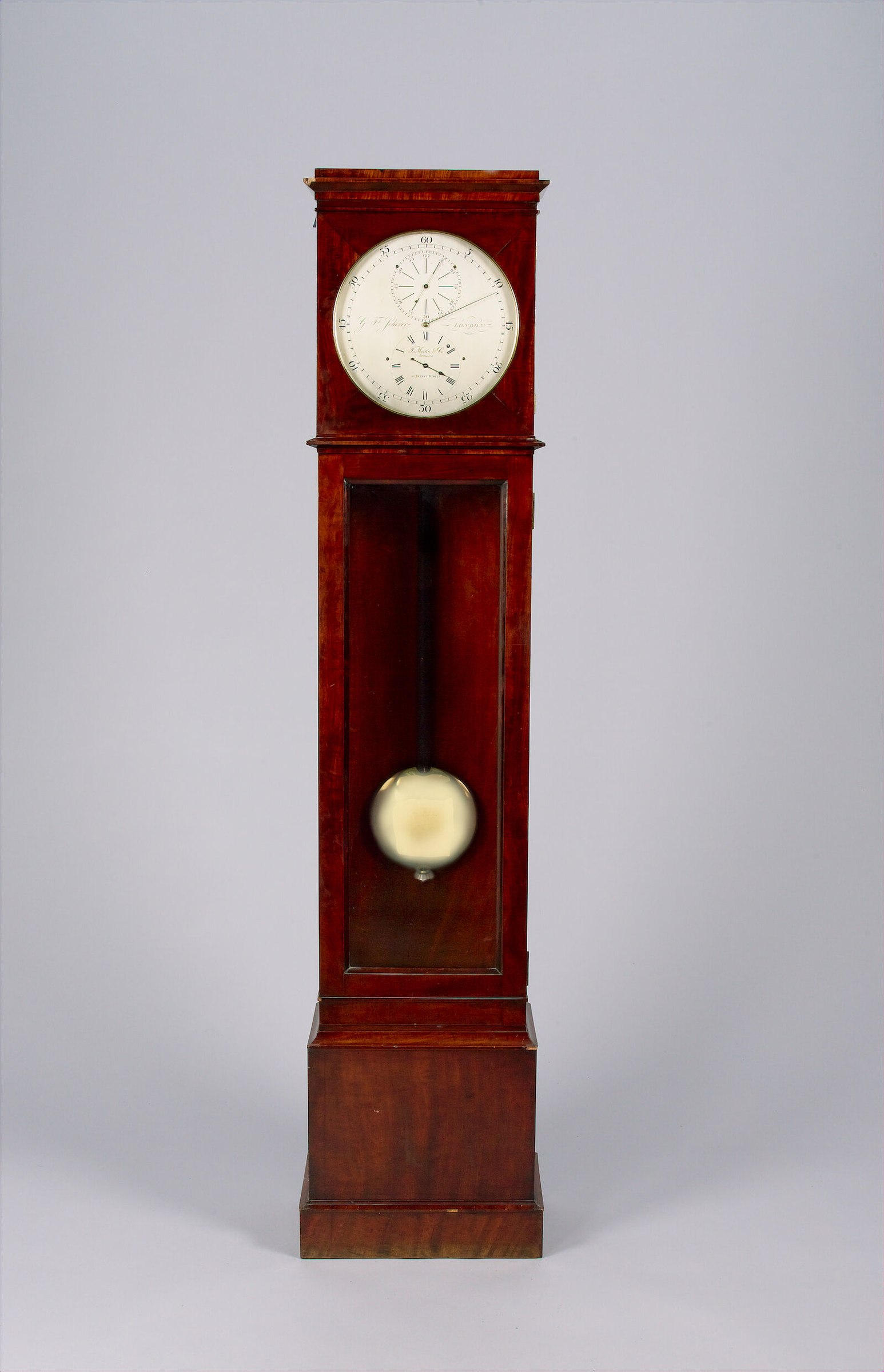
Clock
Mahogany Floorstanding Regulator Clock, G.Fk. Schearer / T. Martin & Co
“This mid-19th-century English floorstanding regulator clock is housed in a mahogany case featuring a square-topped hood, a glazed trunk door, and a plinth base. Measuring 1.88 m…”
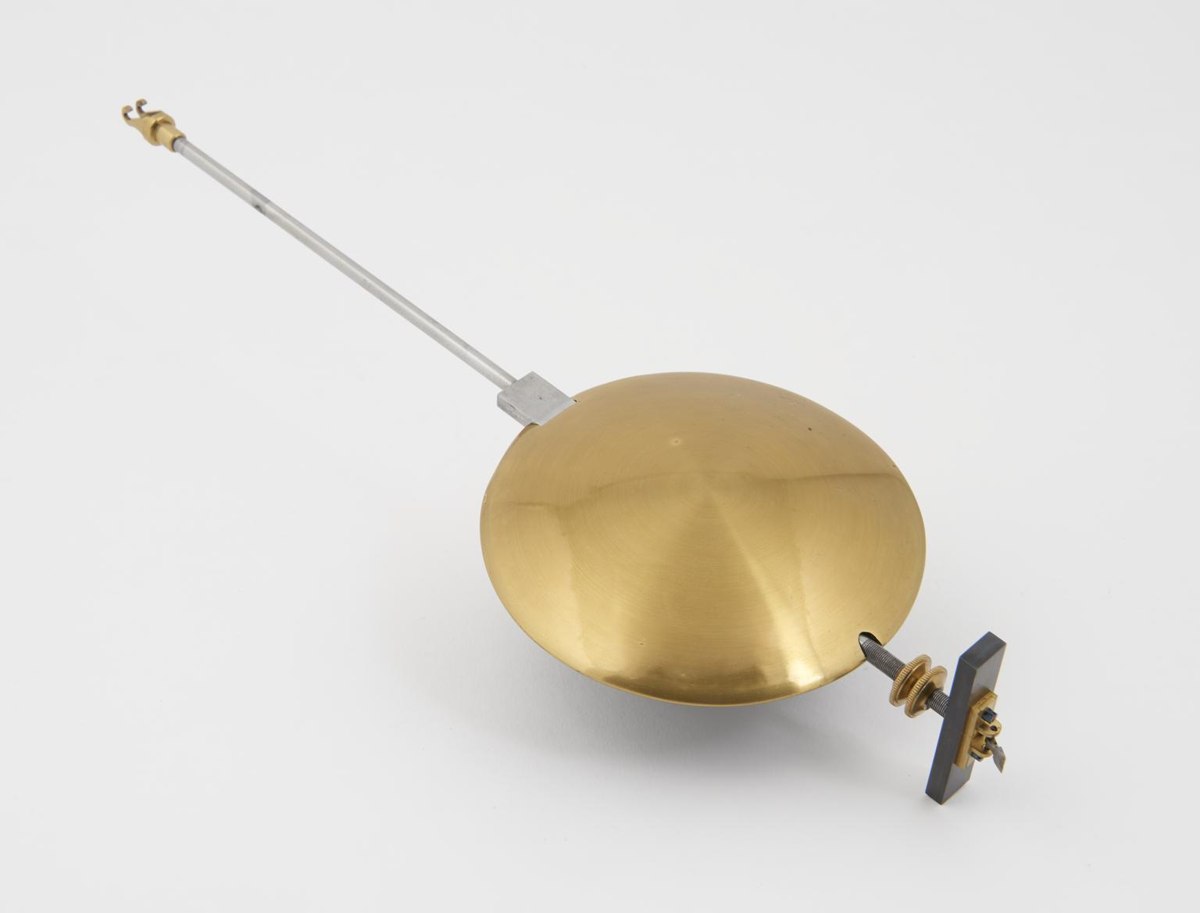
Component
Hipp pendulum
“This clock component is a Hipp pendulum from an electrically driven clock equipped with a Hipp butterfly escapement. According to the Science Museum Group, the clock was made by…”
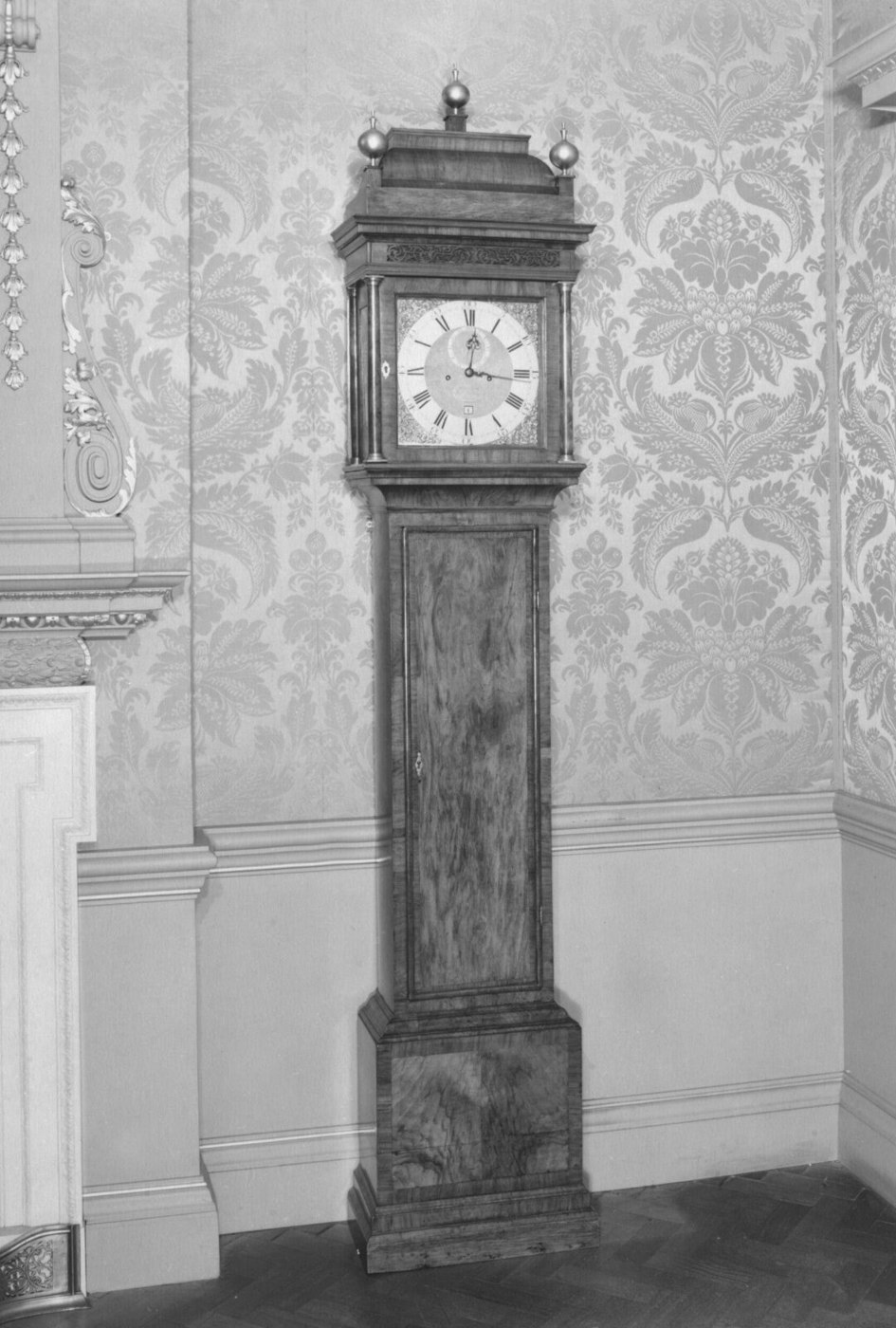
Clock
Long case clock by Benjamin Gray and Just Vulliamy
“This long case clock, signed by Benjamin Gray and Just Vulliamy, dates to approximately 1730. Housed in a case of figured walnut, it features a sliding hood with a caddy top and…”
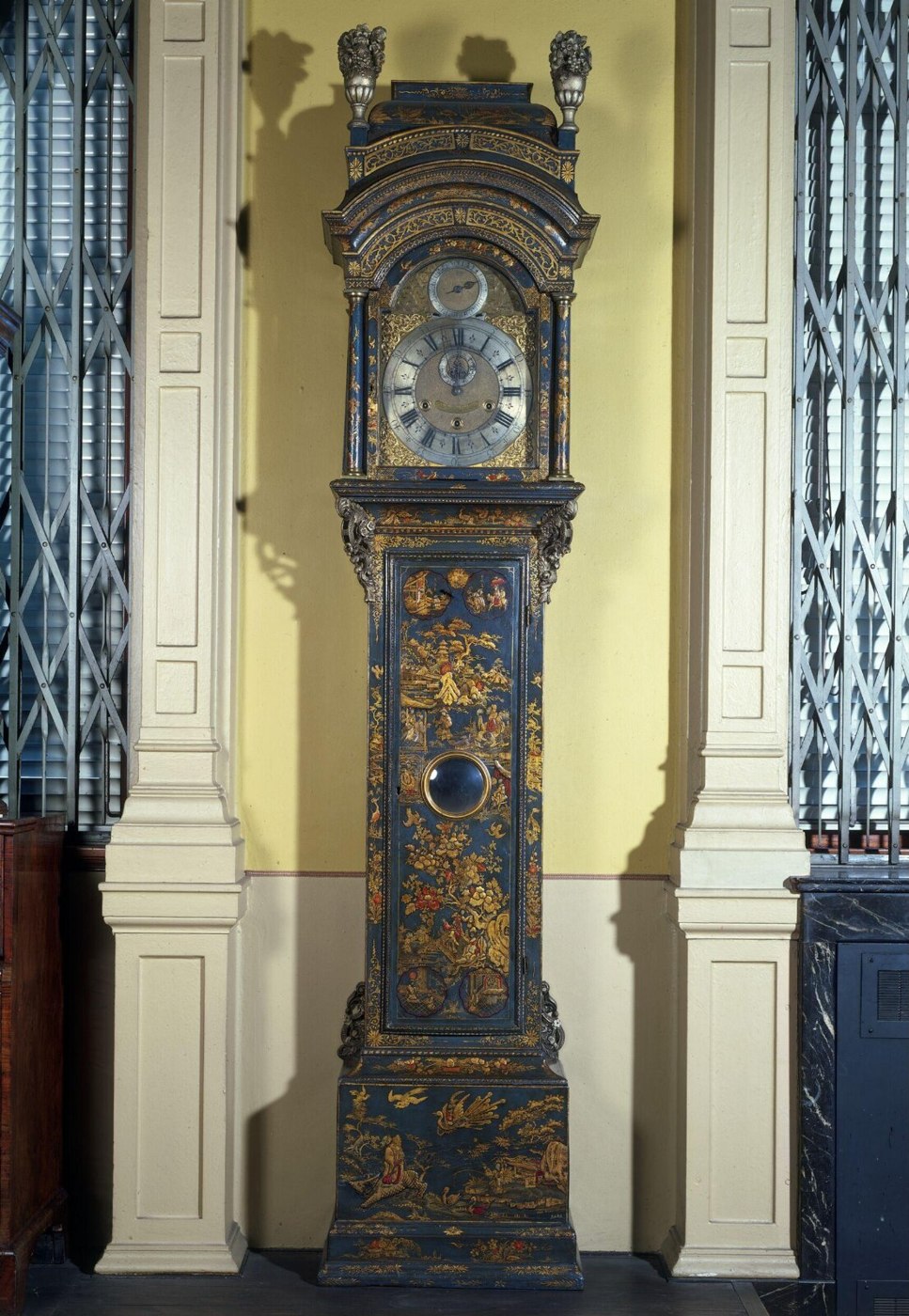
Clock
Quarter chiming month-going longcase clock
“Pendulum bob is brass-cased with an octagonal rating nut”