
Glossary · Mechanism
Going train
The gear train driving the hands.
Explanation
The going train is the gear train that transmits power from the mainspring or weight to the escapement and drives the hands, as opposed to the striking or chiming trains. In a typical watch it runs barrel–centre wheel–third wheel–fourth wheel–escape wheel; the centre wheel turns once an hour and the fourth wheel usually once a minute, carrying the seconds hand.
In the object catalogue
Catalogued objects whose own source record mentions “Going train”. The quoted line shows where; it is the seller’s or museum’s wording, not independent verification.
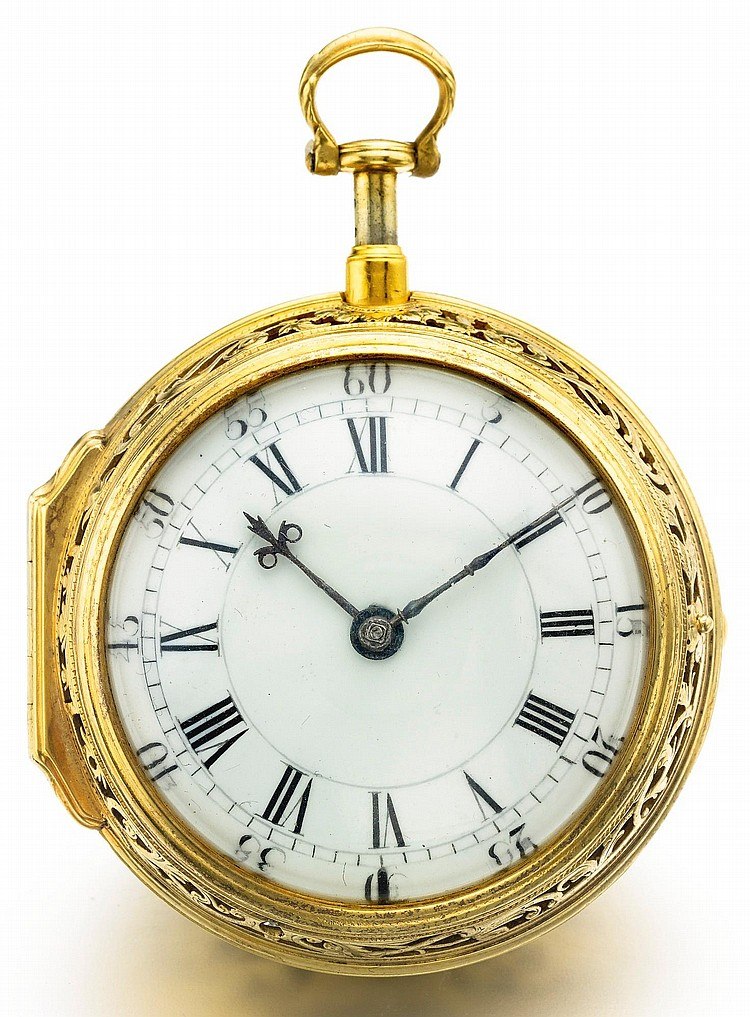
Pocket watch
Daniel Quare gilt quarter repeating pocket watch No. 280
“According to the auction catalogue, this antique pocket watch was produced circa 1715 by Daniel Quare in London. It features a gilt full plate verge movement with a fusee for th…”
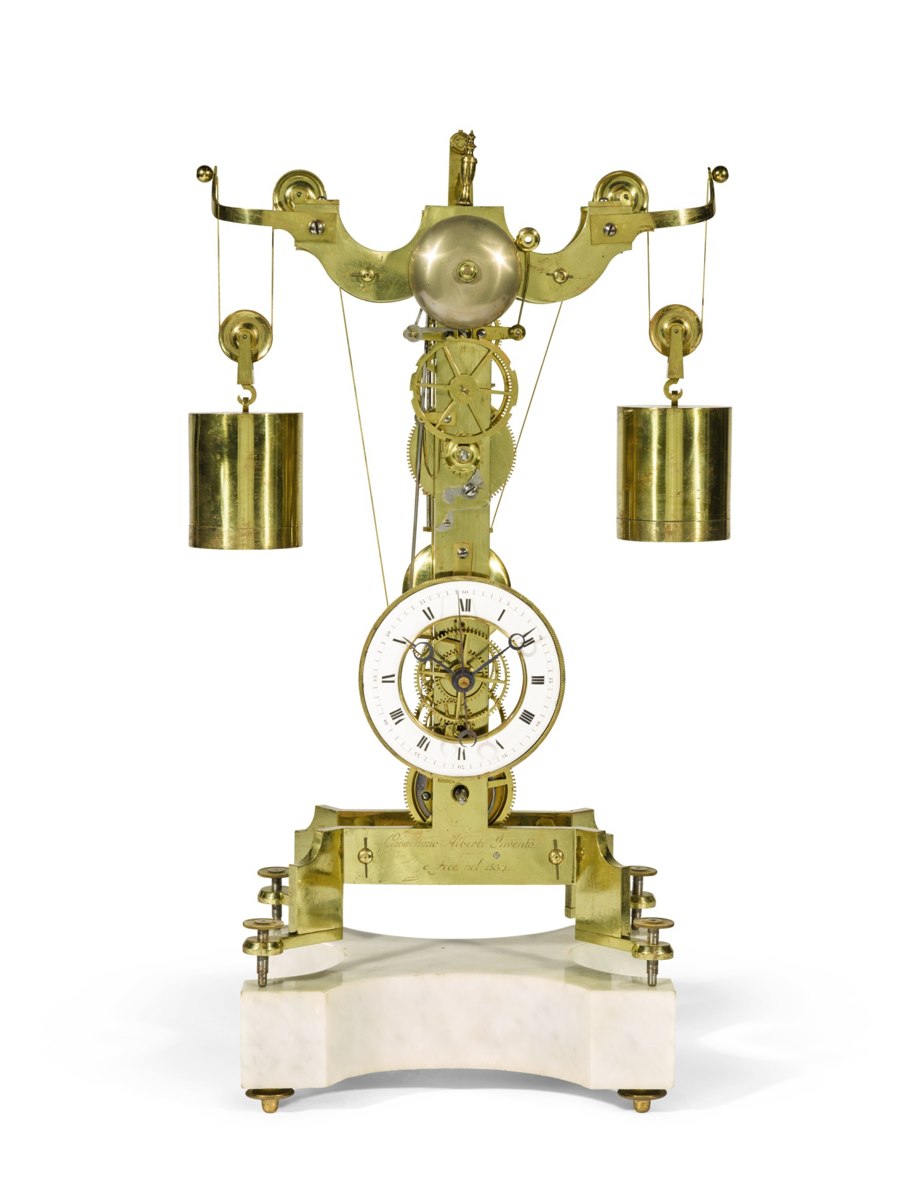
Clock
Gioachino Alberti brass skeleton clock with constant force escapement
“This Italian brass skeleton clock is documented as invented and made by Gioachino Alberti in Milan, dated 1834. The frame is engraved 'Gioachimo Alberti Invento, e Fece nel 1834…”
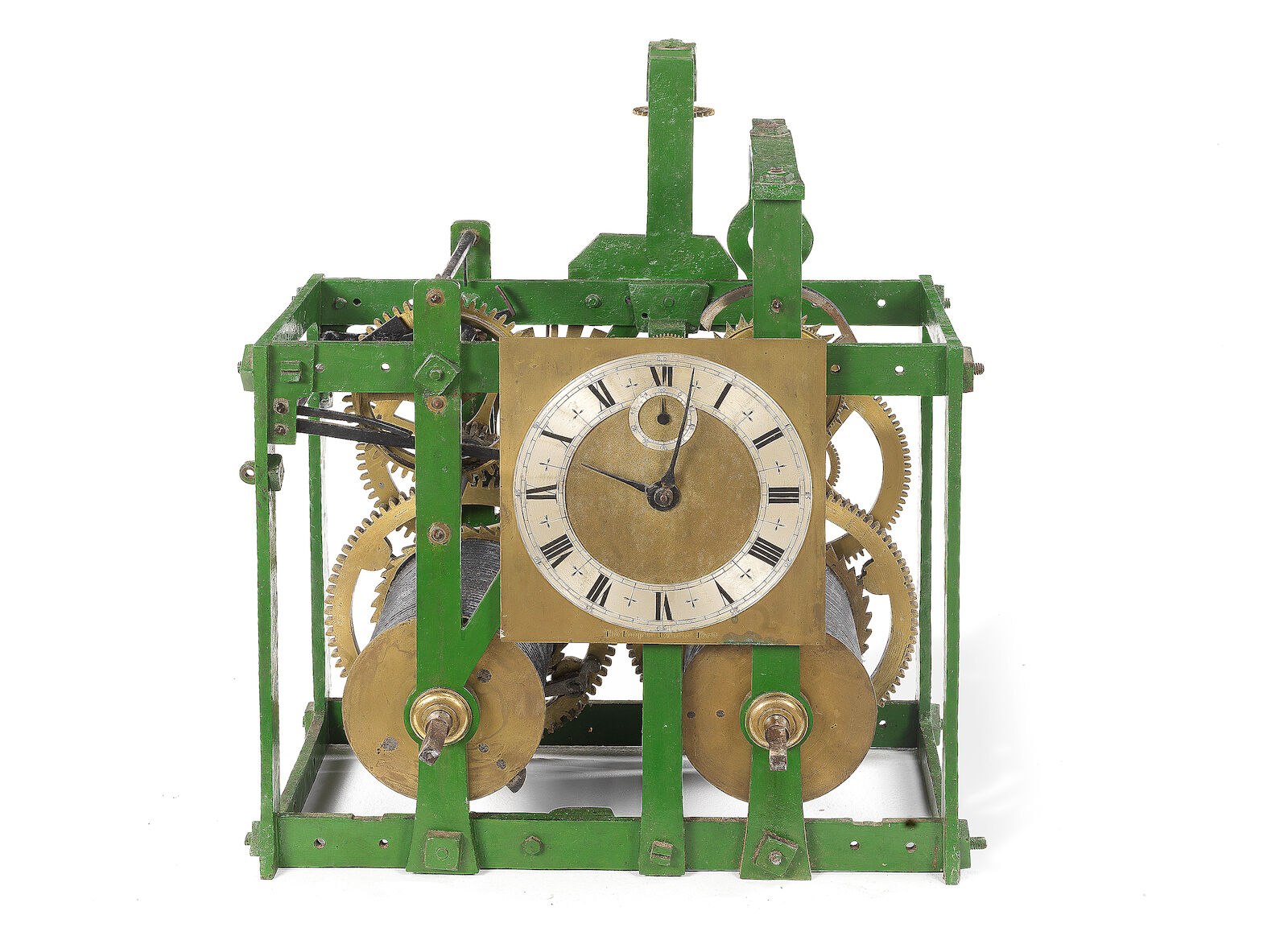
Clock
Thomas Tompion eight-day turret clock movement
“This late 17th-century turret clock movement is attributed to Thomas Tompion and reported as being of eight-day duration. Constructed from forged iron bars painted green, the fr…”
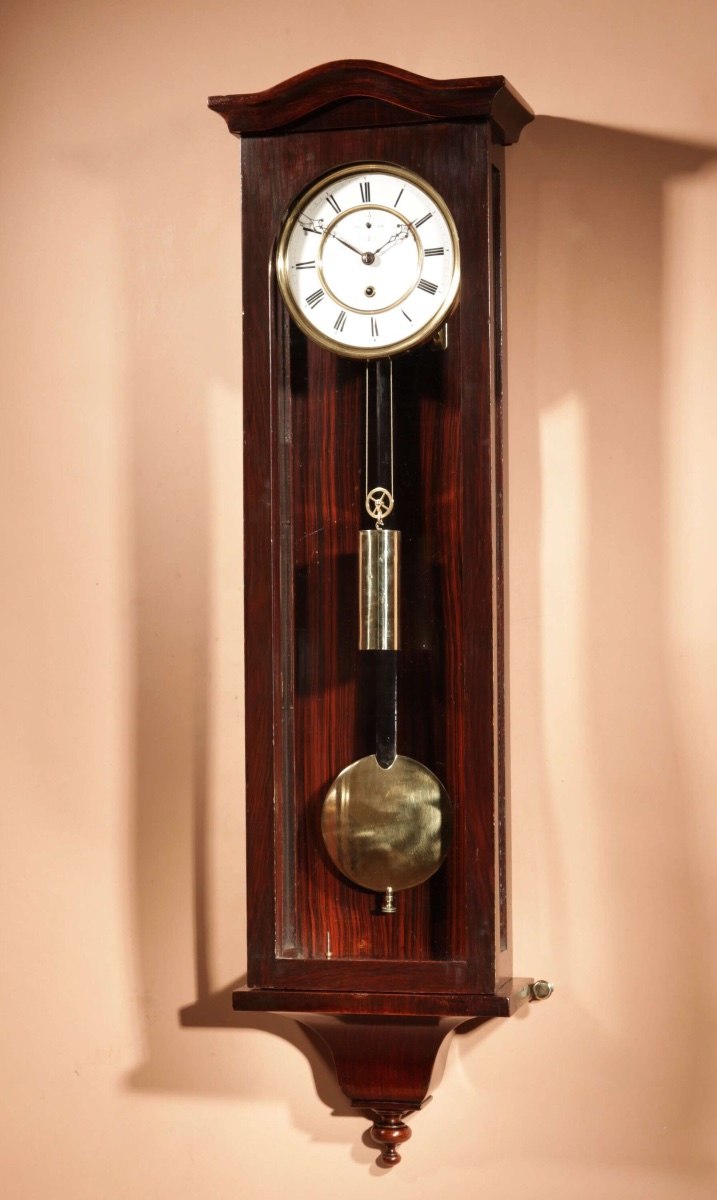
Clock
Black Forest Regulator Wall Clock in Vienna Style
“This regulator wall clock in the Vienna style is attributed to Germany's Black Forest region and dated circa 1850–1880. Encased in wood with a lacquer finish simulating rosewood…”
Pocket watch
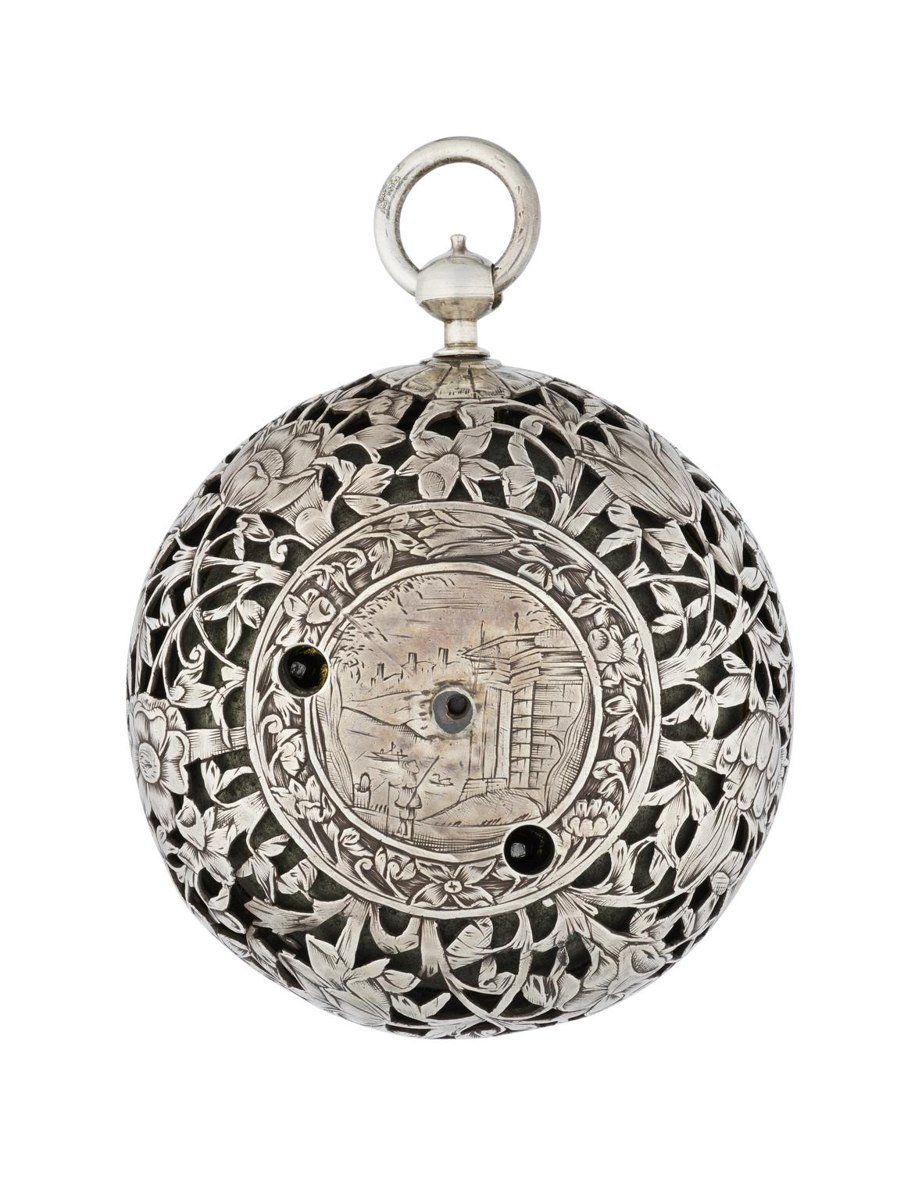
Silver clock-watch by Henricus Mott
“The Science Museum Group records this silver pair-cased clock-watch as made by Henricus Mott in London, dated circa 1640 in the text and 1660 in metadata. The movement is signed…”
Pocket watch
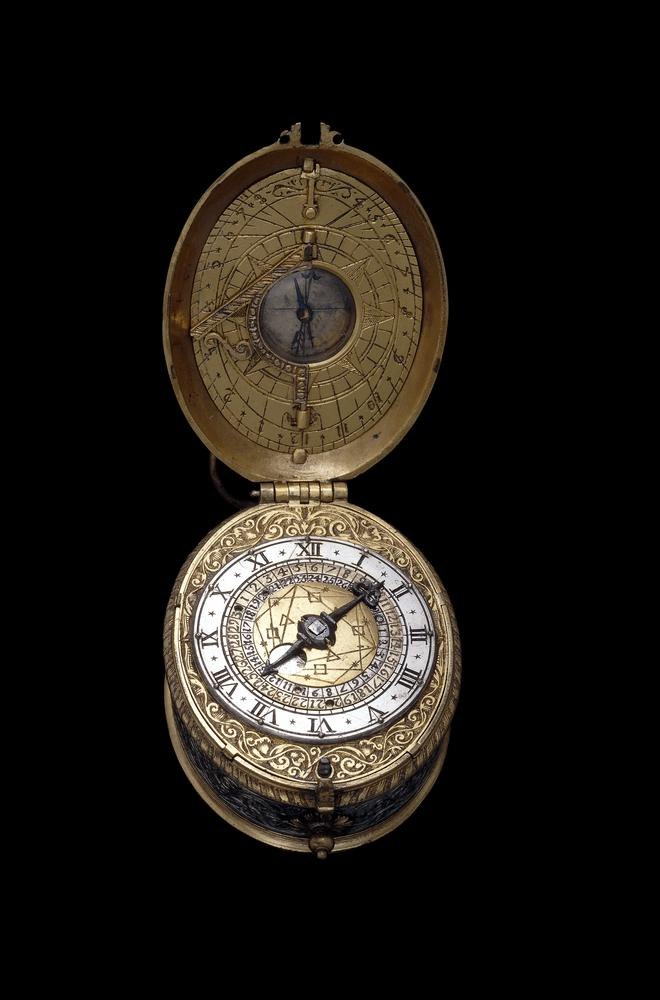
Oval gilt-brass and silver cased verge watch with calendar dial and sundial
“This early seventeenth-century oval watch is reported by the British Museum to have been made by Coenrad Jacobs in Leeuwarden between 1610 and 1620. Constructed with a gilt-bras…”