
Nuremberg, Germany · 1489–1564
Georg Hartmann
Partially verifiedScientific instrument maker and manual writer
Life & work
Born in Eggolsheim, Georg Hartmann studied theology and mathematics in Cologne before settling in Nuremberg in 1518 to establish a workshop.
He successfully combined his vocation as a vicar at the church of St. Sebald with the production of numerous scientific instruments. The workshop produced a wide variety of tools, including astrolabes, sundials, quadrants, celestial globes, and armillary spheres. From 1540, he expanded his output to include specialized gunner's instruments designed for calculating ranges and cannon bores.
Hartmann is noted for his innovative use of punches rather than manual engraving for letters and numbers on his metal instruments. Beyond his technical production, he authored manuals on instrument construction and contributed significantly to the printing of scientific manuscripts.
The fuller biography summarises the open references listed under Sources; each statement was checked against the cited passage. Confirm key dates in period documents before relying on them.
Training, contributions & innovations
- Hartmann is credited by Levinus Hulsius as the inventor of the gunner's gauge.
- He conducted early research into magnetic declination and the inclination of the Earth's magnetic field while in Rome.
- He pioneered the production of paper scientific instruments to make time-keeping tools more accessible to those who could not afford brass originals.
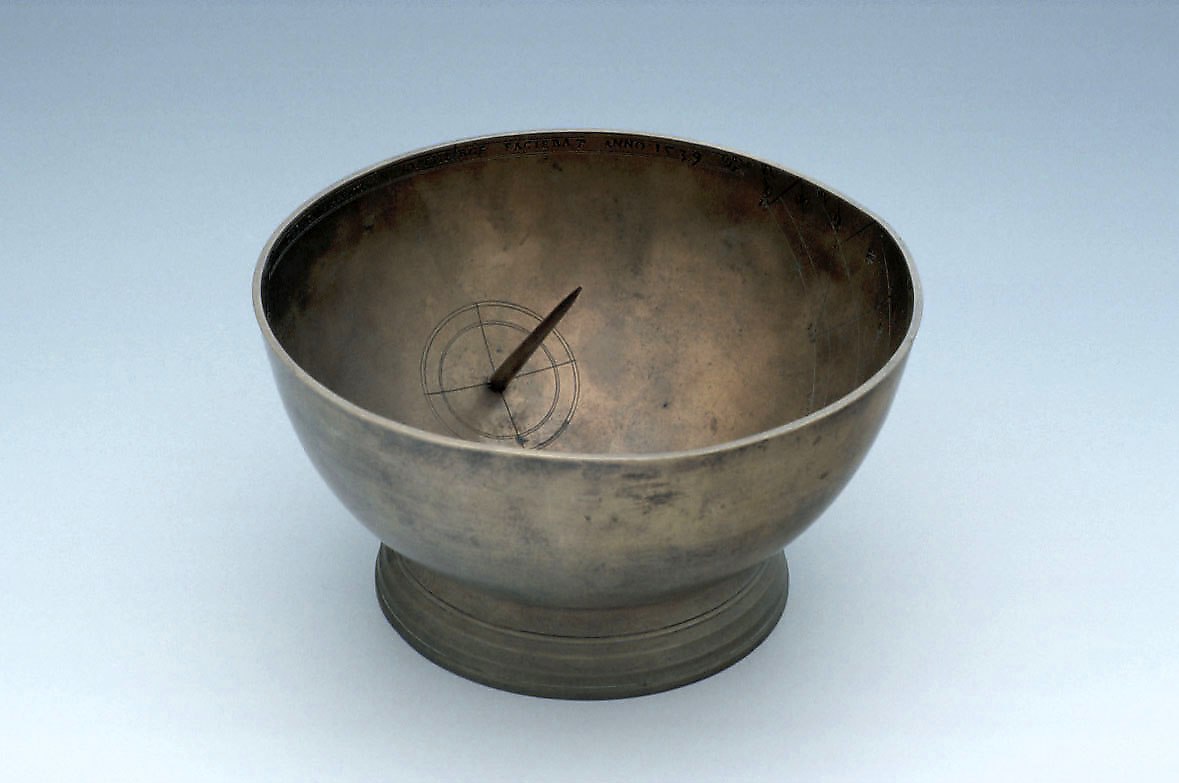
- He designed refractive sundials in the sixteenth century, as well as various specialized dials including shepherd's and moon dials.
Documented works
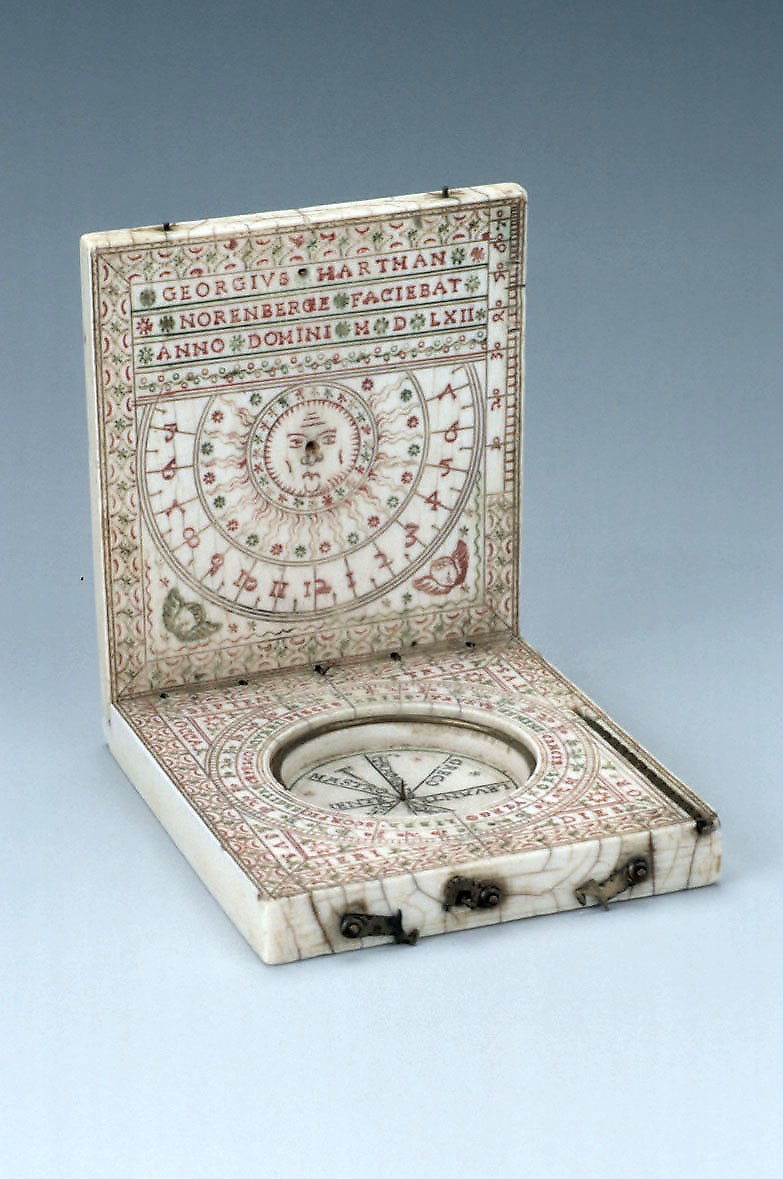
- A folding compass and sundial in ivory, signed and dated 1562, is held in the Victoria and Albert Museum collections.
- A cruciform sundial printed on paper survives in the German National Museum in Nuremberg.
- An album containing 110 of his printed paper instruments is preserved in the Bavarian State Library in Munich.
- A notable astrolabe produced by Hartmann is currently housed in the Peabody Museum at Yale University.
Collecting significance
The catalogued pieces listed on this page show the kinds of objects auction houses, dealers and museums attribute to this maker; each attribution is the source's own.
Firms, key models & movements
No firm, model or movement in this encyclopedia is yet recorded under this maker's name.
In the object catalogue
8 catalogued objects are recorded under Georg Hartmann. Attributions are as given by each source and are not independent authentication.
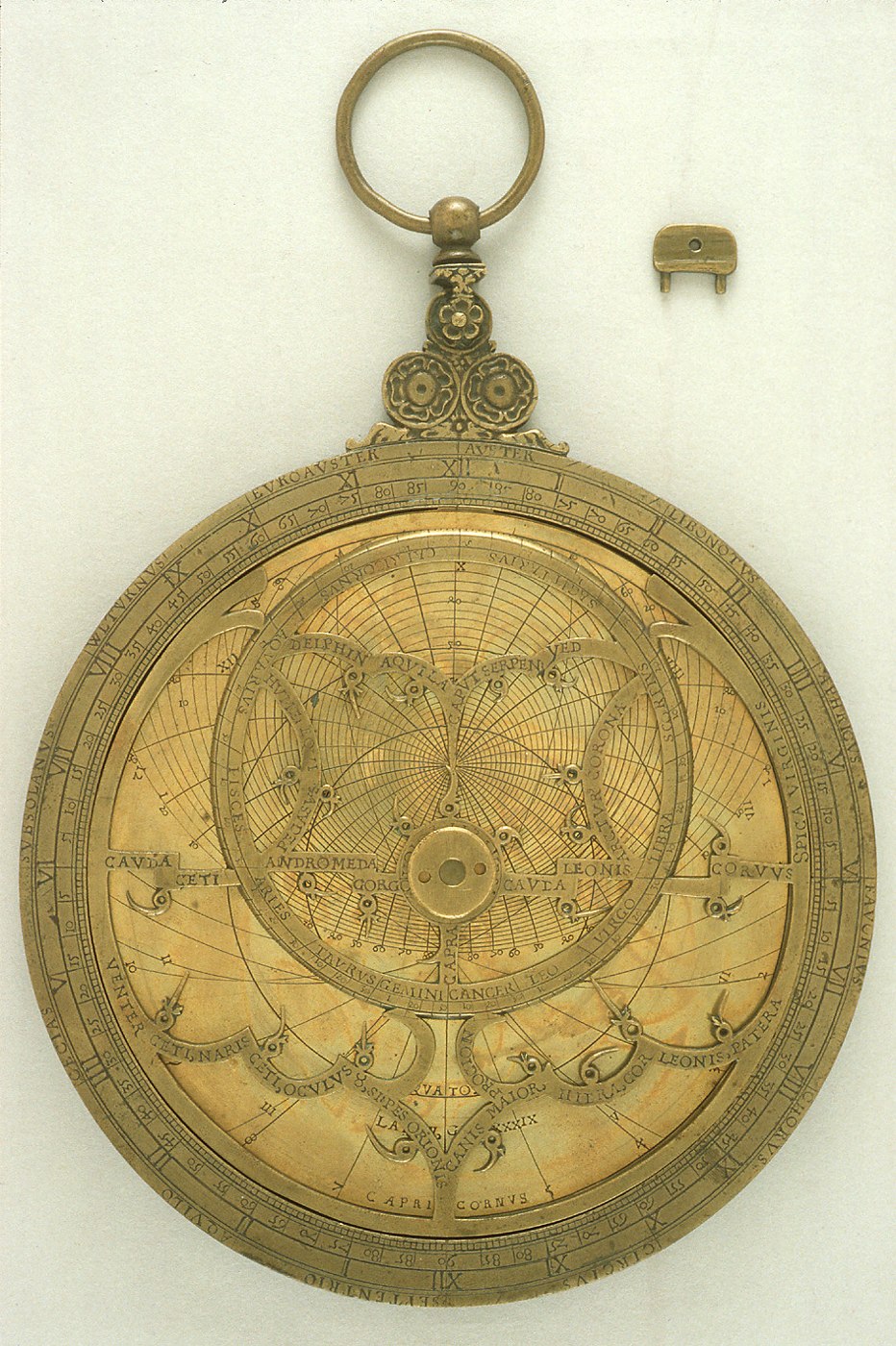
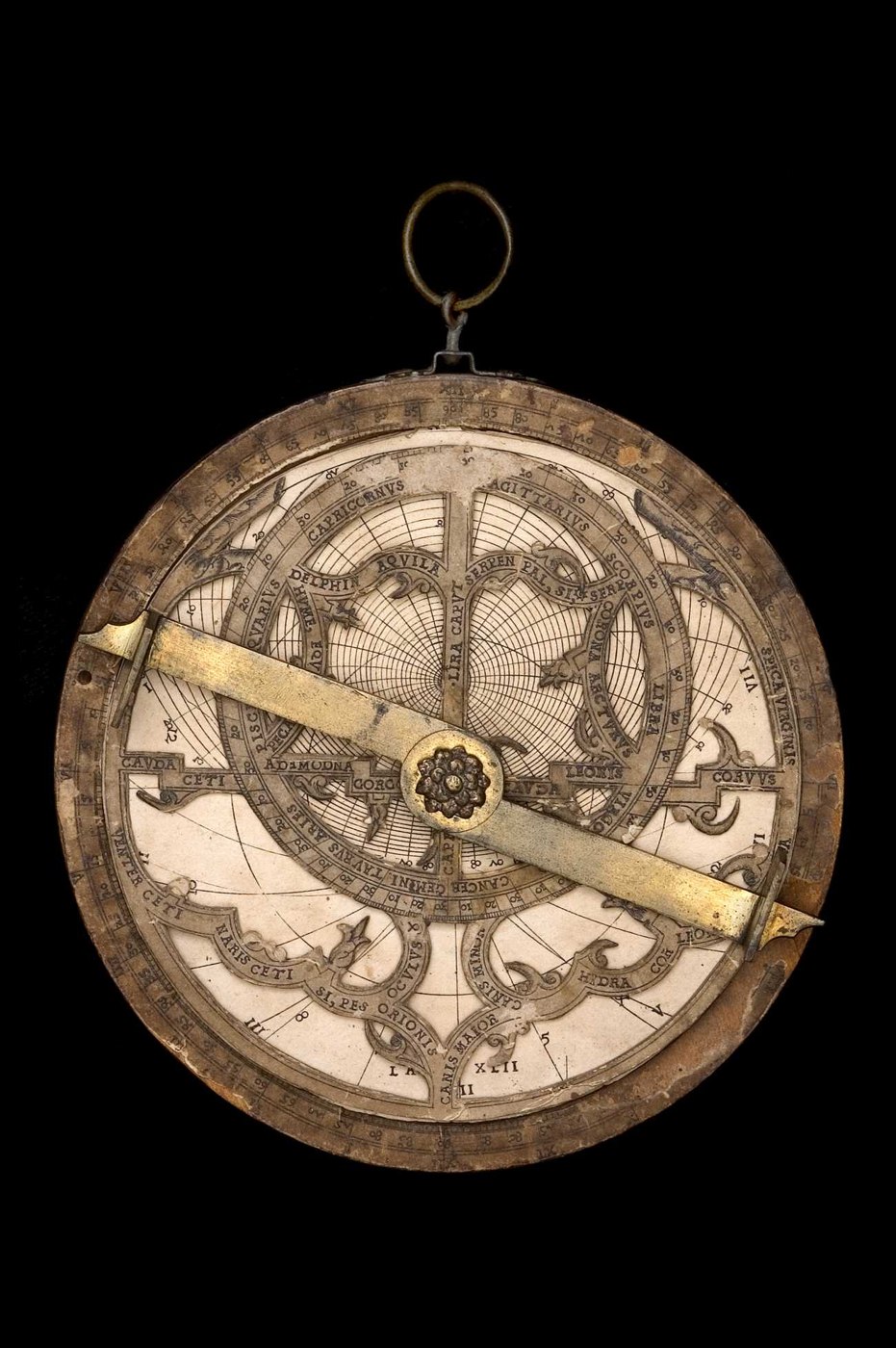
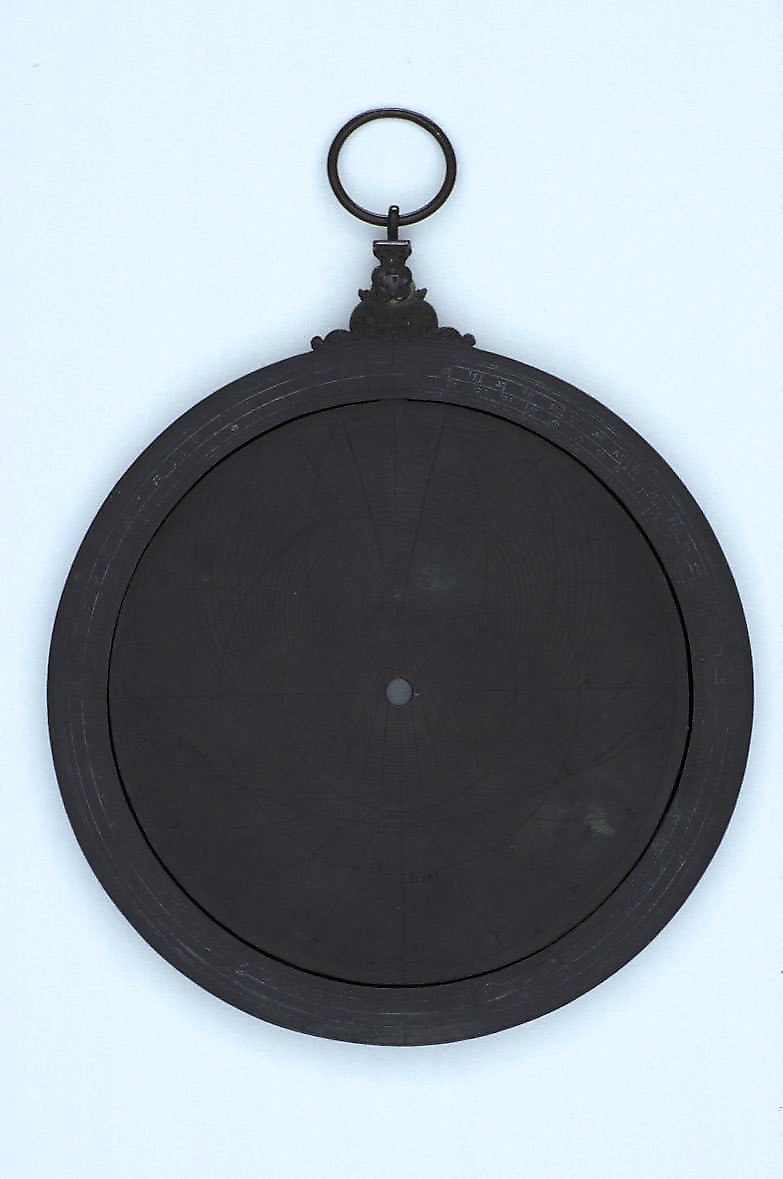
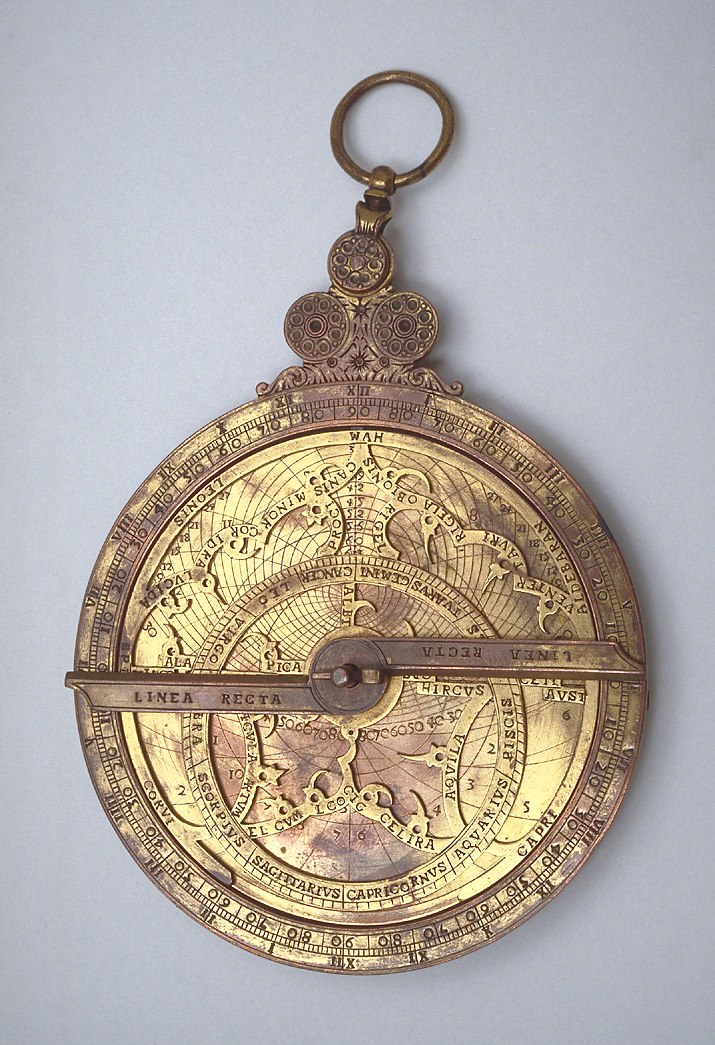
- Astrolabe by Georg HartmannAstrolabe · 1542
- Astrolabe by Georg HartmannAstrolabe · 1527
- Astrolabe by Georg HartmannAstrolabe · 1545
- Astrolabe by Georg HartmannAstrolabe · 1537
- Diptych Sundial by Georg HartmannDiptych sundial · 1562
- Georg Hartmann Crucifix DialOther sundial · 1541
- Gilt Brass Planispheric AstrolabeAstrolabe · 1541
- Scaphe Dial by Georg HartmannOther sundial · 1539
Sources & references
- Collections Online | British Museum, British Museum, retrieved 2026-11-03 (paraphrased; text © the publisher)
- Museo Galileo - Georg Hartmann, Museo Galileo, retrieved 2026-11-03 (paraphrased; text © the publisher)
- Compass | Hartmann, Georg | V&A Explore The Collections, Victoria and Albert Museum, retrieved 2026-11-03 (paraphrased; text © the publisher)
- Georg Hartmann - The Linda Hall, Linda Hall Library, retrieved 2026-11-03 (paraphrased; text © the publisher)
- Deutsche Biographie - Hartmann, Georg, Deutsche Biographie, retrieved 2026-11-03 (paraphrased; text © the publisher)
- Georg Hartmann, Wikipedia (English), retrieved 2026-11-03 (text CC BY-SA 4.0)
Where sources disagree, the disagreement is stated rather than resolved silently.