
Glossary · Case & Dial
Regulator dial
A dial layout separating hours, minutes and seconds onto distinct axes, with the minute hand dominant.
Explanation
A regulator dial gives the minutes the full main dial, with hours and seconds on separate subsidiary dials. The layout descends from precision workshop and observatory regulators, where the minute and second readings were the working references and the hour was secondary. The name describes the dial arrangement, not a guarantee of the movement's precision.
Reading a regulator dial takes practice: the long hand is minutes, the small hour hand sits on its own subdial, and the seconds are separate again. Modern wristwatches adopt the layout as a design reference to that precision heritage. A regulator-style dial on an ordinary movement is a styling choice, not a claim about construction.
Record the positions of the hour and seconds subdials and the dial's markings. For a historical regulator, the dial layout is one element of identification alongside the movement's escapement, compensation and case; for a modern watch, it is a description of display only.
Sources & references
- de Carle, D., Practical Watch Repairing — technical further reading; exact procedures require calibre documentation
- Reymondin et al., The Theory of Horology — construction and terminology further reading
Where sources disagree, the disagreement is stated rather than resolved silently.
Distinctions at a glance
| Hand | Axis | Reading |
|---|---|---|
| Minute hand | Central, full dial | Primary reading |
| Hour hand | Own subsidiary dial | Secondary reference |
| Seconds hand | Separate subsidiary dial | Working reference on precision regulators |
| Layout on an ordinary movement | Design reference | Not a precision claim |
What to record
- Identify the minute hand as the primary reading.
- Record subdial positions and markings.
- Keep dial style separate from movement quality.
Do not set the hands by dragging the minute hand backwards through striking or calendar work; the dial layout does not change the setting rules of the movement beneath.
In the object catalogue
Catalogued objects whose own source record mentions “Regulator dial”. The quoted line shows where; it is the seller’s or museum’s wording, not independent verification.
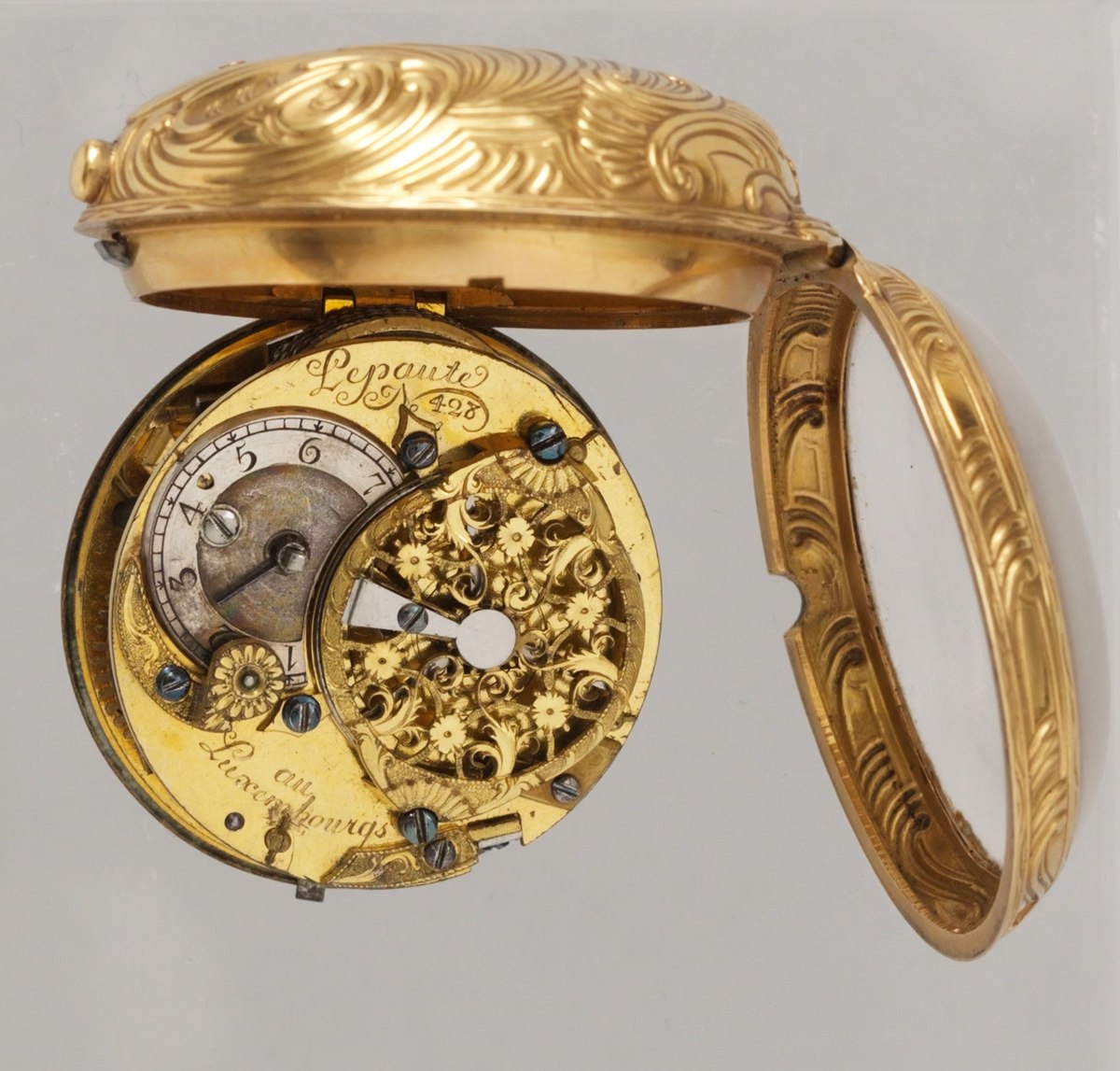
Pocket watch
Lepaute 18th-century gold pocket watch
“Silvered regulator dial disc calibrated with numbers 1 to 6”
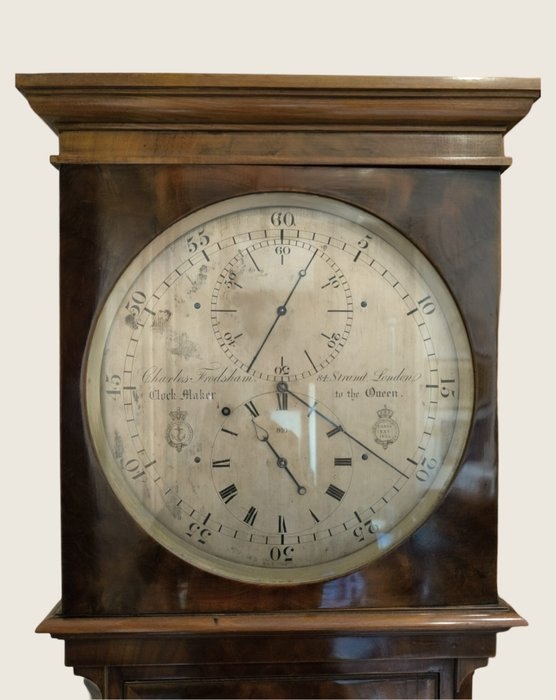
Clock
Charles Frodsham Astronomical Regulator Clock
“This astronomical regulator clock attributed to Charles Frodsham features a silvered metal regulator dial set in a mahogany case. The dial layout includes an outer minute track …”
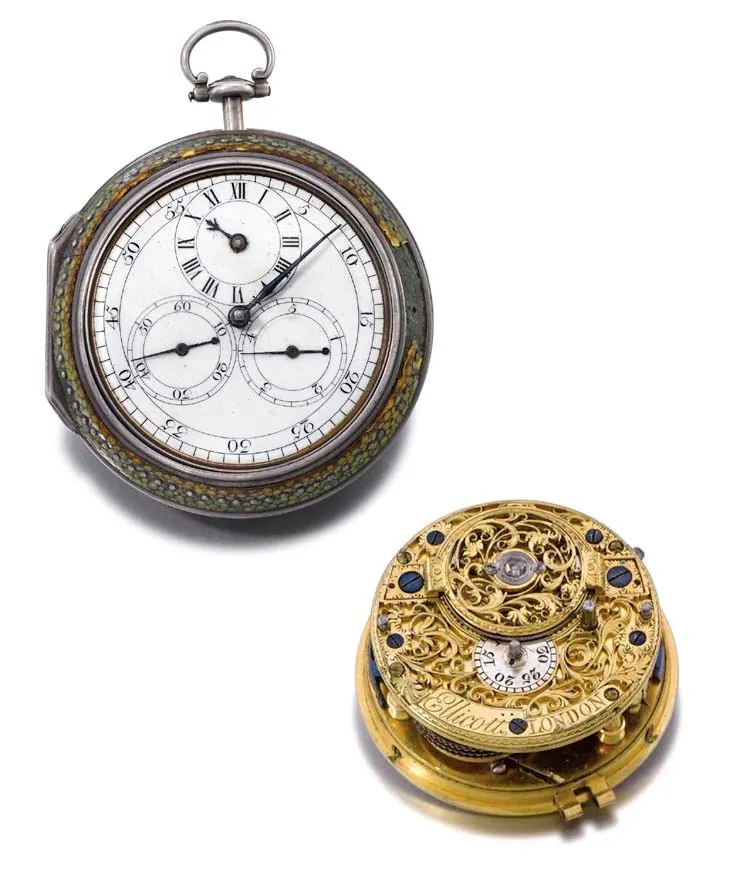
Pocket watch
Ellicott openface cylinder pocket watch with regulator dial
“Ellicott openface cylinder pocket watch with regulator dial”
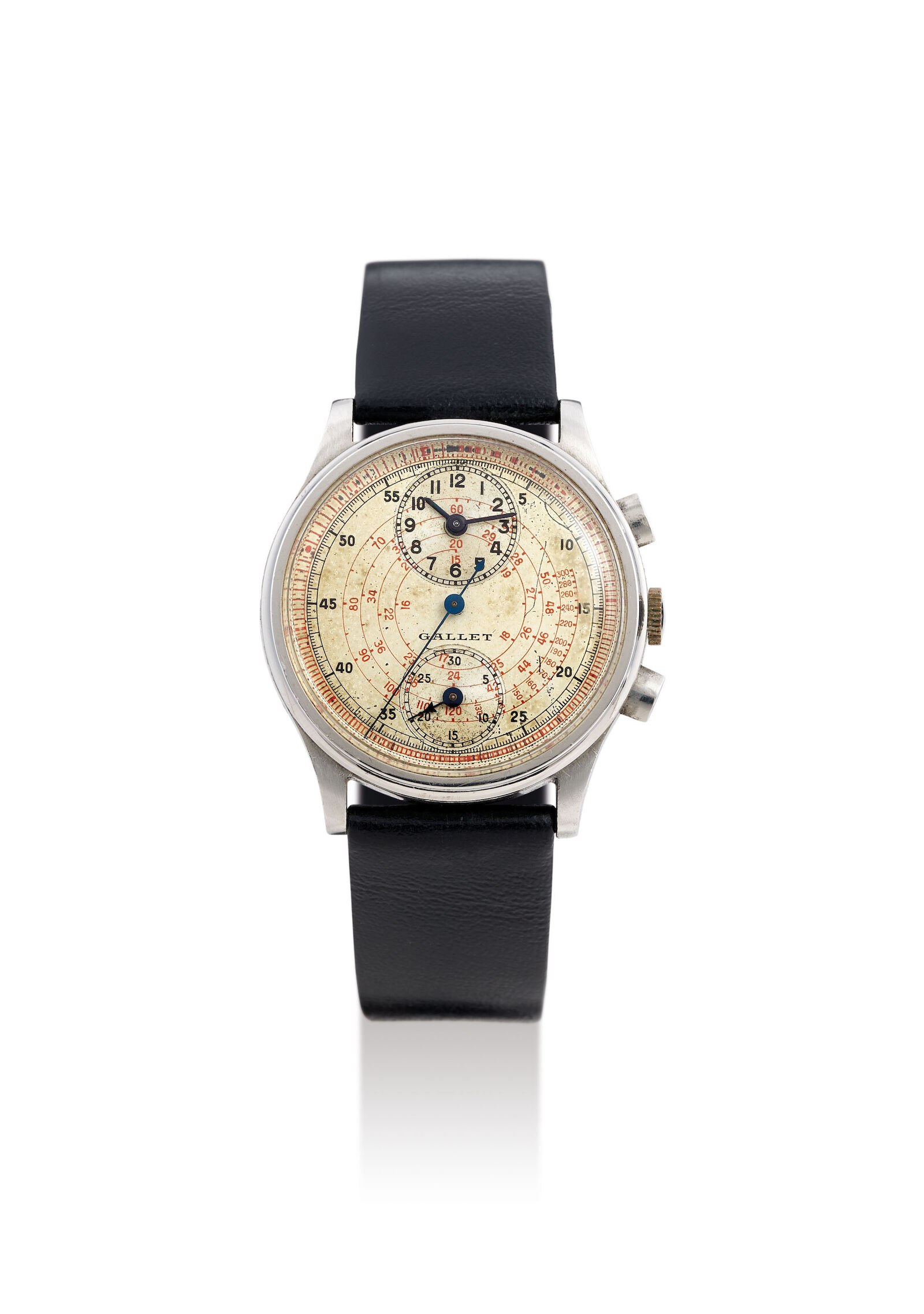
Wristwatch
Gallet Stainless Steel Chronograph Wristwatch with Regulator Dial
“Gallet Stainless Steel Chronograph Wristwatch with Regulator Dial”
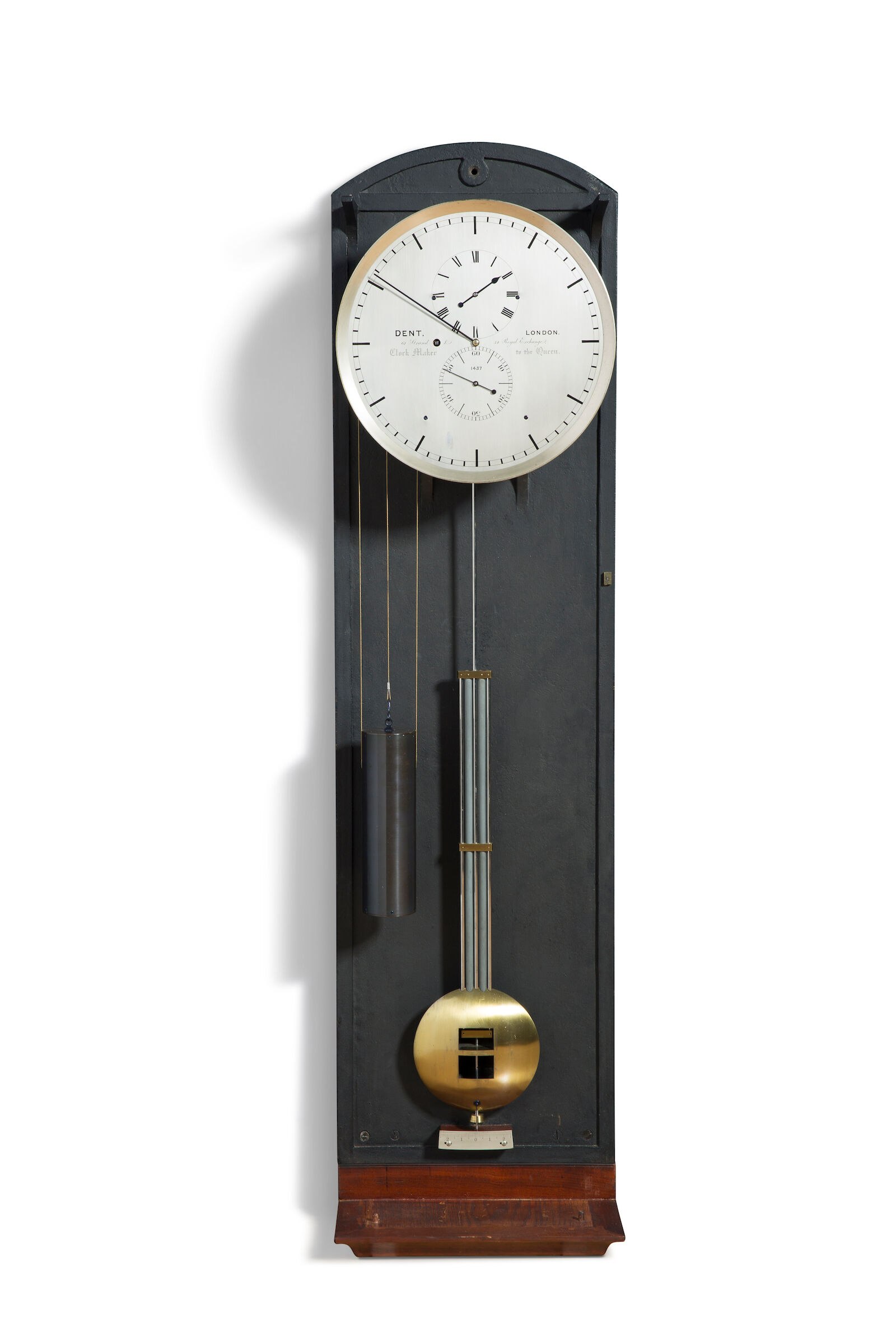
Clock
Dent Mahogany Wall Regulator with Dennison's Three-Legged Gravity Escapement, No. 1437
“This English precision wall regulator was manufactured by Dent, 61 Strand & 34 Royal Exchange, London, circa 1853, bearing serial number 1437. According to the source, the movem…”
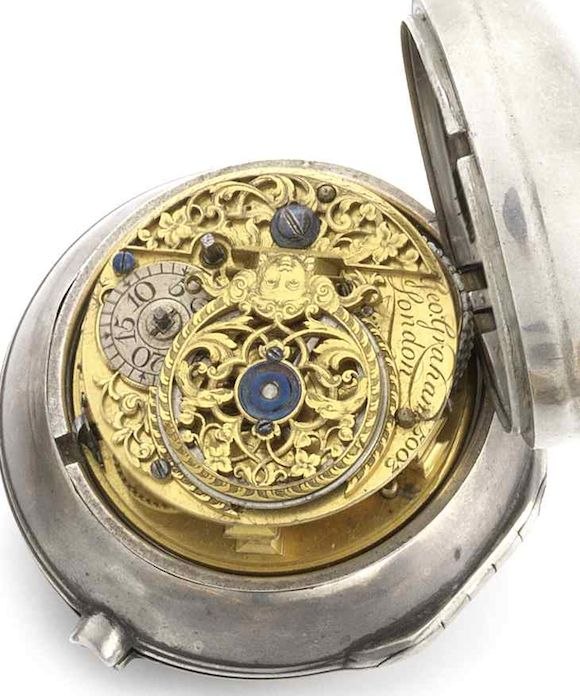
Pocket watch
George Graham silver pair case pocket watch
“Silvered regulator dial marked with Arabic numerals”