
Glossary · Case & Dial
Subsidiary dial
A small dial within the main dial carrying a separate indication, most commonly the seconds.
Explanation
A subsidiary dial is a small dial set into the main dial, driven by the movement's own gearing. The most familiar is the small seconds at six o'clock, but subsidiary dials also carry calendar, alarm, power-reserve and chronograph indications. Each one reads from a specific wheel of the movement; its position on the dial is fixed by where that wheel's arbor reaches the dial side, not by decoration alone.
Small seconds position is a construction clue. A seconds hand at six usually means a fourth wheel placed for a conventional layout; seconds at nine on a pocket-watch movement converted to a wristwatch betrays the original hunter or open-face orientation. Chronograph registers and calendar subdials follow their own module layouts. A dial described as having 'subsidiary seconds' says nothing about whether the movement beneath is original to the case.
Record the number, position and function of each subsidiary dial, and note whether the hands and printing match the main dial in style and age. A replaced or refinished dial may keep the layout while changing its details; a subdial hand of the wrong length or form is a visible mismatch worth recording.
Sources & references
- de Carle, D., Practical Watch Repairing — technical further reading; exact procedures require calibre documentation
- Reymondin et al., The Theory of Horology — construction and terminology further reading
Where sources disagree, the disagreement is stated rather than resolved silently.
Distinctions at a glance
| Indication | Usual drive | Reading caution |
|---|---|---|
| Small seconds | Fourth wheel or extension | Position reflects movement layout |
| Chronograph registers | Chronograph module or cam work | Not the same as small seconds |
| Calendar subdials | Calendar work from the hour wheel | Setting rules differ by calibre |
| Power reserve | Differential between barrel and arbor | Not a rate indication |
What to record
- Record each subdial's position and function.
- Use seconds position as a layout clue, not proof of originality.
- Compare subdial hands and printing with the main dial.
Do not pull a subdial hand to inspect the arbor; hand removal is a service operation with dial-side risks.
In the object catalogue
Catalogued objects whose own source record mentions “Subsidiary dial”. The quoted line shows where; it is the seller’s or museum’s wording, not independent verification.
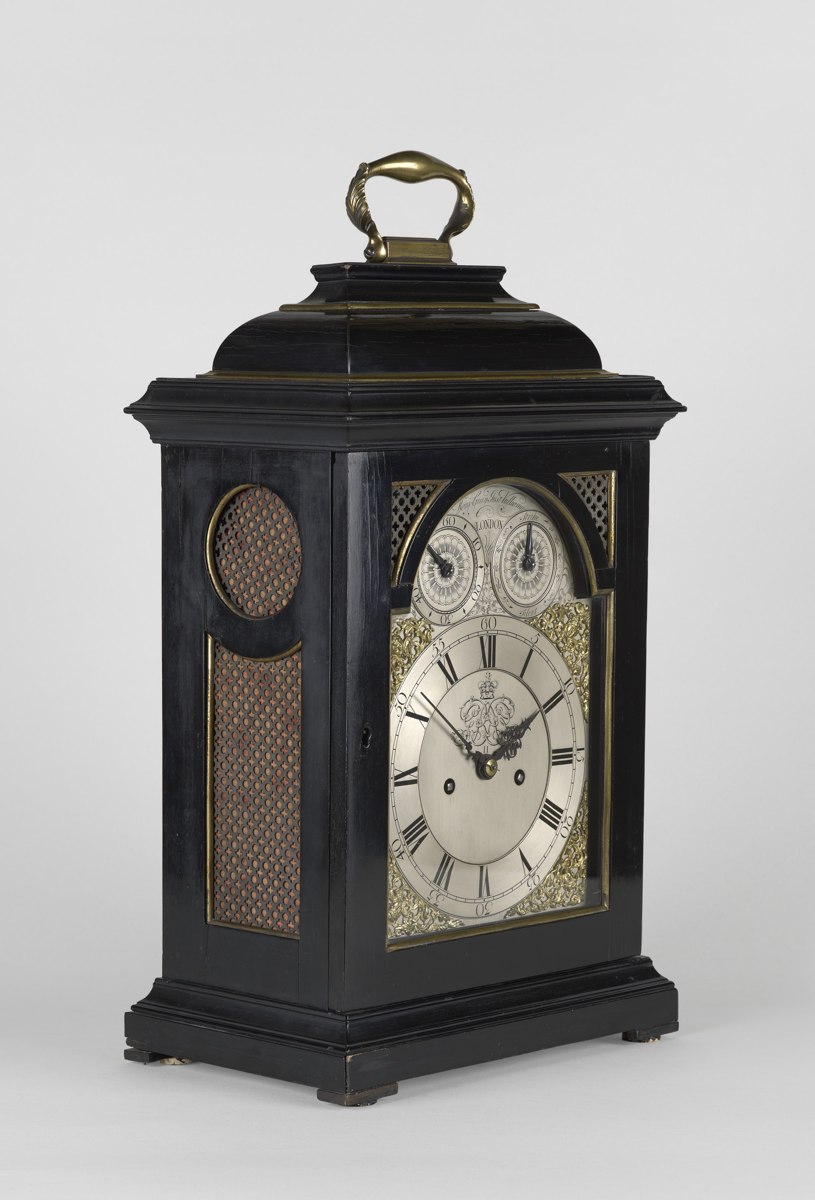
Clock
François-Justin Vulliamy bracket clock
“This bracket clock is held by the Royal Collection Trust and attributed to clockmaker François-Justin Vulliamy (1712–98). The object features an ebonised or dark-finished wooden…”
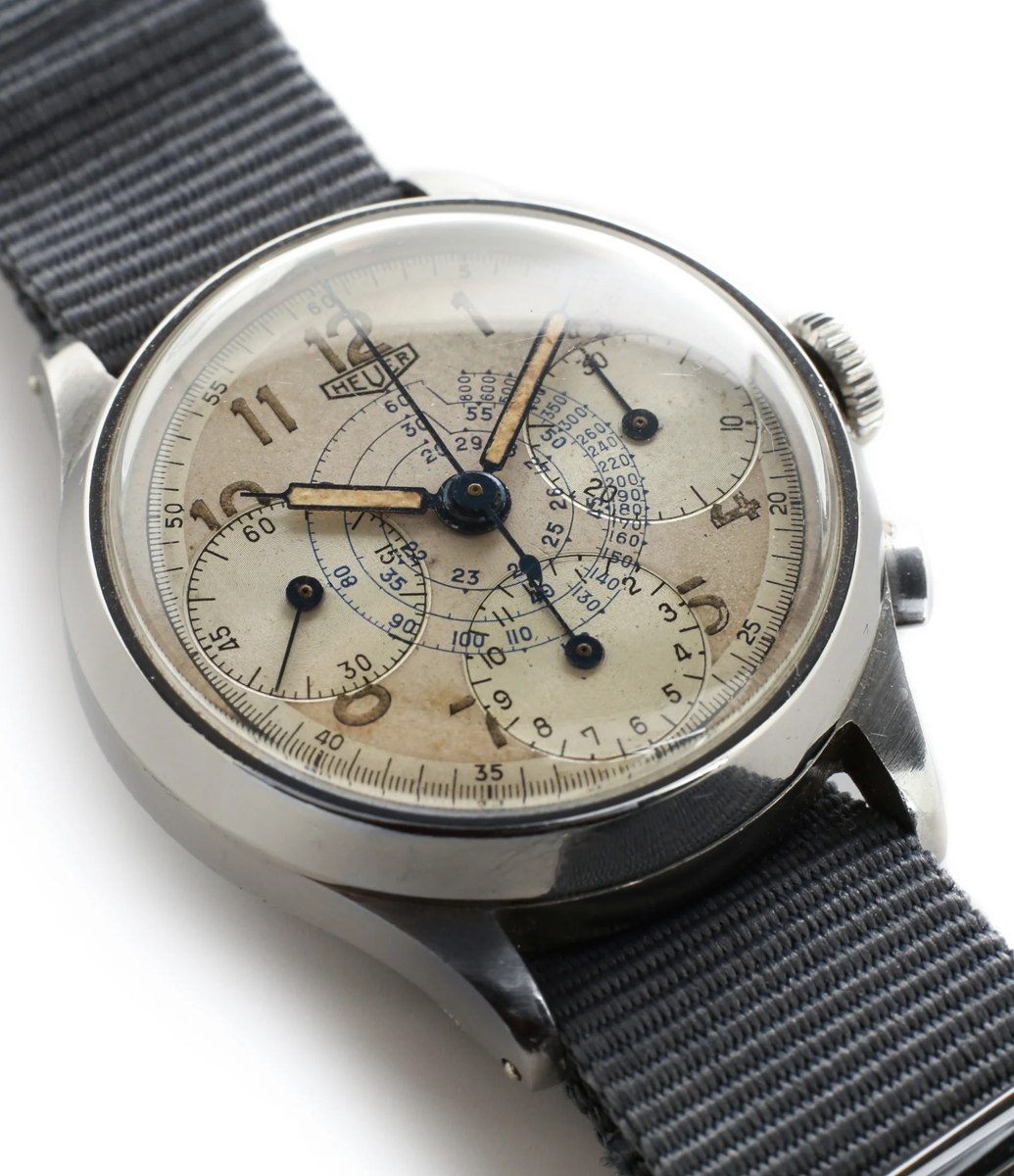
Wristwatch
Vintage Heuer Chronograph in steel
“The source identifies this timepiece as a vintage Heuer chronograph cased in steel. Visible features include a light-colored multi-scale dial marked with the Heuer shield emblem…”
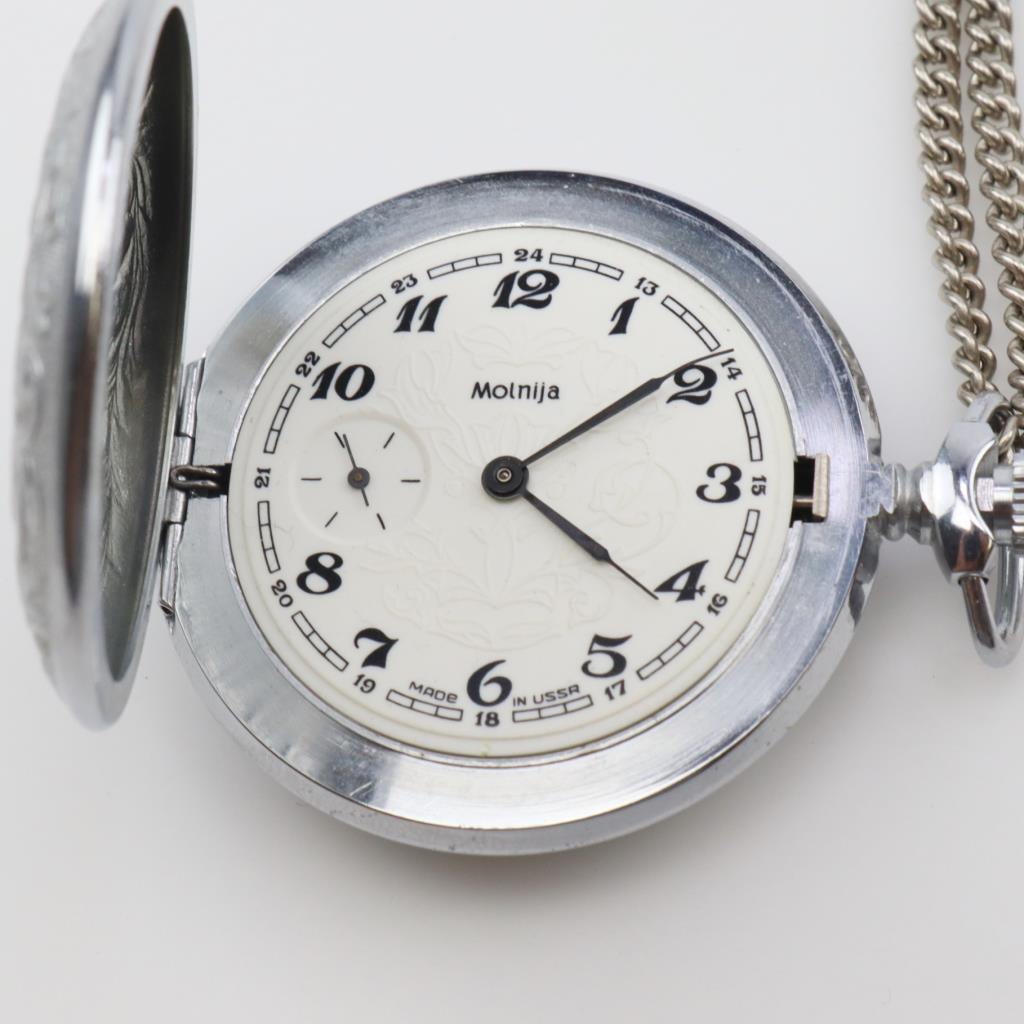
Pocket watch
Vintage Molnija Russian Pocket Watch
“Small seconds subsidiary dial positioned at 9 o'clock.”
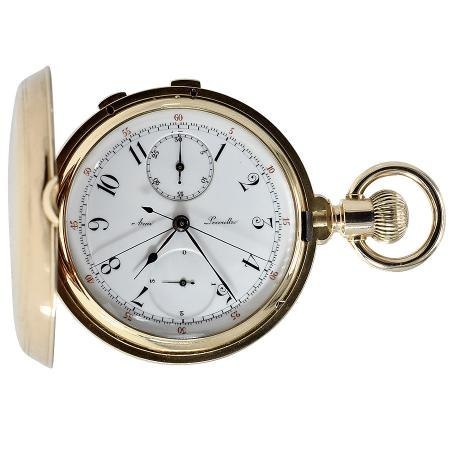
Pocket watch
Charles Ami Lecoultre Diablotine 1/4 Jump Split Seconds Chronograph Pocket Watch
“This antique pocket watch is an 18kt yellow gold hunter-cased timepiece crafted by Swiss watchmaker Charles Ami Lecoultre, dating according to the source to circa 1887. The 55 m…”
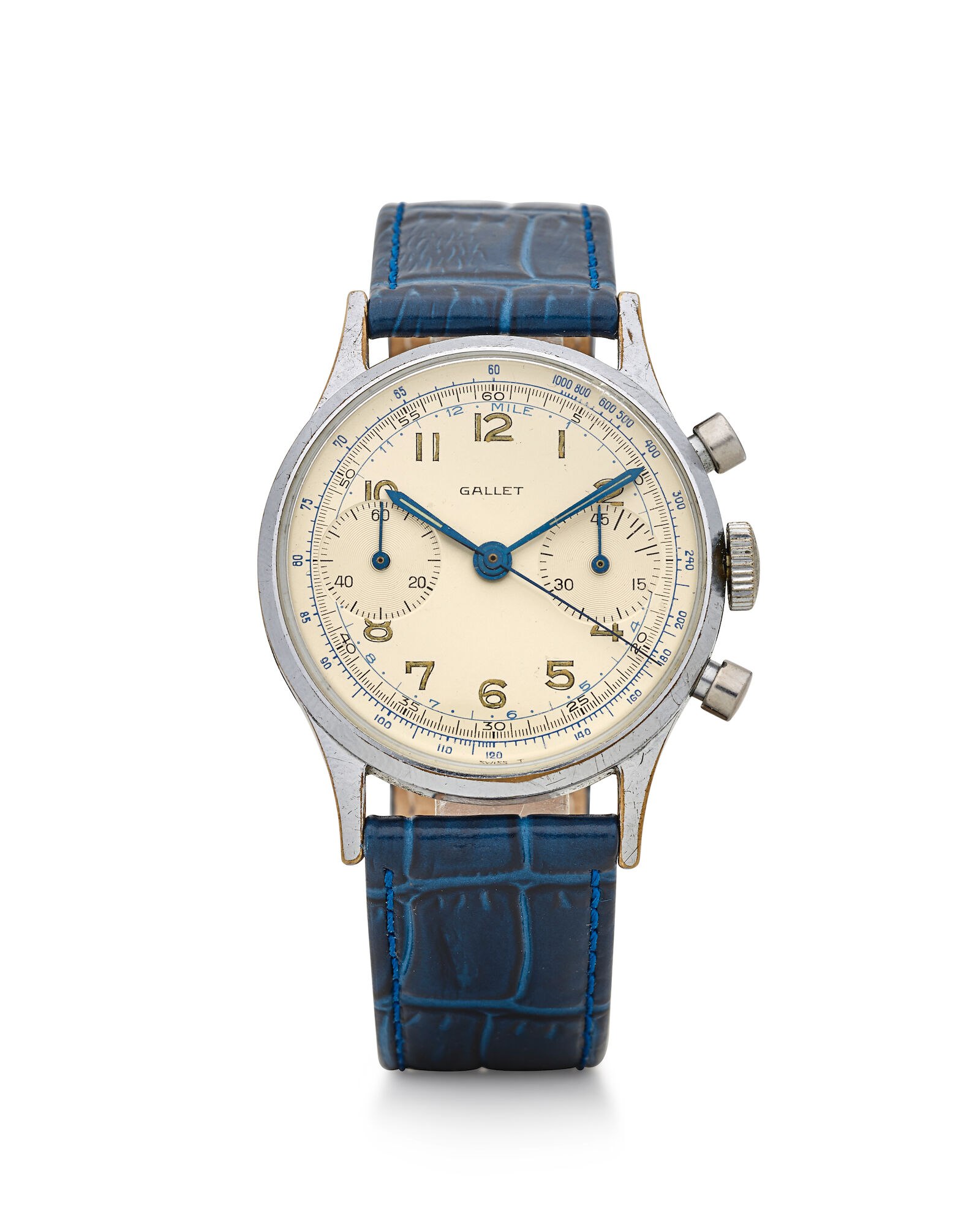
Wristwatch
Gallet stainless steel manual wind chronograph wristwatch
“This is a vintage manual wind chronograph wristwatch by Gallet dating to the 1950s, catalogued as Lot 127 in Bonhams' Fine Watches and Wristwatches auction. According to the sou…”
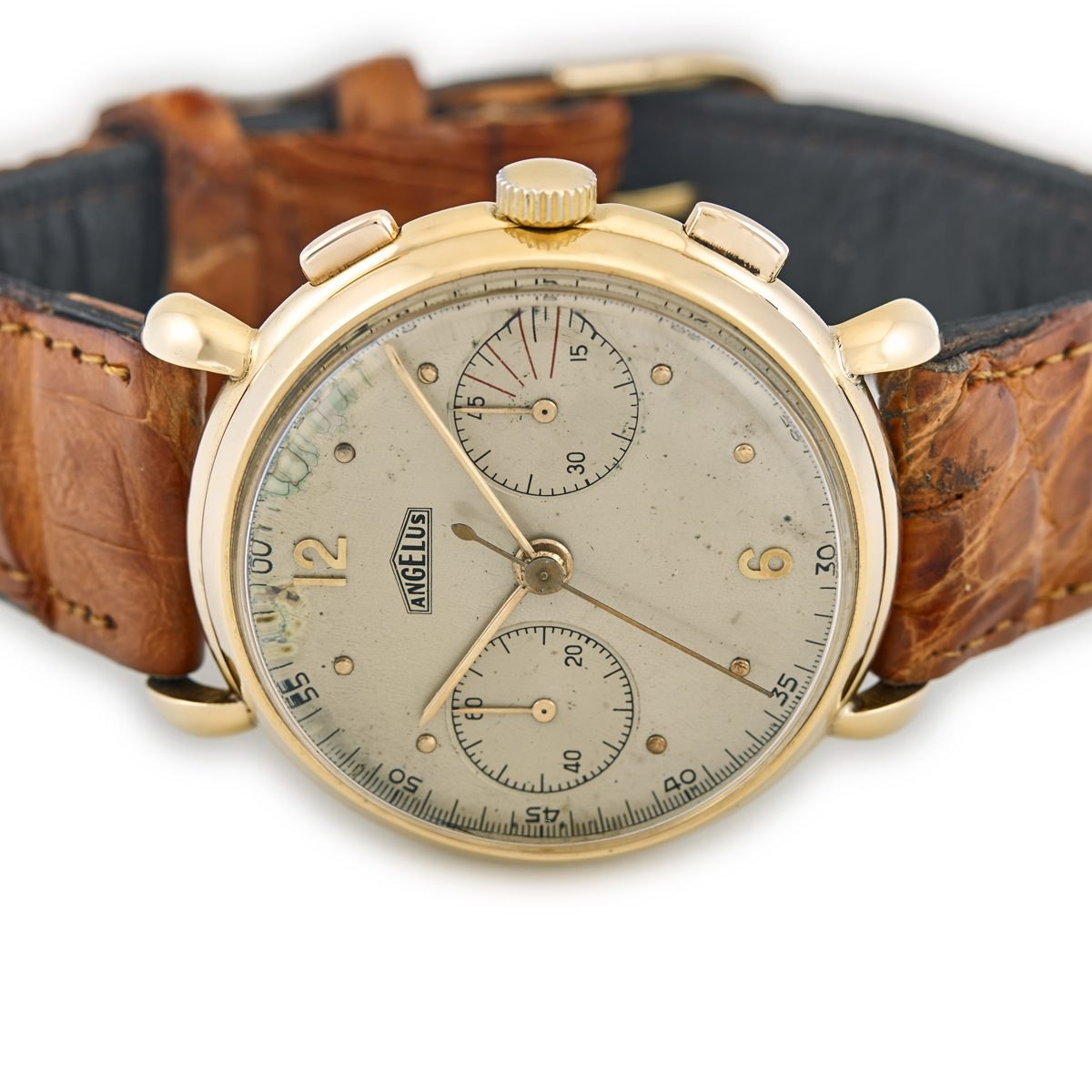
Wristwatch
Angelus Calibre 215 18ct Gold Chronograph Wristwatch
“This is an 18ct yellow gold manual-wind chronograph wristwatch by Angelus, which the seller dates to circa 1943. Measuring 38 mm in diameter excluding the crown, the round gold …”