
Glossary · Case & Dial
Rolled gold
A base-metal core with a bonded layer of gold, thicker than plating but not solid gold; also called gold-filled.
Explanation
Rolled gold is made by bonding a sheet of gold to a base-metal core and rolling the sandwich to thickness, so the gold layer is integral rather than deposited. The same construction is called gold-filled, particularly in American practice, where marks such as '14K gold filled' or 'guaranteed 10 years' refer to the layer's fineness and the maker's wear guarantee, not to solid gold.
The distinction matters for description and value. A rolled-gold case shows brassing — base metal appearing at edges and high points — as the layer wears. Solid-gold hallmarks are a different system of marks; a rolled-gold case does not carry them, and a stamp such as 'Warranted 14K' is not a hallmark. Electroplating deposits a far thinner layer and wears faster still.
Record the exact marks on the case, the visible wear pattern and any documented assay. Weight is not a reliable test on a complete watch, and acid testing damages the surface; identification rests on the marks and construction evidence.
Sources & references
- de Carle, D., Practical Watch Repairing — technical further reading; exact procedures require calibre documentation
- Reymondin et al., The Theory of Horology — construction and terminology further reading
Where sources disagree, the disagreement is stated rather than resolved silently.
Distinctions at a glance
| Construction | Gold content | Wear behaviour |
|---|---|---|
| Solid gold | Gold throughout, hallmarked | Wears without showing base metal |
| Rolled gold / gold-filled | Bonded gold layer on base metal | Brassing at edges and high points |
| Electroplate | Thin deposited layer | Wears through fastest |
| Gilt metal | Thin wash or colour | Not a gold-content mark |
What to record
- Transcribe case marks exactly, including guarantee wording.
- Record brassing or wear-through as condition evidence.
- Keep gold-filled marks separate from hallmarks.
Do not polish a rolled-gold case to remove brassing; polishing removes more of the gold layer.
In the object catalogue
Catalogued objects whose own source record mentions “Rolled gold”. The quoted line shows where; it is the seller’s or museum’s wording, not independent verification.
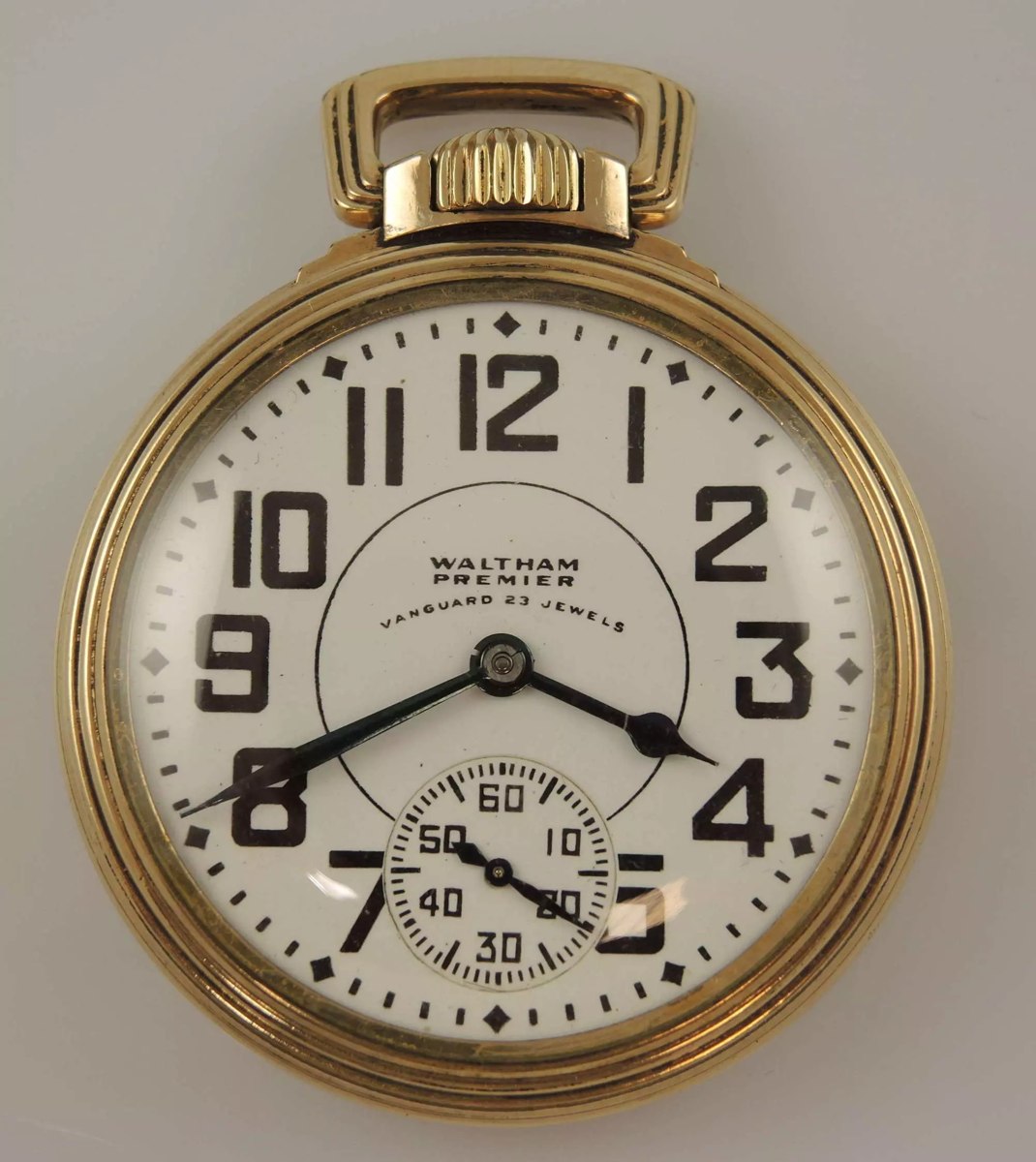
Pocket watch
Waltham Vanguard 23 Jewel Railroad Pocket Watch
“This 16-size American railroad grade pocket watch was manufactured by the Waltham Watch Co around 1942. According to the seller, it is powered by a stem-wound, lever-set nickel …”
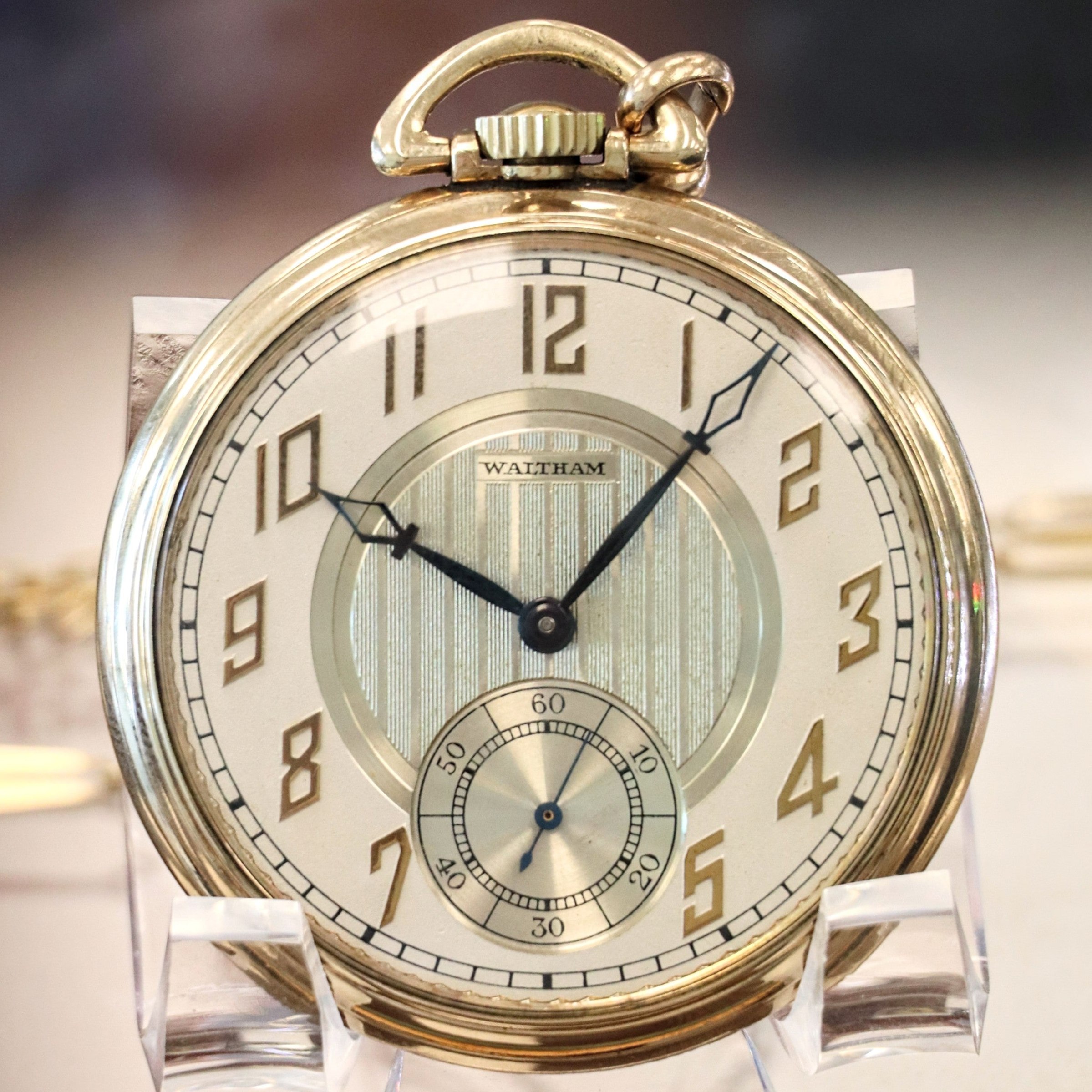
Pocket watch
Waltham 17 Jewels Grade No. 1217 Openface Dress Pocket Watch
“This openface dress pocket watch from the Waltham Watch Company is reported to date to 1936. Sized at 12s, it contains a 17-jewel manual-wind movement, Grade No. 1217 (Model 189…”
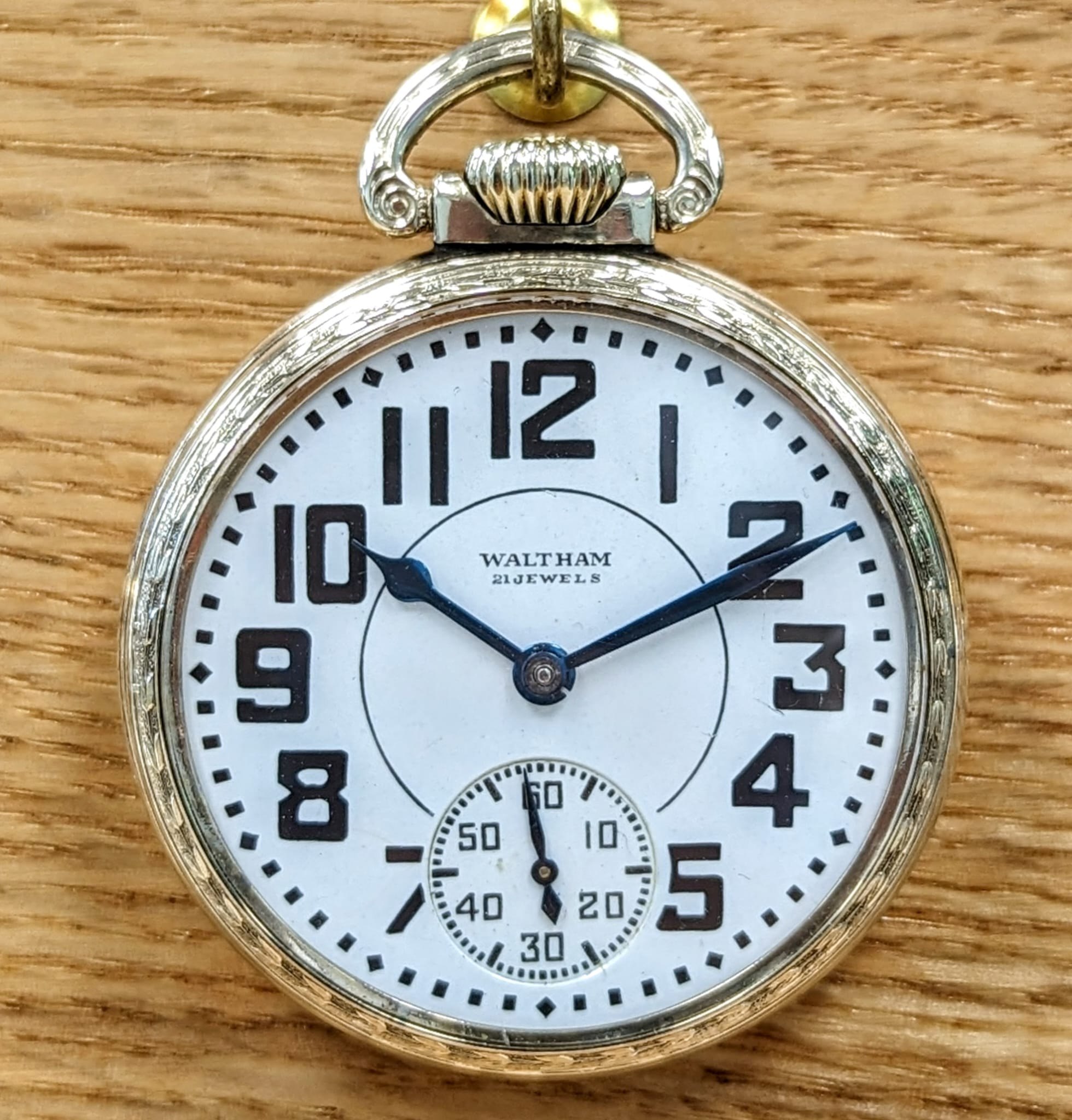
Pocket watch
Waltham Riverside Model 1908 pocket watch
“This open-face pocket watch by Waltham features an original size 16s manual-winding Riverside mechanical movement, Grade No. 1621, with 21 jewels and adjusted positions and temp…”
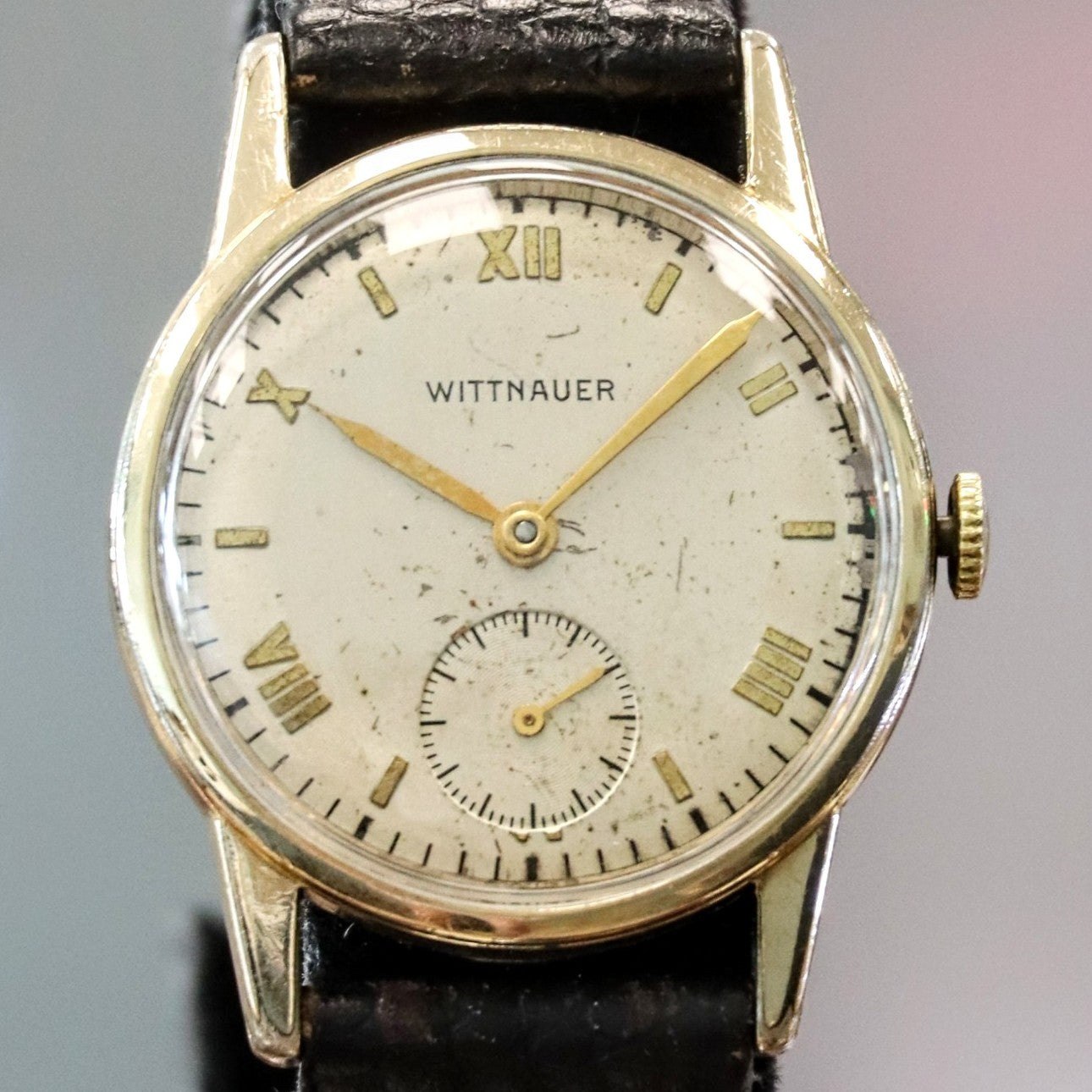
Wristwatch
Wittnauer wristwatch, caliber 11TN
“This vintage Wittnauer wristwatch features a 29.4 mm gold-toned case fitted with a Swiss manual-wind movement. The seller reports the 17-jewel movement is caliber 11TN, based on…”
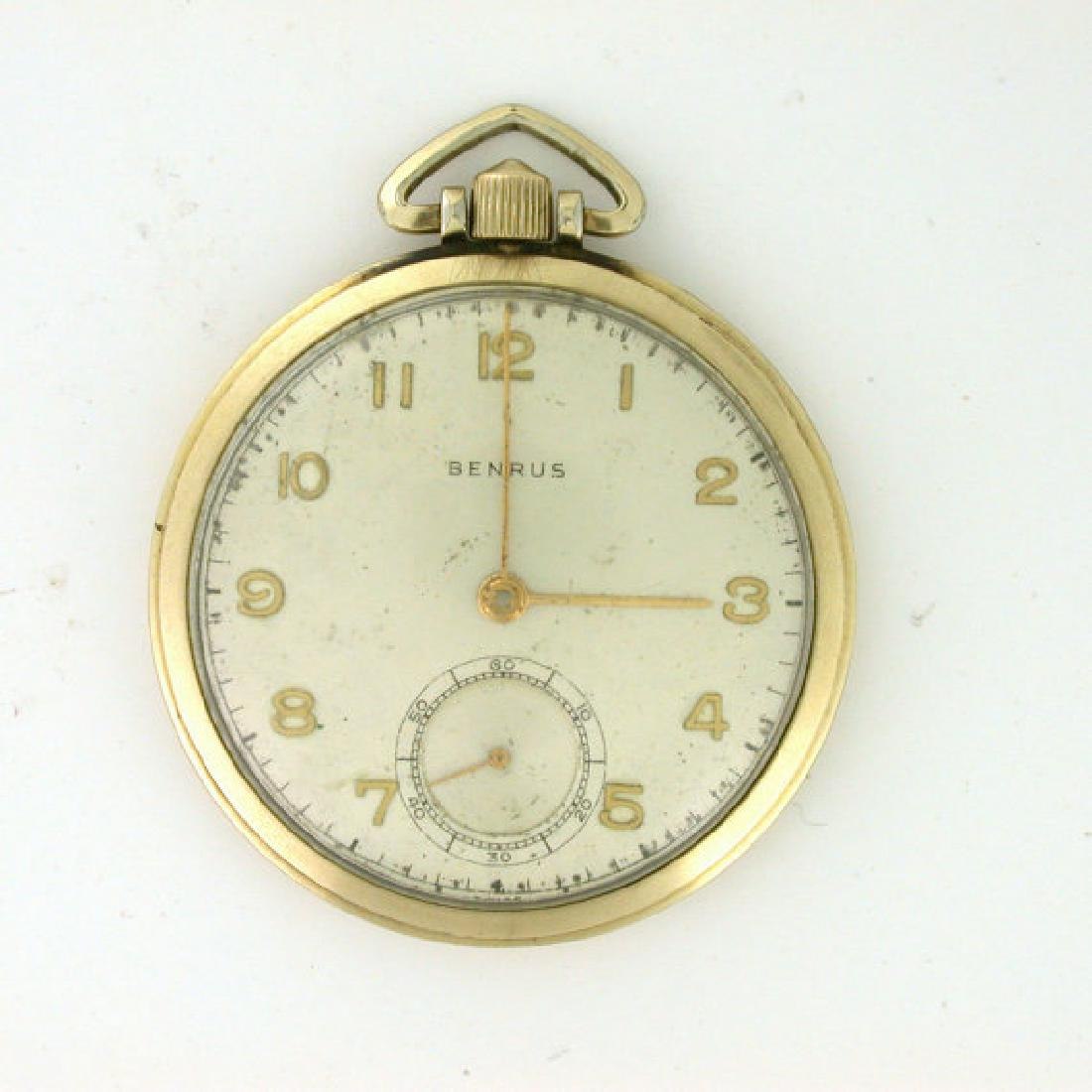
Pocket watch
Benrus 10k Rolled Gold Pocket Watch, 1949
“Benrus 10k Rolled Gold Pocket Watch, 1949”
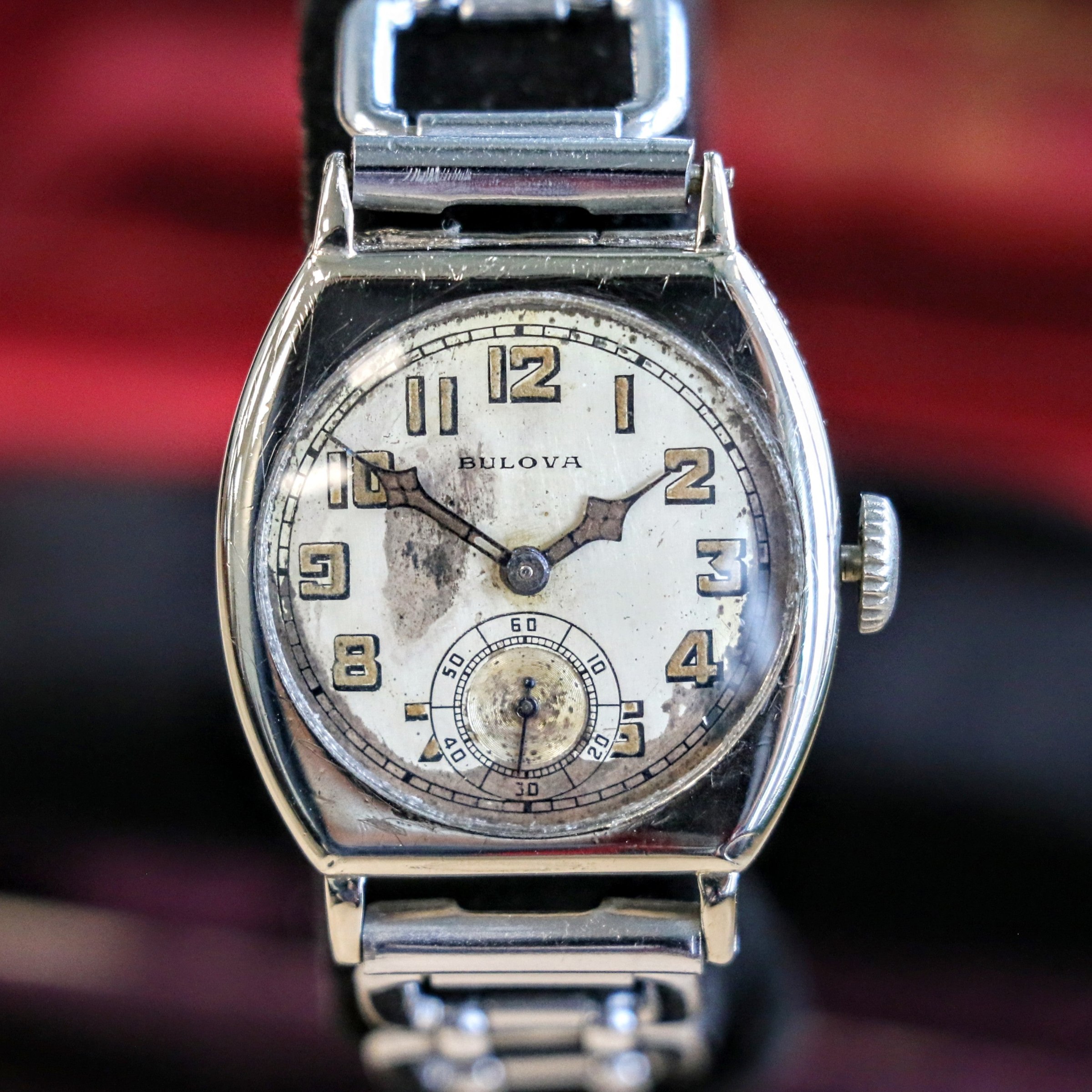
Wristwatch
Bulova Spartan wristwatch, cal. 10AN
“This tonneau-cased Bulova Spartan wristwatch is dated by the seller to 1928 and reported with serial number 17145S1. The silver-toned metal case measures 27.4 mm across and 39 m…”