
Source catalogue · individual objects
Object Catalogue
Individual objects described by auction houses, specialist dealers and collection catalogues. Attribution, dates and specifications remain source-reported unless independently established; rights clearance is pending.
Browse makers and their key pieces · John Ellicott profile
8 of 5699 objects · Page 1 of 1
Clock · Wall clock
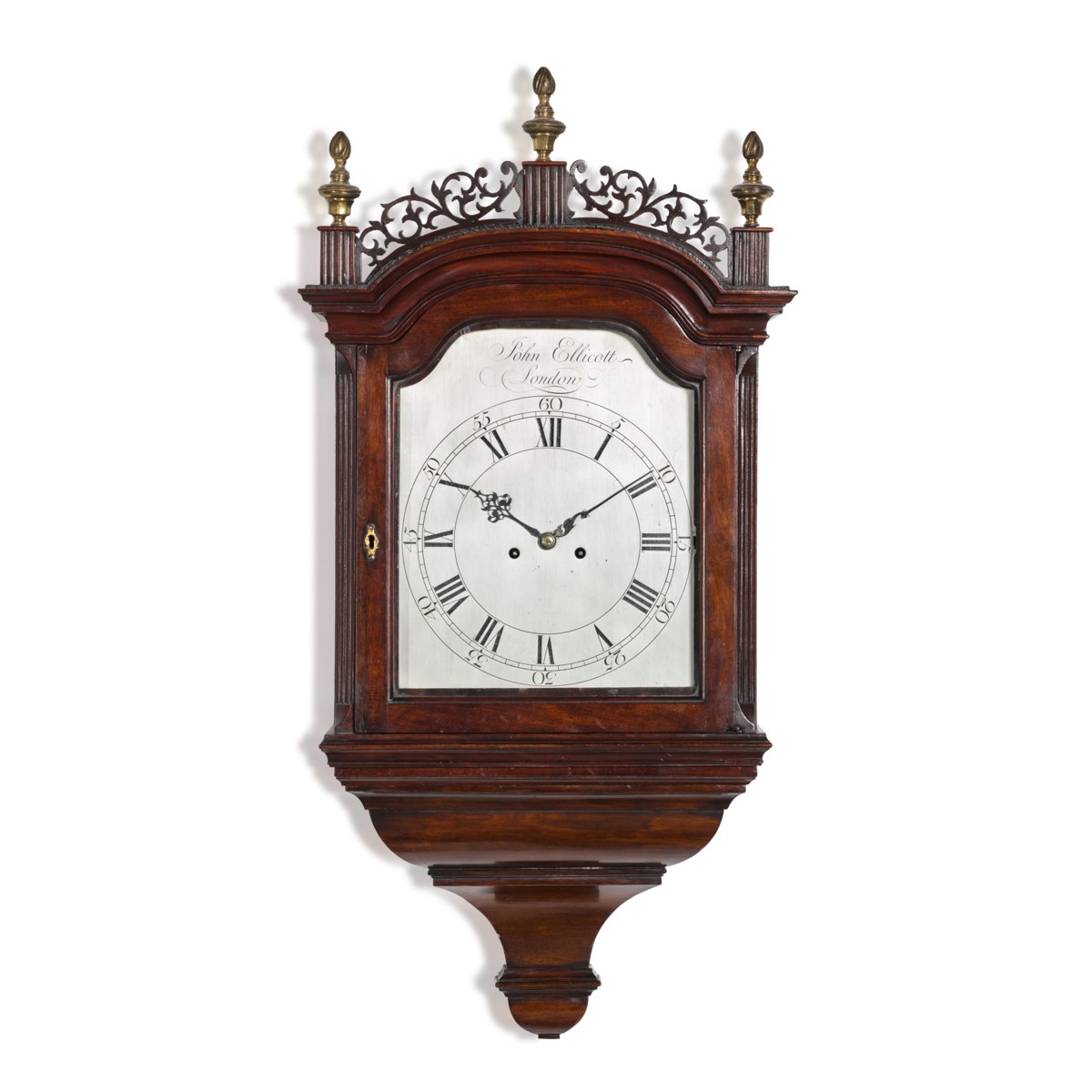
A George III mahogany hooded wall clock, John Ellicott
This George III hooded wall clock, dating to circa 1760, features a 10-inch silvered dial signed 'John Ellicott, London' in the shallow arch. The dial includes Roman hours, outer Arabic five-minute divisions, twin winding apertures, and a strike/silent lever located at III. The solid mahogany case is surmounted by pierced foliate cresting and three flambeau finials, flanked by fluted canted hood corners and scale side frets. It rests on a convex and concave moulded integral bracket that slides to reveal a hidden key compartment. The source reports that the movement features a fusee mechanism with five knopped pillars, verge escapement, and rack striking on a bell.
Full description
www.sothebys.com · 94
Clock · Bracket clock
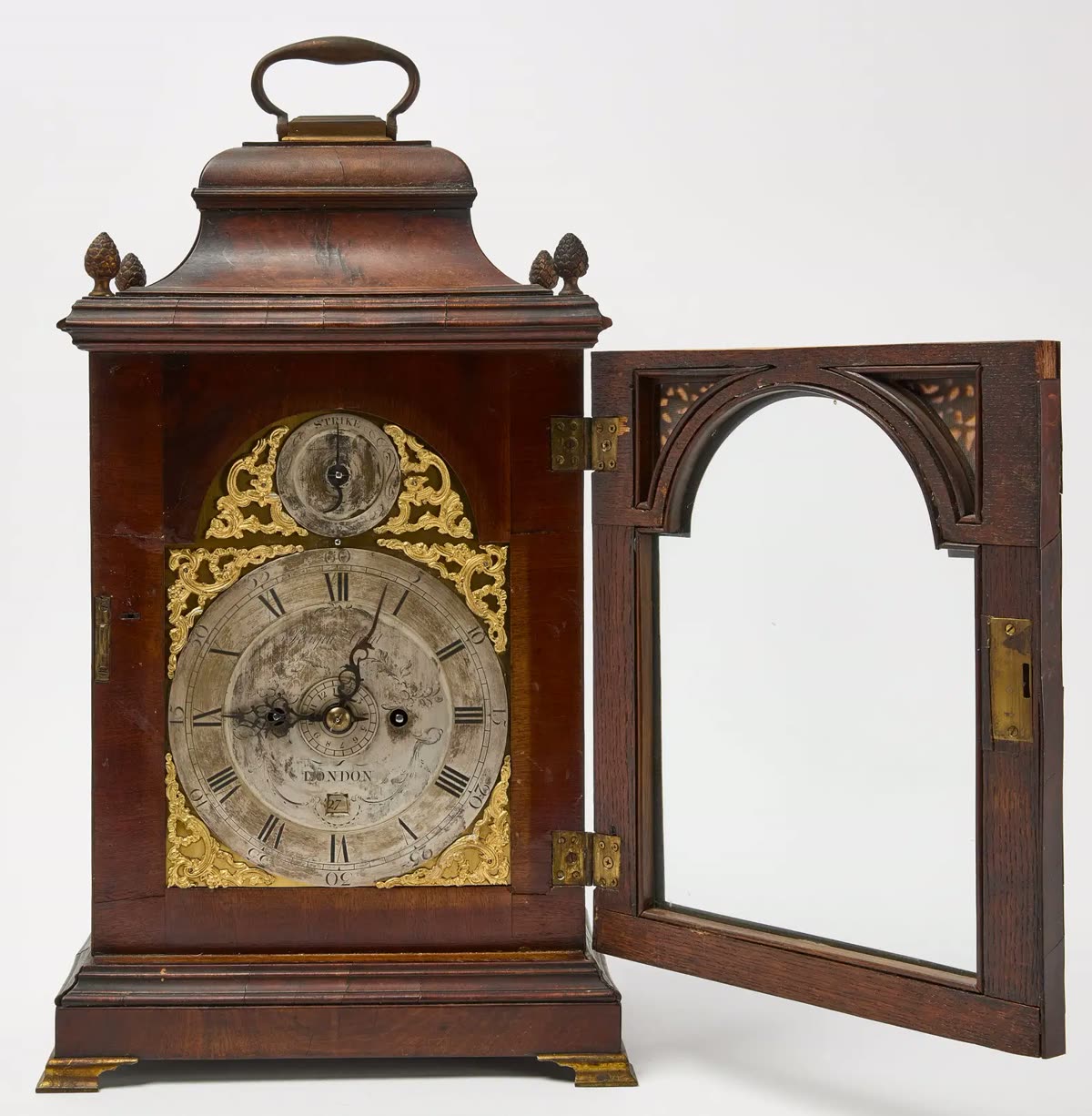
John Ellicott bracket clock
This eighteenth-century English bracket clock is housed in an inverted bell-shaped walnut case surmounted by a carrying handle and corner finials. Its arched brass dial features pierced gilt spandrels, a silvered chapter ring with Roman numerals and outer Arabic minute markings, a date aperture, and an upper subsidiary Strike/Silent dial. The dial center is inscribed 'LONDON'. According to the auction description, the movement is fitted with a verge escapement and the case measures 16-1/2 inches high.
Full description
www.liveauctioneers.com · 0242
Clock · Bracket clock
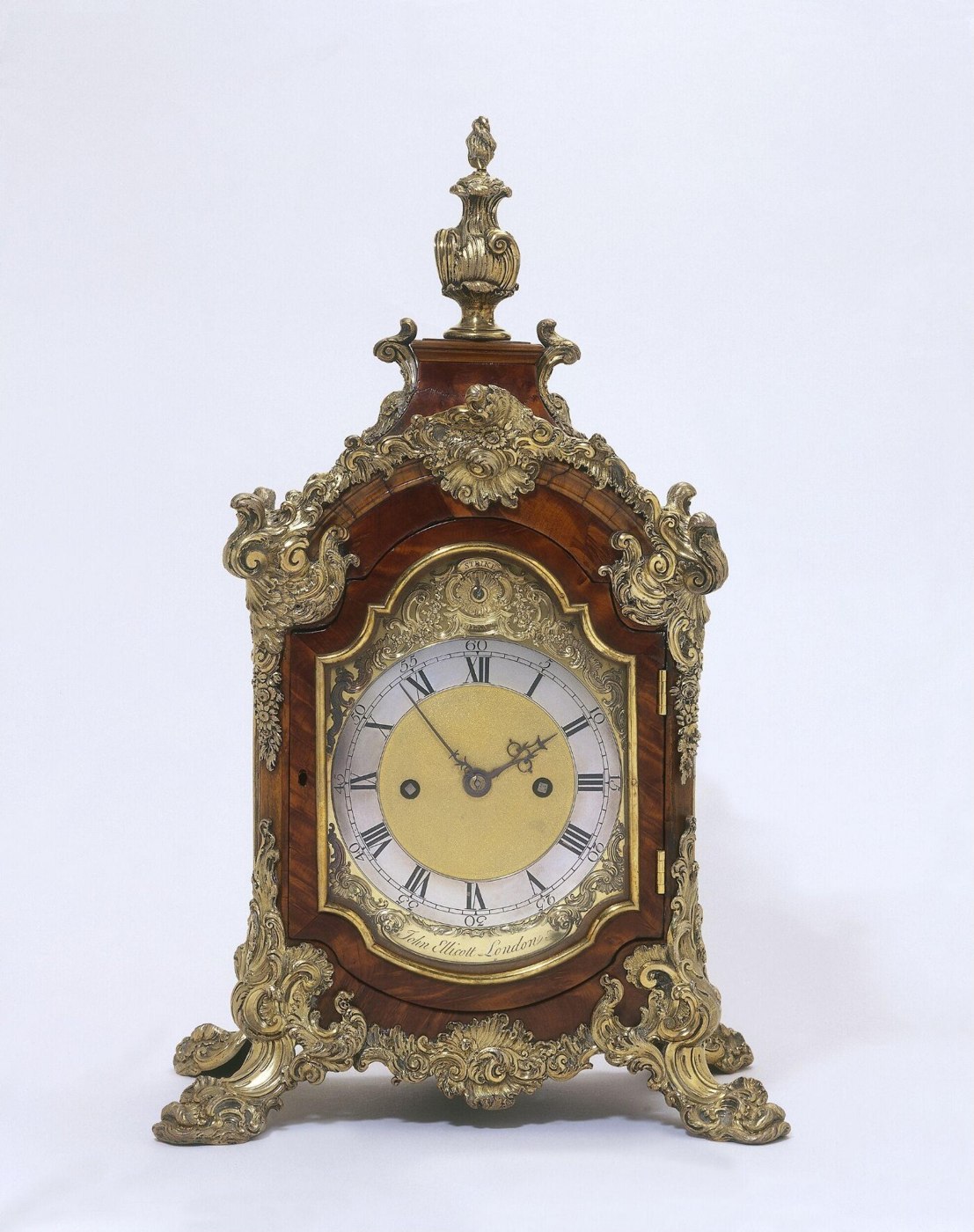
Table clock by John Ellicott
This table clock, created in London between 1740 and 1750 by John Ellicott, features a rectangular walnut case with silver-gilt mounts. The timepiece is equipped with an eight-day verge movement and a repeating mechanism that strikes the hour and the nearest quarter on six bells of varying tones when a cord at the rear is pulled. The dial is constructed with a silver chapter ring and a matted gilt center, displaying hours in Roman numerals and five-minute intervals in Arabic numerals, with blued steel hands. A subsidiary 'STRIKE' and 'SILENT' dial is positioned at the top of the silver-gilt dial plate. While the original maker remains documented, the escapement, crown-wheel, and pallet have been replaced. The clock is signed by John Ellicott on the dial and the rear movement plate, where the serial number 36803 is also scratched.
Full description
collections.vam.ac.uk · M.22-1970
Clock · Longcase clock
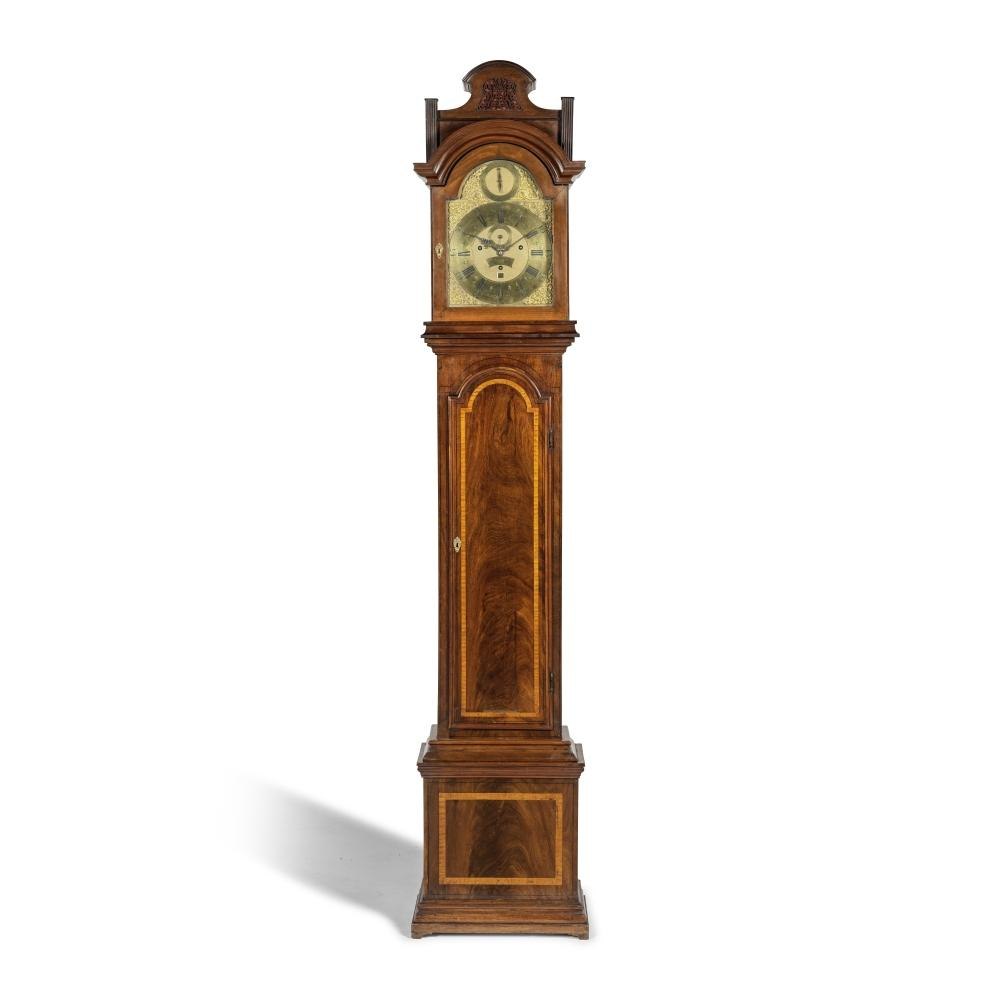
John Ellicott Longcase Clock
This mid-18th century longcase clock features a movement by John Ellicott, London, housed within a case of later construction. The clock measures 250cm in height. Its 12-inch break-arch brass dial displays a silvered chapter ring with Roman and Arabic numerals, complemented by fleur-de-lys half-hour markers. The matted center includes a subsidiary seconds dial and a calendar aperture. The arch houses a strike/silent subsidiary dial. The movement is substantial, utilizing a deadbeat escapement with adjustable steel pallets. It features an hour-striking train controlled by a rack and snail system on a large bell, while the quarters are struck on a train of eight bells operated by a pinned barrel. The later case is characterized by a moulded architectural pediment, pierced sound fret with red silk backing, and inlaid doors. The clock is provided with a case key and a winding key.
Full description
www.invaluable.com · 280
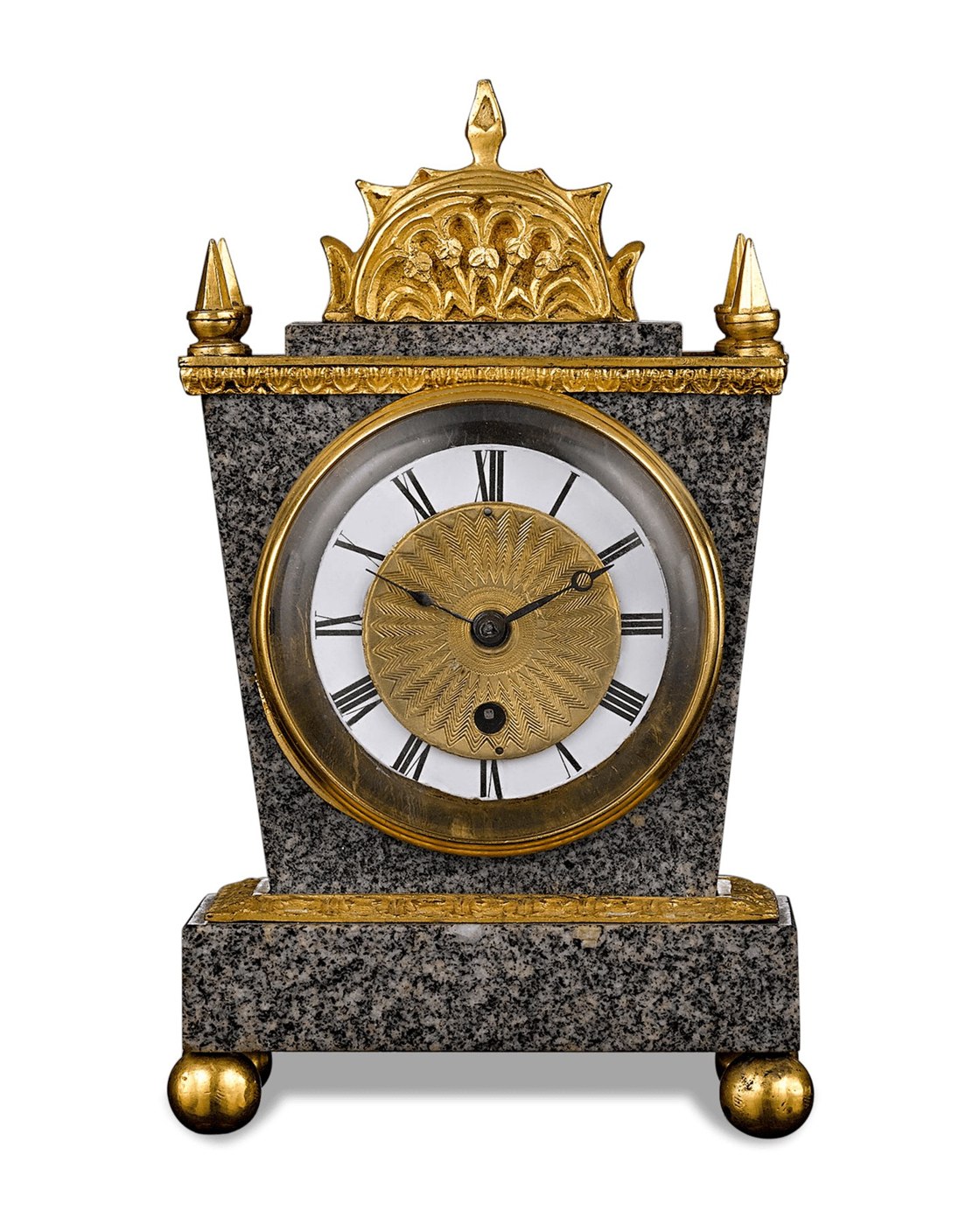
Clock · Bracket clock
English Porphyry Clock by Ellicott
This table clock, attributed to the English clockmaker John Ellicott, is constructed from porphyry and doré bronze. Produced between 1760 and 1772, the piece dates to the period of collaboration between John Ellicott and his son, Edward Ellicott. The clock features a verge movement and stands 4.5 inches tall, 2.25 inches wide, and 1.5 inches deep. Its small, portable design incorporates gilded bronze elements atop the porphyry base and surrounding the dial and movement. The mechanism is signed "Ellicott / London". As a product of the mid-eighteenth century, the clock reflects the work of a maker known for his position as clockmaker to King George III.
Full description
Source listing
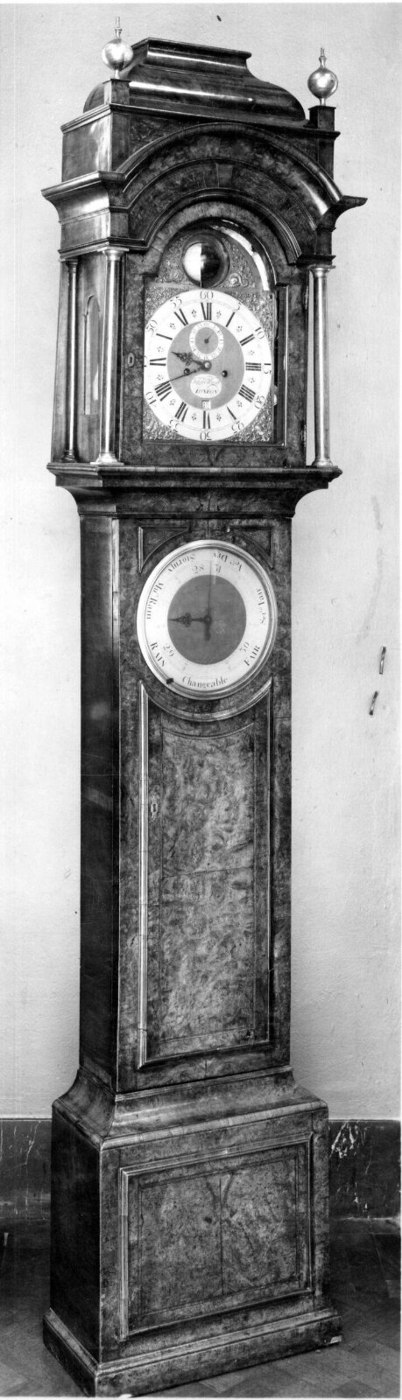
Clock · Longcase clock
Longcase clock with integrated barometer
This eight-day longcase clock is constructed from walnut veneer on an oak carcass and features an integrated wheel barometer. The clock movement is weight-driven and features a dead-beat escapement and pendulum regulation. The brass dial includes a subsidiary seconds ring, a calendar aperture, and a globe moon phase indicator positioned in the break-arch. The hood is of a sliding, break-arch design surmounted by a caddy top and is flanked by free-standing columns. The trunk door incorporates a circular silvered dial for the barometer, which operates independently from the clock mechanism. The maker is identified by the inscription 'John Ellicott London' on the dial. and was acquired by the museum via a bequest from C. D. Rotch. The construction includes steel pierced hands and matted brass shutters concealing the winding squares.
Full description
collections.vam.ac.uk · W.107:1 to 7-1962
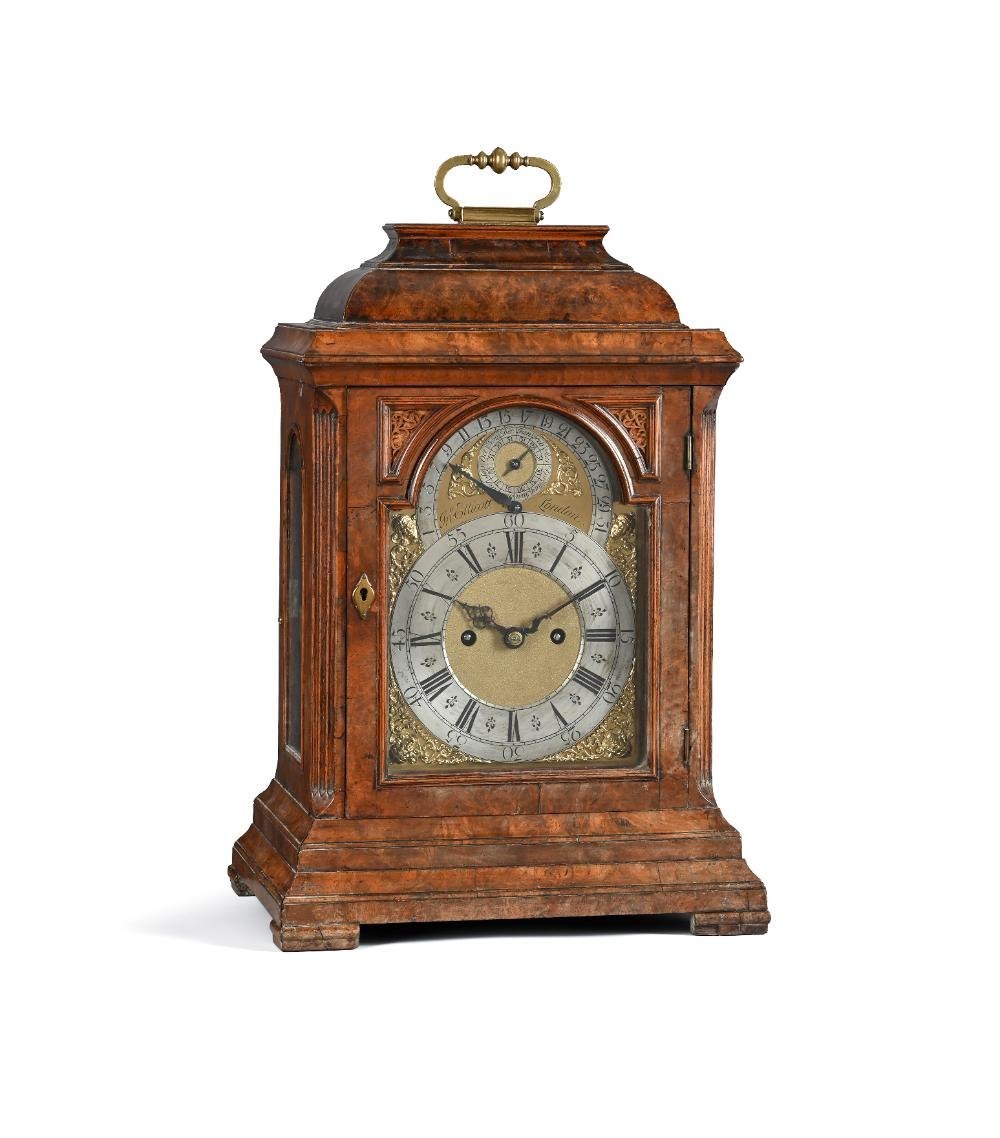
Clock · Bracket clock
George II burr walnut table clock by John Ellicott
This George II table clock by John Ellicott of London, dating to circa 1745, features a burr walnut veneer case with an inverted bell-top design, fluted canted angles, and a brass carrying handle. The clock stands on a double cross-grain molded skirt with feet. It is equipped with a five-pillar twin fusee movement featuring a verge escapement and bell strike. The rear of the clock houses a backplate engraved with foliated scrollwork and a basket of fruit. The 7-inch brass break-arch dial incorporates a matted center, a silvered Roman numeral chapter ring with fleur-de-lys markers, and scroll-pierced blued steel hands. Functional indicators include an upper curved silvered plate for a fly-back date-of-the-month and a central subsidiary dial for the month of the year. The ensemble includes a George III brass-mounted mahogany wall bracket dating to approximately 1760.
Full description
Source listing
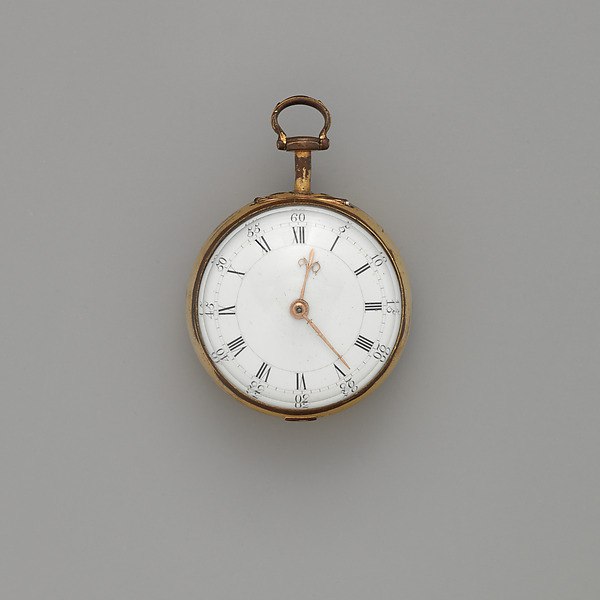
Pocket watch · Open-face watch
John Ellicott pocket watch
This pocket watch was made by the London-based watchmaker John Ellicott (1706–1772), circa 1760. The object is catalogued as part of The Metropolitan Museum of Art collection, accession number 17.190.1462a, b, and was a gift from J. Pierpont Morgan in 1917. The watch features construction incorporating materials identified by the museum as pinchbeck, tortoiseshell, and enamel, with a recorded diameter of 2 1/8 inches (5.4 cm). The design includes a circular case with a winding aperture on the case back and a white enamel dial with Roman numerals. The watch is classified within the museum's European Sculpture and Decorative Arts department. John Ellicott was a prominent English horologist active in London, known for his scientific contributions, including work on temperature-compensated pendulums and the cylinder escapement. The piece reflects the manufacturing standards and materials used during the mid-eighteenth century in London.
Full description
Source listing · 17.190.1462a, b