
Skip to content
The Encyclopedia of Horology

Movement · Verge watch movement

Watch movement with remontoir and two balance springs by Thomas Mudge

Partially verified

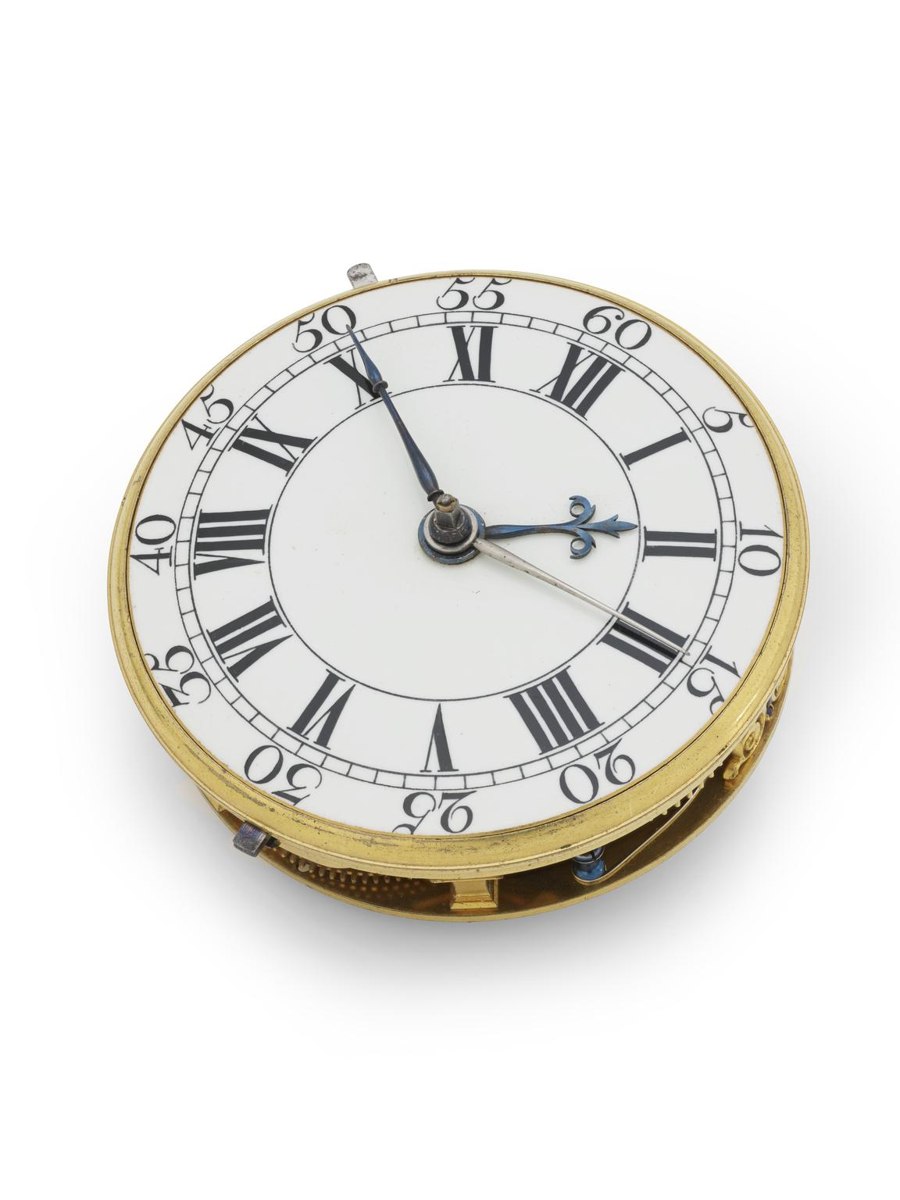
This verge watch movement with remontoir and two balance springs was made in London in 1755 by Thomas Mudge, bearing serial number 260. The movement features a white enamel dial with Roman numerals for the hours and an outer chapter ring with large Arabic five-minute numerals. It carries blued steel beetle-style hands along with a centre seconds hand positioned between the hour and minute indicators. According to museum documentation, the fusee movement incorporates a verge escapement, a remontoir, and two balance springs, one with curb compensation and the other with a regulator. Sourced provenance notes state it was sold to King Ferdinand of Spain in August 1755.

Dial and movement edge view of Thomas Mudge verge watch movement no. 260
Dial and movement edge view of Thomas Mudge verge watch movement no. 260 — Science Museum Group / The Clockmakers' Museum. Rights pending — permission not yet requested. Original source

Catalogue identity

Source
collection.sciencemuseumgroup.org.uk
Category
Movement · Verge watch movement
Maker / attribution
Thomas Mudge
Reference
Not recorded
Catalogue / lot identifier
L2015-3217
Source-reported date
1755
Source-reported place
United Kingdom
Source-reported serial
260

Source-reported attribution and specifications are not independent authentication. A listing does not establish present ownership, current display, availability or permission to reproduce.

Object description

Dial and Visual Features

The object is a verge watch movement featuring a white enamel dial. It is marked with large minute figures and employs steel beetle hands, with a centre seconds hand positioned between the hour and minute indicators.

The gilt brass movement structure is visible beneath the edge of the dial, including pillars and a latch at the rim.

Evidence for this section
  • “White enamel dial with large minute figures and steel beetle hands and a centre seconds hand, placed between the hour and minute hands.”
  • “Gilt brass movement structure visible beneath dial edge, including pillars and a latch at the rim”

Mechanism

The fusee movement contains a verge escapement and a remontoir. It utilizes two balance springs: one with curb compensation and the other with a regulator.

Operational features described include a minute hand that jumps forward once every minute and a pivoted detent intended to prevent the remontoir wheel from running back during winding. A stop acts on the wheel carrying the seconds hand, and a small hook engages with the wheel teeth to ensure an immediate advance of the seconds hand when the stop is removed.

Evidence for this section
  • “The fusee movement contains a verge escapement, a remontoir, and balance with two balance springs; one with curb compensation and the other with regulator.”
  • “The minute hand jumps forward once every minute.”
  • “The fusee has no maintaining power, but a pivoted detent prevents the remontoir wheel from running back during winding.”
  • “A stop acts on the wheel carrying the seconds hand, allowing it to be halted. When the stop is taken off a small hook engages with the wheel teeth, thus ensuring an immediate advance of the seconds hand.”

Provenance and Identification

The movement is signed 'Thos Mudge London 260' and is identified by the object number L2015-3217. It was produced in London in 1755.

Historical records indicate the movement was originally sold to Ferdinand, King of Spain, on August 22, 1755. It was subsequently presented to the Worshipful Company of Clockmakers by John Grant Jnr in 1850.

Evidence for this section
  • “Signed on the movement 'Thos Mudge London 260'.”
  • “Watch movement numbered 260, by Thomas Mudge, London, 1755.”
  • “Originally sold to Ferdinand, King of Spain on August 22nd 1755.”
  • “Presented to the Worshipful Company of Clockmakers by John Grant Jnr in 1850.”

Open research questions

  • What is the function of the diamond noted in the materials list within the movement assembly?

Source evidence

Recorded claims and source quotations for Watch movement with remontoir and two balance springs by Thomas Mudge
FieldSource-reported valueSource quotation
MakerThomas Mudge“maker: Thomas Mudge”
Date1755“Made: 1755 in London”
Movement Number260“Watch movement numbered 260, by Thomas Mudge, London, 1755.”
Movement SignatureThos Mudge London 260“Signed on the movement 'Thos Mudge London 260'.”
Escapement and RemontoirVerge escapement with remontoir and two balance springs“The fusee movement contains a verge escapement, a remontoir, and balance with two balance springs; one with curb compensation and the other with regulator.”
Object NumberL2015-3217“Object Number: L2015-3217”
Original ProvenanceFerdinand, King of Spain“Originally sold to Ferdinand, King of Spain on August 22nd 1755.”
MaterialsSilver alloy, enamel, brass, steel, and diamond“Materials: silver (alloy) , enamel , brass (copper, zinc alloy) , steel (metal) and diamond”
Dimensions41 mm x 49 mm x 25 mm“Measurements: overall: 41 mm x 49 mm x 25 mm”

Visible details

  • Circular white enamel dial with black Roman hour numerals
  • Outer track with prominent Arabic five-minute numerals
  • Blued steel beetle-style hour hand and straight pointer hands, with a central seconds hand mounted between the hour and minute hands
  • Gilt brass movement structure visible beneath dial edge, including pillars and a latch at the rim
  • Watch movement uncased

Research qualifications

  • Escapement, remontoir, and dual balance springs are inside or on the back of the movement and not directly visible in the dial-side view
  • No watch case is present with the movement

Photograph identity and source facts were screened before import; rights clearance remains pending.

Terms in this record

Glossary explanations for terms named in this object’s record.