
Skip to content
The Encyclopedia of Horology

Tool · Demonstration model

Dent Demonstration Model of the Earnshaw Chronometer Escapement

Partially verified

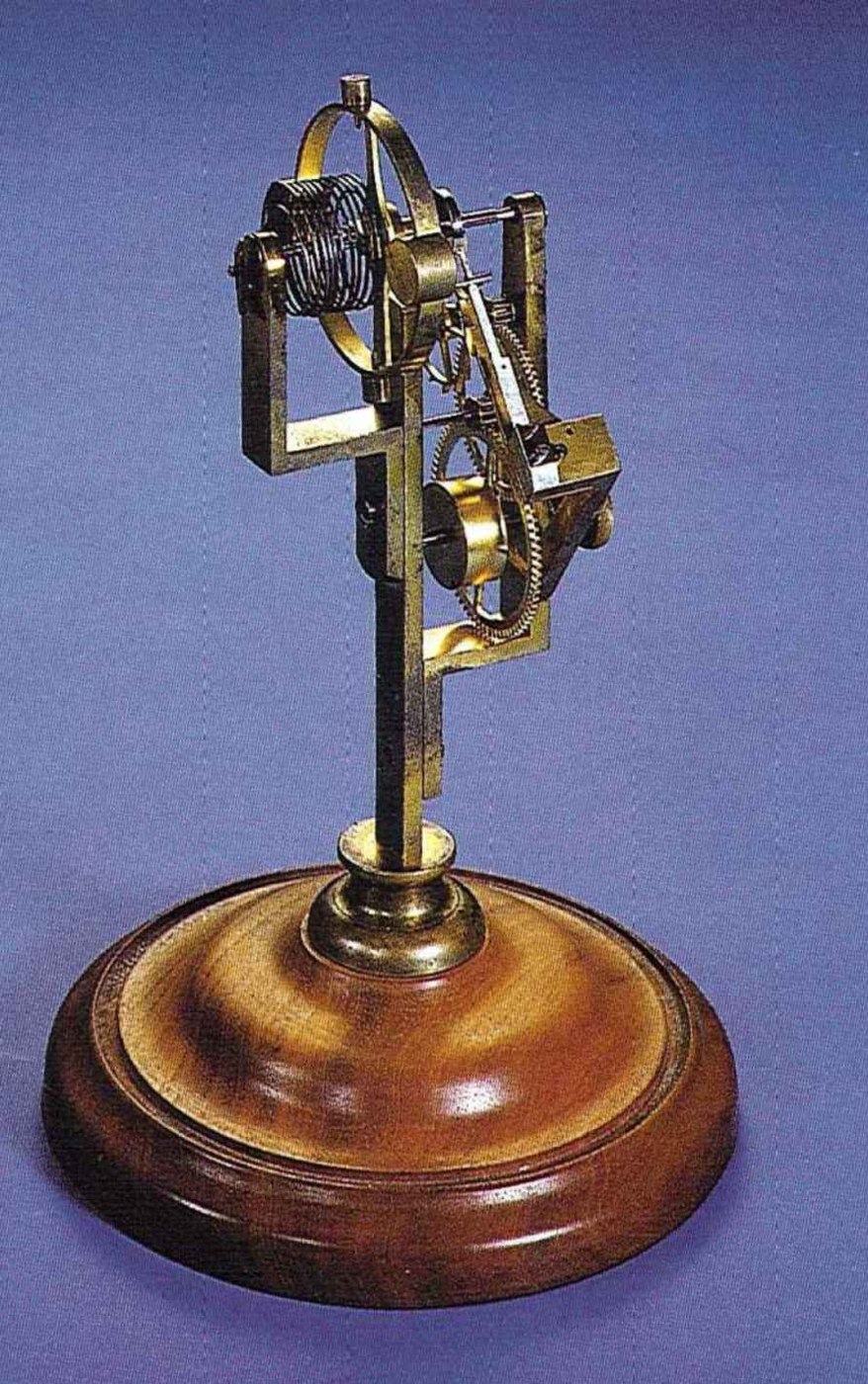
This circa 1880 demonstration model of an Earnshaw chronometer escapement was produced in London by Dent. Intended for display purposes, it was formerly held in the premises of E. Dent & Co. The object features a vertical arrangement with the gear train secured between bridges on a brass bar. The going train is powered by a small gilded barrel wound via a knurled button, providing approximately one hour of duration. The wheels are gilded and fixed to lantern pinions with screws. The escapement mechanism follows the Earnshaw pattern, utilizing a polished steel spring-detent, a steel locking pin and roller, and a gold-alloy passing spring. The balance staff is equipped with blued-steel end-plates, while the plain brass balance includes adjustable circular weights and timing screws. The assembly is completed with a helical blued-steel spring and is free-sprung with terminal curves, mounted on a turned mahogany base.

Demonstration model of the Earnshaw chronometer escapement, mounted on a turned mahogany base.
Demonstration model of the Earnshaw chronometer escapement, mounted on a turned mahogany base. — Antiquorum. Rights pending — permission not yet requested. Original source

Catalogue identity

Source
catalog.antiquorum.swiss
Category
Tool · Demonstration model
Maker / attribution
Dent
Reference
Not recorded
Catalogue / lot identifier
186
Source-reported date
circa 1880
Source-reported place
London

Source-reported attribution and specifications are not independent authentication. A listing does not establish present ownership, current display, availability or permission to reproduce.

Object description

Escapement and Balance Mechanism

The model features an Earnshaw-pattern chronometer escapement designed for demonstration. It incorporates a polished steel spring-detent and a steel locking pin and roller. The passing spring is described as being made of a gold alloy, although the source notes this with uncertainty. The balance assembly utilizes a plain brass balance fitted with adjustable circular weights and timing screws.

The movement uses a helical blued-steel spring, which is free-sprung and finished with terminal curves. The balance staff is supported by blued-steel end-plates, contributing to the specialized construction required for this type of precision chronometric display.

Evidence for this section
  • “Earnshaw pattern escapement with polished steel spring-detent, gold-alloy (?) passing spring, steel locking pin and roller”
  • “balance staff with bluedsteel end-plates, plain brass balance with adjustable ciruclar weights and timing screws.”
  • “Helical bluedsteel spring, free-sprung with terminal curves.”

Construction and Layout

The demonstration model is constructed with a vertical orientation, placing the gear train between bridges mounted on a central brass bar. The wheels within the train are gilded and secured to their respective lantern pinions using screws. This configuration allows for the viewing of the escapement action and the transmission of power.

Power is provided by a small gilded going barrel, which is wound through a knurled button. This mechanism is capable of sustaining movement for a duration of approximately one hour. The entire vertical assembly is mounted onto a turned mahogany base, which was historically accompanied by a glass dome.

Evidence for this section
  • “Vertical layout, the train planted between bridges on a brass bar”
  • “small gilded going barrel, wound by a knurled button, with power for approximately one hour”
  • “gilded wheels secured by screws onto lantern pinions.”
  • “Mounted on a turned mahogany base with glass dome.”

Provenance and History

The object is documented as having been held on the premises of E. Dent & Co., a firm founded by Edward John Dent. This specific model serves as an example of the tools used by the firm in their London operations. Its historical path includes a sale conducted by Christie's in London on 8 November 1972.

The model was sold as lot 112 during that 1972 auction, upon the instructions of the Dent firm. The item currently remains identified by its historical association with the display of the Earnshaw chronometer escapement mechanism.

Evidence for this section
  • “formerly on display in the premises of E. Dent & Co.”
  • “Sold on instructions of Mesere. Dent by Christie 's, London on 8 November 1972, lot 112.”

Open research questions

  • Was the model part of a larger set of demonstration pieces used for public education or internal training?
  • Is there evidence of the original glass dome still accompanying the object?

Source evidence

Recorded claims and source quotations for Dent Demonstration Model of the Earnshaw Chronometer Escapement
FieldSource-reported valueSource quotation
MakerDent“Dent, London”
Datecirca 1880“circa 1880”
Escapement typeEarnshaw pattern“Earnshaw pattern escapement”
Height25 cm“Height: 25 cm. exclusive of dome.”
Power reserveApproximately one hour“power for approximately one hour”
MountingTurned mahogany base“Mounted on a turned mahogany base with glass dome.”

Visible details

  • Vertical train layout between bridges on a brass bar
  • Gilded wheels attached to lantern pinions via screws
  • Helical blued-steel balance spring

Research qualifications

  • Gold alloy composition of the passing spring is identified with a question mark in the source
  • The total height of 25cm excludes the glass dome

Photograph identity and source facts were screened before import; rights clearance remains pending.