
Glossary · Mechanism
Balance staff
The pivoted axle carrying the balance wheel, hairspring collet and impulse or safety rollers.
Explanation
The balance staff is the axle of the balance wheel. Its very fine pivots run in jewelled bearings, and it carries the balance wheel, the hairspring collet and the roller table. It is the part most often broken when a watch is dropped, especially before shock protection; replacements must match the original dimensions exactly, and fitting one is a skilled job requiring staking tools or a lathe.
In the object catalogue
Catalogued objects whose own source record mentions “Balance staff”. The quoted line shows where; it is the seller’s or museum’s wording, not independent verification.
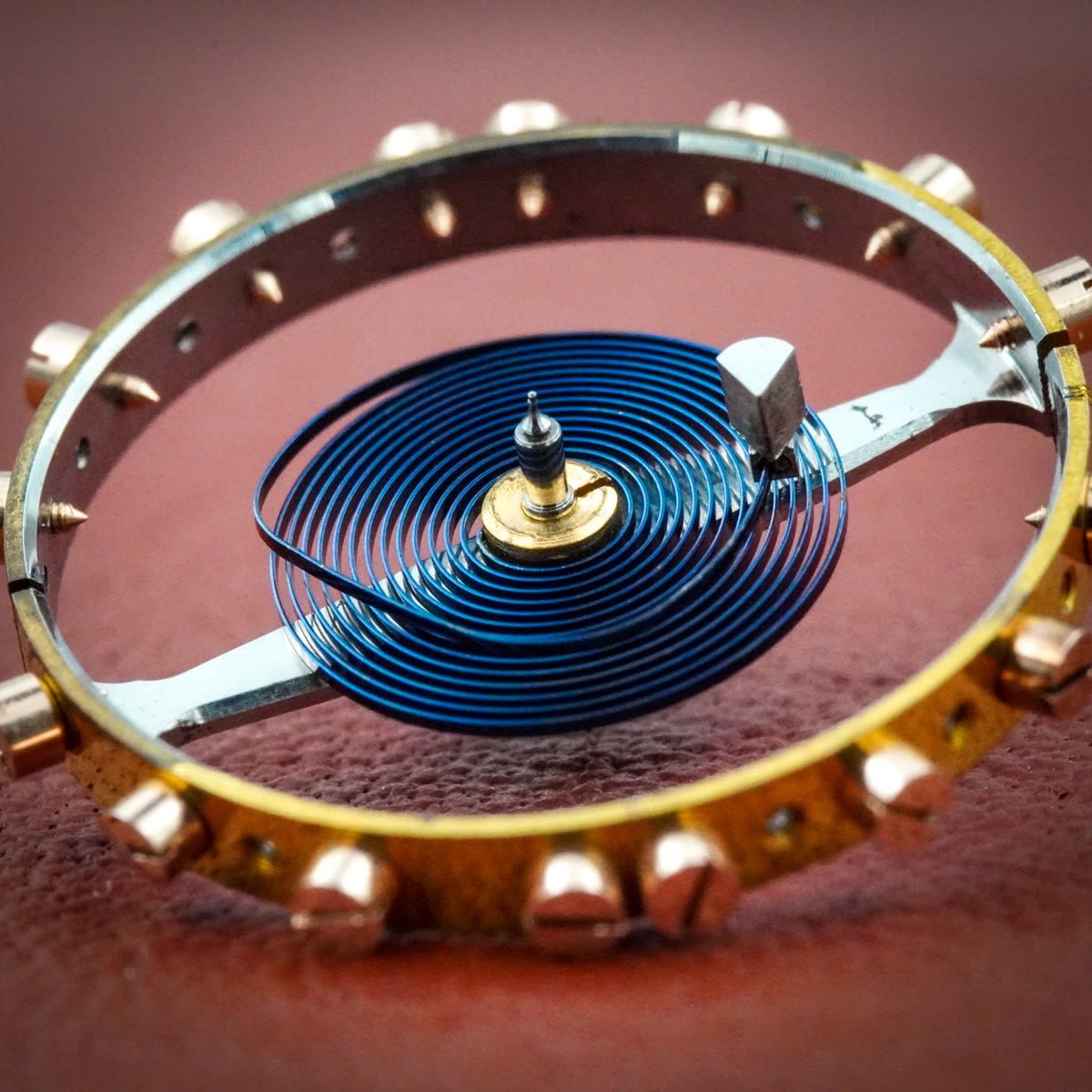
Component
Elgin No. 239 Veritas Hairspring and Balance Assembly
“This horological component comprises the hairspring and balance assembly identified by the source as originating from an Elgin No. 239 Veritas pocket watch movement. The source …”
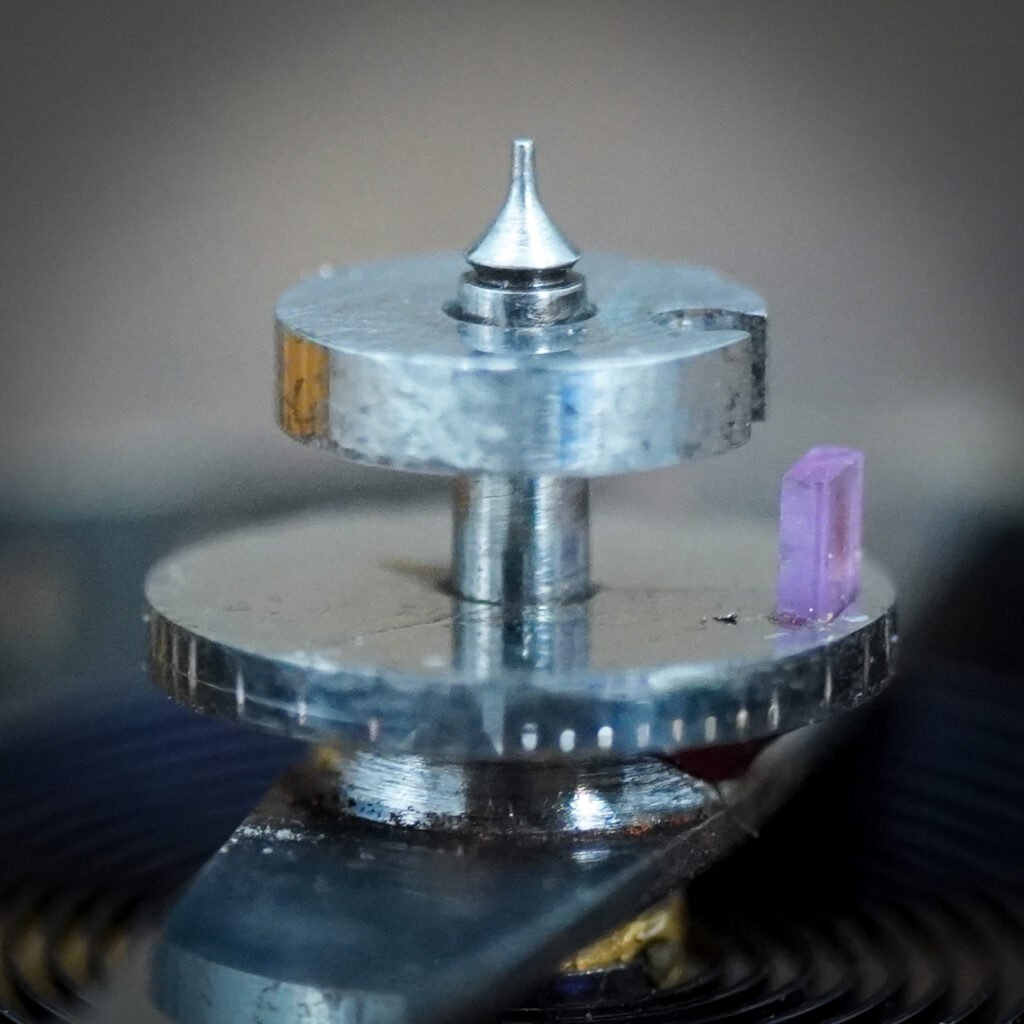
Movement
Adams & Perry Lancaster Watch Movement #1369
“Conical balance pivot tapering to a fine point terminates the upper end of the balance staff.”
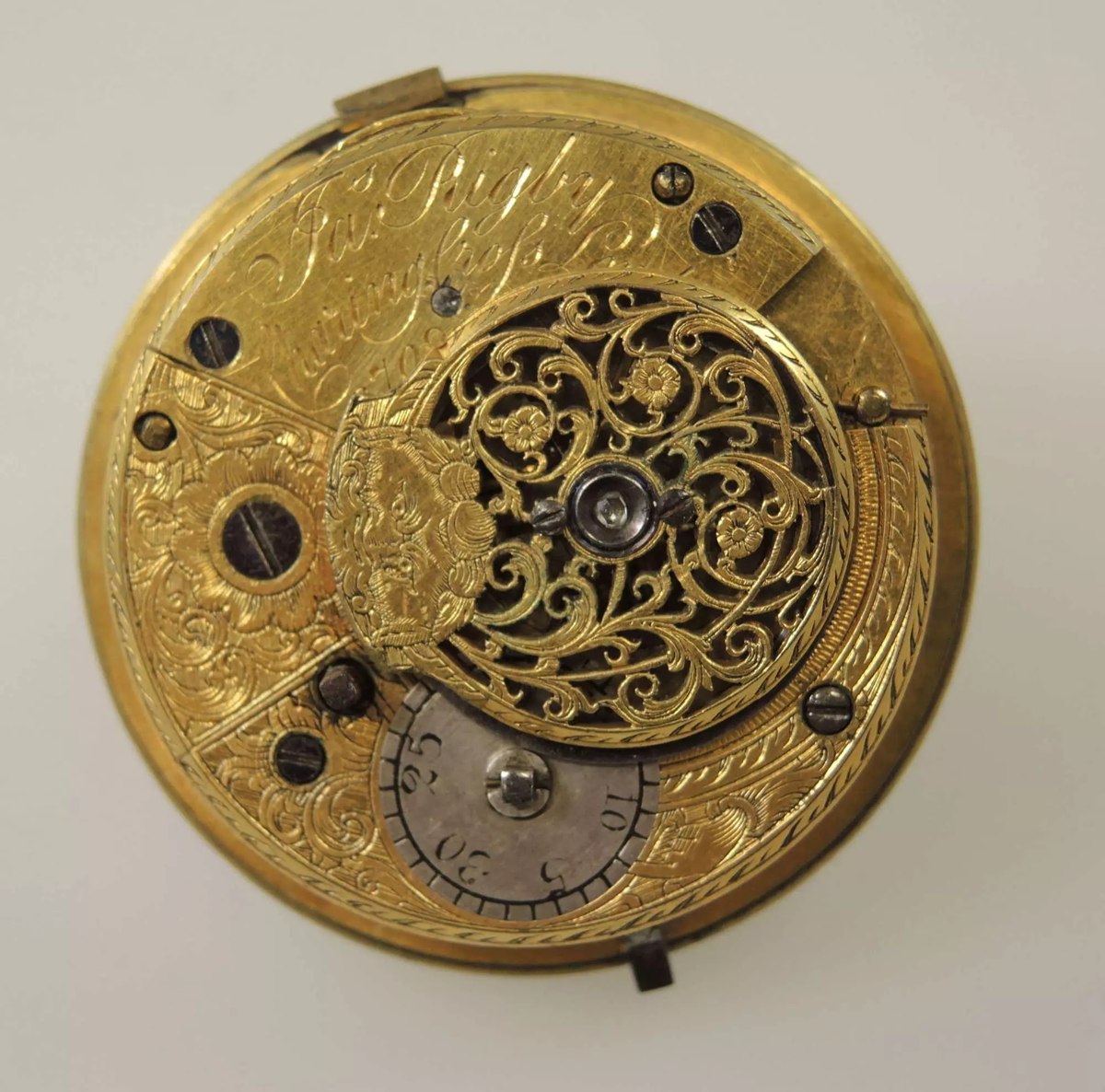
Movement
Georgian verge fusee pocket watch movement by Rigby, London c1810
“This item is an English gilt full-plate verge fusee pocket watch movement catalogued to circa 1810 by dealer Atlam Watches. The top plate is engraved in cursive script with the …”
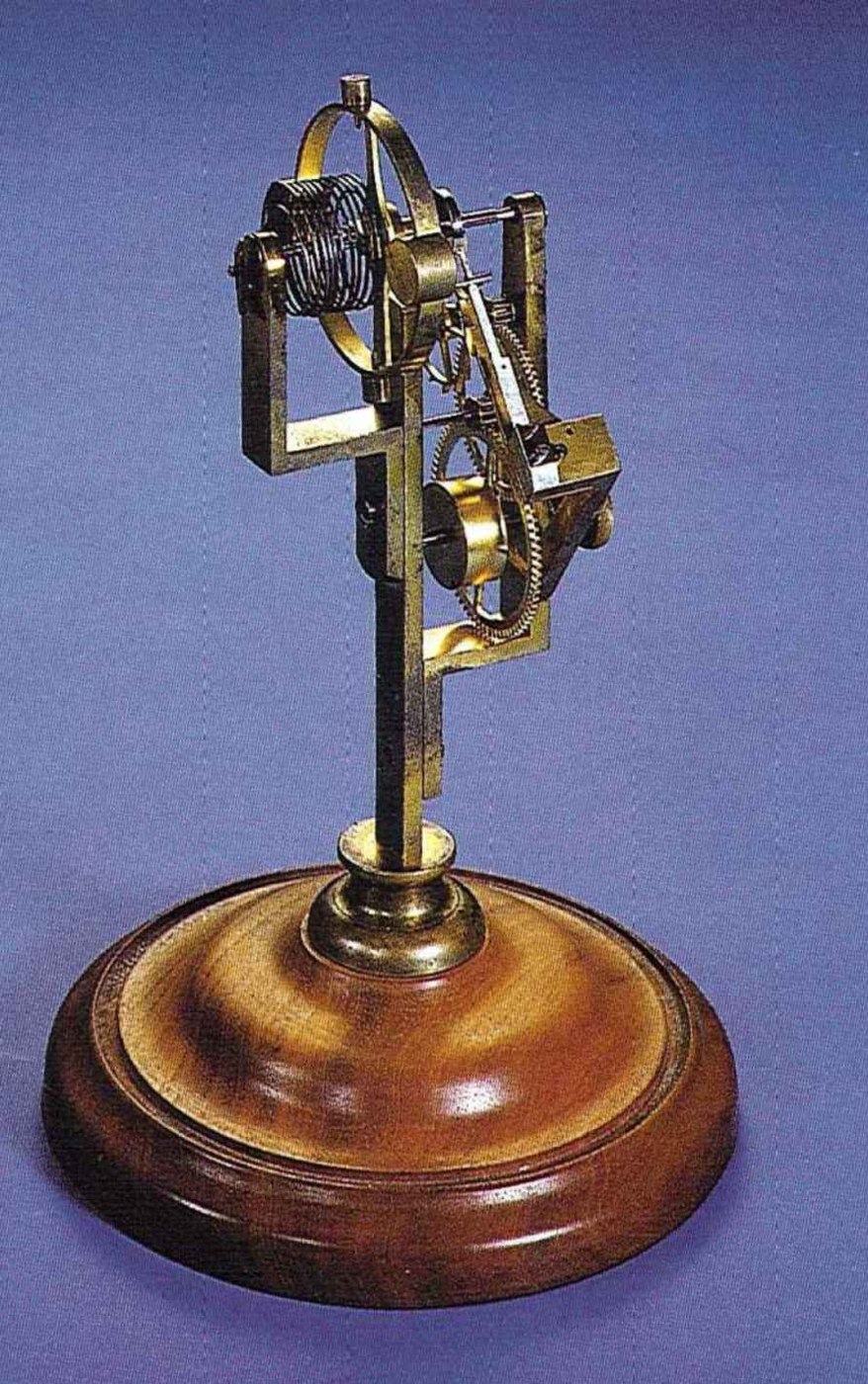
Movement
Dent Demonstration Model of the Earnshaw Chronometer Escapement
“This circa 1880 demonstration model of an Earnshaw chronometer escapement was produced in London by Dent. Intended for display purposes, it was formerly held in the premises of …”
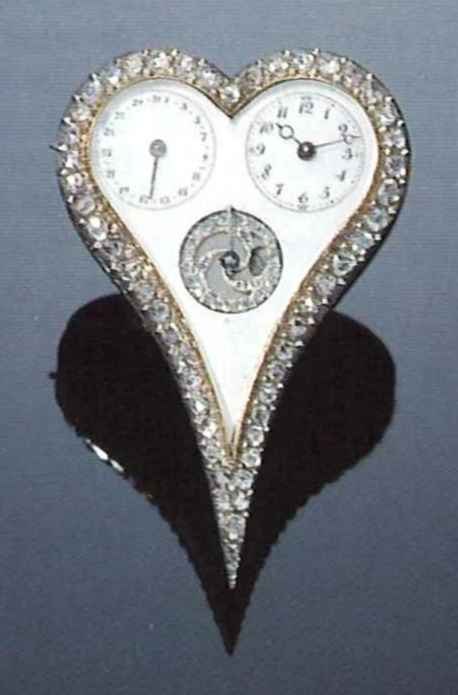
Pocket watch
Anonymous Heart-Shaped Brooch Watch
“This 18-karat gold heart-shaped brooch watch, attributed to Switzerland circa 1800, features a white enamel dial with dual subsidiary rings for the hours and date. The piece is …”
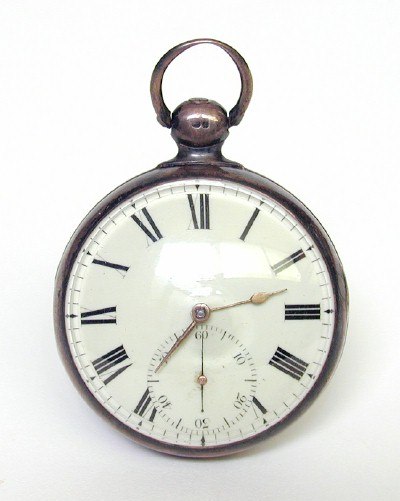
Pocket watch
Silver Pocket Watch by Fisher
“This silver pocket watch was produced in 1816 by the London-based maker N. Fisher. The watch features a white enamel dial with black Roman numerals for the hours and minutes, ac…”