
Glossary · Mechanism
Chronometer escapement (detent)
A detached escapement giving direct, unbuffered impulse to the balance, used chiefly in marine chronometers.
Explanation
The chronometer (detent) escapement gives the balance impulse in only one direction of swing, through a spring detent that unlocks the escape wheel. Nearly frictionless and very efficient, it was the escapement of marine and pocket chronometers from the late 18th century. It is delicate, can set if jolted, and is not self-starting, which is why it stayed in precision instruments rather than everyday watches.
In the object catalogue
Catalogued objects whose own source record mentions “Chronometer escapement (detent)”. The quoted line shows where; it is the seller’s or museum’s wording, not independent verification.
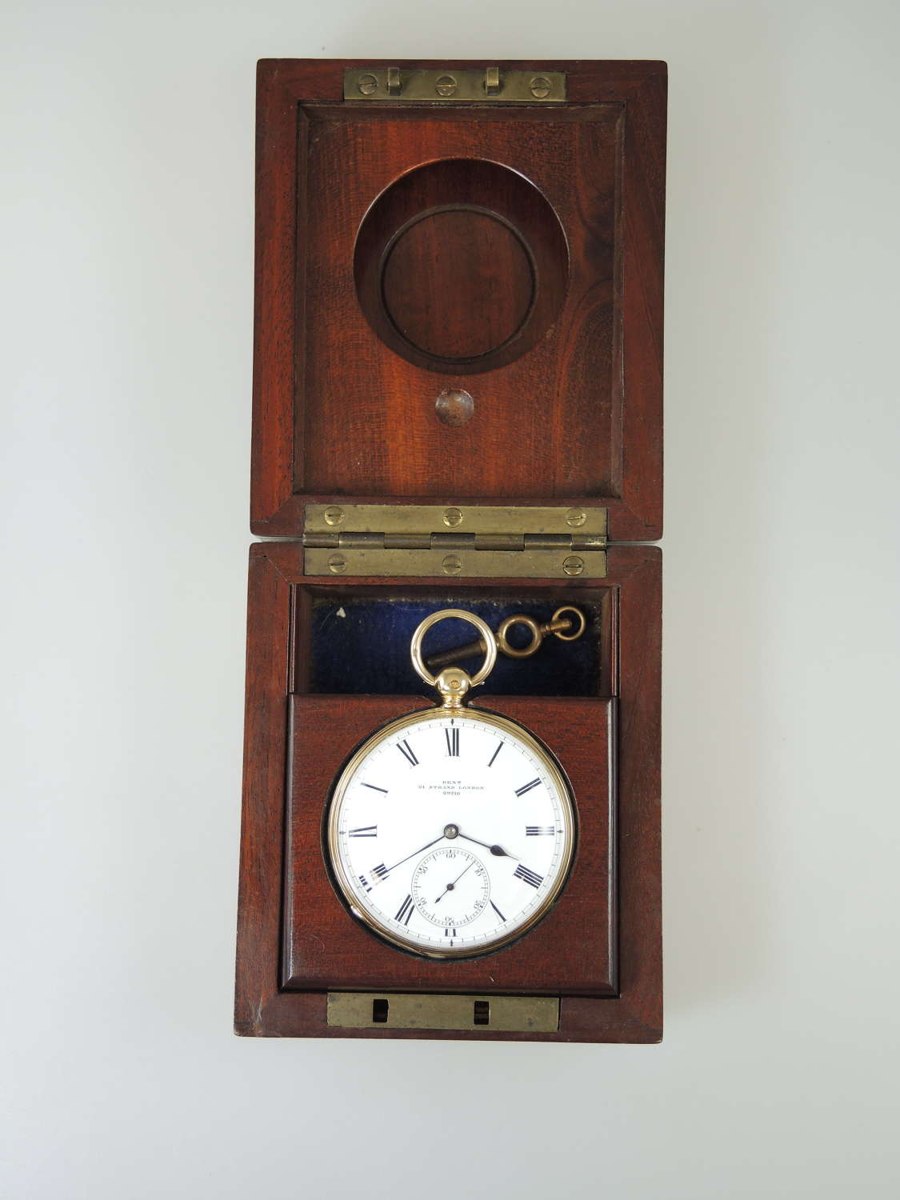
Pocket watch
Dent 18K Gold Pocket Chronometer with Original Box
“Escapement type: Detent chronometer escapement”
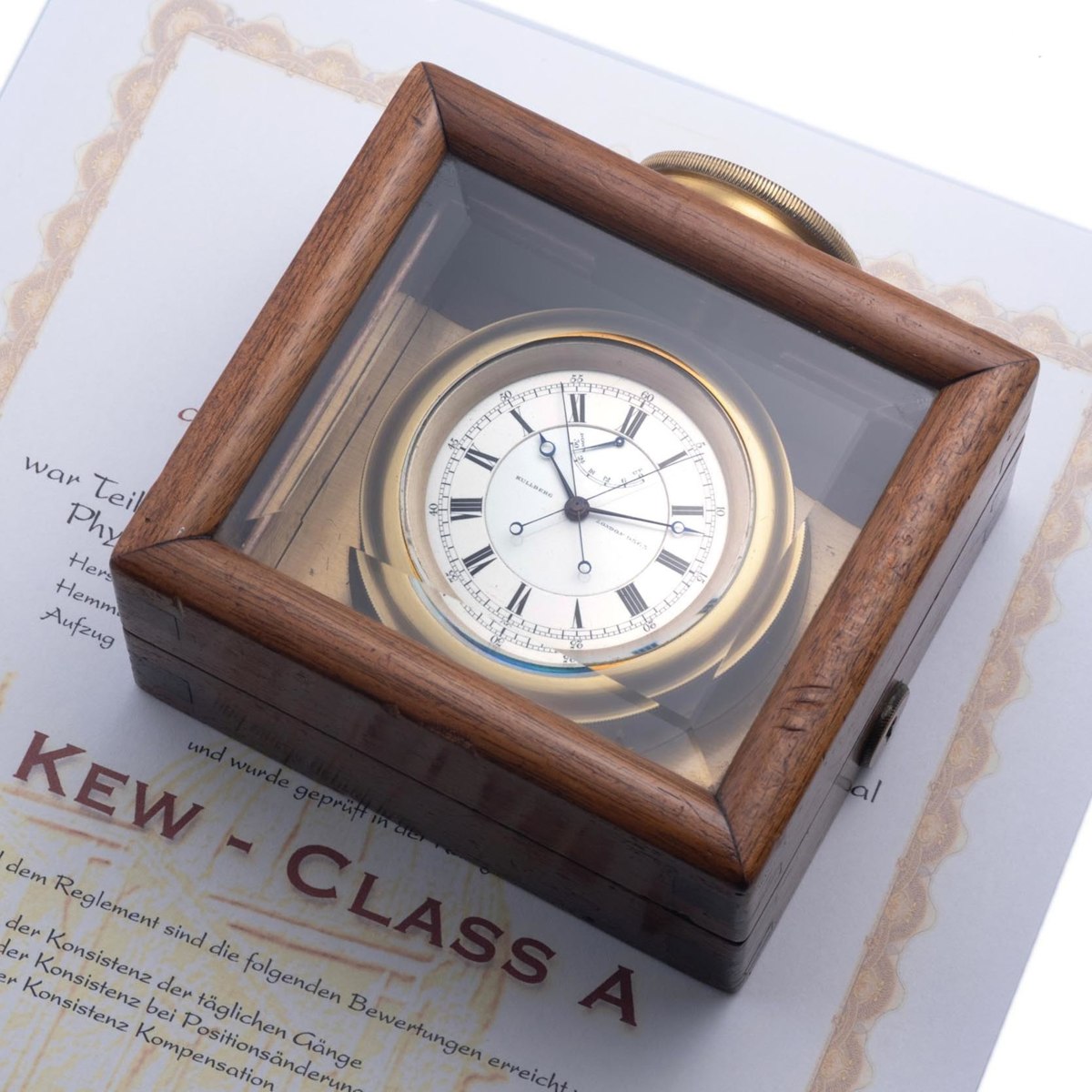
Marine chronometer
Victor Kullberg Spring Detent Deck Chronometer
“This manual-wind deck chronometer by Victor Kullberg features a split-seconds chronograph and an up-and-down 30-hour power reserve indication. Housed in a gilded brass case with…”
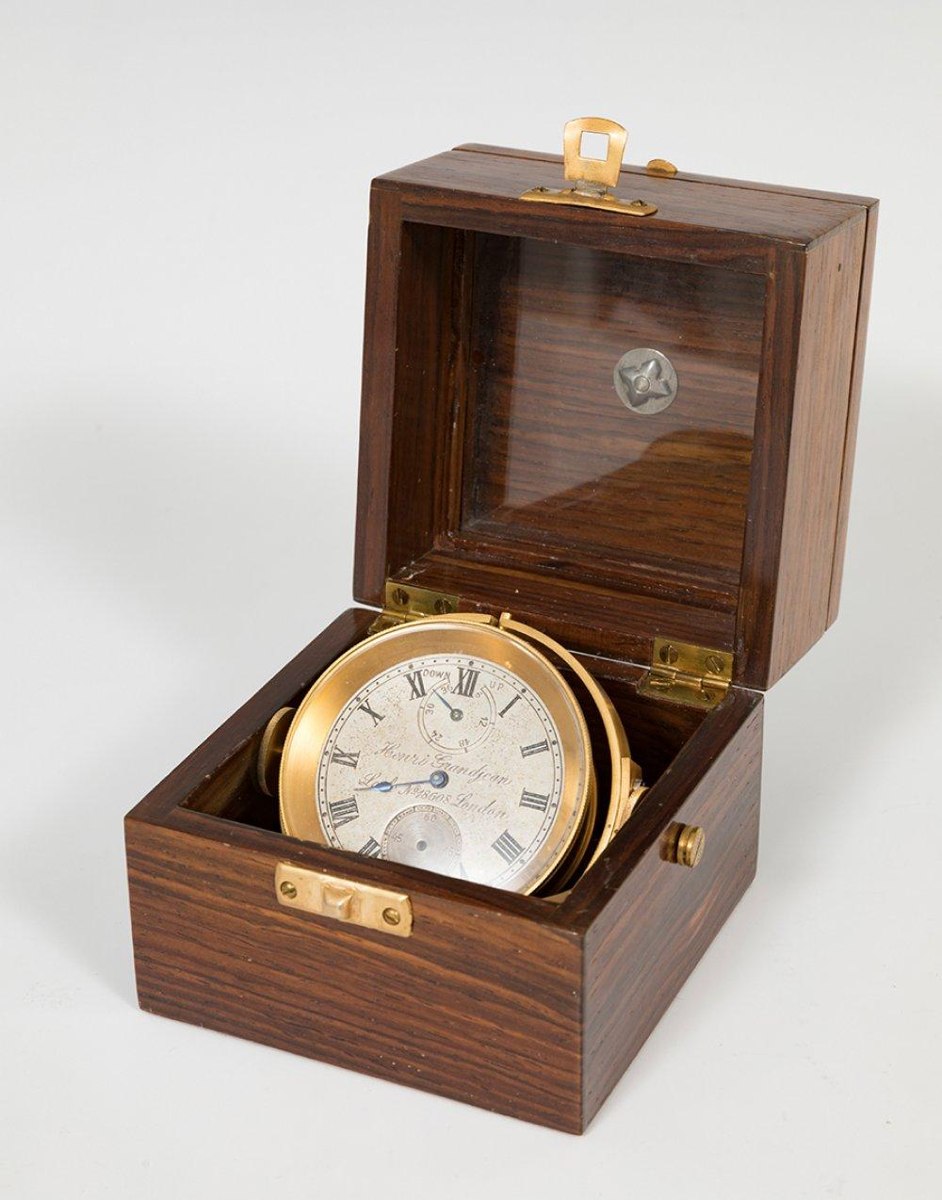
Marine chronometer
Henri Grandjean Maritime Chronometer in Wooden Box
“This nineteenth-century marine chronometer is signed Henri Grandjean and attributed by Setdart Auction House to England. Encased in a gimbaled brass bowl within a fitted dark wo…”
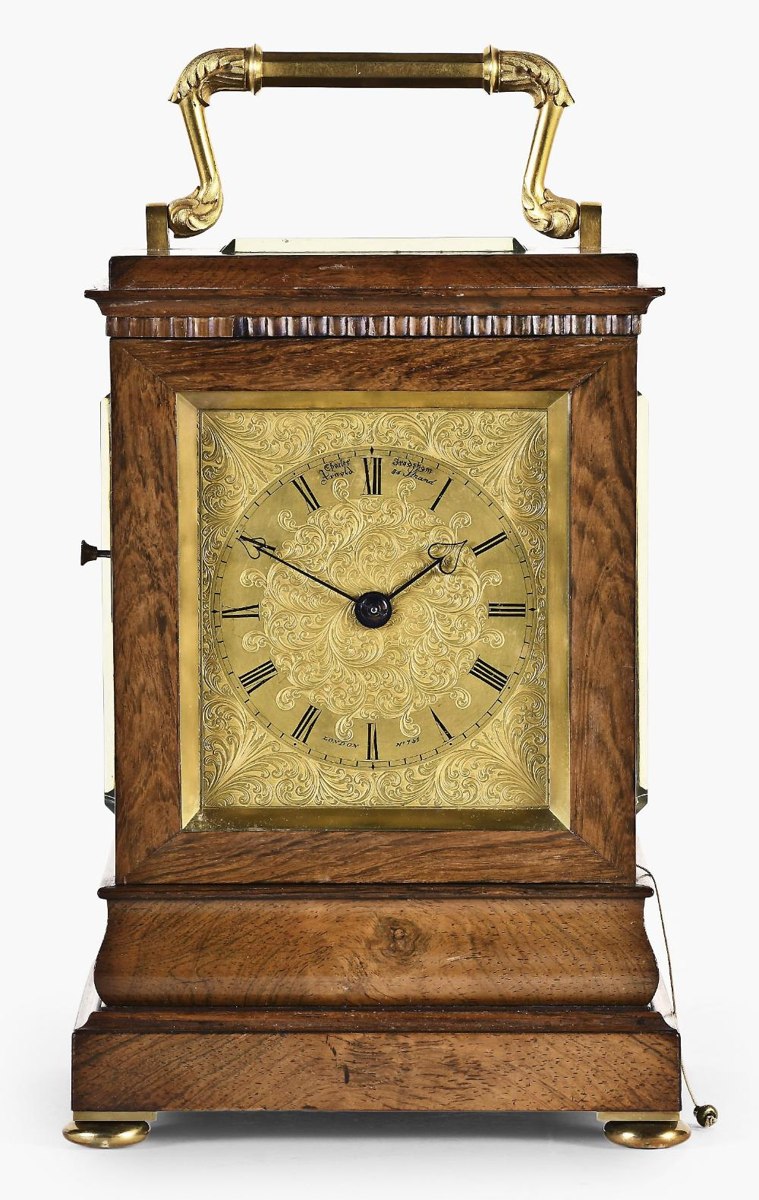
Clock
Arnold & Frodsham Rosewood Giant Carriage Clock with Chronometer Escapement
“Arnold & Frodsham Rosewood Giant Carriage Clock with Chronometer Escapement”
Pocket watch
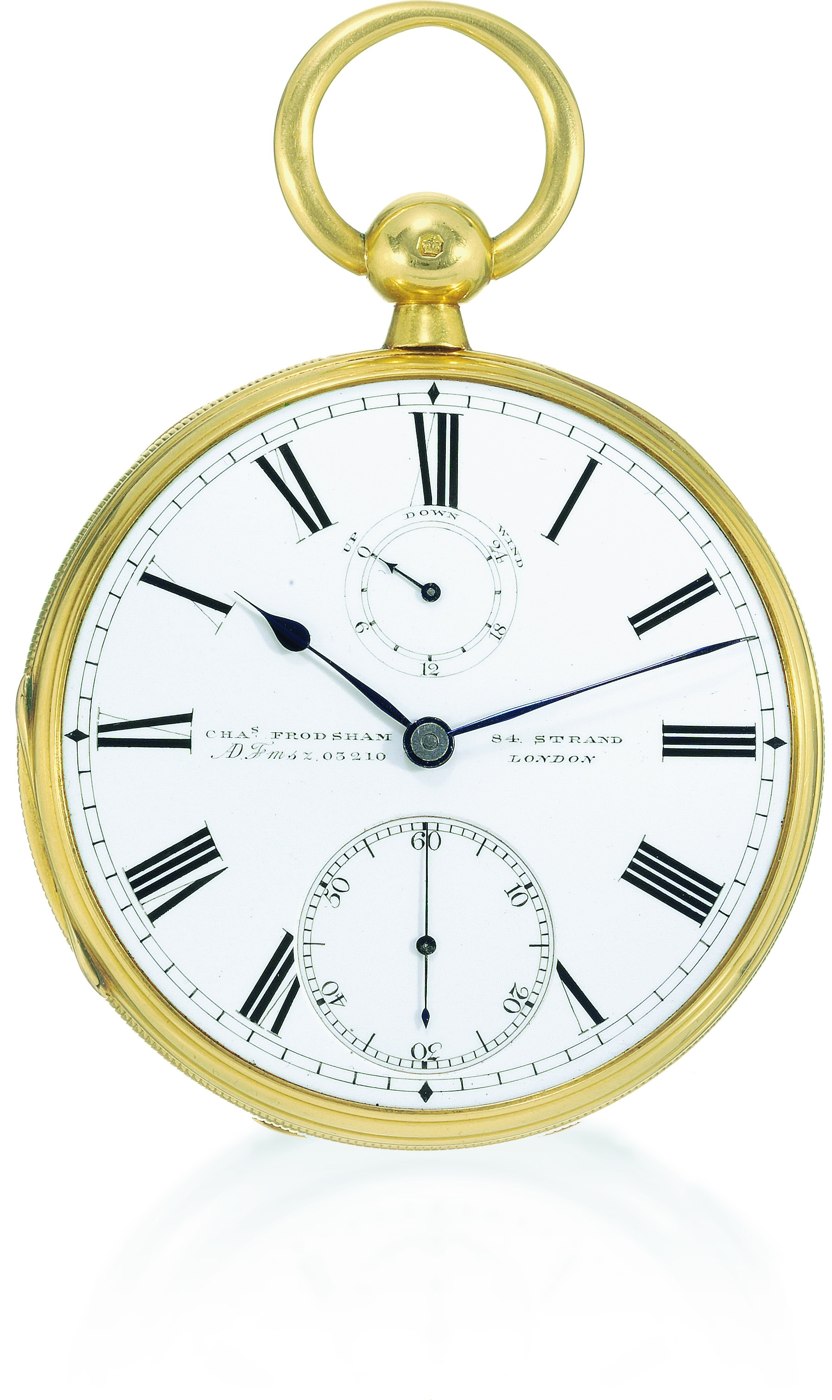
Charles Frodsham 18K Gold Pocket Chronometer
“This 18K gold pocket chronometer, bearing the serial number 03210, was produced by Charles Frodsham of 84, Strand, London. The case is hallmarked for 1865-1866. It features a th…”
Pocket watch
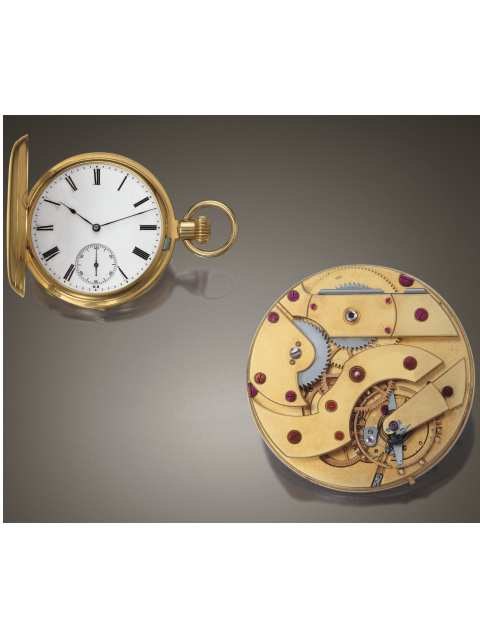
Patek, Philippe & Cie. Hunting Cased Keyless Pocket Chronometer No. 47372
“This Patek, Philippe & Cie. pocket chronometer, bearing serial number 47372, was manufactured in 1872. Produced for A. Barbero & Co. in Rome, the watch was sold to General Zinov…”