
Source catalogue · individual objects
Object Catalogue
Individual objects described by auction houses, specialist dealers and collection catalogues. Attribution, dates and specifications remain source-reported unless independently established; rights clearance is pending.
Browse makers and their key pieces · John Arnold profile
7 of 5699 objects · Page 1 of 1
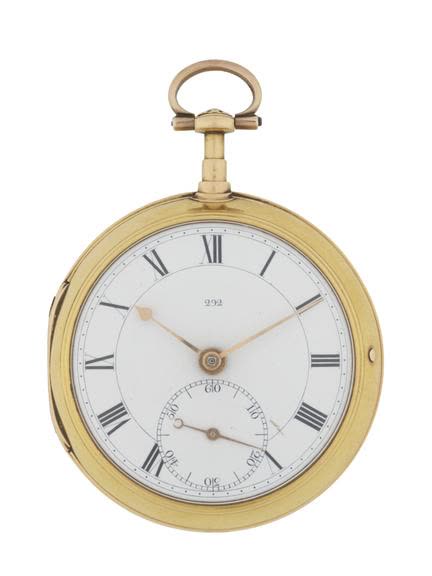
Pocket watch · Pocket chronometer & deck watch
John Arnold & Son Pocket Chronometer Watch with Spring Detent Escapement
According to the Science Museum Group, this pocket chronometer watch was produced by John Arnold & Son in London and features a gold case hallmarked for 1788–1789. The case bears casemaker's mark 'TH' and stamped number 292. The white enamel dial displays Roman hour numerals, gold hands, a subsidiary seconds dial, and the inscription '292'. The movement is recorded as having a spring detent escapement, an OZ balance, and a gold helical balance spring with 4 turns. The movement is inscribed 'John Arnold & Son, London, N 292/593, Invt. et Fect'.
Full description
collection.sciencemuseumgroup.org.uk · L2015-3337
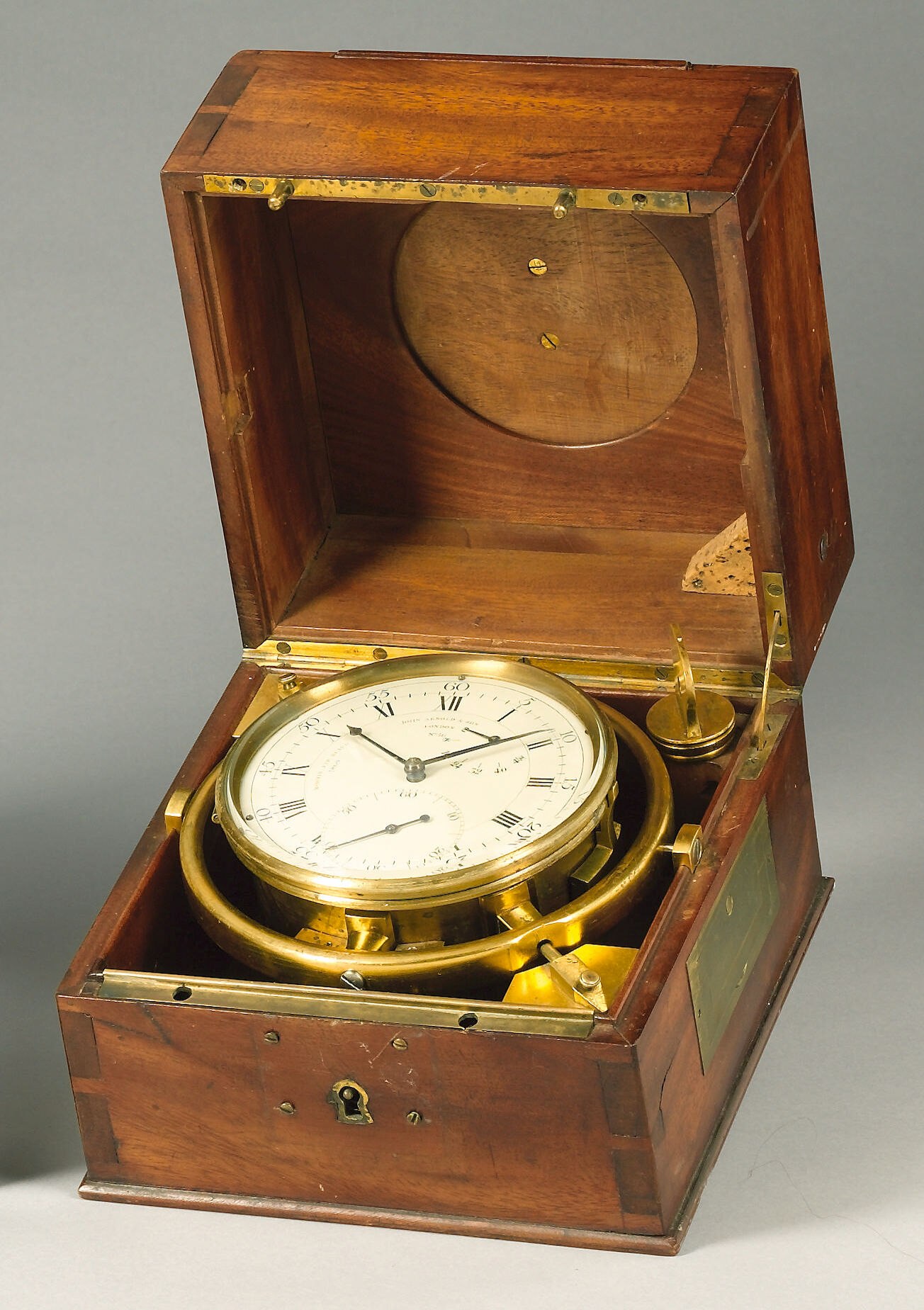
Marine chronometer · Eight-day marine chronometer
John Arnold & Son eight-day marine chronometer No. 56
This eight-day marine chronometer is catalogued by Bonhams as made by John Arnold & Son, London, bearing number 56. The source reports the instrument was one of four timekeepers carried aboard HMS Providence in 1794 for an astronomical Pacific expedition led by Commander William Robert Broughton. It was transferred to the Governor of Monterey in 1796 and later documented in the 1804 will of Spanish Fleet Commander D. Thomas de Ugarte, who bequeathed it to King Fernando VII. Housed in a wooden box with brass gimbal suspension, the chronometer features a circular silvered dial with Roman numerals and an auxiliary register.
Full description
www.bonhams.com · 273
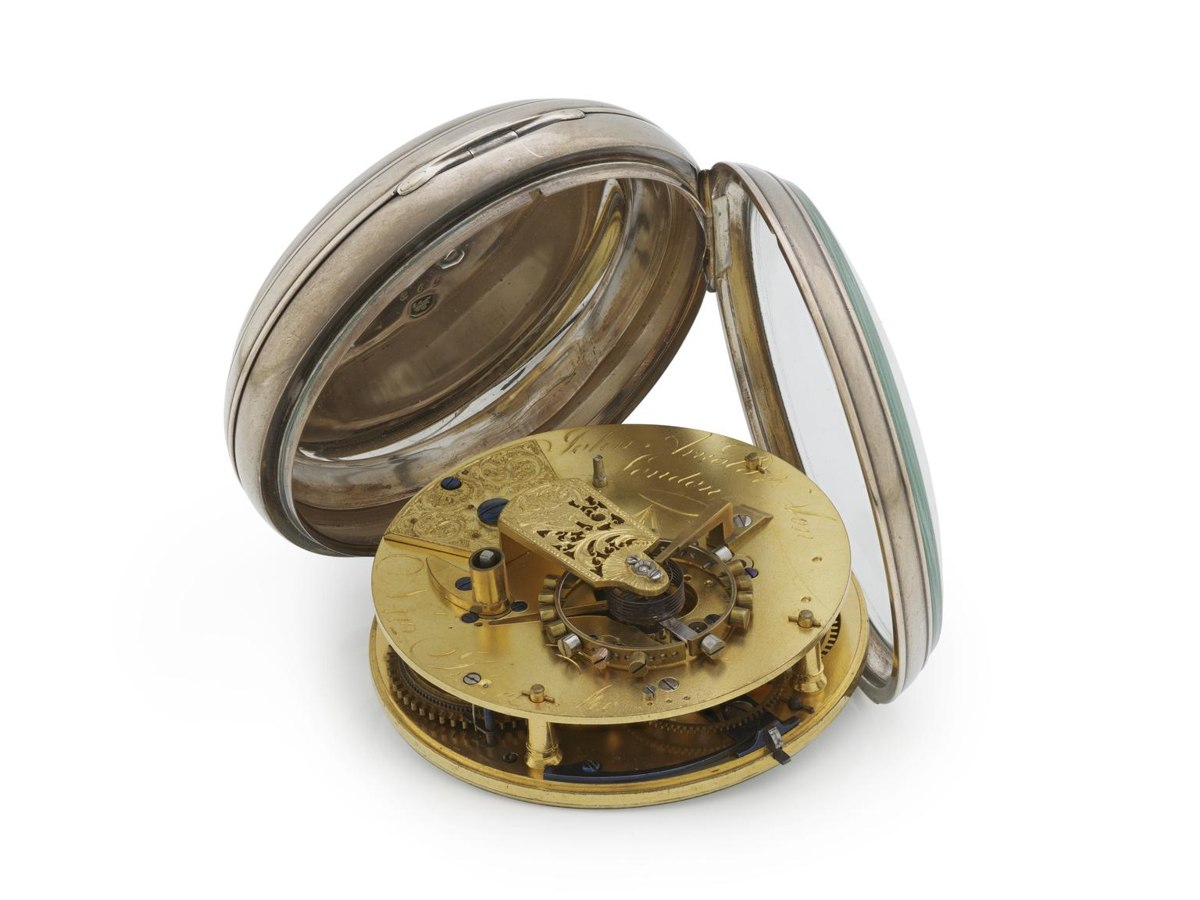
Pocket watch · Pocket chronometer & deck watch
Deck watch by John Arnold and Son
This deck watch by John Arnold & Son, London, is dated to circa 1790 by the source. The jewelled movement features an Earnshaw-type spring detent escapement and is inscribed 'John Arnold & Son London No. 112 Invt et Fec' alongside a broad arrow mark. It is housed in a later silver case hallmarked for 1838–1839 with the maker's mark JJ, and is catalogued alongside an outer mahogany deck-box. According to the Science Museum Group, it was presented by the Lords Commissioners of the Admiralty to the Worshipful Company of Clockmakers in 1906.
Full description
collection.sciencemuseumgroup.org.uk · L2015-3343
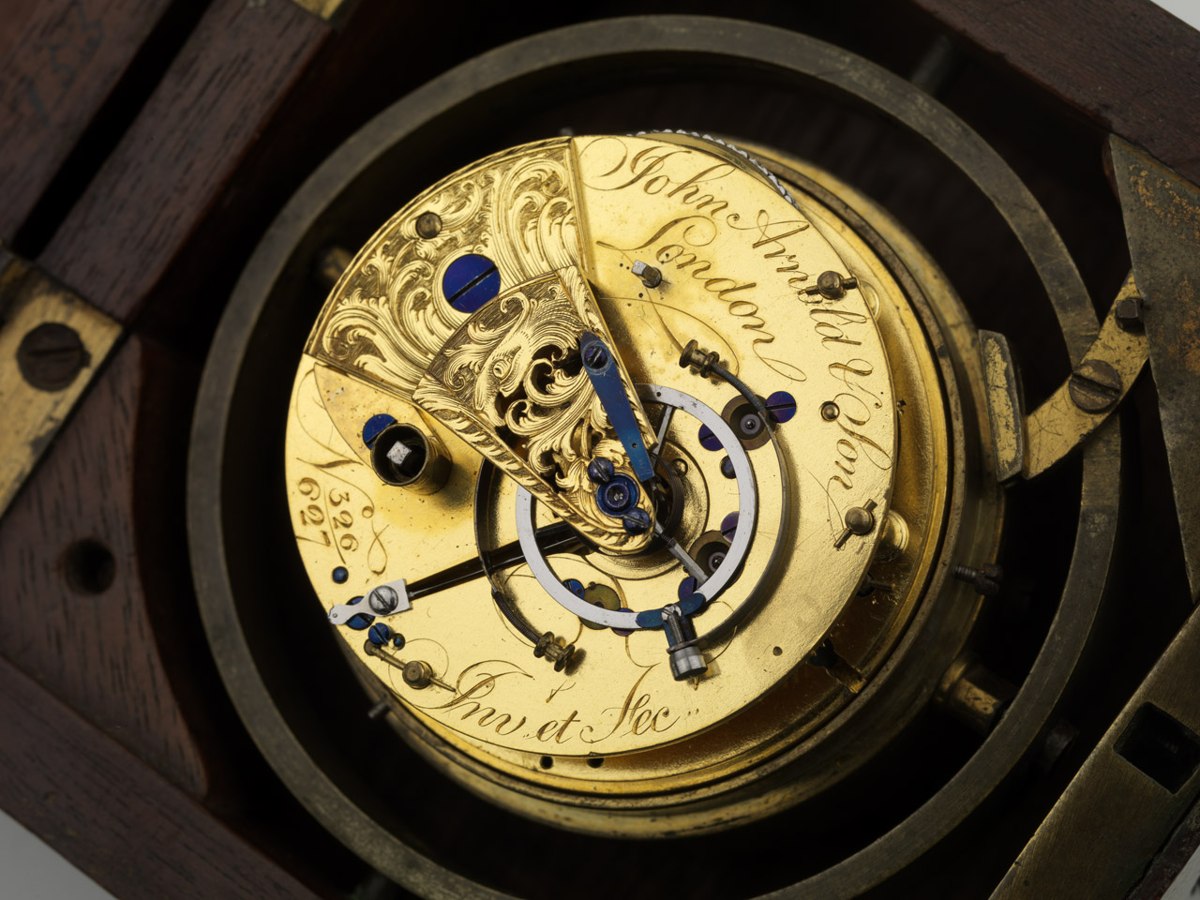
Marine chronometer · One-day marine chronometer
John Arnold & Son No. 326 Marine Chronometer
This one-day marine chronometer by John Arnold & Son originated as a pocket chronometer movement before being fitted into a gimballed three-tier mahogany box around 1810. The full-plate gilt brass fusee movement features four pillars, Harrison's maintaining power, an Arnold-type spring detent escapement, and an Arnold OZ-type balance with bimetallic segments and a blued steel helical balance spring. The potence plate is engraved with the maker's signature along with serial and production numbers.
Full description
www.rmg.co.uk
Marine chronometer · Marine chronometer (duration not stated)
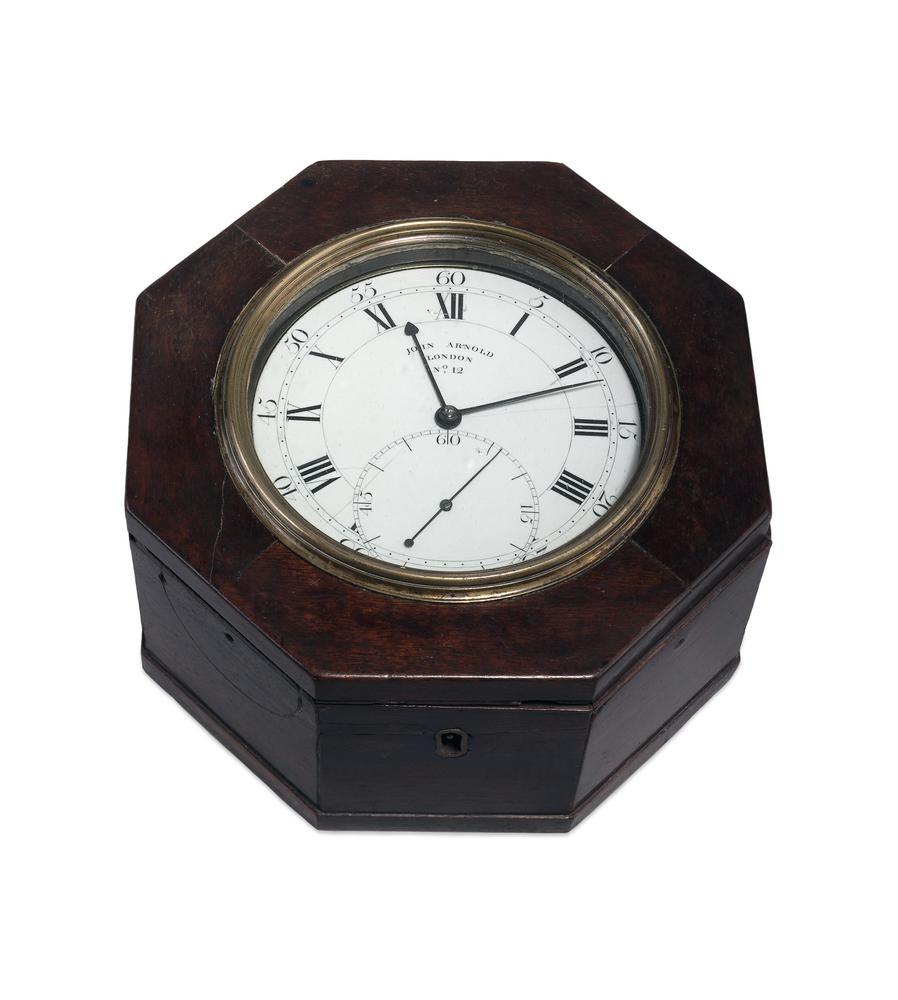
John Arnold Marine Chronometer No. 12
This marine chronometer by John Arnold is housed in an octagonal mahogany box with a glazed brass bezel and lock. Museum documentation dates the piece to 1778, 1779, or 1782 and notes it as likely the first marine chronometer built with Arnold's spring detent escapement and a double-T transverse compensation balance. The movement features a full-plate design with fusee maintaining power, a blued steel helical balance spring, and a white enamel dial signed 'John Arnold, London No 12'. Formerly in the Courtenay Adrian Ilbert Collection, it was donated to the British Museum by Gilbert Edgar in 1958.
Full description
www.britishmuseum.org
Marine chronometer · Two-day marine chronometer
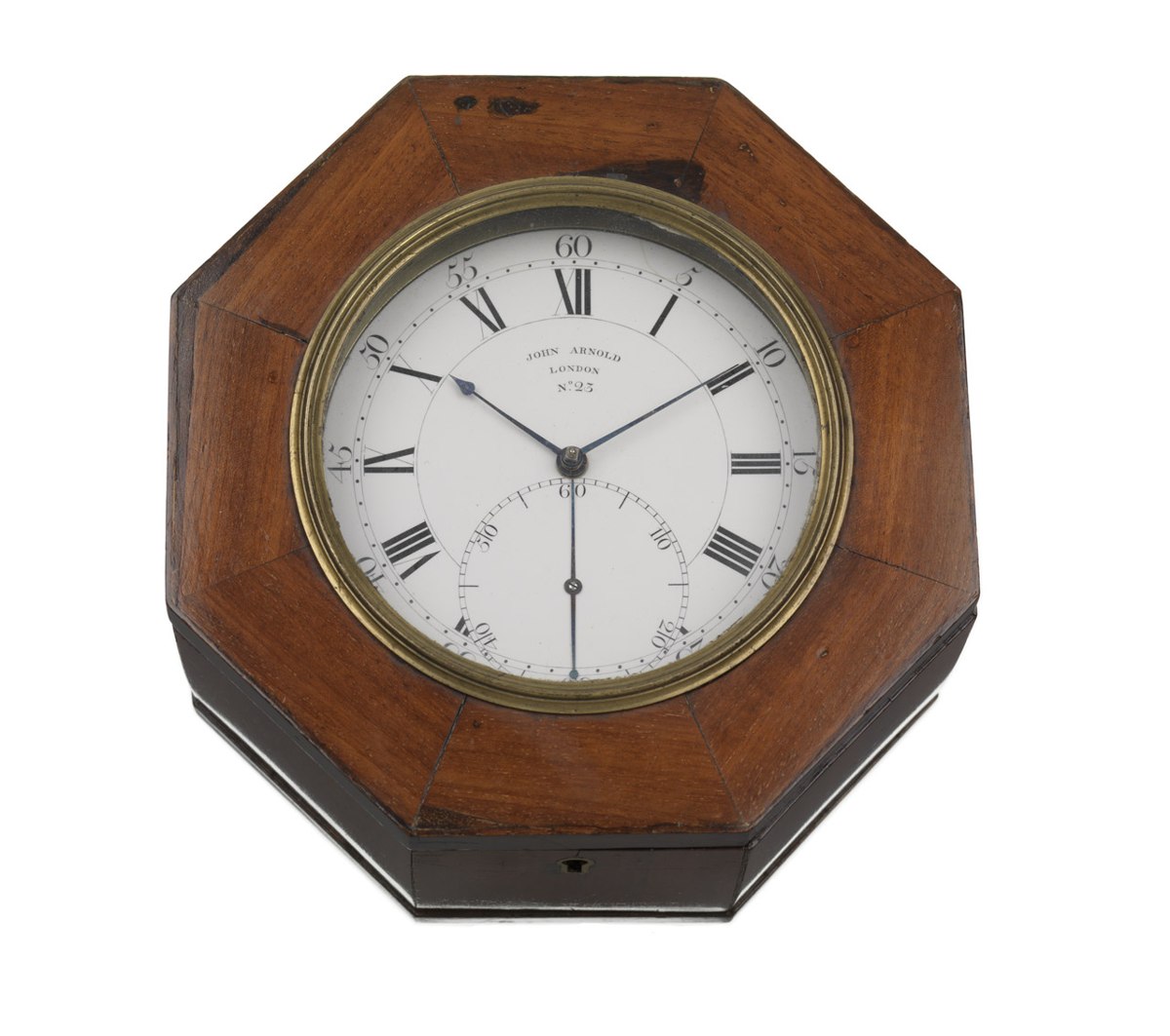
John Arnold & Son No. 23 two-day marine chronometer in octagonal mahogany box
This two-day marine chronometer was constructed by John Arnold & Son in London circa 1784. It is housed in an octagonal mahogany box featuring concealed joints and an eight-segment radially jointed lid with a glazed brass bezel. The white enamel dial is marked with Roman numerals, Arabic five-minute outer markers, and an expansive subsidiary seconds ring, signed 'JOHN ARNOLD / LONDON / No.23'. According to the source, the movement incorporates a full-plate fusee setup with Harrison's maintaining power, an early Arnold spring detent escapement, a blued-steel helical balance spring, and an early Arnold 'Z' balance with bimetallic segments.
Full description
www.rmg.co.uk
Marine chronometer · Eight-day marine chronometer
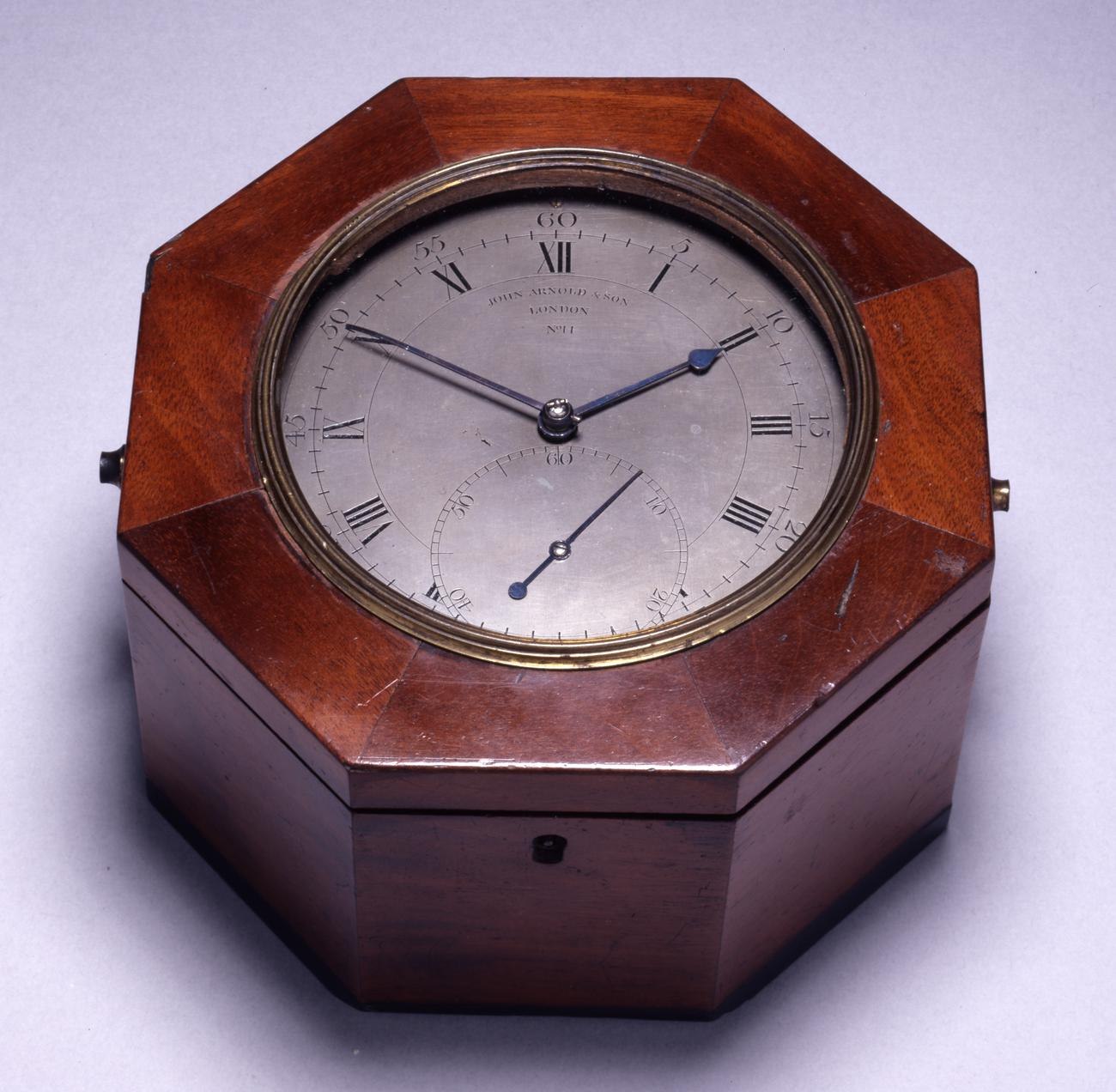
John Arnold & Son Marine Chronometer No. 14/104
This eight-day marine chronometer is catalogued by the British Museum as made in 1790 in London by John Arnold & Son. It is signed on the dial 'John Arnold and Son London, No. 14' and on the back plate 'John Arnold and Son London No 14/104 Invt et Fect.' The source notes that chronometer No. 14 was later improved and re-numbered 104. The movement incorporates a spring-detent escapement, a free-sprung gold helical balance spring, and Arnold's 'YZ' bimetallic temperature-compensation balance. Housed in an octagonal mahogany box, the instrument accompanied Captain George Vancouver between 1791 and 1795 on voyages surveying the Pacific coastline of North America.
Full description
www.britishmuseum.org