
Skip to content
The Encyclopedia of Horology

Tool · Arabic-inscribed astrolabe, North Africa

North African Astrolabe

Partially verified

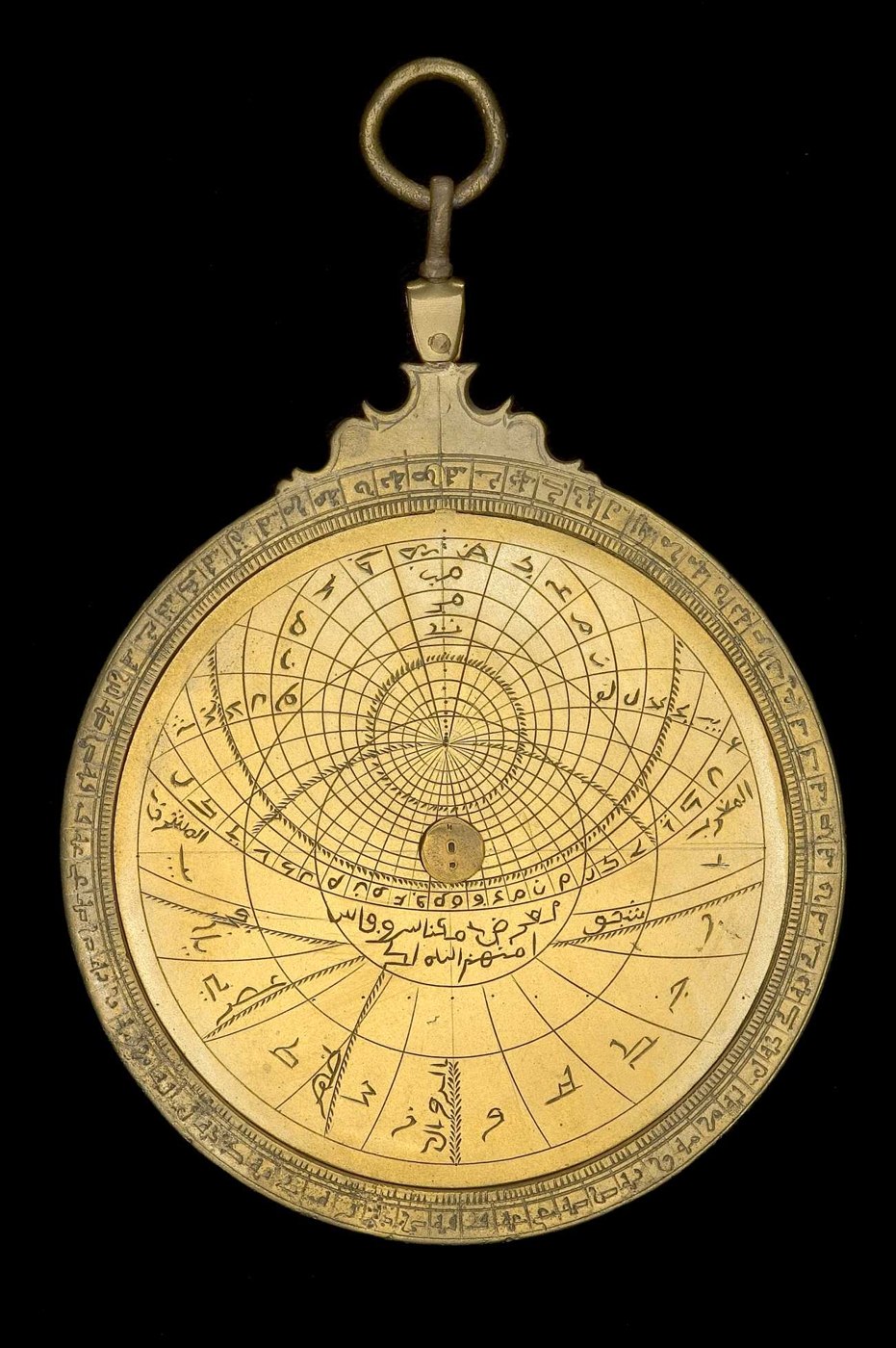
This planispheric astrolabe, catalogued under inventory number 40407, is a brass scientific instrument attributed to North Africa and dating to the late 18th century. The instrument features a simple-type brass throne with an integrated base, a simple round-section ring, and an eye-bolt shackle. The mater and limb consist of two riveted pieces, with a notch for the tab positioned at the throne. The womb contains engravings suggesting an intended gazetteer, though this was never completed. The instrument includes two latitude plates ranging from 21°0' to 36°0'. The back is engraved with six distinct scales, including altitude, zodiacal signs, calendar, unequal hours, and a shadow square. The instrument was acquired by the History of Science Museum, University of Oxford, in 1957 as a gift from J. A. Billmeir, who had previously purchased the item from the collection of Henri Michel in Brussels around 1950.

Front view of the brass astrolabe showing the rete, mater, and throne assembly.
Front view of the brass astrolabe showing the rete, mater, and throne assembly. — History of Science Museum, University of Oxford. Rights pending — permission not yet requested. Original source

Catalogue identity

Source
www.mhs.ox.ac.uk
Category
Tool · Arabic-inscribed astrolabe, North Africa
Maker / attribution
Not established
Reference
Not recorded
Catalogue / lot identifier
40407
Source-reported date
late 18th century
Source-reported place
North Africa

Source-reported attribution and specifications are not independent authentication. A listing does not establish present ownership, current display, availability or permission to reproduce.

Object description

Construction and Mater

The astrolabe is fabricated from brass and incorporates a two-piece, riveted mater and limb construction. The assembly includes a simple-type throne featuring an integrated base. This throne is designed in two sections: the back portion serves as an extension of the back plate, while the front is integrated into the limb. The instrument is suspended by a simple, round cross-section ring secured via an eye-bolt type shackle, which attaches to an angle bracket.

The womb of the mater bears engravings that indicate the maker intended to include a gazetteer, although the work remains unfinished. A tab notch is located at the position of the throne to ensure proper alignment. The limb is graduated with a circular, concentric degree scale ranging from 0 to 360 degrees, with numbering occurring at 5-degree intervals.

Evidence for this section
  • “The mater and limb are of two pieces, riveted construction.”
  • “The womb has been engraved as if the maker intended to add a gazetteer. However, the gazetteer was never completed.”

Scales and Plates

The back of the instrument provides a comprehensive set of six scales for astronomical and timekeeping calculations. These include two altitude scales covering 0 to 90 degrees in the upper quadrants, a circular zodiacal scale, and a calendar scale spanning the full circle. Unequal hours are represented in the upper left quadrant.

Additionally, a shadow square is present in the lower quadrants, with scales marked for feet in 1-unit increments. The instrument includes two interchangeable plates, providing latitudes that range between 21°0' and 36°0'.

Evidence for this section
  • “The back contains 6 scales of the following types: Altitude; Zodiacal signs; Calendar; Unequal hours; Shadow square.”
  • “There are 2 plates with latitudes ranging from 21°0' to 36°0' .”

Provenance

The astrolabe was incorporated into the History of Science Museum, University of Oxford, collection in 1957, following its presentation by J. A. Billmeir. The item carries the accession number 1957-84/14.

Prior to its acquisition by Billmeir, the astrolabe was part of the collection held by Henri Michel of Brussels. Records indicate that Billmeir purchased the Michel collection around 1950.

Evidence for this section
  • “Presented by J. A. Billmeir in 1957”
  • “Accession 1957-84/14”
  • “Billmeir acquired it with the collection of Henri Michel, of Brussels, which he purchased about 1950.”

Open research questions

  • What specific cities or locations were intended for the incomplete gazetteer in the womb?
  • Could the specific latitudes of the two plates provide further evidence for the precise region of manufacture within North Africa?

Source evidence

Recorded claims and source quotations for North African Astrolabe
FieldSource-reported valueSource quotation
Inventory number40407“Inventory no. 40407”
MaterialBrass“Material Brass”
Datelate 18th century“Date late 18th century”
PlaceNorth Africa“Place North Africa”
AcquisitionPresented by J. A. Billmeir in 1957“Presented by J. A. Billmeir in 1957”
Accession number1957-84/14“Accession 1957-84/14”
Throne styleSimple type“The throne is of the simple type”
ShackleEye-bolt type“Shackle of the eye-bolt type”

Visible details

  • Throne constructed in two pieces with the back as an extension of the back plate
  • Womb displays evidence of an incomplete gazetteer engraving
  • Limb features a circular degree scale numbered every 5 degrees

Research qualifications

  • The exact origin within North Africa is not specified
  • The specific latitudes for the two plates are limited to a range of 21°0' to 36°0'

Photograph identity and source facts were screened before import; rights clearance remains pending.

Consulted source

Astrolabe, inventory 40407 (North Africa, late 18th century)

Reviewed 2026-10-26 · Record 54018d1d5e

Terms in this record

Glossary explanations for terms named in this object’s record.