
Skip to content
The Encyclopedia of Horology

Tool · Arabic-inscribed astrolabe, North Africa

Astrolabe by Muḥammad ibn Aḥmad al-Baṭṭuṭī

Partially verified

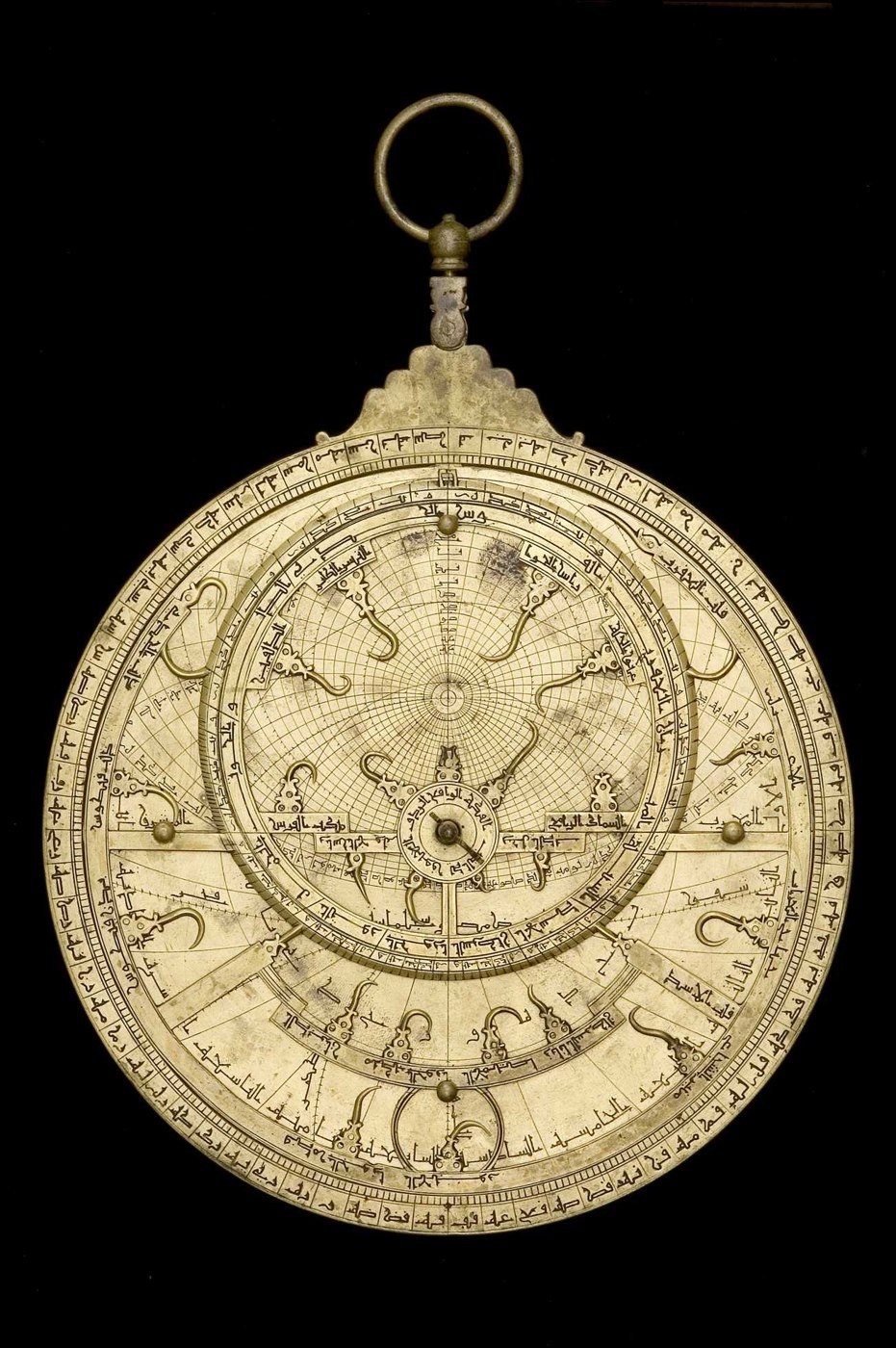
This brass astrolabe was made by Muḥammad ibn Aḥmad al-Baṭṭuṭī in 1733/4 (A.H. 1146). The instrument features a moorish arch type throne with an integrated base, a simple round-section ring, and a rotating pin shackle. The mater and limb are of two-piece soldered and riveted construction. The rete is of the indicator-line type, displaying 26 stars marked with dagger pointers and featuring trefoil-shaped bases. The back of the instrument contains seven scales, including altitude, zodiacal signs, a calendar, sine/cosine, unequal hours, and shadow squares. An extensive Arabic inscription on the back records that the astrolabe was given as a bequest to the minaret of the Mulla Idrīs mosque in Fez. , and a fixed, non-original replacement alidade with decorative scroll work near the pivot hole.

Front view of the brass astrolabe showing the rete, throne, and circular scales.
Front view of the brass astrolabe showing the rete, throne, and circular scales. — History of Science Museum, University of Oxford. Rights pending — permission not yet requested. Original source

Catalogue identity

Source
www.mhs.ox.ac.uk
Category
Tool · Arabic-inscribed astrolabe, North Africa
Maker / attribution
Muḥammad ibn Aḥmad al-Baṭṭuṭī
Reference
Not recorded
Catalogue / lot identifier
51459
Source-reported date
1733/4 (A.H. 1146)
Source-reported place
Morocco

Source-reported attribution and specifications are not independent authentication. A listing does not establish present ownership, current display, availability or permission to reproduce.

Object description

Construction and Design

The astrolabe is constructed of brass, utilizing a two-piece soldered and riveted method for the mater and limb. The throne is fashioned in a moorish arch style with an integrated base, supporting a simple round-section ring and a rotating pin shackle. The notch designed for securing the tympans is positioned at the throne.

The rete is characterized as an indicator-line type, featuring four knobs used for rotation. It displays 26 stars, each indicated by a dagger pointer with distinctive trefoil-shaped bases. The instrument is held together by a pin and wedge; however, the auction description reports that the long pin currently present may not be original to the device.

Evidence for this section
  • “The mater and limb are of two pieces, soldered and riveted construction.”
  • “The rete is of the indicator-line (simple) type. This rete is characterised by the trefoil-shaped bases of the star pointers”
  • “The pin is quite long, and may not be original.”

Inscriptions and Provenance

The back of the instrument carries a significant Arabic inscription located within the hour-line diagram. It identifies the object as a religious bequest given to the minaret of the Mulla Idrīs mosque in Fez, Morocco. The text records the donor as a jurist named Muḥammad, son of the deceased.

The provenance of the astrolabe is traced through the collection of Henri Michel of Brussels, which was acquired by J. A. Billmeir circa 1950. The object was subsequently presented to the museum in 1957. The inscription itself acts as a record of the instrument's historical function as a pious donation.

Evidence for this section
  • “Billmeir acquired it with the collection of Henri Michel, of Brussels, which he purchased about 1950.”

Scales and Components

The back of the instrument contains seven distinct scales for astronomical and timekeeping calculations, including altitude, zodiacal signs, calendar, sine/cosine, unequal hours, and shadow squares. The shadow squares are located in the lower quadrants and are numbered in fingers.

The alidade is double-ended, fixed, and identified as a replacement. It features decorative scroll work near the pivot hole. There are two plates included, which provide latitudes ranging from 30°0' to 36°0'. The instrument also incorporates lines specifically for calculating Muslim prayer times.

Evidence for this section
  • “The back contains 7 scales of the following types: Altitude; Zodiacal signs; Calendar; Sine/Cosine; Unequal hours; Shadow square.”
  • “in determining prayer times by true astronomical time, this astrolabe contains special lines for the calculation of Muslim prayer times.”

Open research questions

  • What is the specific material and age of the replacement alidade?
  • Can the identity of the 'jurist Muhammad' be linked to specific historical figures in 18th-century Fez?

Source evidence

Recorded claims and source quotations for Astrolabe by Muḥammad ibn Aḥmad al-Baṭṭuṭī
FieldSource-reported valueSource quotation
MakerMuḥammad ibn Aḥmad al-Baṭṭuṭī“Made by Muḥammad ibn Aḥmad al-Baṭṭūṭī in the year 1146 (AH)”
Date1733/4 (A.H. 1146)“1733/4 (A.H. 1146)”
MaterialBrass“Material Brass”
ProvenancePresented by J. A. Billmeir in 1957“Presented by J. A. Billmeir in 1957”
Rete star count26“The rete contains 26 stars.”
Inventory number51459“Inventory no. 51459”

Visible details

  • Decorative trefoil-shaped bases on rete star pointers
  • Moorish arch type throne
  • Fixed, double-ended alidade with scroll work
  • Inscription within hour-line diagram on back

Research qualifications

  • The central pin may not be original
  • The alidade is a reported replacement
  • Interpretation of the Arabic inscription includes a question mark regarding the phrasing

Photograph identity and source facts were screened before import; rights clearance remains pending.

Consulted source

Astrolabe, inventory 51459 (Morocco, 1733/4 (A.H. 1146))

Reviewed 2026-10-26 · Record 10a75c81d3

Terms in this record

Glossary explanations for terms named in this object’s record.