
Skip to content
The Encyclopedia of Horology

Tool · Arabic-inscribed astrolabe, North Africa

Brass astrolabe, North Africa

Partially verified

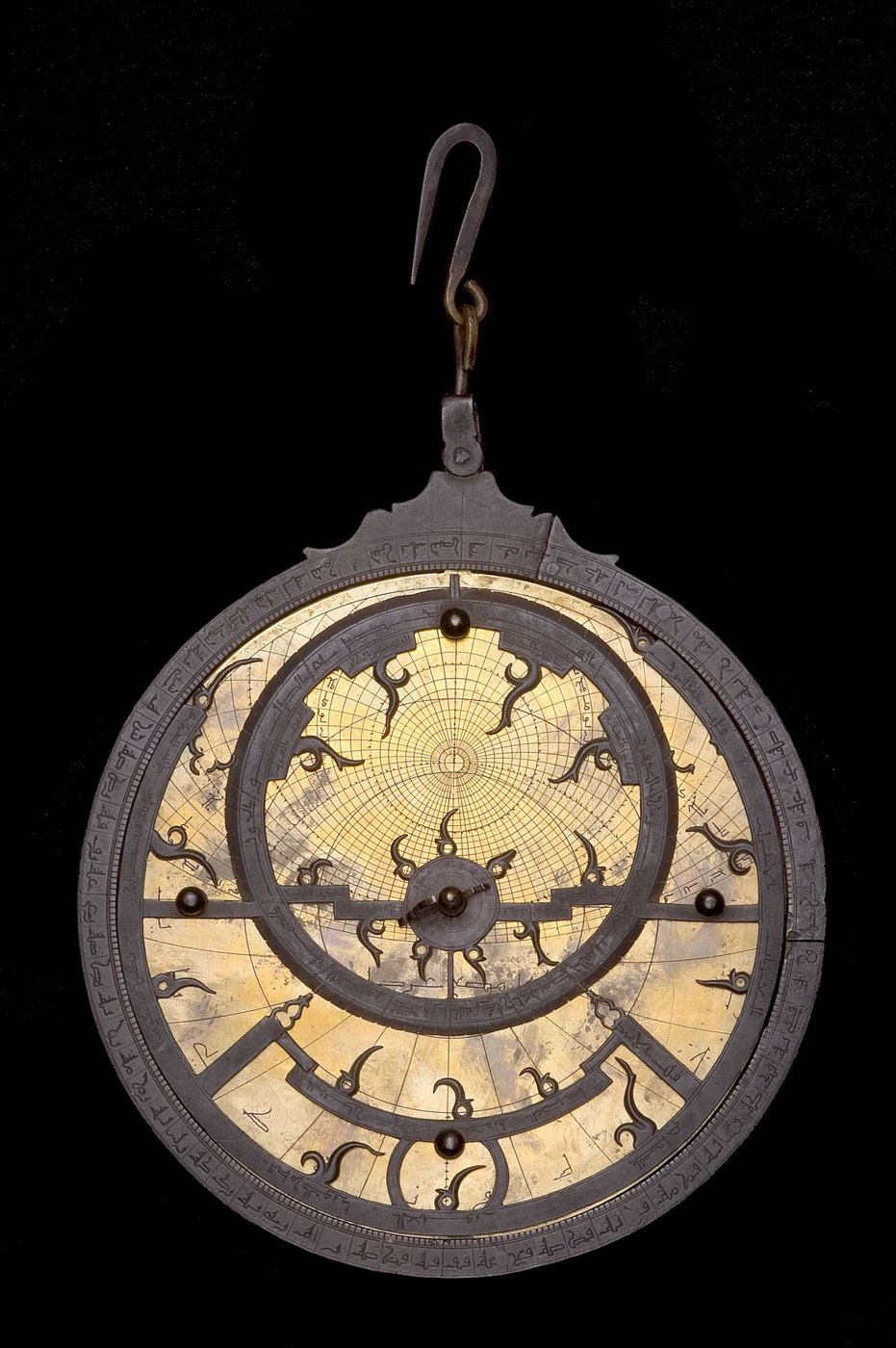
This planispheric astrolabe, inventory number 34314, is a brass instrument of North African origin dating to the early 18th century. The instrument features a simple brass throne with an integrated base and an eye-bolt type shackle. Its mater and limb are constructed from two pieces through soldering and riveting; the limb exhibits a repair, potentially addressing a previous fracture or deficiency. The astrolabe includes four plates covering latitudes between 21°0' and 36°0'. The back of the instrument displays six distinct scales, including those for altitude, zodiacal signs, calendar, unequal hours, and a shadow square. The back bears an inscription dedicating the device as a bequest to the Grand Mosque in Tangiers. The present double-ended alidade is a replacement and lacks scales or decoration. The object was presented to the History of Science Museum by J. A. Billmeir in 1957.

Front view of the brass astrolabe showing the rete, mater, and throne.
Front view of the brass astrolabe showing the rete, mater, and throne. — History of Science Museum, University of Oxford. Rights pending — permission not yet requested. Original source

Catalogue identity

Source
www.mhs.ox.ac.uk
Category
Tool · Arabic-inscribed astrolabe, North Africa
Maker / attribution
Not established
Reference
34314
Catalogue / lot identifier
1957-84/1
Source-reported date
early 18th century
Source-reported place
North Africa

Source-reported attribution and specifications are not independent authentication. A listing does not establish present ownership, current display, availability or permission to reproduce.

Object description

Instrument Construction and Components

The astrolabe consists of a mater and limb constructed from two pieces of brass, joined by soldering and riveting. The instrument includes a simple-type throne with an integrated base and an eye-bolt type shackle assembly that attaches to a fish-hook style ring. The notch required for positioning the tympans is situated at the throne.

The device includes four plates with latitude ranges from 21°0' to 36°0'. The current double-ended alidade is a replacement and features no scales or decorative elements, distinguishing it from the primary body of the instrument.

Evidence for this section
  • “The mater and limb are of two pieces, soldered and riveted construction.”
  • “The throne is of the simple type made of brass attached with integrated base”
  • “The rule is not original. This rule is devoid of any scales or other decoration.”

Scales and Inscriptions

The back of the astrolabe is engraved with six scales: altitude, zodiacal signs, calendar, unequal hours, and a shadow square. The degree scale on the limb spans 0 to 360 degrees, marked every five degrees. The shadow square scales are divided into twelve units, or fingers, and are placed on the vertical and bottom faces of the square.

The back also features an inscription in Arabic, translated as: "Praise be to God. This astrolabe was given as a bequest to the Grand Mosque of the port of Tangiers, may God elevate it with His grace. Amen."

Evidence for this section
  • “The back contains 6 scales of the following types: Altitude; Zodiacal signs; Calendar; Unequal hours; Shadow square.”
  • “The back is inscribed: with a miscellaneous marked as الحمد لله هذا الأسطرلاب حبس على المسجد الأعظم من ثغر طنجة علاه الله بمنه آمين”

Provenance and Condition

The astrolabe was acquired by J. A. Billmeir as part of the collection of Henri Michel of Brussels, purchased circa 1950. It was subsequently donated to the History of Science Museum in Oxford in 1957.

Regarding its physical condition, the limb has undergone a repair, which may have been necessitated by a break or other structural deficiency. The replacement of the alidade indicates that the instrument is no longer in its original, complete state.

Evidence for this section
  • “Billmeir acquired it with the collection of Henri Michel, of Brussels, which he purchased about 1950.”
  • “This limb has been repaired, perhaps from a break or some other deficiency in the limb.”

Open research questions

  • What is the specific nature of the damage that required the limb repair?
  • Is there any evidence to identify the wealthy merchant who may have commissioned the original bequest?

Source evidence

Recorded claims and source quotations for Brass astrolabe, North Africa
FieldSource-reported valueSource quotation
MaterialBrass“Material Brass”
Dateearly 18th century“Date early 18th century”
Place of originNorth Africa“Place North Africa”
Inventory number34314“Inventory no. 34314”
Accession number1957-84/1“Accession 1957-84/1”
InscriptionArabic inscription dedicating the astrolabe to the Grand Mosque of Tangiers“الحمد لله هذا الأسطرلاب حبس على المسجد الأعظم من ثغر طنجة علاه الله بمنه آمين”
ConstructionTwo-piece soldered and riveted mater and limb“The mater and limb are of two pieces, soldered and riveted construction.”

Visible details

  • Simple brass throne with integrated base
  • Replacement double-ended alidade
  • Visible repair on the limb

Research qualifications

  • The exact origin of the repair to the limb is not confirmed
  • The donor of the bequest mentioned in the inscription remains unidentified

Photograph identity and source facts were screened before import; rights clearance remains pending.

Consulted source

Astrolabe, inventory 34314 (North Africa, early 18th century)

Reviewed 2026-10-26 · Record ff71696fca

Terms in this record

Glossary explanations for terms named in this object’s record.