
Skip to content
The Encyclopedia of Horology

Pocket watch · Slim pocket watch

Gregson à Paris 18ct Gold and Enamel Slim Pocket Watch

Partially verified

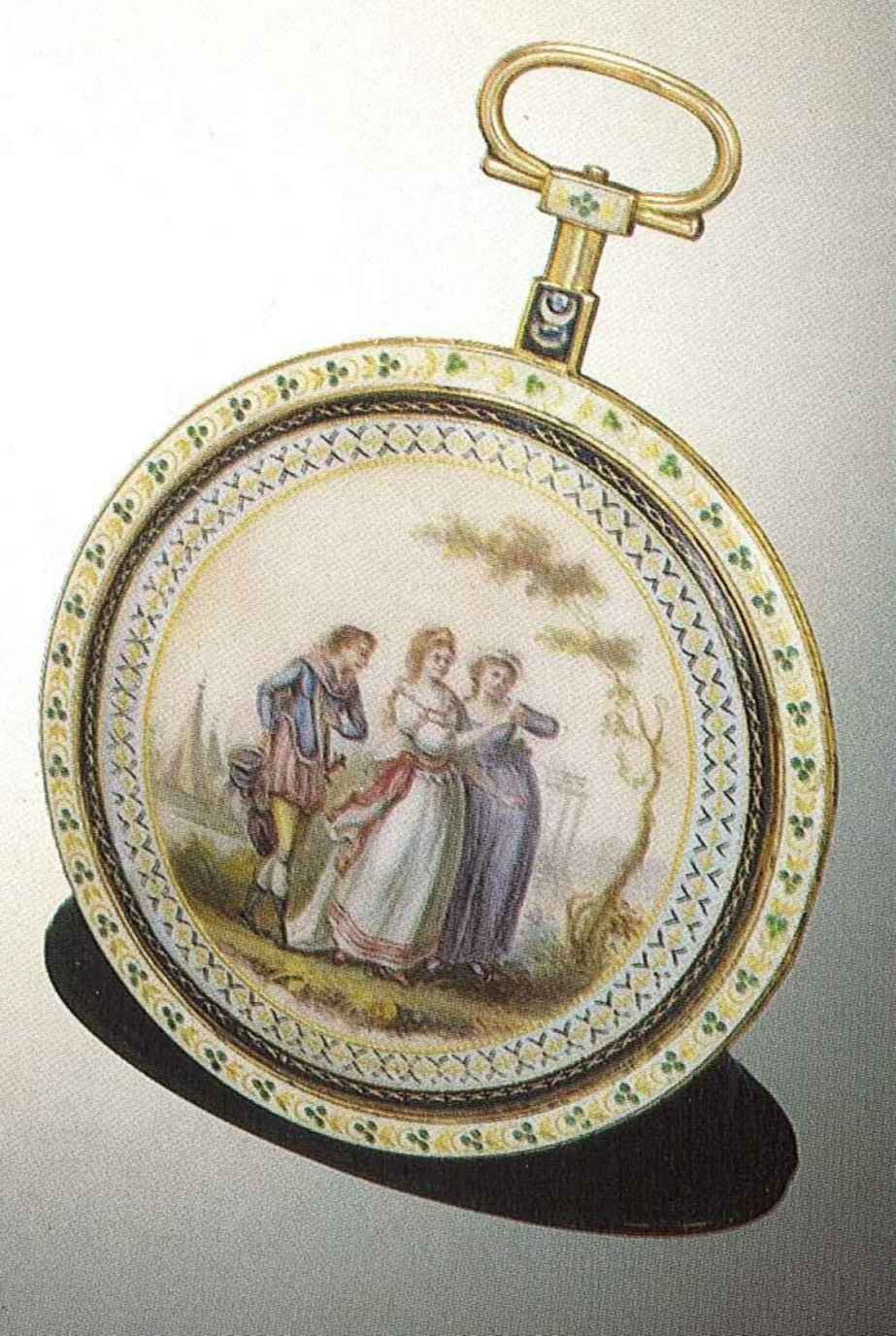
This 18ct gold and enamel slim pocket watch by Gregson à Paris dates to approximately 1780. The watch is constructed with a double-body, lenticular case, featuring bezels and a pendant decorated with champlevé paillonné motifs. The reverse of the case is finished in enamel, displaying a detailed scene of two women and a soldier in a landscape setting near a military camp. The watch retains its glazed gilt brass protecting case. It features a white enamel dial with Roman numerals and gold pierced hands. The movement is a very thin, hinged gilt brass Hessen's calibre, which incorporates a going barrel passing through the back plate, a brass cylinder escapement, and a three-arm balance with a flat balance spring. The watch is signed on the dial and the back plate, and its provenance includes the Muller collection in Milan, with previous publication in E. Morpurgo's research on precious watches.

A slim 18ct gold and enamel pocket watch by Gregson à Paris featuring a painted enamel scene of a soldier and two women on the back, accompanied by its protective case.
A slim 18ct gold and enamel pocket watch by Gregson à Paris featuring a painted enamel scene of a soldier and two women on the back, accompanied by its protective case. — Antiquorum. Rights pending — permission not yet requested. Original source

Catalogue identity

Source
catalog.antiquorum.swiss
Category
Pocket watch · Slim pocket watch
Maker / attribution
Gregson à Paris
Reference
Not recorded
Catalogue / lot identifier
368
Source-reported date
circa 1780
Source-reported place
France

Source-reported attribution and specifications are not independent authentication. A listing does not establish present ownership, current display, availability or permission to reproduce.

Object description

Case and Enamel Decoration

The watch is housed in an 18ct gold case designed with a double-body, lenticular form. The exterior surfaces, specifically the bezels and the pendant, are adorned with champlevé paillonné decoration. This ornamental technique complements the central feature of the case back, which is an enamel painting rendered in fine pastel colours.

The decorative scene depicts two women and a soldier positioned within a landscape, situated in proximity to a military camp. The entire construction is protected by a glazed gilt brass outer case.

Evidence for this section
  • “Double body, "lenticular", bezels and pendant with champleve paillonné decoration”
  • “the back enamelled with a very fine painted scene depicting two ladies and a soldier in a landscape, near by a military camp”
  • “Glazed gilt brass protecting case.”

Movement and Construction

The internal mechanism is a very thin, hinged gilt brass movement utilizing the Hessen's calibre. A characteristic element of this calibre is the going barrel, which passes through the back plate, contributing to the slim profile of the watch. The escapement is a brass cylinder type, paired with a plain gilt brass three-arm balance and a flat balance spring.

The watch is signed by the maker on both the dial and the back plate, verifying its identification. These movements were associated with the innovations of André Hessen, and this watch represents the thin design style produced by Gregson during this period. The source indicates this piece is a representative example of this specific style of production.

Evidence for this section
  • “Hinged gilt brass, very thin Hessen's calibre with going ban-el passing through the back plate”
  • “brass cylinder escapement, plain gilt brass three-arm balance and flat balance spring.”
  • “Signed on the dial and the back plate.”

Provenance and Documentation

The watch is noted to have belonged to the Muller collection in Milan. It was documented and illustrated in the book 'Precious watches from the XVIth to the XIXth century' by E. Morpurgo, published in 1955. This historical record serves to confirm the watch's recognition in academic literature concerning the development of thin timepieces.

Regarding the origin of the maker, Pierre Gregson is cited as an eminent foreign maker based in Paris. The source draws stylistic and technical parallels between Gregson's work and that of André Hessen, suggesting that their workshop practices were closely aligned or potentially shared during the late 18th century.

Evidence for this section
  • “Previously in the Muller collection in Milan, this watch is illustrated in E. Morpurgo Precious watches froin the XVIth to the XIXth century, Omega Edition, 1955, page 88.”
  • “Pierre Gregson was one of the few eminent foreign makers working in Paris for the Court of France.”
  • “His watches are very similar to those produced by Hessen”

Open research questions

  • What is the specific nature of the technical or professional relationship between Pierre Gregson and André Hessen in Paris?
  • Are there archival records in the Muller collection that provide a more detailed acquisition history for this specific timepiece?

Source evidence

Recorded claims and source quotations for Gregson à Paris 18ct Gold and Enamel Slim Pocket Watch
FieldSource-reported valueSource quotation
MakerGregson à Paris“Gregson à Paris”
Material18 ct. gold and enamel“18 ct. gold and enamel”
Movement typeHessen's calibre“Hessen's calibre”
Diameter54 mm“Diam. 54 mm”
ProvenanceMuller collection, Milan“Previously in the Muller collection in Milan”
EscapementBrass cylinder“brass cylinder escapement”
PublicationE. Morpurgo, 1955“illustrated in E. Morpurgo Precious watches froin the XVIth to the XIXth century, Omega Edition, 1955, page 88.”

Visible details

  • Champlevé paillonné decoration on the pendant and bezel
  • Painted enamel scene on the case back
  • Glazed gilt brass protecting case included
  • White enamel dial with Roman numerals

Research qualifications

  • The exact extent of collaboration or interaction between Gregson and Hessen remains speculative.
  • Attribution of the specific enamel painting style to Hessen is suggested as a possibility by the source.

Photograph identity and source facts were screened before import; rights clearance remains pending.

Terms in this record

Glossary explanations for terms named in this object’s record.