
Glossary · Mechanism
Alidade
A sighting device for measuring angles.
Explanation
The alidade is a rotating sighting rule. On the back of an astrolabe it is used to measure the altitude of the Sun or a star against a scale of degrees. With that altitude and the date, the front of the astrolabe can then be set to find the time.
Astrolabe alidades have two sight vanes with small holes or slots. Surveying instruments use alidades in the same way to sight distant points. Replacement alidades are common on astrolabes, so they should be examined separately from the rest of the instrument.
What to record
- Check the alidade for a style and engraving consistent with the instrument.
- Look for wear patterns at the pivot that match the rest of the astrolabe.
Astrolabe parts are often replaced; ask the holding institution or catalogue for component notes.
In the object catalogue
Catalogued objects whose own source record mentions “Alidade”. The quoted line shows where; it is the seller’s or museum’s wording, not independent verification.
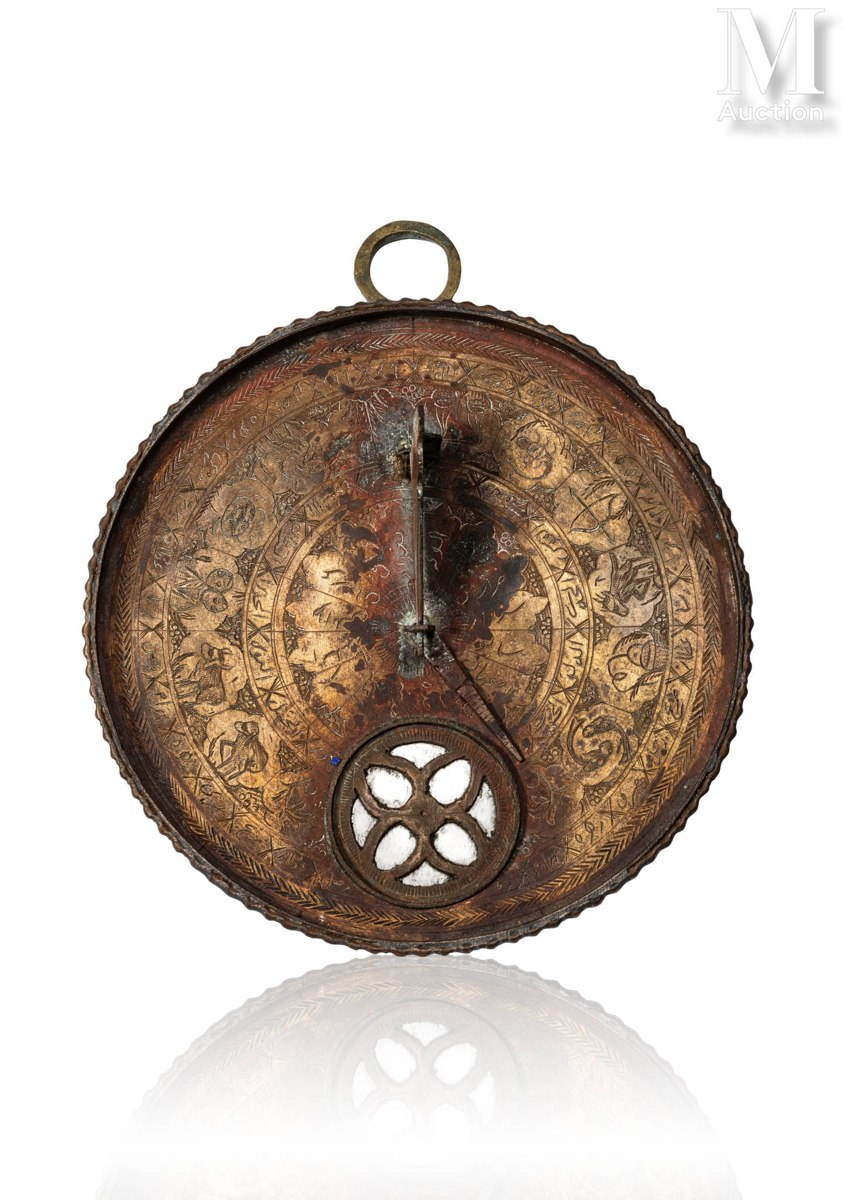
Tool
Qajar Engraved Brass Compass-Sundial Instrument
“Described as a nineteenth-century Qajar engraved brass compass-sundial instrument (muwaqqit) from Iran, this circular piece measures 14 cm in diameter. The brass disc is fitted …”
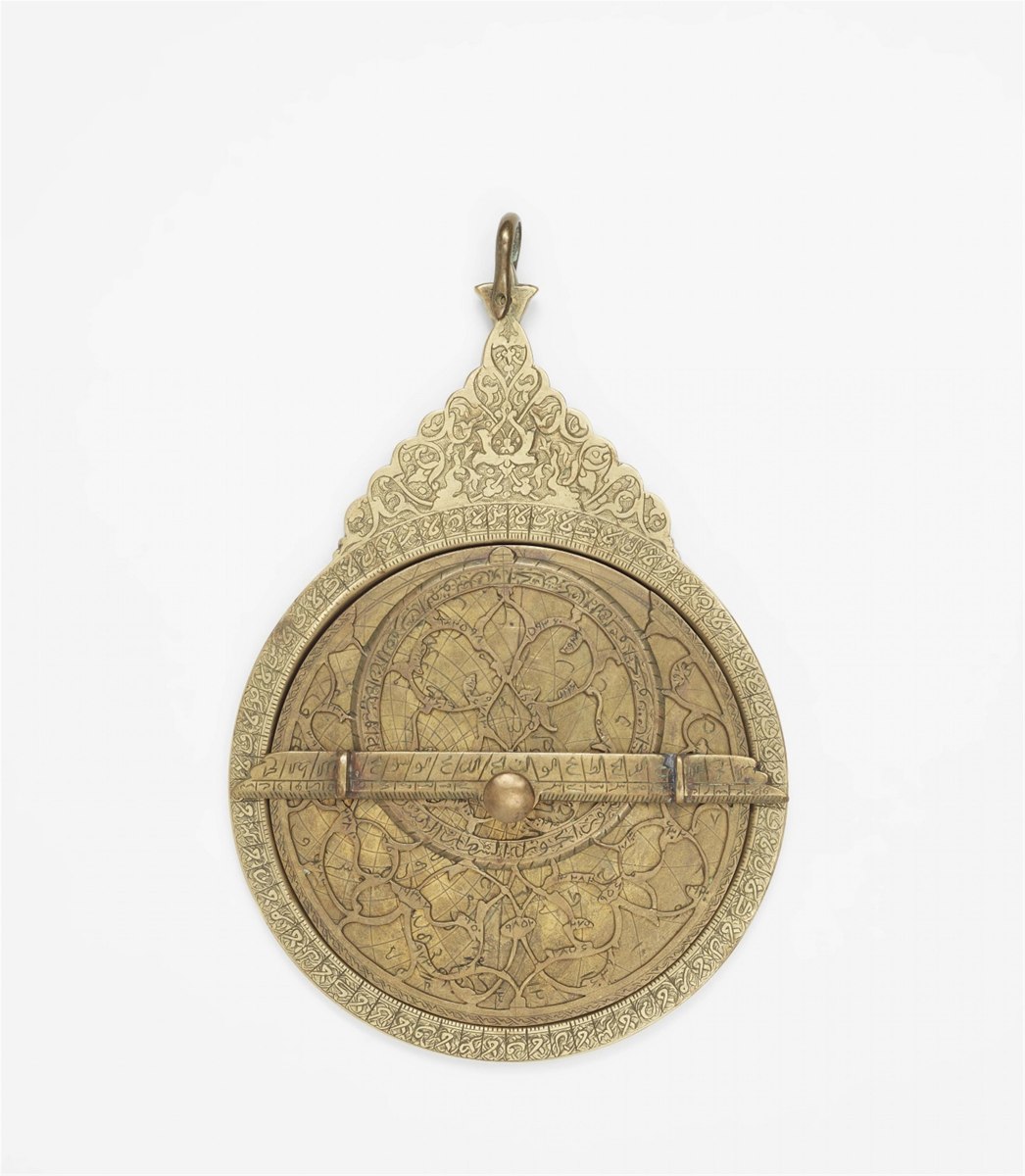
Tool
Middle Eastern planispheric astrolabe
“Central rule or alidade arm secured across the front face with a rounded central pin”
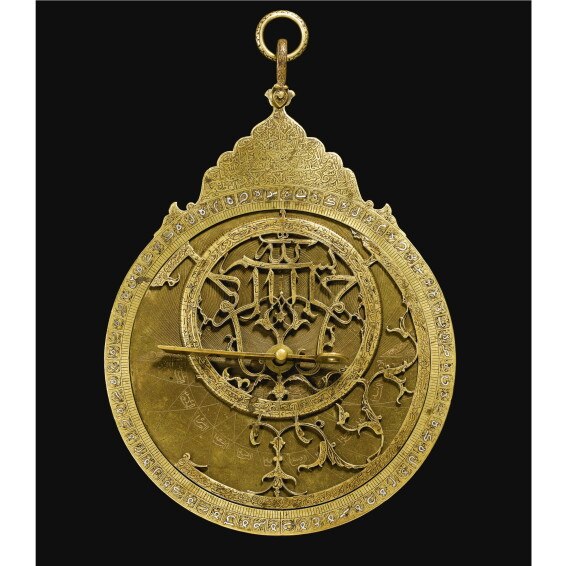
Tool
Safavid silver-inlaid brass astrolabe
“Replacement Component: Alidade”
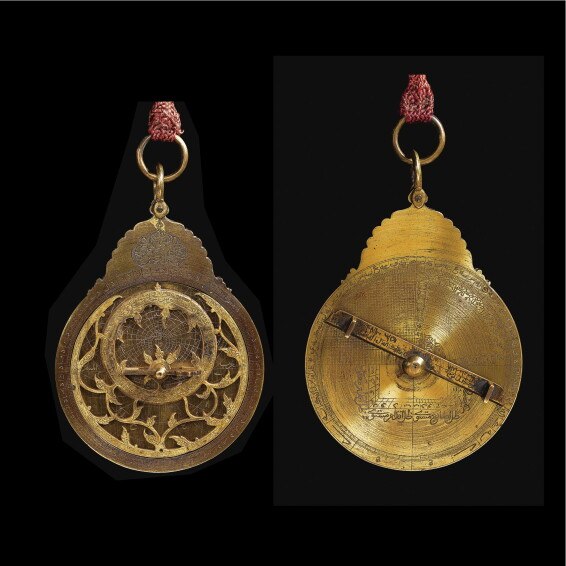
Tool
Iranian astrolabe in the style of 'Abd al-A'imma
“According to Sotheby's, this unsigned Iranian astrolabe is executed in the style of late 17th-century Isfahan instrument-maker 'Abd al-A'imma. The front of the throne is engrave…”
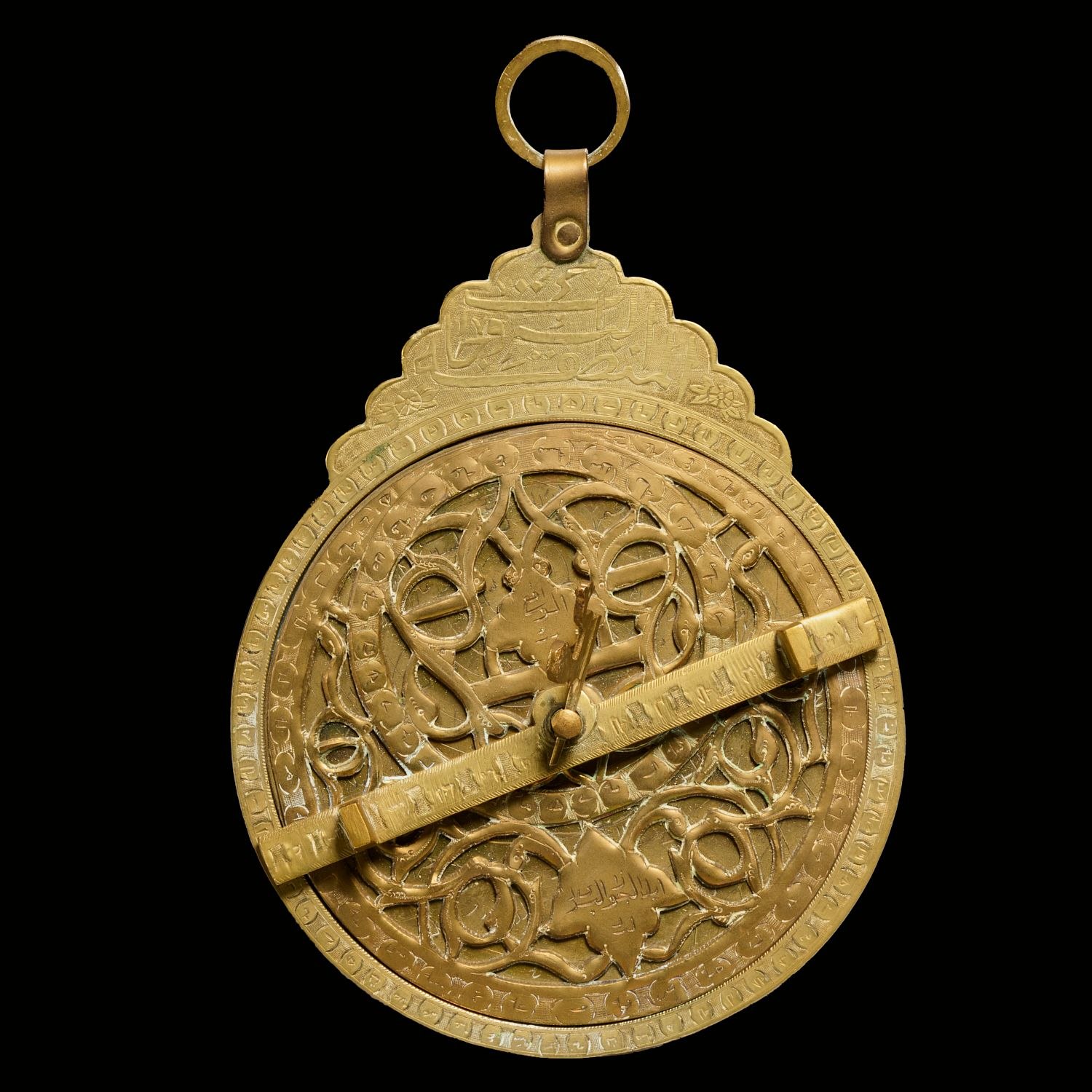
Tool
Islamic Engraved Brass Astrolabe
“This Islamic astrolabe is catalogued as a 19th-century scientific instrument of natural patinated bronze or engraved brass, tentatively attributed to Iran. The mater rim is engr…”
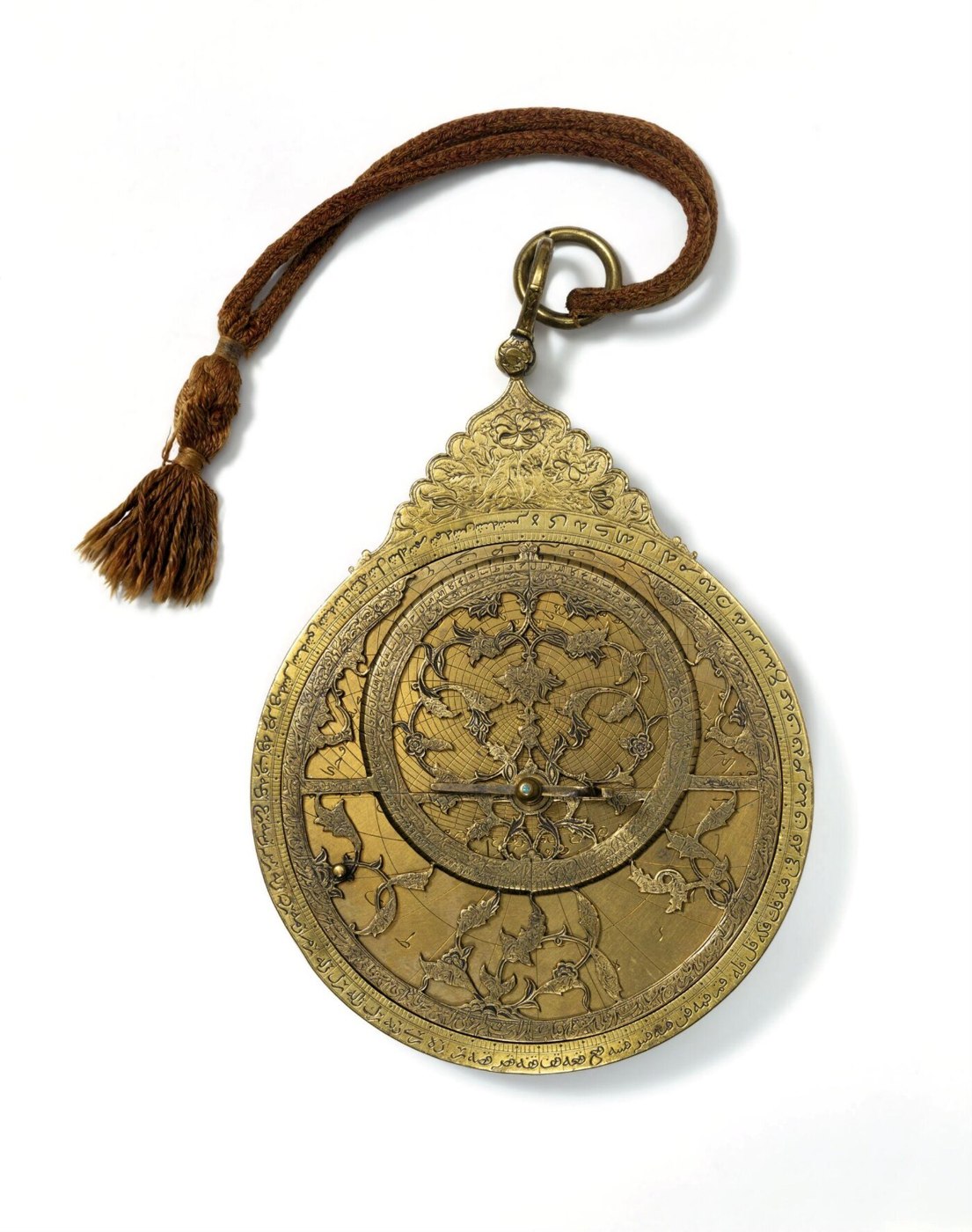
Tool
Astrolabe by Muhammad Khalil and Muhammad Mahdi
“This astrolabe, designated M.38-1916 in the Victoria and Albert Museum collection, was produced in Isfahan, Iran, in 1667. Constructed from brass, the instrument is both engrave…”