
Glossary · Mechanism
Governor (regulator of striking train)
A small centrifugal or air-brake device that limits the speed of a striking or repeating train.
Explanation
The striking governor limits the speed of a striking or repeating train so the blows fall at a steady, audible pace. Clock governors are usually air brakes — a small fan — while watch repeaters use centrifugal or friction governors, often made silent by inertia design. A worn or dirty governor makes the strike race or drag.
In the object catalogue
Catalogued objects whose own source record mentions “Governor (regulator of striking train)”. The quoted line shows where; it is the seller’s or museum’s wording, not independent verification.
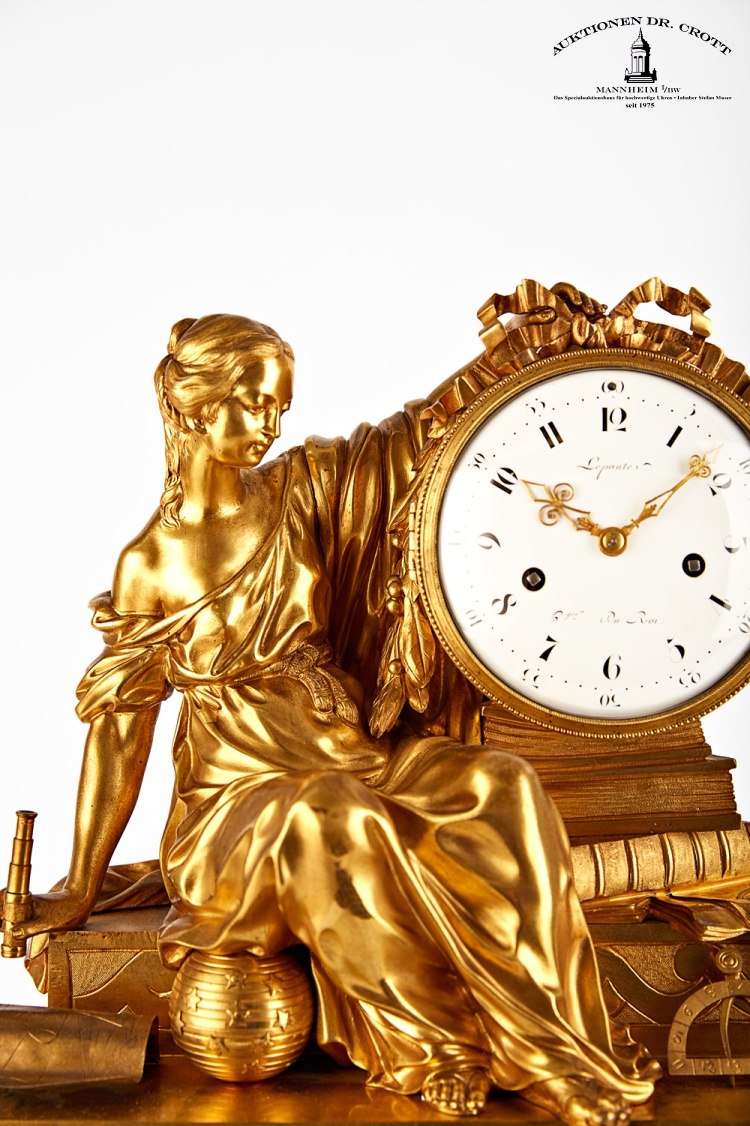
Clock
Lepaute 'Urania' Musical Mantel Clock
“This ormolu mantel clock, representing Urania, the muse of astronomy, depicts the draped muse holding a telescope beside a clock case resting upon stacked books. Accompanying sc…”
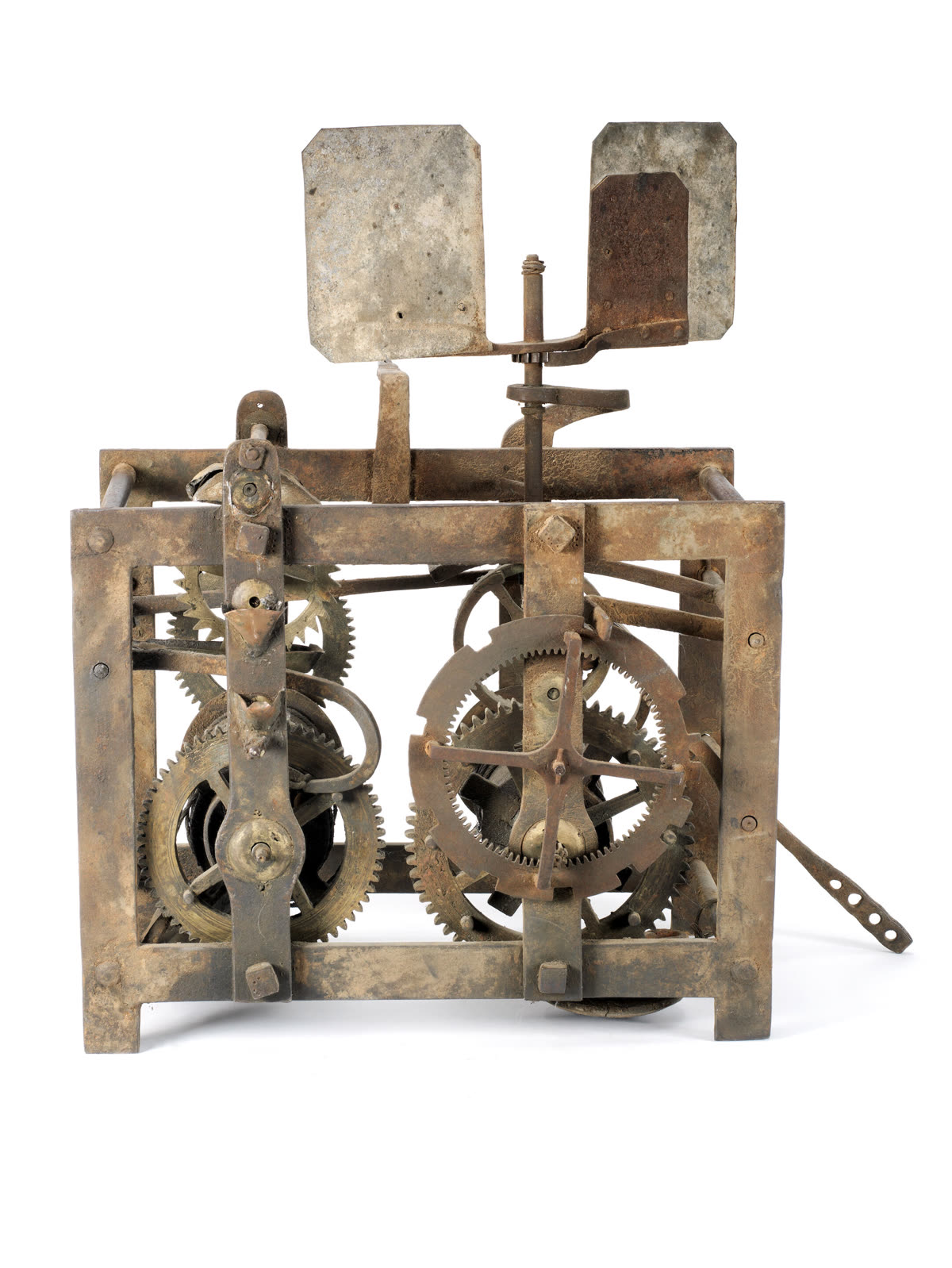
Clock
A small 18th century striking turret clock movement
“Top-mounted vertical fly governor fitted with two rectangular sheet vanes.”
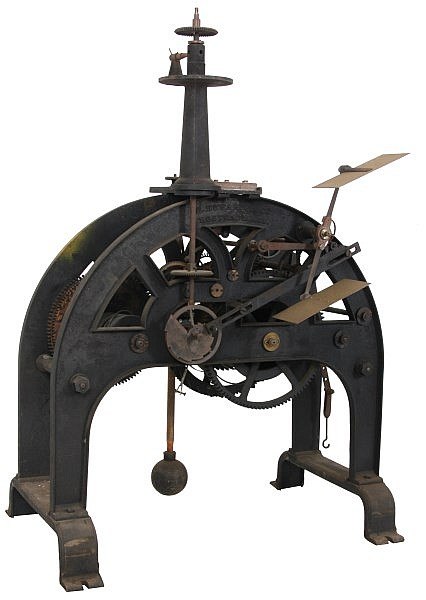
Clock
E. Howard Round Top Tower Clock
“This large tower clock mechanism by E. Howard & Co. of Boston, Massachusetts, features arched pierced cast iron side frames. According to the auction catalog, it is constructed …”
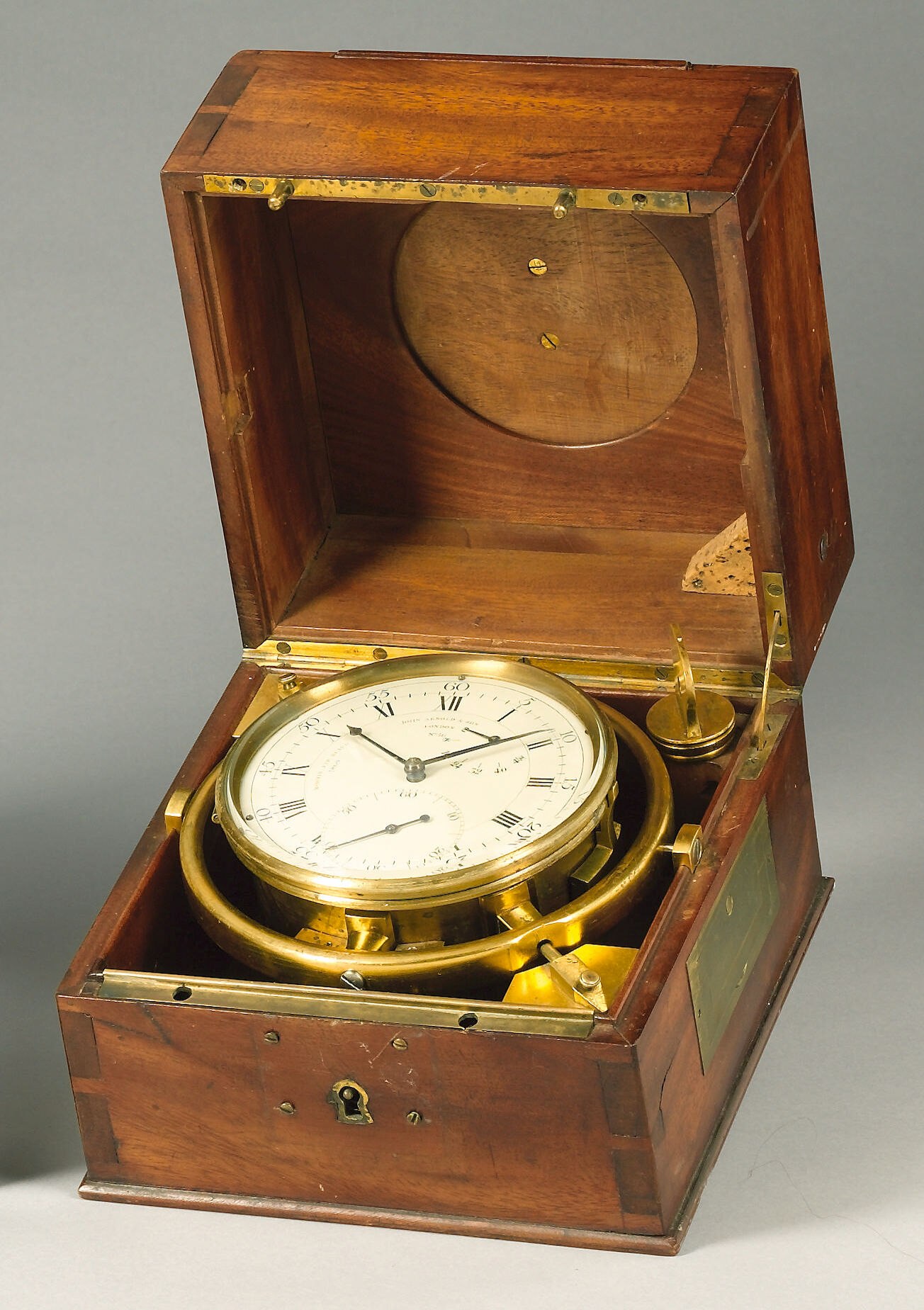
Marine chronometer
John Arnold & Son eight-day marine chronometer No. 56
“This eight-day marine chronometer is catalogued by Bonhams as made by John Arnold & Son, London, bearing number 56. The source reports the instrument was one of four timekeepers…”
Pocket watch
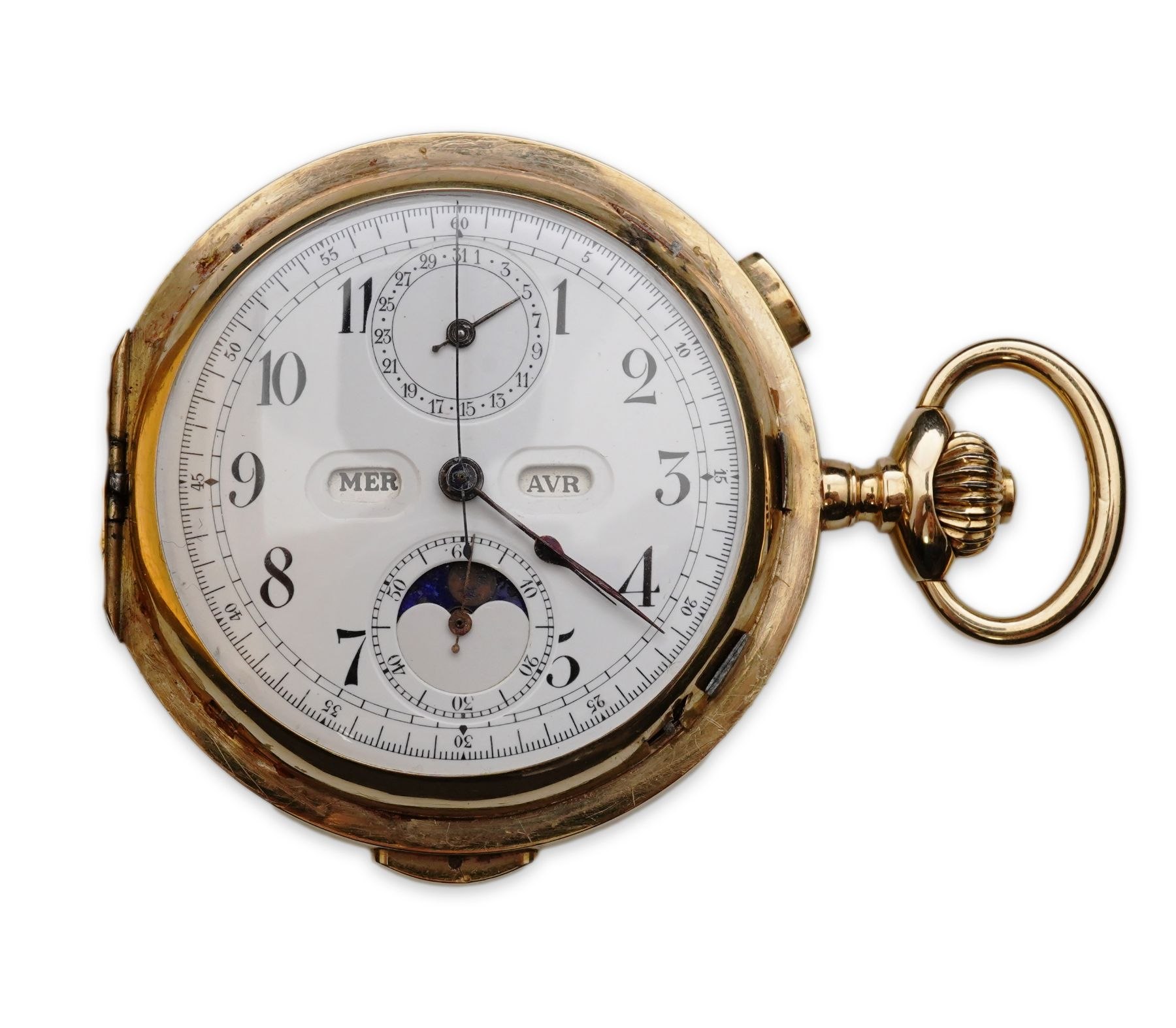
Schwab-Loeillet 18k Gold Triple Calendar Minute Repeating Chronograph Full Hunter Pocket Watch
“This 18k gold keyless-wind full hunter pocket watch is attributed by the auctioneer to maker Schwab-Loeillet and dated to circa 1890. It features a gilt Swiss lever movement equ…”
Clock
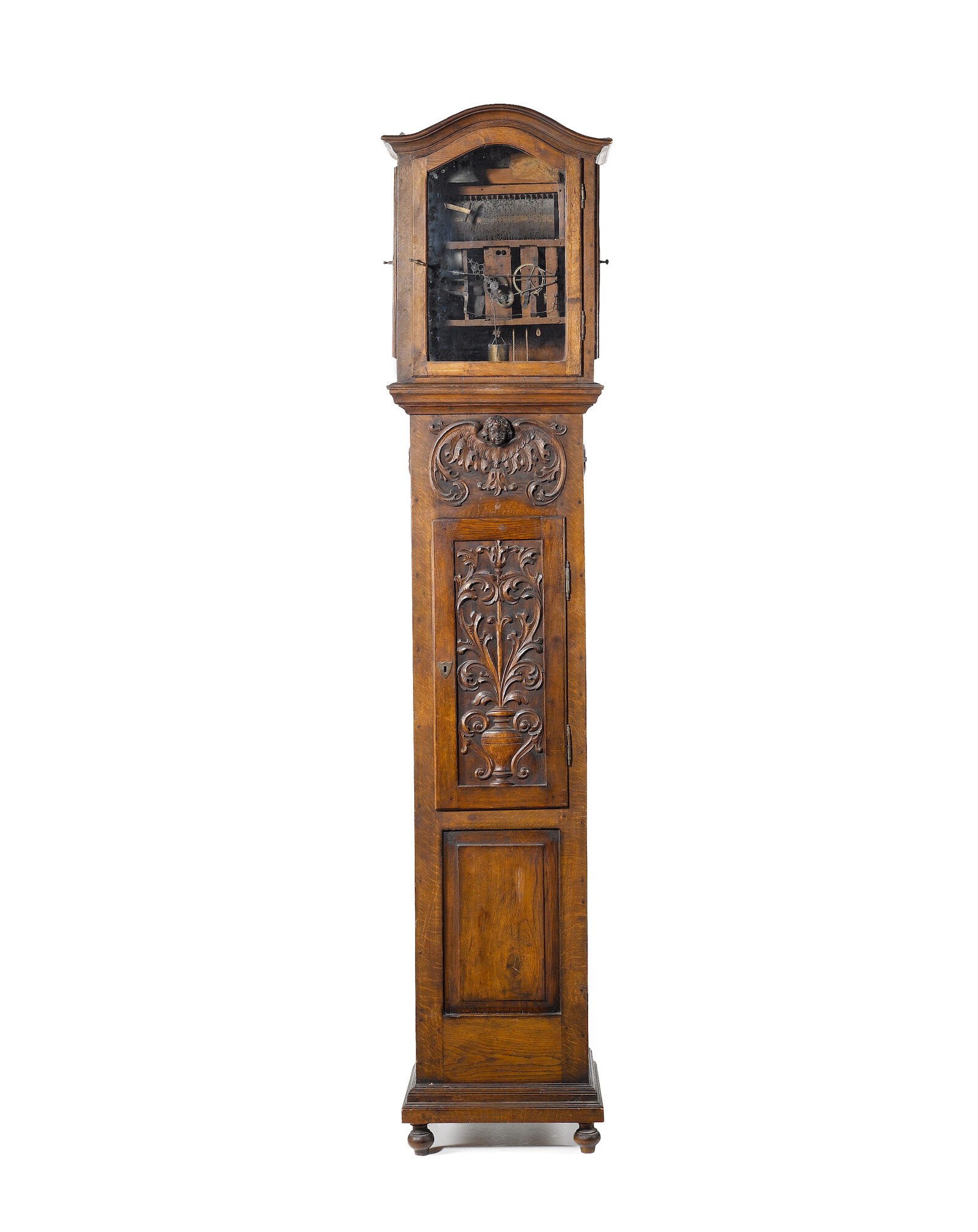
Black Forest Longcase Clock with Barrel Organ Movement
“This Black Forest tall clock incorporates an 8-day bell-striking timepiece paired with a twenty-one key barrel organ movement dated by the auction house to circa 1840. The organ…”