
Glossary · Mechanism
Escape wheel
The last wheel of the going train, whose teeth act directly on the pallets or detent to lock and release the train.
Explanation
The escape wheel is the interface between the going train and the escapement. The train delivers torque to it; the escapement locks it, releases it tooth by tooth, and takes impulse from it. Its tooth form is specific to the escapement family: the pointed, forward-raked teeth of a recoil anchor, the club teeth of a Swiss lever, the slender teeth of a cylinder escape wheel and the light, sharp teeth of a detent chronometer wheel are not interchangeable shapes.
Tooth counts and geometry matter to rate and action. A lever escape wheel commonly has fifteen teeth; club-tooth form divides lift between wheel and pallet. Wear, bent teeth or incorrect depth show as uneven unlocking, recoil where none should exist, or a train that runs down when the balance is removed. These are inspection findings for a watchmaker, not owner adjustments.
When describing a movement, name the escapement before inferring the wheel's form, and photograph the wheel only with the movement secured. A bright escape wheel in a photograph says nothing about pivot condition or depth.
Sources & references
- de Carle, D., Practical Watch Repairing — technical further reading; exact procedures require calibre documentation
- Reymondin et al., The Theory of Horology — construction and terminology further reading
Where sources disagree, the disagreement is stated rather than resolved silently.
Distinctions at a glance
| Escapement | Wheel character | Do not confuse with |
|---|---|---|
| Swiss lever | Club teeth, commonly fifteen | The lighter cylinder wheel |
| Cylinder | Slender upright teeth on a flat wheel | The two-level duplex wheel |
| Duplex | Two tooth levels on one wheel | A single-level lever wheel |
| Anchor or deadbeat (clock) | Larger wheel acting on pallet arms | A watch escape wheel |
What to record
- Name the escapement family before describing tooth form.
- Record tooth count where documented for the calibre.
- Keep wear observations separate from depth or beat conclusions.
Never probe the escape wheel with the mainspring let down only partially; a suddenly released train can bend teeth and pivots.
In the object catalogue
Catalogued objects whose own source record mentions “Escape wheel”. The quoted line shows where; it is the seller’s or museum’s wording, not independent verification.
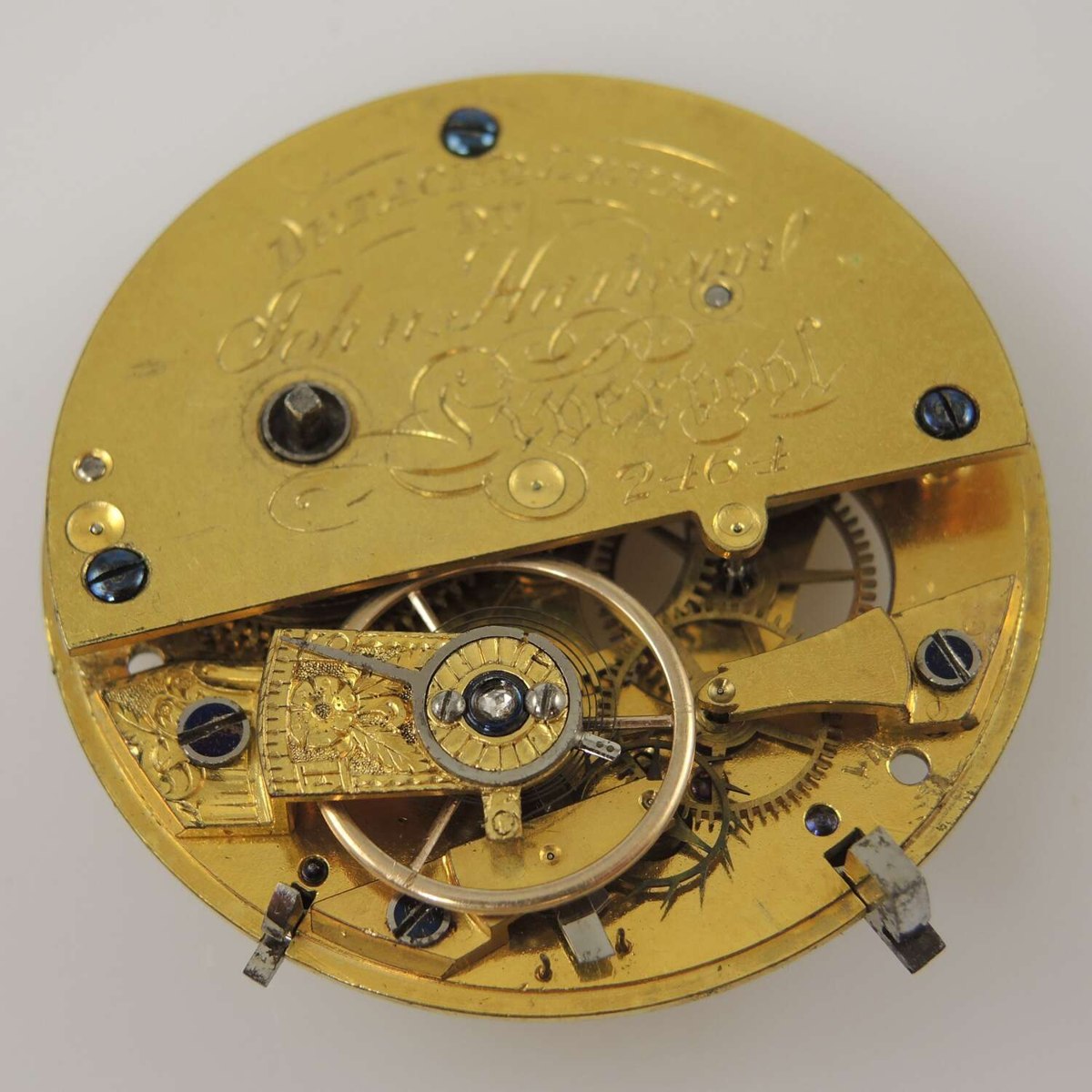
Movement
English fusee detached lever pocket watch movement by John Harrison, Liverpool
“Gold balance wheel positioned over visible gear train wheels and escape wheel teeth”
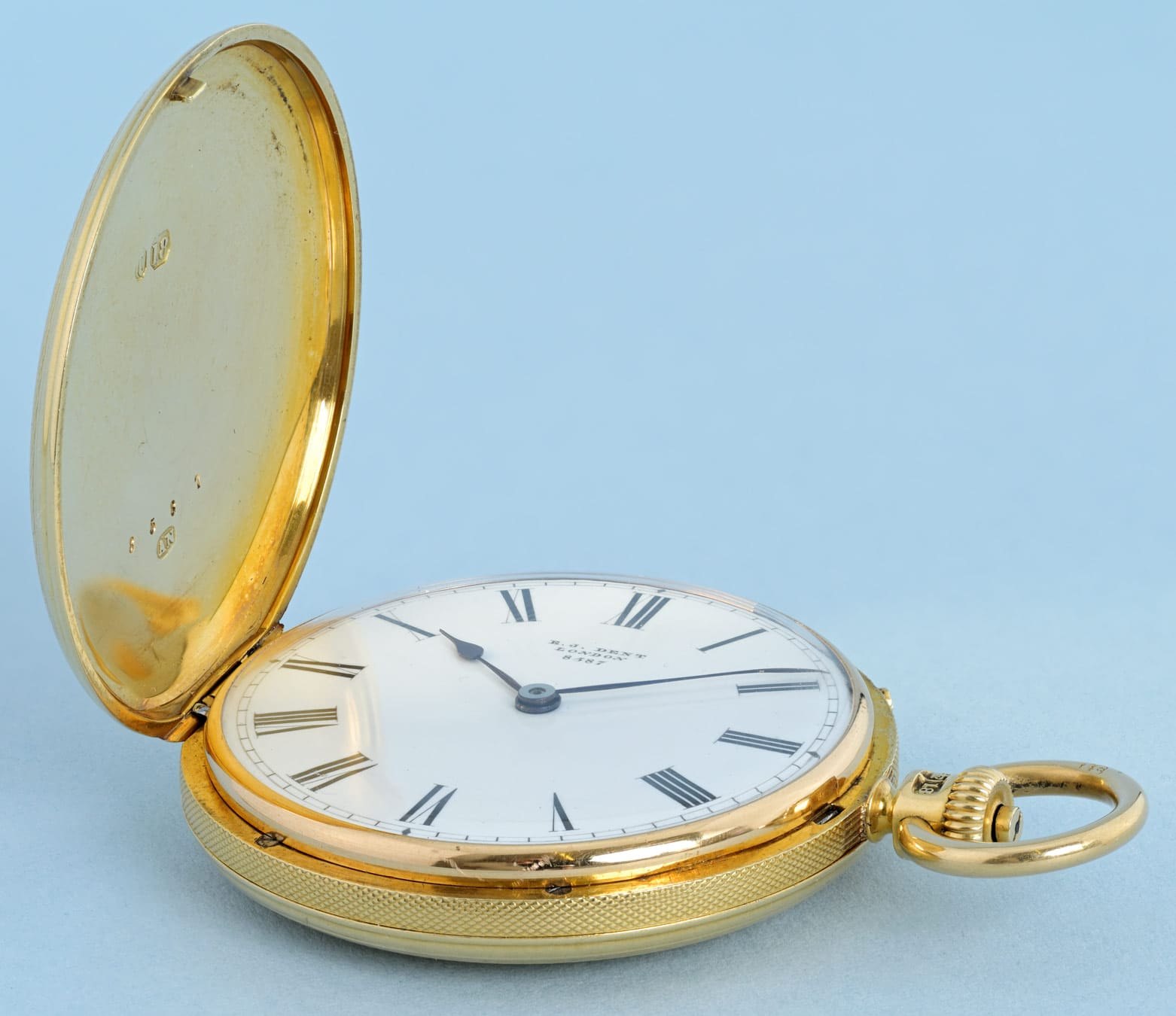
Pocket watch
Nicole Nielsen Gold Hunter Pocket Watch
“This mid-19th-century English duplex pocket watch is attributed to Nicole Nielsen and documented with London hallmarks dating to 1858. The watch is encased in an 18-carat yellow…”
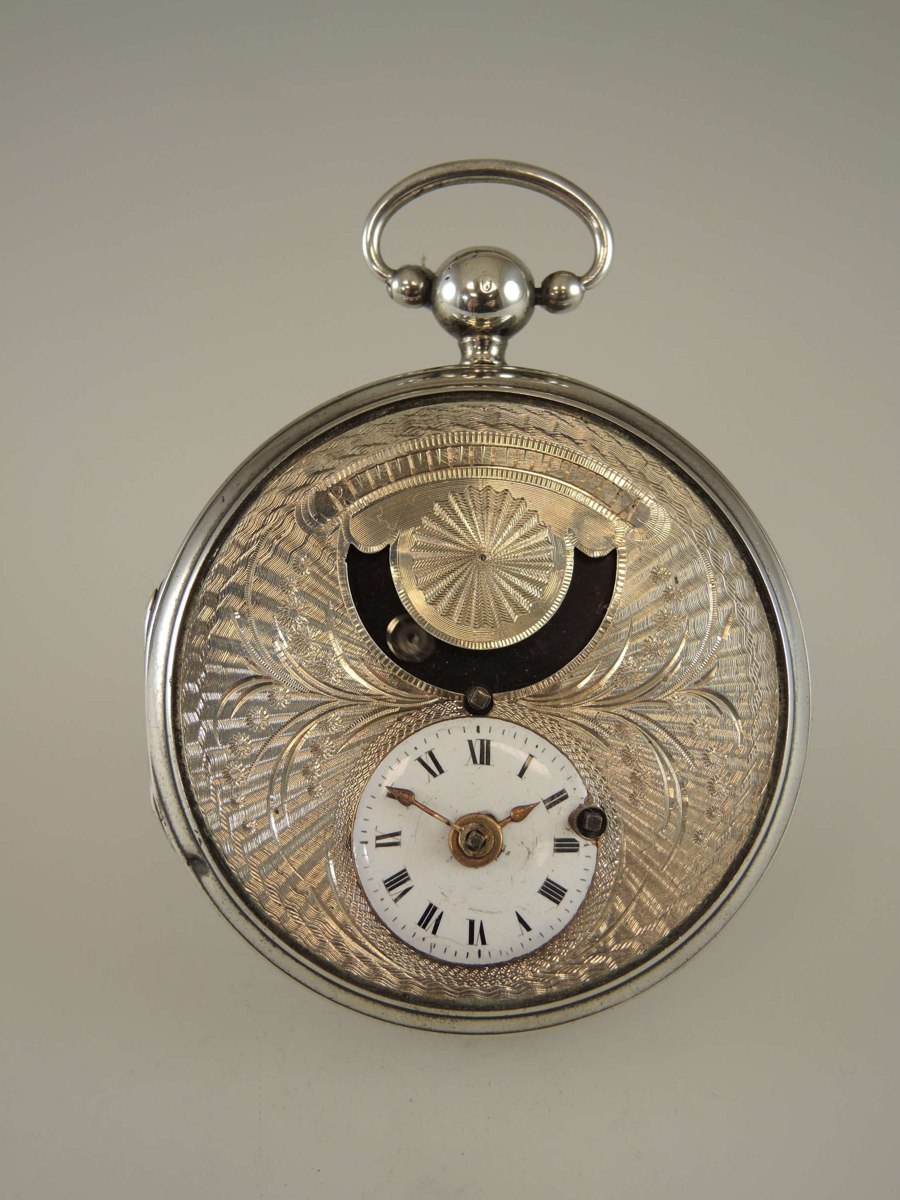
Pocket watch
Continental silver verge fusee mock pendulum pocket watch
“This Continental open-face pocket watch dates to circa 1810, featuring a gilt full-plate verge fusee movement. According to the seller, the balance and escape wheel are inverted…”
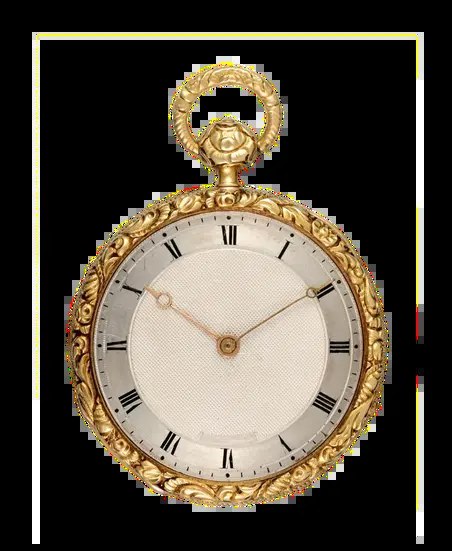
Pocket watch
J F Bautte et Cie Swiss Quarter Repeating Cylinder Pocket Watch
“Escapement: Polished steel cylinder and escape wheel”
Pocket watch
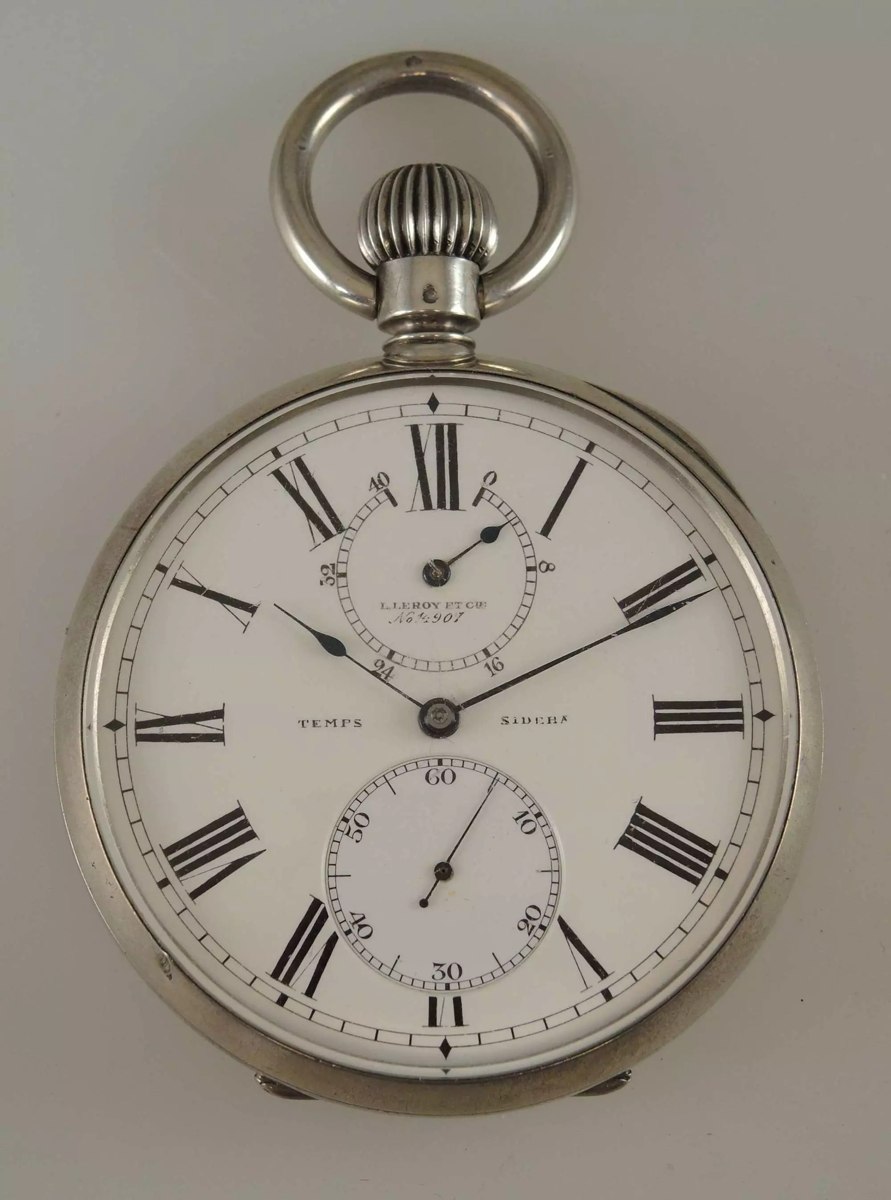
LeRoy & Cie Oversized Silver Marine Deck Watch
“This oversized silver open-face deck watch is attributed to L. LeRoy & Cie, dating circa 1930. The dealer reports it was manufactured for the French Navy Service Hydrographique.…”
Movement
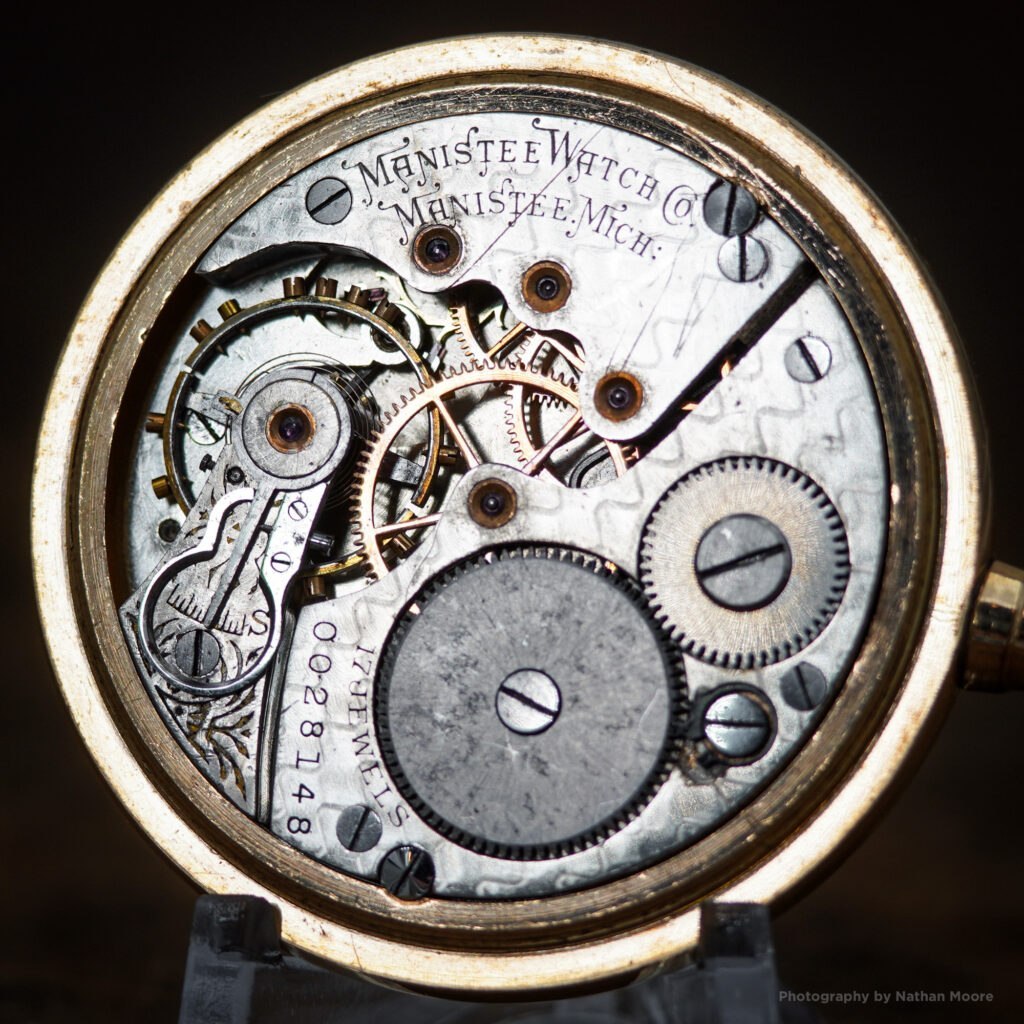
Manistee Watch Company 16-size movement, serial 0028148
“This 16-size pocket watch movement was manufactured by the Manistee Watch Company of Manistee, Michigan, and bears zero-padded serial number 0028148. Introduced as a higher-grad…”