Glossary · Trade
Temporal hours
Hours of varying length dividing daylight and night.
Explanation
Temporal or unequal hours divide daylight and night into twelve parts each. Daytime hours are longer in summer and shorter in winter, and they equal night hours only at the equinoxes. The system was used in Antiquity and in parts of the medieval world.
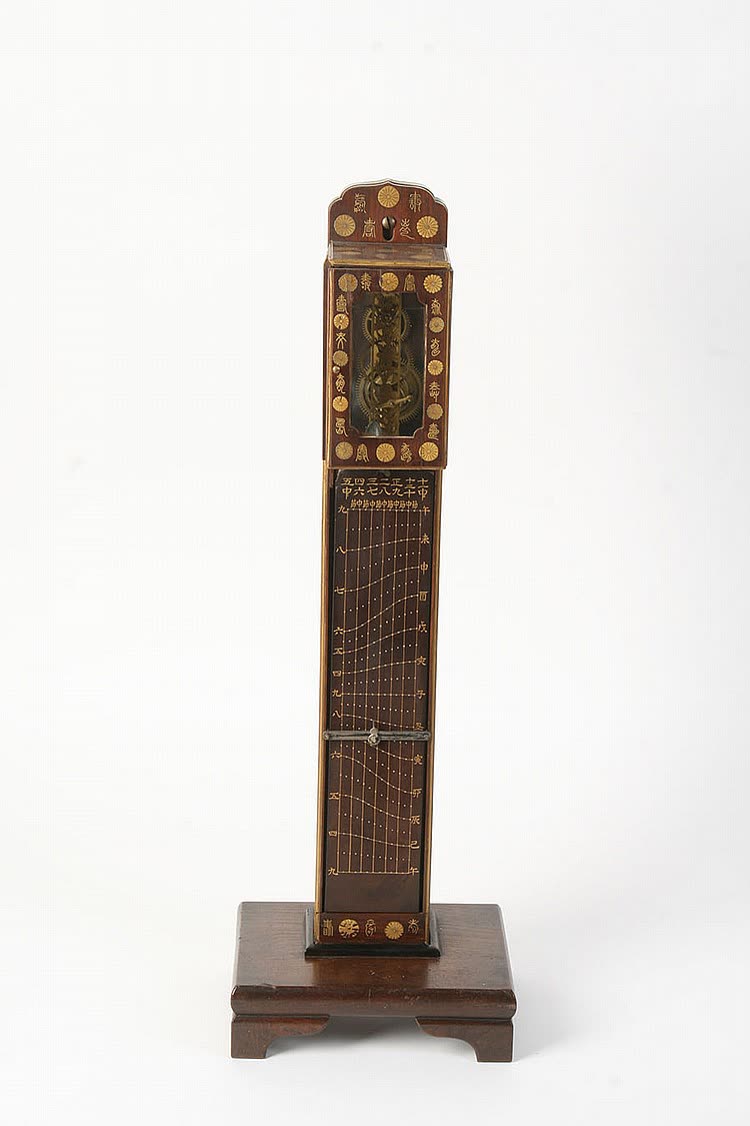
Sundials and astrolabes can show temporal hours directly. Mechanical clocks generally run at a constant rate, so displaying unequal hours requires adjustable dials or regular resetting; Japanese wadokei solved this with movable hour markers or two foliots.
What to record
- Astrolabe plates often carry unequal-hour lines below the horizon.
- Japanese clocks with adjustable hour markers show a mechanical approach to temporal hours.
Do not assume all early dials used temporal hours; equal hours were also used.
In the object catalogue
Catalogued objects whose own source record mentions “Temporal hours”. The quoted line shows where; it is the seller’s or museum’s wording, not independent verification.