
Art, mechanisms & provenance
Decorated Early Watches
Painted allegories, engraved silver and floral enamel: five surviving watches whose cases, movements and later histories do not always share one date.
One watch, several histories
The V&A floral watch combines a seventeenth-century enamel exterior with an eighteenth-century movement signed Caille. The museum proposes a possible later assembly in Vienna, but leaves that history unresolved.
A maker’s signature, an enamel technique and a catalogue date answer different questions. Preserve the qualifications rather than making every component contemporary.
Read the floral watch’s layered historyFloral enamel and a later movement
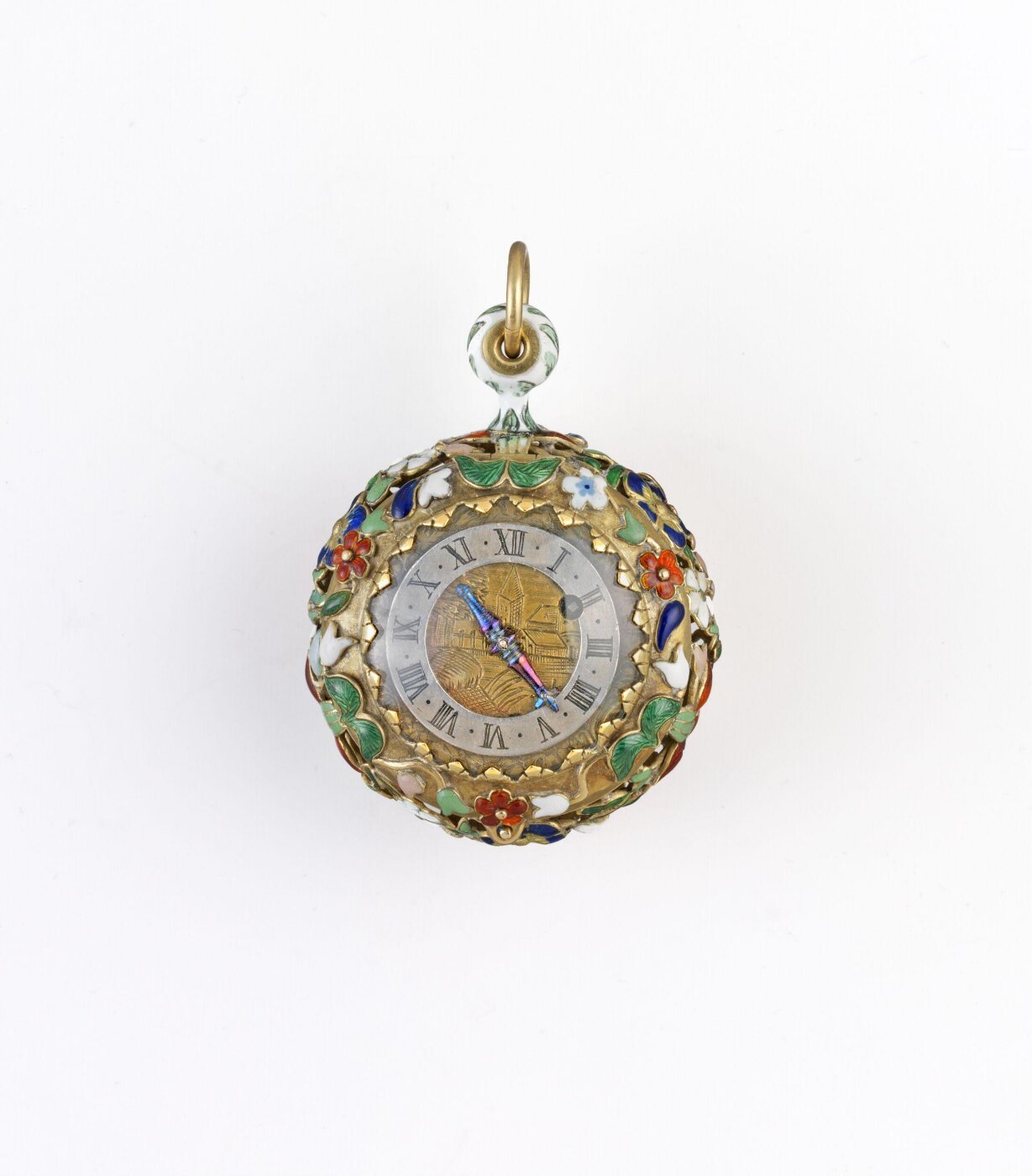
V&A M.33:1,2,3-2018. Exact exterior photograph; the proposed assembly date is not established.
Comprehensive reading
Historical reference library
Fisher’s 1906 enamel manual and Glasgow’s 1885 Watch and Clock Making have verified title pages and publication details. Period techniques are not modern conservation instructions.
Fisher’s original title page
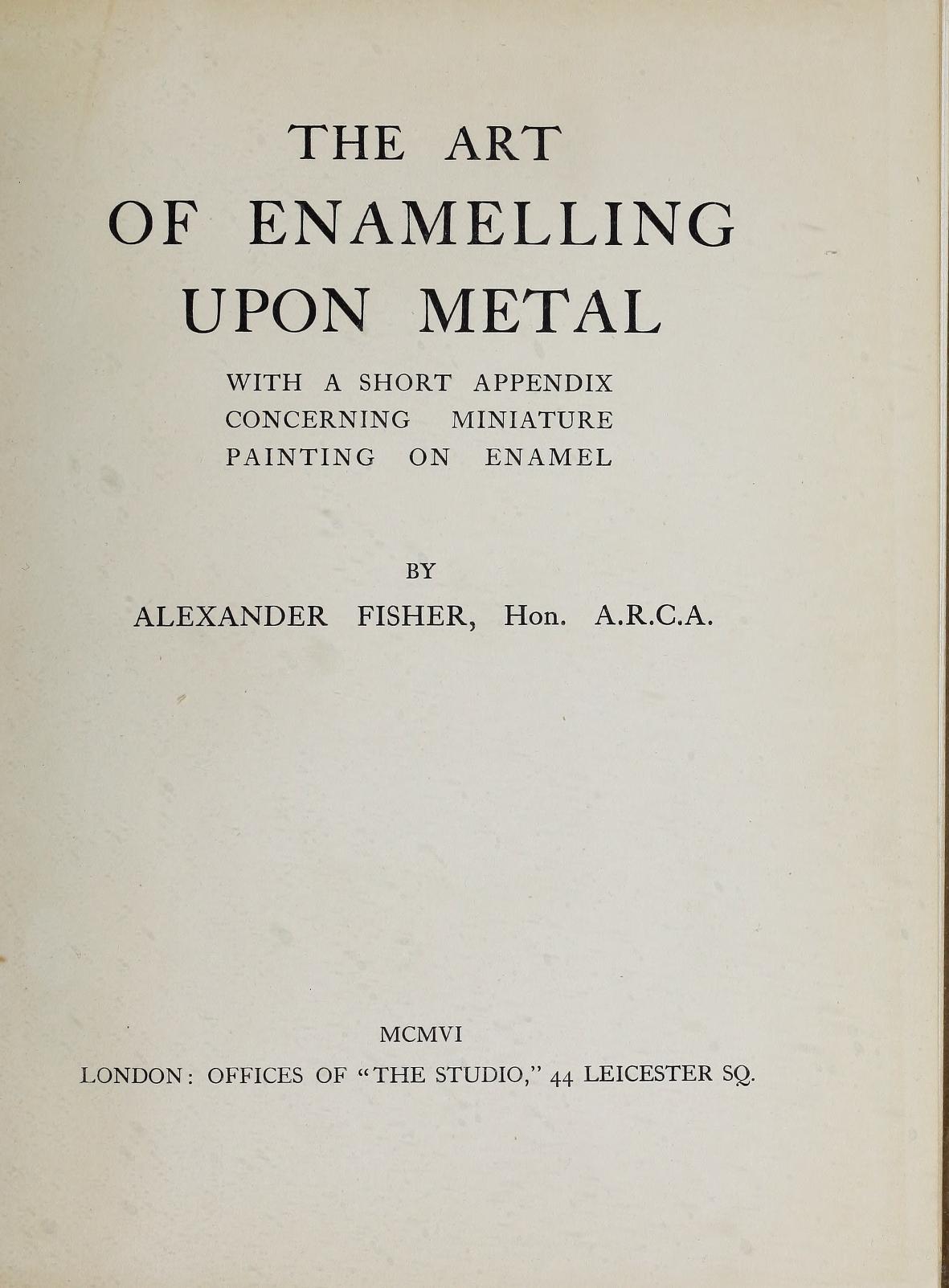
Photographs are illustrative examples of the type, not necessarily the exact object described. Verify details against the source file page.
Exact collection records
5 collection records
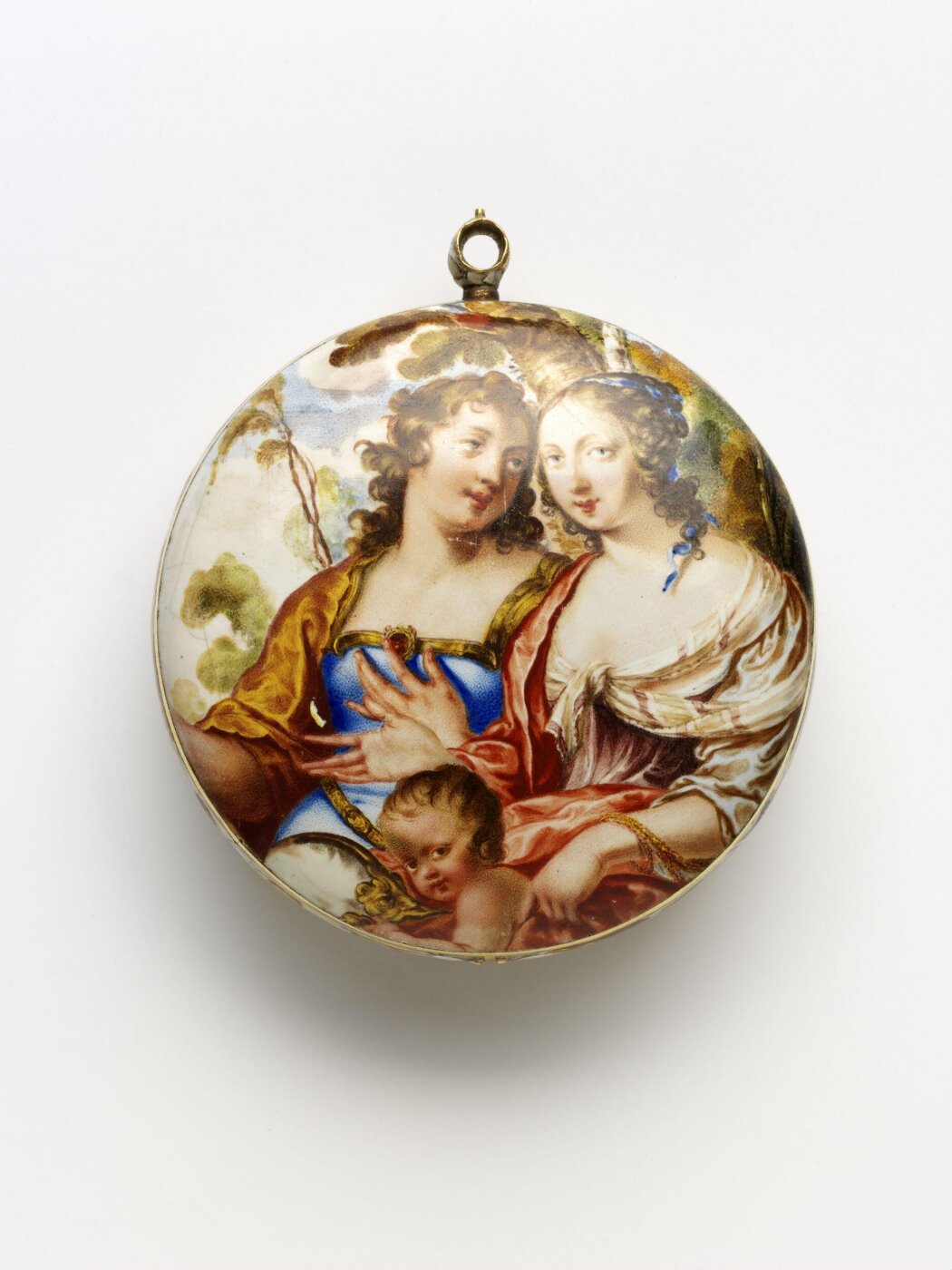 Painted-enamel watch · Case 1640–1660; movement 1740–1760 (date field)Painted-enamel watch with Mars, Venus and CupidThis gold case is painted with figures the museum reasonably identifies as Mars, Venus and Cupid; the qualification matters because iconographic interpretation is not an inscription naming the subject. Landscape vignettes continue around the sides and inside the case. The dial combines a painted centre with a white enamel chapter ring.4869-1901
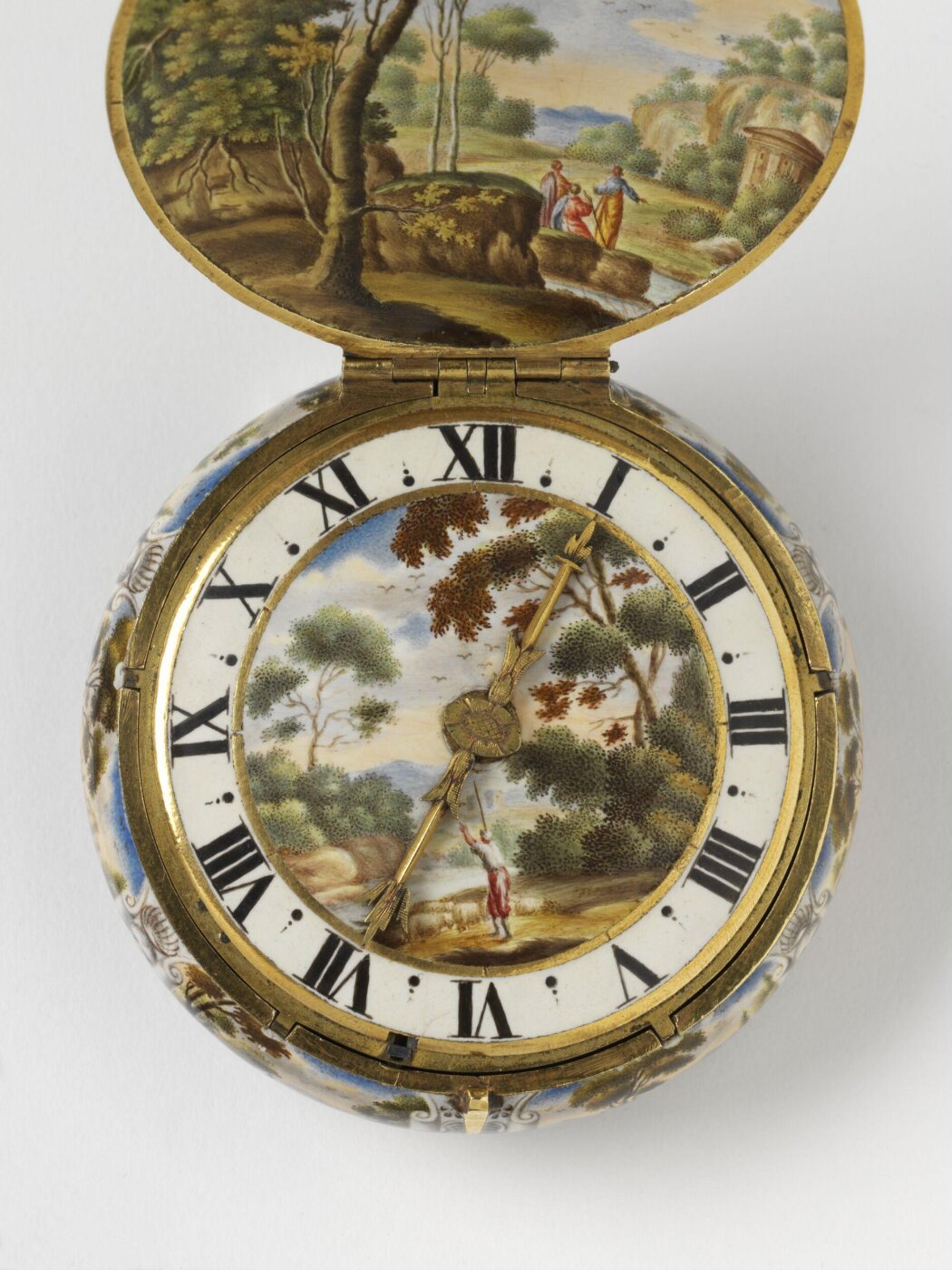 Painted-enamel watch · 1640–1650Nicolas Bernard watch with Faith, Hope and CharityThe V&A names Nicolas Bernard as watchmaker and identifies a gold case painted with Charity on the front and Faith and Hope on the back. Landscapes decorate the dial, sides and interior surfaces. Its summary connects the case to improved miniature painting in enamel around 1630, while naming Jean Toutin among the key figures in that development; this is not an attribution of this particular case to Toutin.2359-1855
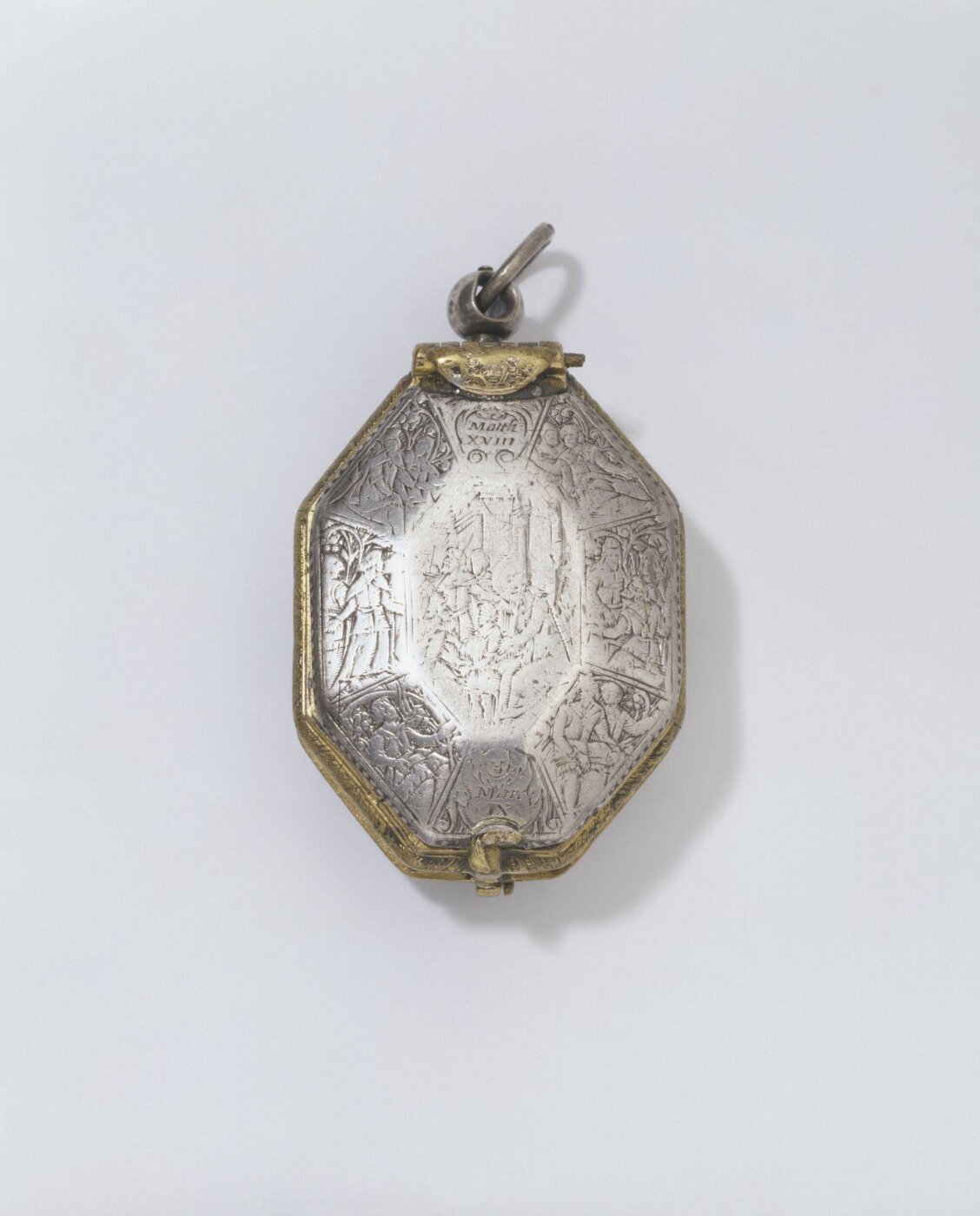 Engraved form watch · ca. 1610–1620; brief description separately says about 1640Octagonal watch signed Robert GrinkinThe octagonal watch has an engraved silver and brass case, brass dial, silver chapter ring and single hand. Its movement bears the name Robert Grinkin. The museum discusses two London watchmakers of that name, father and son, and suggests that the earlier date may point to the elder. A signature and a plausible date do not remove that qualified identity.M.3-2003
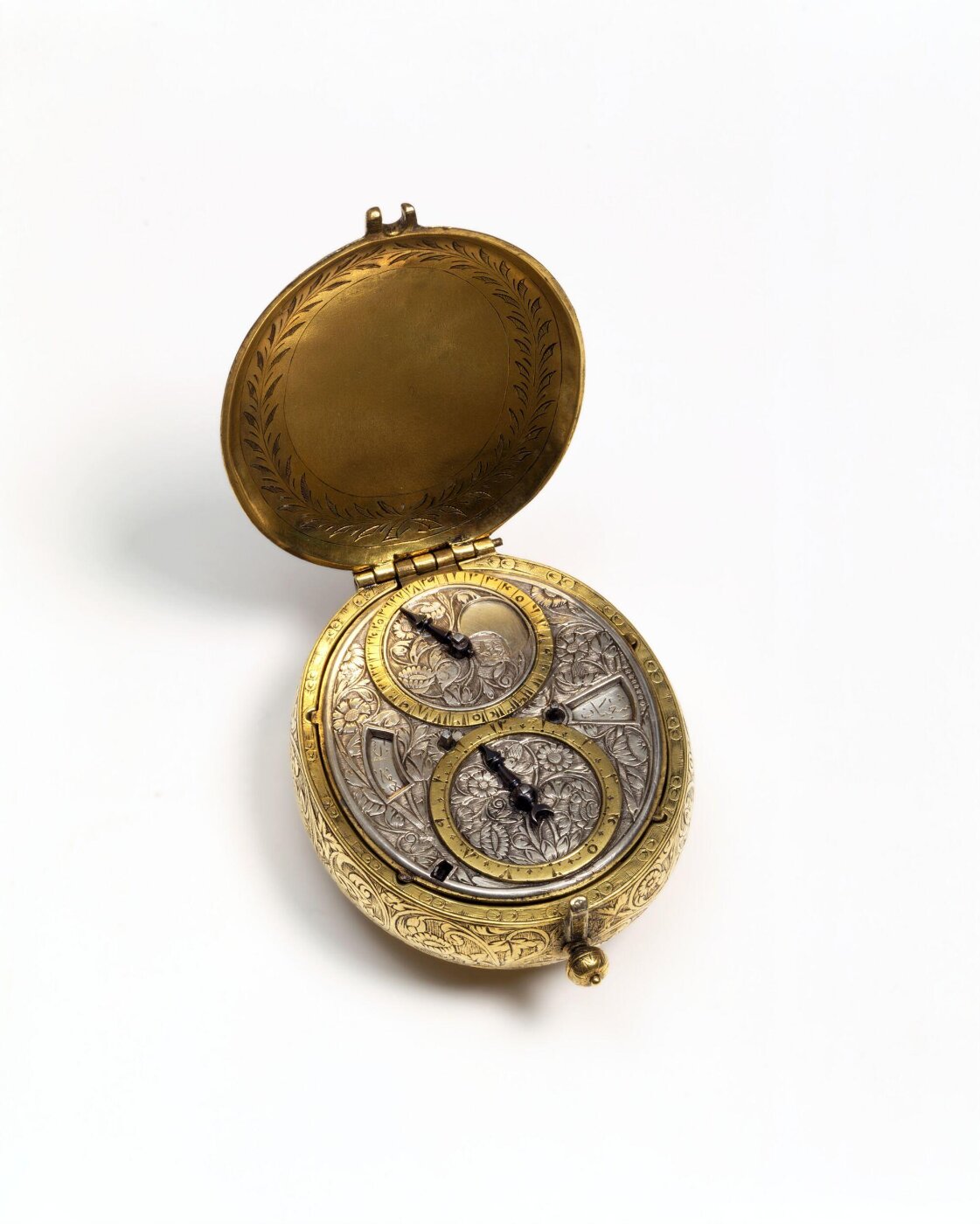 Calendar watch · ca. 1670Calendar watch with Arabic inscriptions, 136-1907This engraved gilt-brass and silver watch has separate calendar and hour indications, with apertures for lunar phases, days of the week and months. The museum describes the date ring as numbered 1–29 and the hour ring 1–12 using numerals it calls “Indian”. This is a transcription of the institutional description, not a claim that the complete calendar system has been independently demonstrated.136-1907Openwork enamel watch · Case enamel 1650–1670; movement 1750–1775Openwork floral enamel watch with later Caille movementThe gold exterior is constructed as flowers and foliage decorated with opaque and basse-taille enamel. The museum dates the enamelled exterior to 1650–1670 and the movement to 1750–1775. Its silver chapter ring, blued steel hand and engraved dial belong to the preserved assembled object; they should not all be assigned the exterior’s seventeenth-century date.M.33:1,2,3-2018
Dating the components
| Accession | Case or exterior | Movement or qualification |
|---|---|---|
| 4869-1901 | 1640–1660 | Later Vrythoff; date ranges differ |
| 2359-1855 | 1640–1650 | Nicolas Bernard; renewed gut line |
| M.3-2003 | Catalogue dates disagree | Grinkin father/son attribution uncertain |
| 136-1907 | ca. 1670; probably Turkey | Jan Ptrw; possible Pattru identification |
| M.33:1,2,3-2018 | 1650–1670 enamel | 1750–1775 Caille; assembly unresolved |
Terminology
Component chronologySeparate dating of the case, movement, dial and later assembly.Enamel groundA fired enamel base supporting subsequent painted-enamel decoration.Miniature painting in enamelSmall-scale painted images fused onto an enamel support through firing.Renewed fusee lineA documented replacement of the flexible line transmitting power to a fusee.Evidence and further research
Sources & references
- https://collections.vam.ac.uk/item/O377036/
- https://collections.vam.ac.uk/item/O377038/
- https://collections.vam.ac.uk/item/O73510/
- https://collections.vam.ac.uk/item/O114502/
- https://collections.vam.ac.uk/item/O1439618/
Where sources disagree, the disagreement is stated rather than resolved silently.
Current operation and public display are unverified. Photographs retain V&A copyright and remain pending reuse-permission review. Conservation before restoration before repair; qualified assessment before opening or winding.