
Source catalogue · individual objects
Object Catalogue
Individual objects described by auction houses, specialist dealers and collection catalogues. Attribution, dates and specifications remain source-reported unless independently established; rights clearance is pending.
Browse makers and their key pieces · Ferdinand Berthoud profile
7 of 5699 objects · Page 1 of 1
Clock · Mantel clock
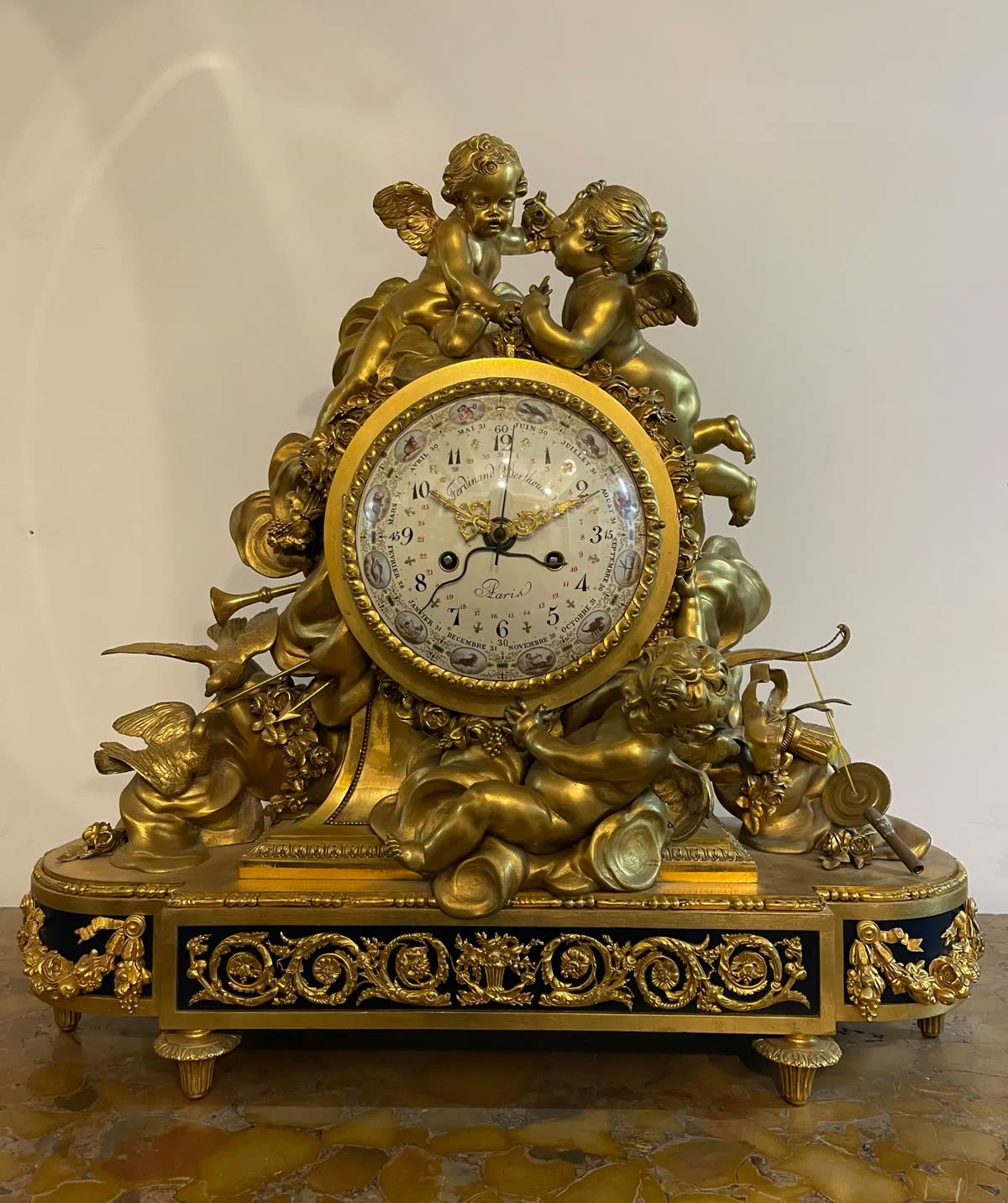
French Large Gilt Bronze Mantel Clock by Ferdinand Berthoud
This large French mantel clock features a sculptured gilt bronze case depicting winged putti among clouds, birds, and attributes surrounding a circular drum dial. The source attributes the clock to Ferdinand Berthoud and reports the case casting to Jean Beurdeley. The white dial displays dual winding squares, pierced gilt hands, and central script reading Ferdinand Berthoud Paris, encircled by calendar months and zodiac or pictorial indications. The assembly rests on an ornate rectangular plinth decorated with scrolling foliate bronze mounts and supported by fluted toupie feet.
Full description
www.liveauctioneers.com · 0051
Wristwatch · Hand-wound wristwatch
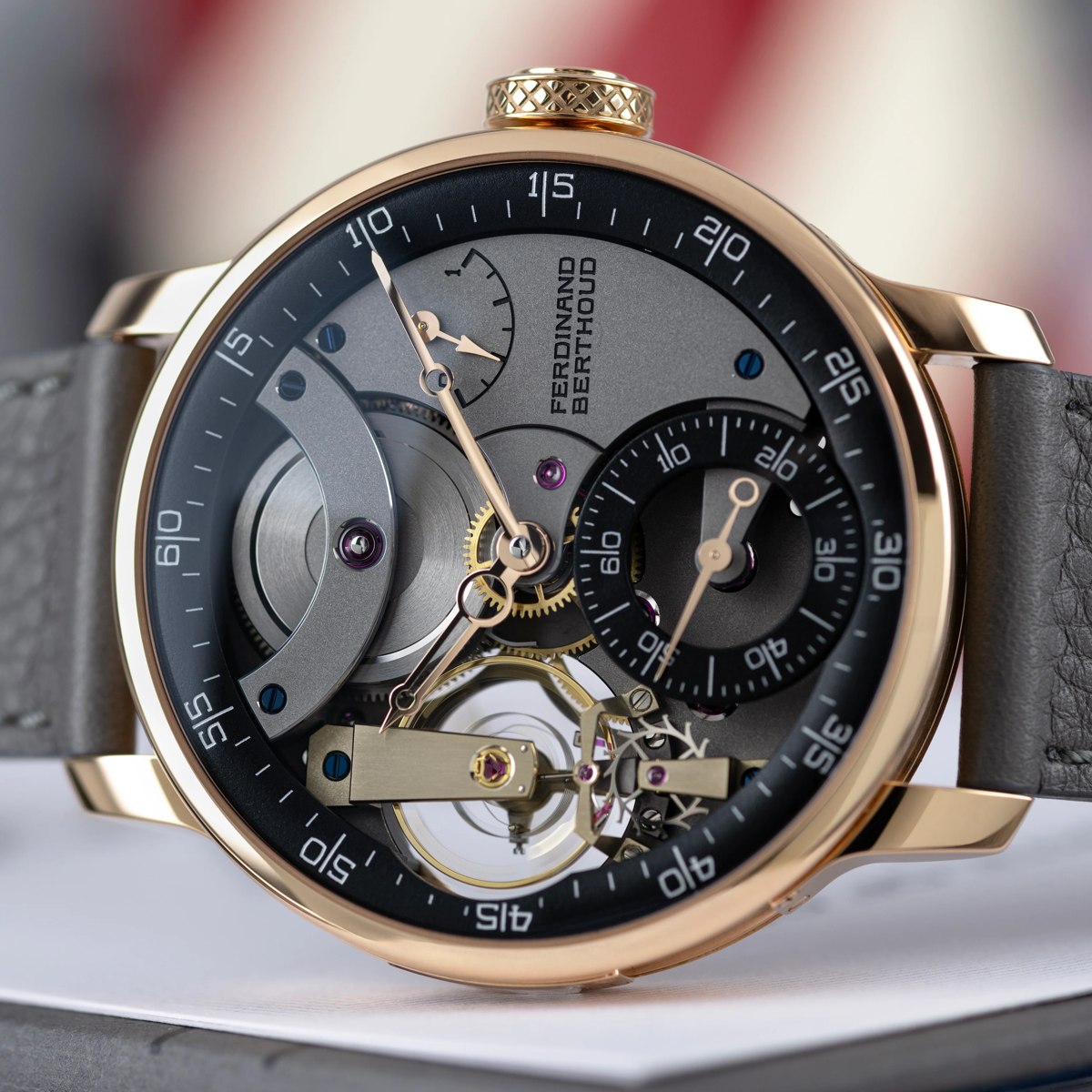
Ferdinand Berthoud Chronomètre FB 3SPC.2
The Ferdinand Berthoud Chronomètre FB 3SPC.2 is a chronometer wristwatch cased in 18k rose gold measuring 42.30 mm by 9.43 mm, offered by Phillips PERPETUAL in London. The movement, composed of 230 components, features an in-house cylindrical hairspring operating without a tourbillon, achieving COSC certification. The open dial showcases six nickel-silver bridges with sandblasted matte surfaces and galvanic coating. Displays include an outer peripheral minute ring, central minutes, a suspended sub-dial for small seconds at six o'clock, an off-centre sub-dial for hours, a power reserve indicator near two o'clock, and a hacking seconds stopwork mechanism.
Full description
perpetual.phillips.com
Marine chronometer · Marine chronometer (duration not stated)
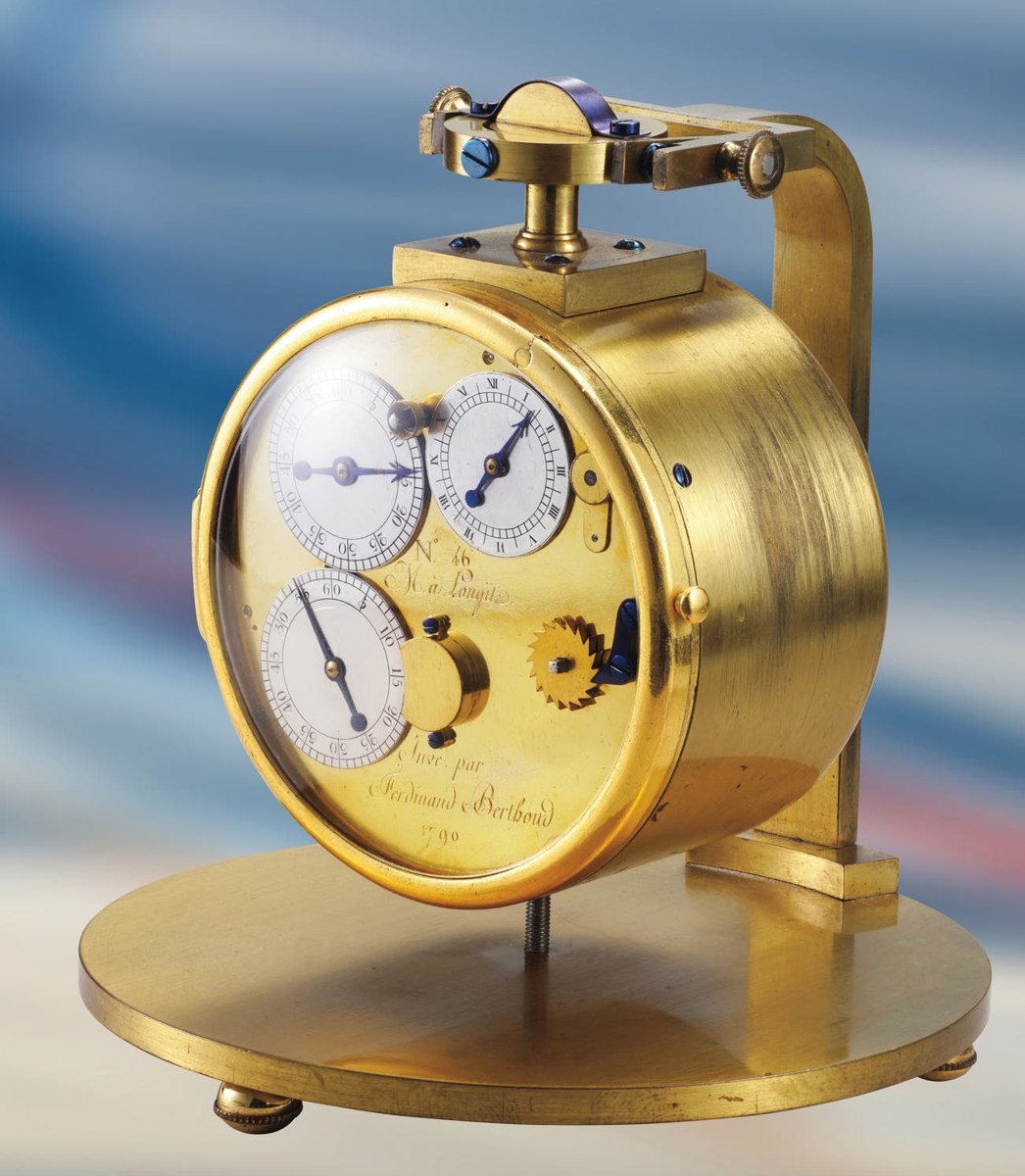
Ferdinand Berthoud La Montre à Longitude Verticale No. 46
Completed in 1790, La Montre à Longitude Verticale No. 46 is a brass vertical marine chronometer designed by Ferdinand Berthoud and constructed by Vincent Martin. Source notes describe the instrument as a versatile precision timekeeper conceived to serve at sea, as a deck or pocket watch, and as a desk timepiece via its detachable gimballed suspension. The movement features a manual fusée and chain, maintaining power, a detached pivoted detent escapement, and temperature compensation combining steel and copper. The front dial plate integrates three enamel subsidiary dials for time indications, exposed clickwork, and engraved signatures.
Full description
www.phillips.com · 91
Clock · Regulator
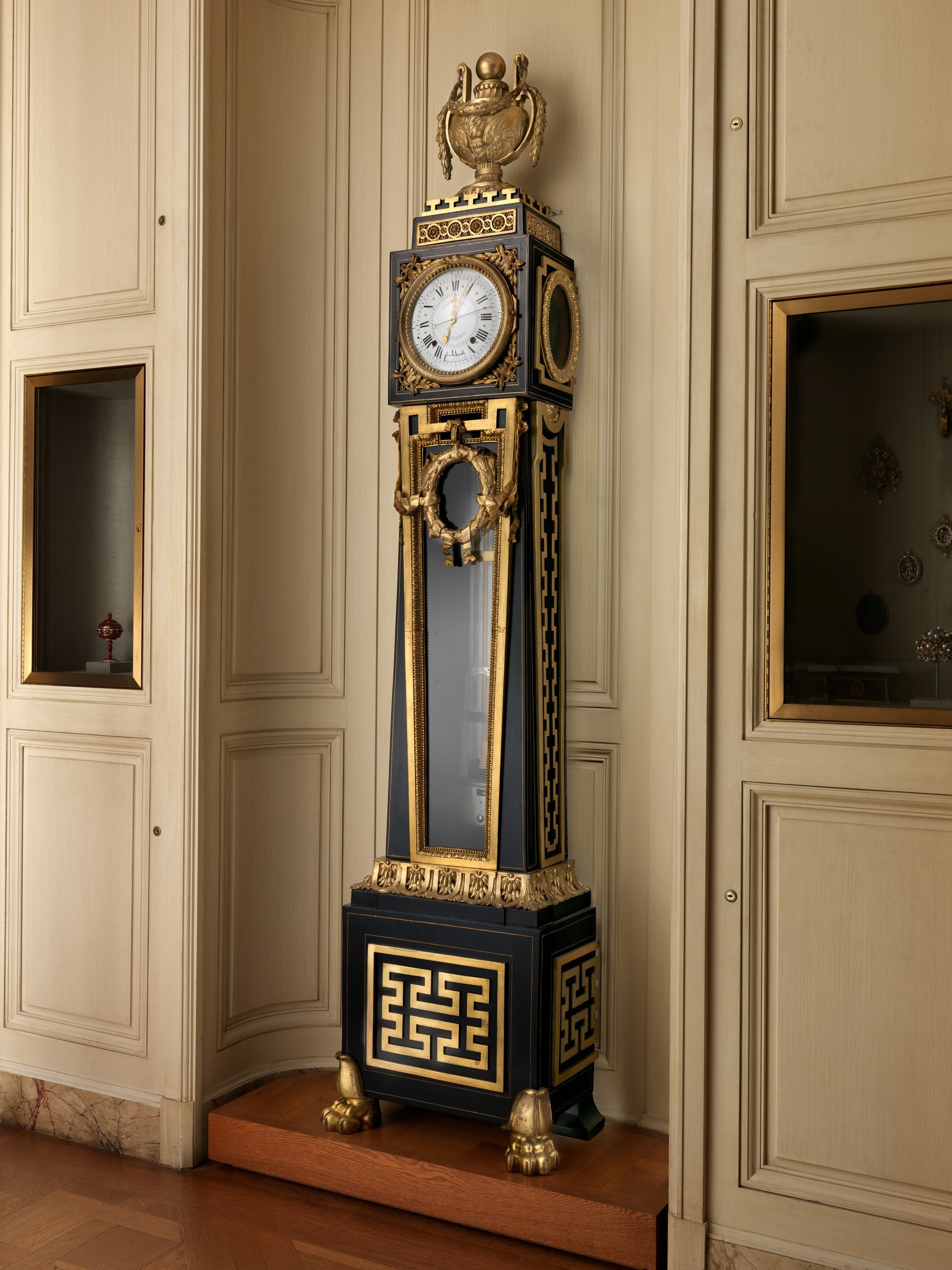
Longcase astronomical regulator
This longcase astronomical regulator, created circa 1768–1770, is the work of horologist Ferdinand Berthoud, with its case attributed to master ébéniste Balthazar Lieutaud. The clock features a weight-driven going train with maintaining power, regulated by a Graham-type dead-beat escapement and a bimetallic gridiron pendulum. It is designed to track both mean time and solar time, utilizing an epicyclic system with a kidney-shaped cam mechanism mounted on the back of the calendar dial. The case is constructed of oak veneered with ebony and brass, finished with gilt-bronze mounts, including Chinese-inspired fret motifs on the base. The white enamel dial provides hour and minute indications, as well as a date aperture. It was acquired by the Metropolitan Museum of Art in 1982 as part of the Jack and Belle Linsky Collection.
Full description
www.metmuseum.org · 1982.60.50
Wristwatch · Hand-wound wristwatch
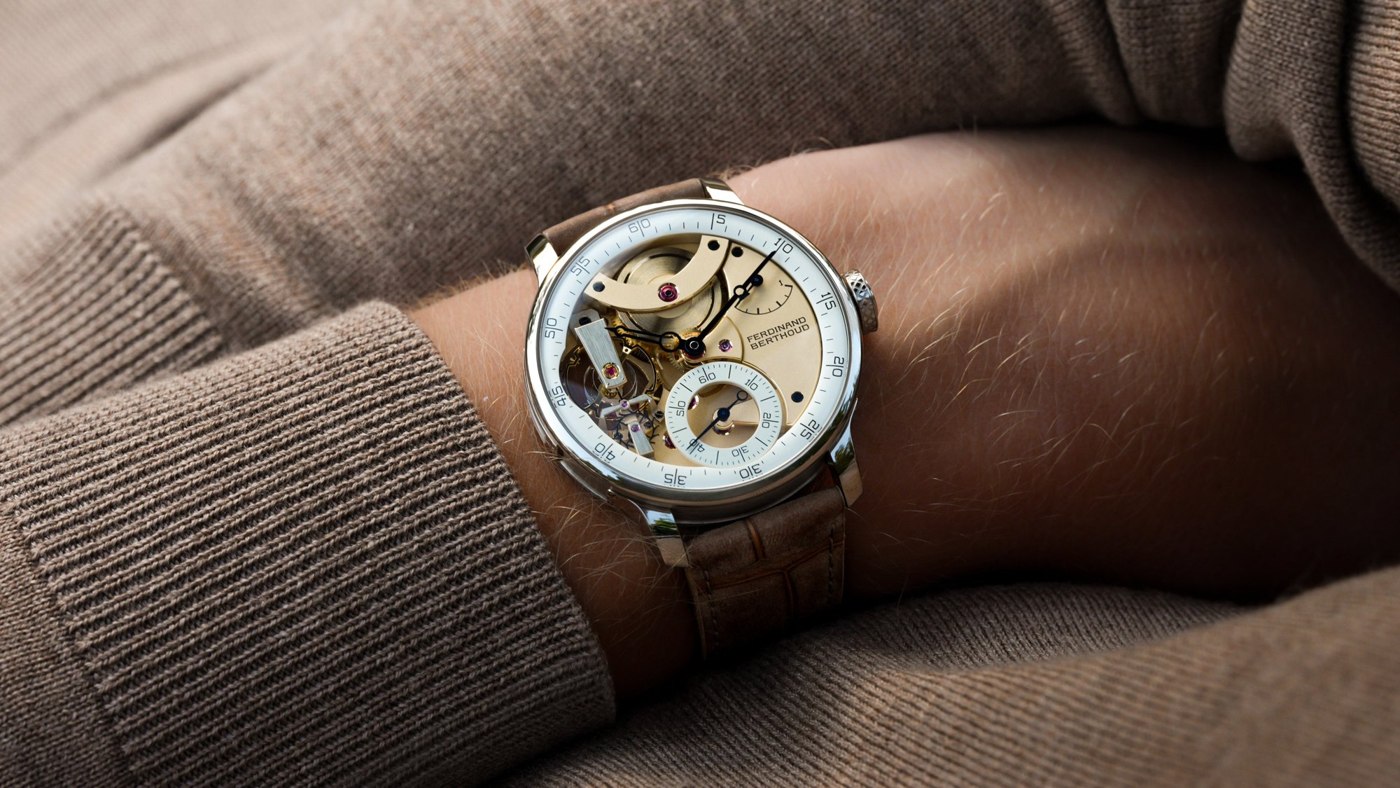
Ferdinand Berthoud FB 3SPC.1 Wristwatch
The Ferdinand Berthoud FB 3SPC.1 is a contemporary time-only wristwatch constructed with a white gold case and powered by the caliber FB-SPC. Its primary horological feature is the use of a cylindrical hairspring, designed to achieve concentric breathing to improve isochronism. The movement, which does not utilize a tourbillon, features hand-shaped terminal curves on the hairspring, verified under 20x magnification. The finishing of the movement components requires over 100 hours of labor by a single watchmaker, incorporating frosted sandblasted surfaces with beveled and hand-polished edges. The watch is presented as the first movement utilizing a cylindrical hairspring to receive an official COSC chronometer certificate according to standard ISO 3159. The case includes a lateral viewing aperture on the flank to observe the operation of the cylindrical balance spring. The watch is stated to be in excellent working order.
Full description
Source listing
Pocket watch · Open-face watch
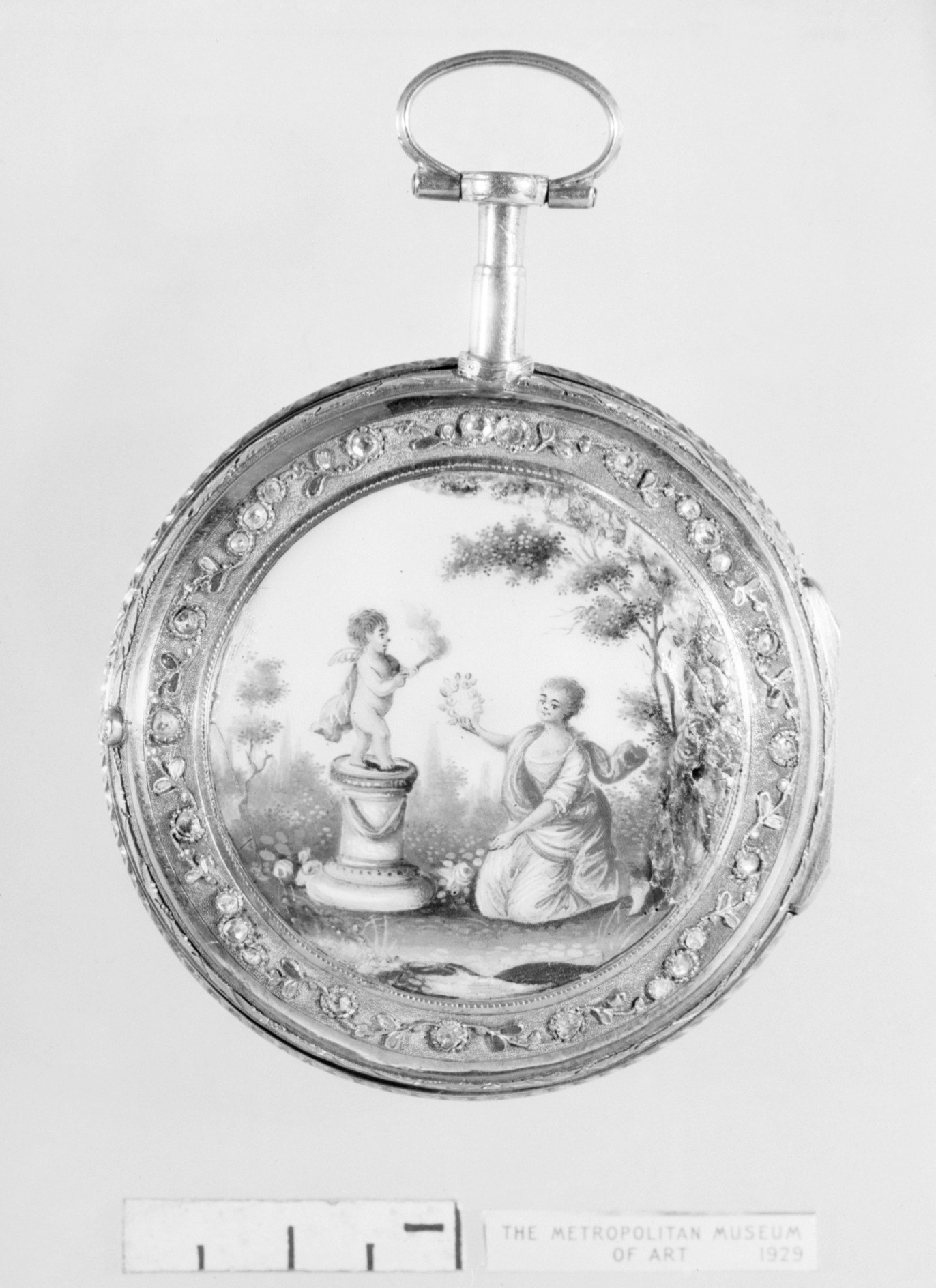
Ferdinand Berthoud pocket watch
This pocket watch was produced by the watchmaker Ferdinand Berthoud (1727–1807) in Paris during the late 18th century. The watch is part of the collection at The Metropolitan Museum of Art, entering the institution as a bequest of Laura Frances Hearn in 1917. The timepiece is constructed from gold and embellished with rose diamonds. Measuring 2 inches (5.1 cm) in diameter, the object reflects the production of a maker who held the titles of Horologist-Mechanic to the King and the Navy. The case features decorative work surrounding a central scene. The documentation provided by The Metropolitan Museum of Art confirms the materials and attribution to Berthoud, who was a significant figure in the development of both domestic timepieces and marine chronometers during this period of French horological history.
Full description
Source listing · 17.101.12
Pocket watch · Enamel, form & pendant watch
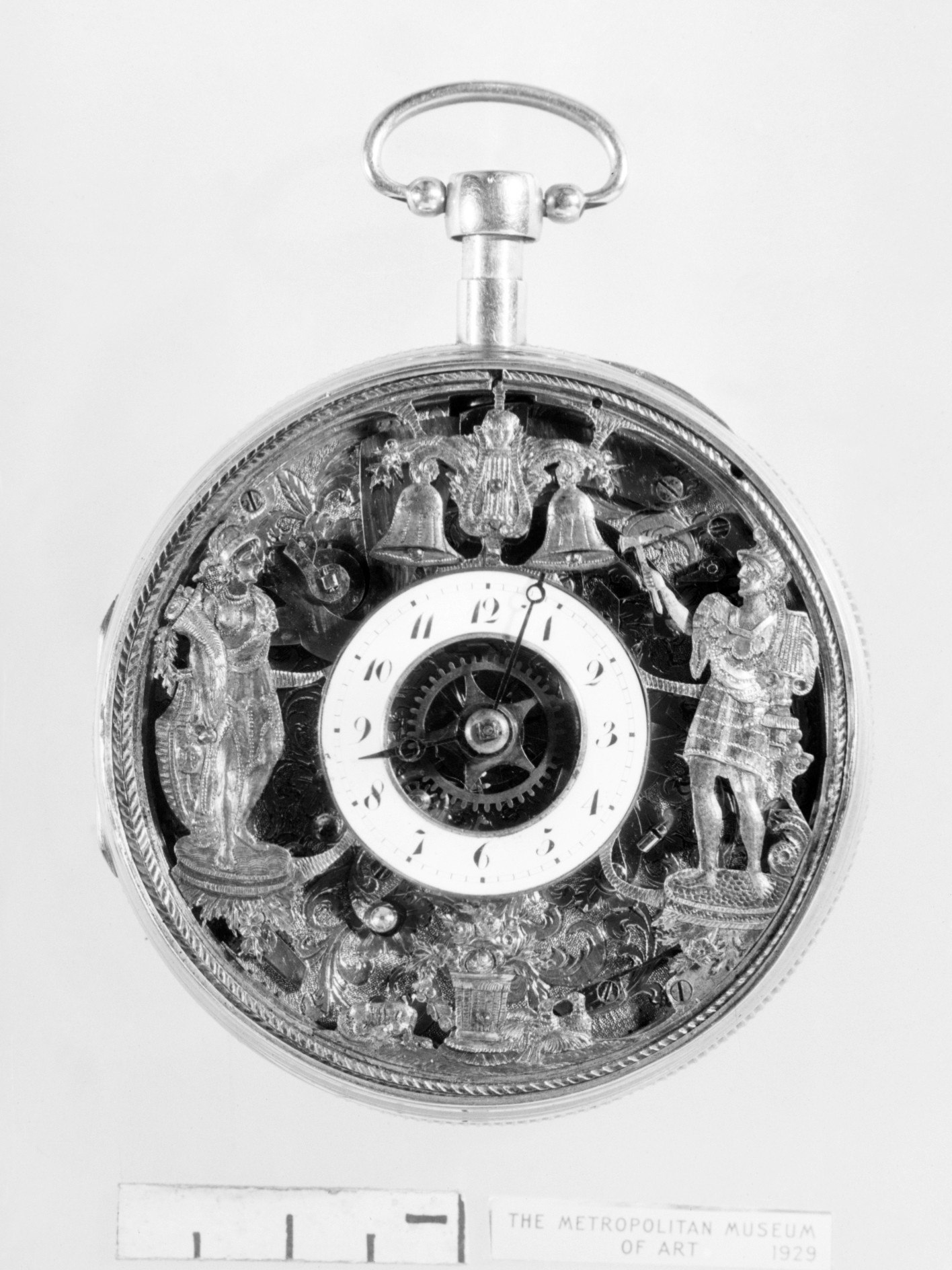
Ferdinand Berthoud Gold and Enamel Watch
This watch, identified by the Metropolitan Museum of Art as accession number 17.101.11, is an early nineteenth-century timepiece attributed to the watchmaker Ferdinand Berthoud (1727–1807). Produced in Paris, the watch features a construction of gold and enamel. The piece measures 2 1/8 inches (5.4 cm) in diameter. Berthoud, who became a master watchmaker in Paris in 1753 and served as Horologist-Mechanic by appointment to the King and the Navy, maintained a workshop that created personal horological pieces alongside his recognized work in marine chronometry. This item was acquired by the museum through the bequest of Laura Frances Hearn in 1917. The watch is classified within the Department of European Sculpture and Decorative Arts, reflecting Berthoud's ongoing production of personal watches into the opening years of the nineteenth century.
Full description
Source listing · 17.101.11