
Skip to content
The Encyclopedia of Horology

Marine chronometer · Two-day marine chronometer

Two-day marine chronometer by Morris Tobias

Partially verified

According to the Science Museum Group, this two-day marine chronometer was made circa 1830 in London by Morris Tobias. The piece is signed 'Morris Tobias maker to the Admiralty, 31 Minories London 1456'. The source records that it features a silvered dial with an up-and-down indicator and subsidiary seconds, along with a spring detent escapement, a two-armed balance, and a cylindrical balance spring with overcoil. The movement is mounted within brass gimbals inside a wooden transport box.

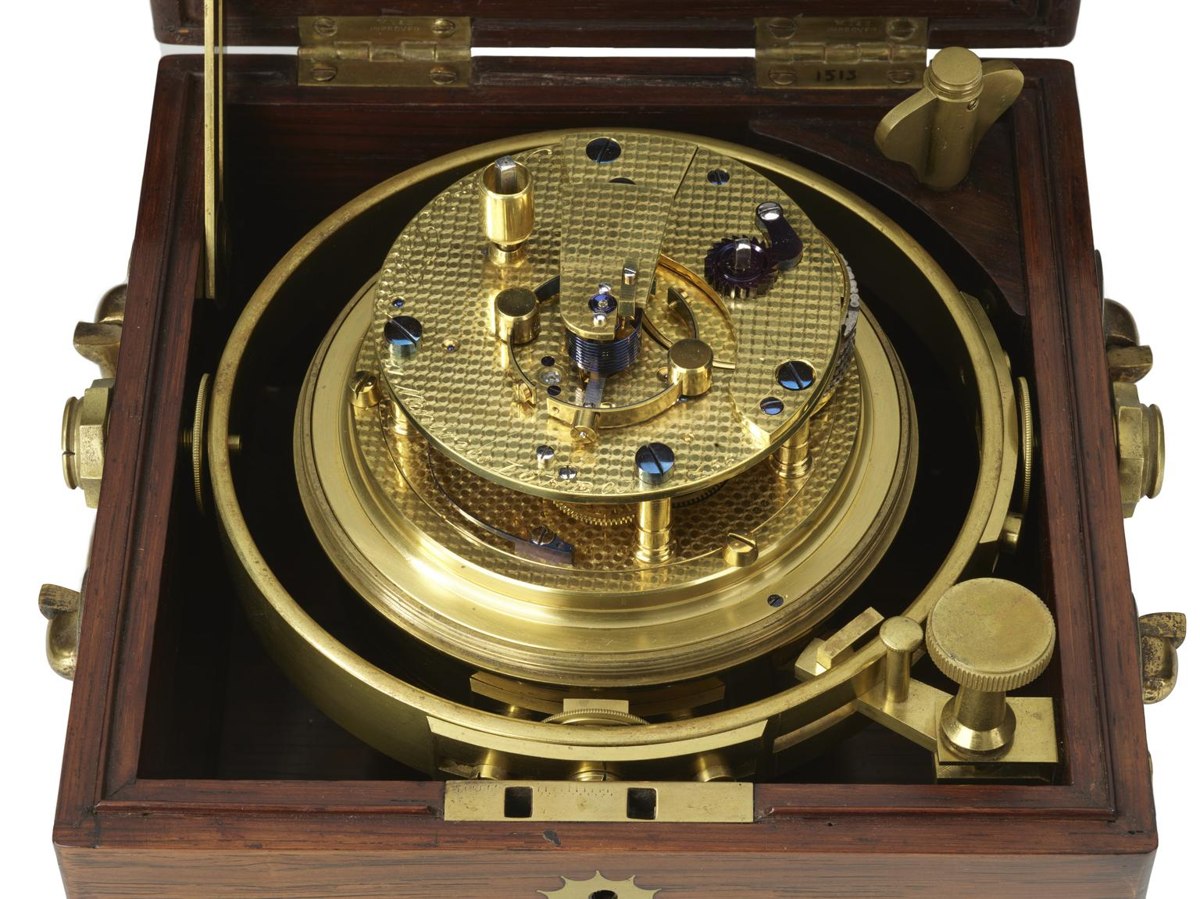
Movement view of the Morris Tobias marine chronometer in its gimballed wooden box.
Movement view of the Morris Tobias marine chronometer in its gimballed wooden box. — Science Museum Group / The Clockmakers' Museum. Rights pending — permission not yet requested. Original source

Catalogue identity

Source
collection.sciencemuseumgroup.org.uk
Category
Marine chronometer · Two-day marine chronometer
Maker / attribution
Morris Tobias
Reference
Not recorded
Catalogue / lot identifier
L2019-480
Source-reported date
circa 1830
Country
United Kingdom
Source-reported serial
1456

Source-reported attribution and specifications are not independent authentication. A listing does not establish present ownership, current display, availability or permission to reproduce.

Object description

Identity and Attribution

This marine chronometer is attributed to Morris Tobias of London. The Science Museum Group dates the piece to circa 1830.

The object record notes a signature reading 'Morris Tobias maker to the Admiralty, 31 Minories London 1456'. This text is not confirmed via the provided photographic evidence.

Evidence for this section
  • “Marine chronometer by Morris Tobias.”
  • “Made: circa 1830”
  • “Signed ‘Morris Tobias maker to the Admiralty, 31 Minories London 1456’.”

Movement and Escapement

The movement is recorded to feature a spring detent escapement. Observations of the exposed movement plates reveal textured spotting or engine-turned patterning.

The balance assembly consists of a two-armed balance and a cylindrical spring with an overcoil. The internal mechanisms listed by the source remain largely obscured or internal.

Evidence for this section
  • “Spring detent escapement.”
  • “Two armed, balance, cylindrical spring with overcoil.”
  • “Textured spotting or engine-turned patterning covers the visible brass movement plates.”

Construction and Housing

The chronometer is housed within a wooden transport box featuring brass hardware. The movement is mounted in brass gimbals. The materials are documented as brass, steel, gold, rosewood, and glass.

A silvered dial with a subsidiary up-and-down indicator and seconds is noted in the source documentation, though it is not visible in the provided top-down photograph.

Evidence for this section
  • “The chronometer movement sits in a heavy brass gimbal ring within a wooden box fitted with brass hardware.”
  • “Materials: brass (copper, zinc alloy) , steel (metal) , gold (metal) , rosewood and glass”
  • “Silvered dial with subsidiary up and down indicator and seconds.”

Open research questions

  • Can the internal signature be verified against the physical engraving on the movement plate?
  • Is there physical evidence of Admiralty-specific modifications to this movement?

Source evidence

Recorded claims and source quotations for Two-day marine chronometer by Morris Tobias
FieldSource-reported valueSource quotation
Maker's signature and numberMorris Tobias maker to the Admiralty, 31 Minories London 1456“Signed ‘Morris Tobias maker to the Admiralty, 31 Minories London 1456’.”
EscapementSpring detent escapement“Spring detent escapement.”
Balance and springTwo armed balance, cylindrical spring with overcoil“Two armed, balance, cylindrical spring with overcoil.”
MaterialsBrass, steel, gold, rosewood, and glass“Materials: brass (copper, zinc alloy) , steel (metal) , gold (metal) , rosewood and glass”
Overall dimensions180 mm x 190 mm x 195 mm“overall: 180 mm x 190 mm x 195 mm”

Visible details

  • Textured spotting or engine-turned patterning covers the visible brass movement plates.
  • A blued cylindrical balance spring with an overcoil is visible below the balance cock.
  • The chronometer movement sits in a heavy brass gimbal ring within a wooden box fitted with brass hardware.

Research qualifications

  • The silvered dial and subsidiary indications reported by the source are on the reverse side and not visible in this top-down movement photograph.
  • The signature and serial number are reported by the source catalogue text and cannot be fully transcribed from the photograph alone.

Photograph identity and source facts were screened before import; rights clearance remains pending.

Consulted source

Two day marine chronometer by Morris Tobias | Science Museum Group Collection

Reviewed 2026-10-22 · Record 295bc58f73

Terms in this record

Glossary explanations for terms named in this object’s record.