
Glossary · Complication
Up-and-down
A power-reserve indication showing how much of the mainspring's range remains; also the differential mechanism that drives it.
Explanation
An up-and-down indication shows the state of wind of the mainspring. The name comes from the English dial marking 'up' for fully wound and 'down' for exhausted; French dials read 'remonté' and 'descendu'. The indication is driven by a small differential gear connected between the barrel and the winding arbor, so the hand moves as the spring is wound and as the watch runs.
The mechanism is a genuine differential: it compares the turns of the barrel arbor during winding with the turns of the barrel during running. This is why it appears on marine chronometers and precision watches, where knowing the remaining running time before the next winding matters. A power-reserve hand that does not move, or moves erratically, indicates a fault in the differential work, not necessarily in the mainspring.
Record the dial marking, the hand's range and its behaviour over a full wind-and-run cycle if observed. An up-and-down indication certifies that the differential work is fitted; it does not certify the chronometer's current rate.
Sources & references
- de Carle, D., Practical Watch Repairing — technical further reading; exact procedures require calibre documentation
- Reymondin et al., The Theory of Horology — construction and terminology further reading
Where sources disagree, the disagreement is stated rather than resolved silently.
Distinctions at a glance
| Element | Function | Limit |
|---|---|---|
| Differential gearing | Compares winding and running turns | Hidden under bridges or dial |
| Indicating hand | Shows remaining spring range | Not a measure of rate |
| 'Up' marking | Fully wound state | Not permission to force the crown |
| 'Down' marking | Exhausted state | A stopped watch may stop before 'down' |
What to record
- Record the dial language and range markings.
- Note hand behaviour across a winding cycle where observed.
- Keep the indication separate from any rate claim.
Do not wind past firm resistance to test the 'up' position; the differential work and stopwork are not strengthened by the indication.
In the object catalogue
Catalogued objects whose own source record mentions “Up-and-down”. The quoted line shows where; it is the seller’s or museum’s wording, not independent verification.
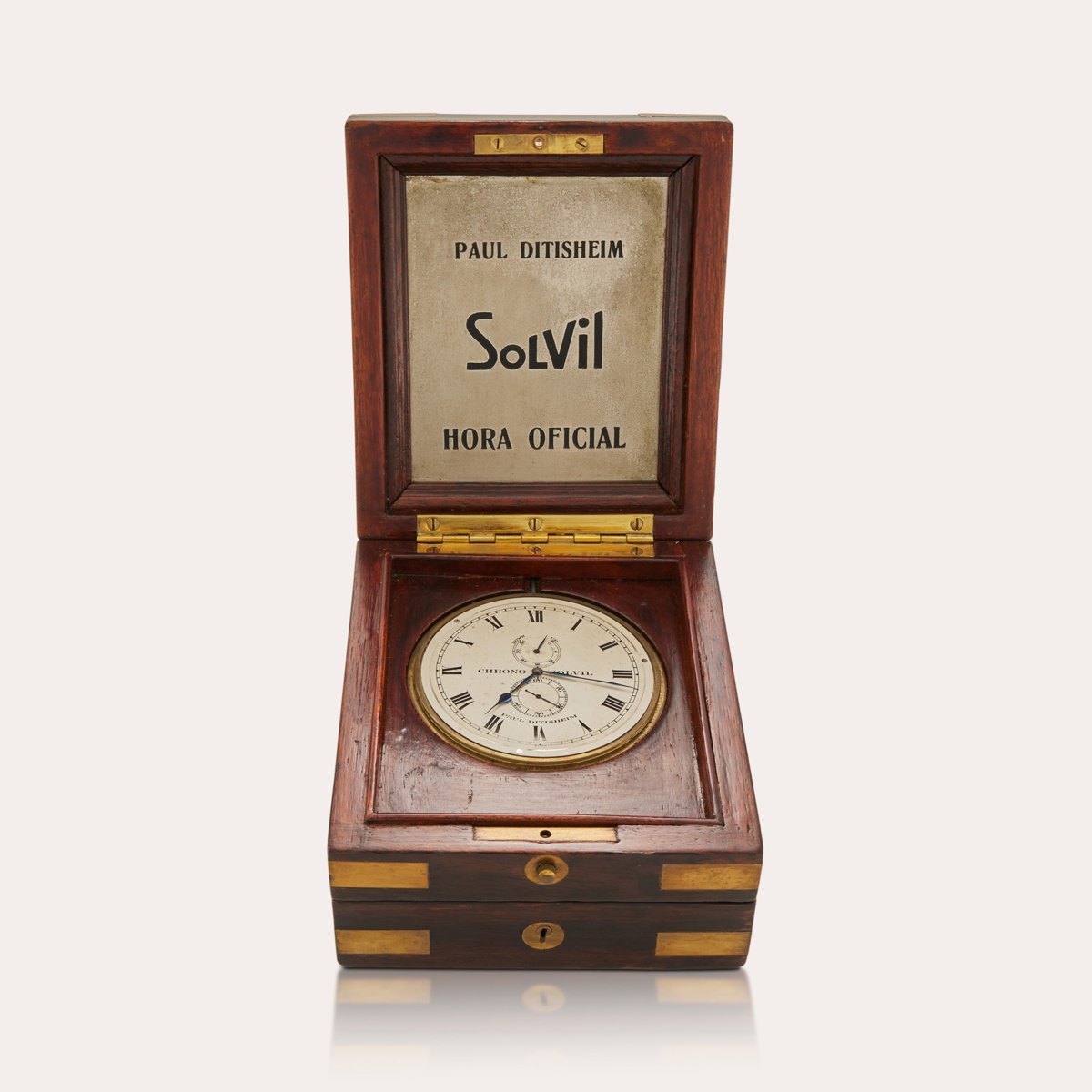
Marine chronometer
Paul Ditisheim Boxed Deck Timepiece No. 98234
“This horological instrument is an individual boxed deck timepiece by Paul Ditisheim, dated circa 1925 by the source. Contained in a single-tier Brazilian rosewood box fitted wit…”
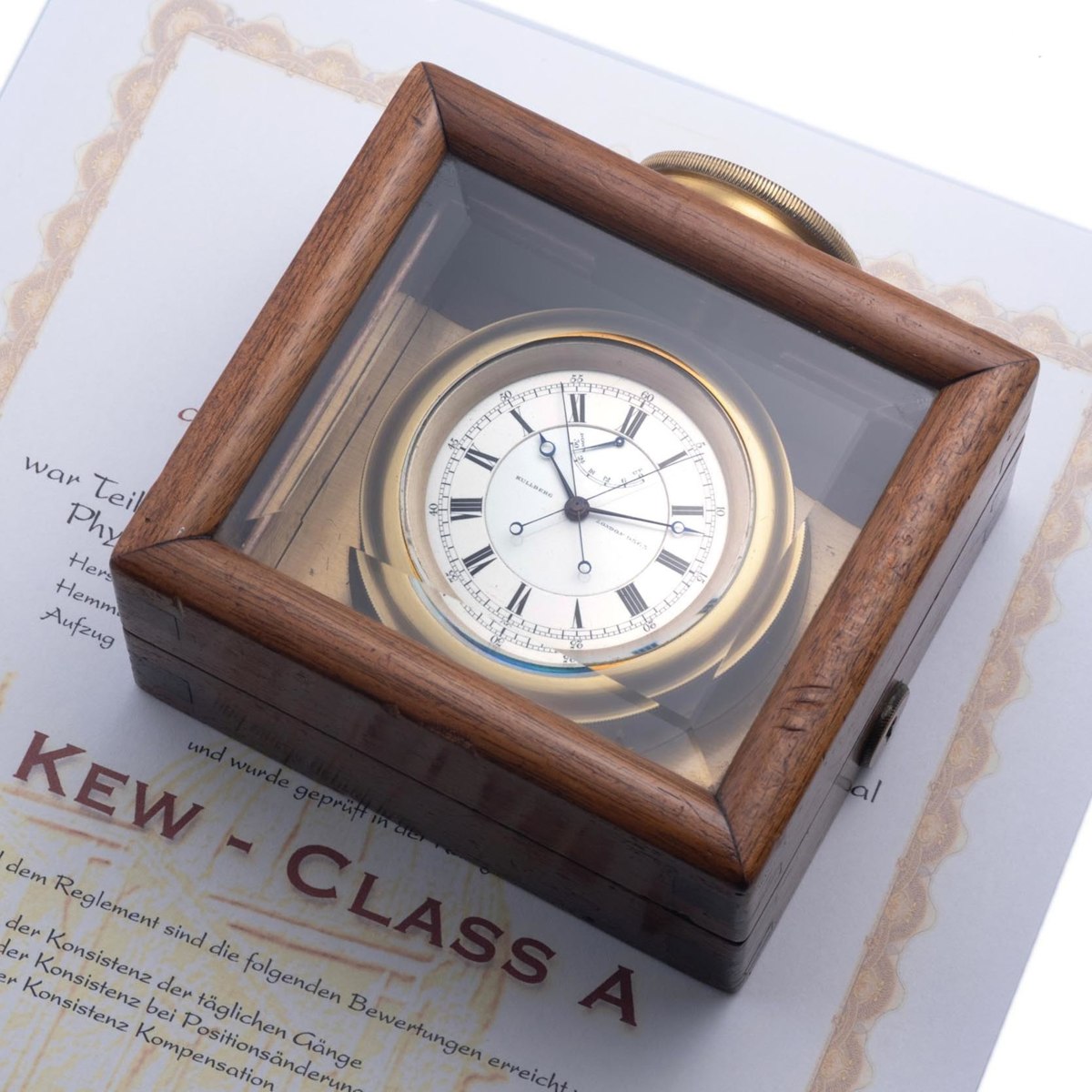
Marine chronometer
Victor Kullberg Spring Detent Deck Chronometer
“This manual-wind deck chronometer by Victor Kullberg features a split-seconds chronograph and an up-and-down 30-hour power reserve indication. Housed in a gilded brass case with…”
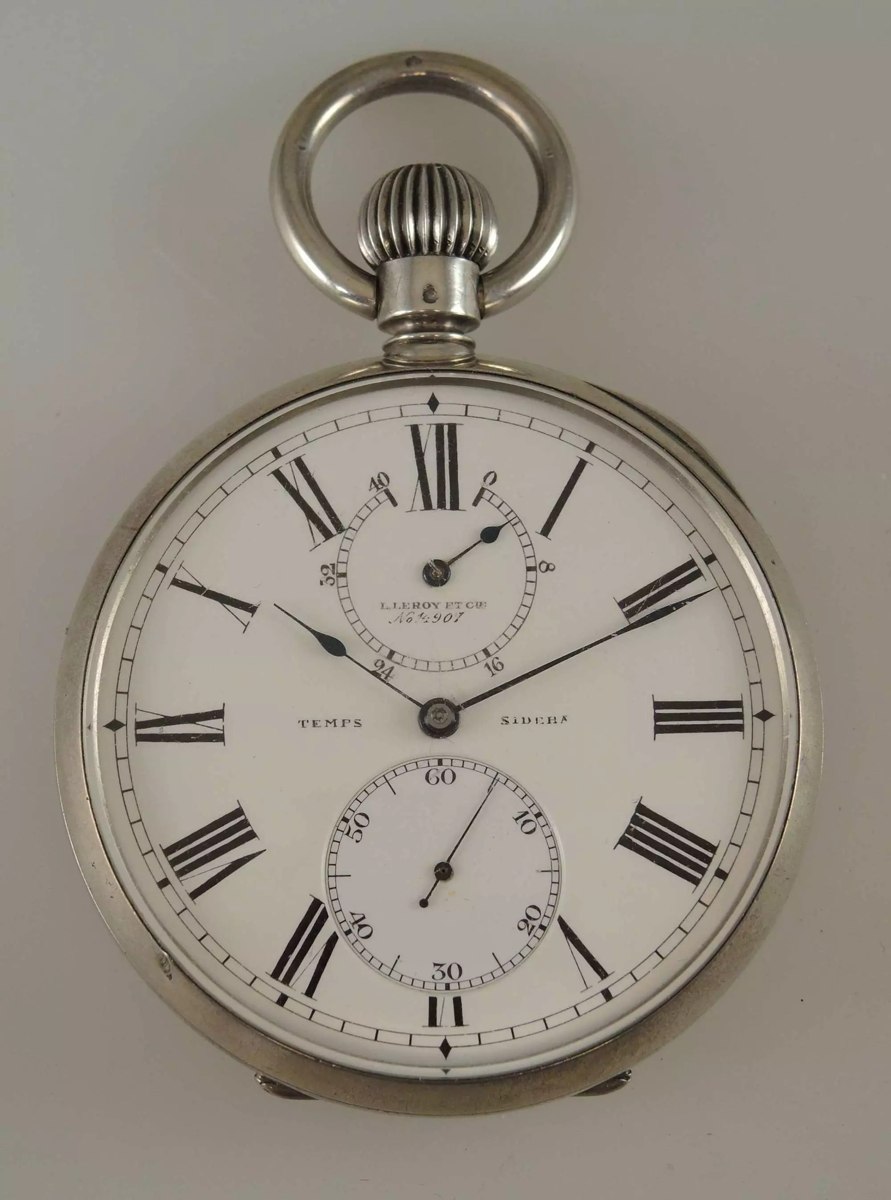
Pocket watch
LeRoy & Cie Oversized Silver Marine Deck Watch
“Up-and-down state of wind subsidiary dial calibrated to 40 hours situated below the XII marker.”
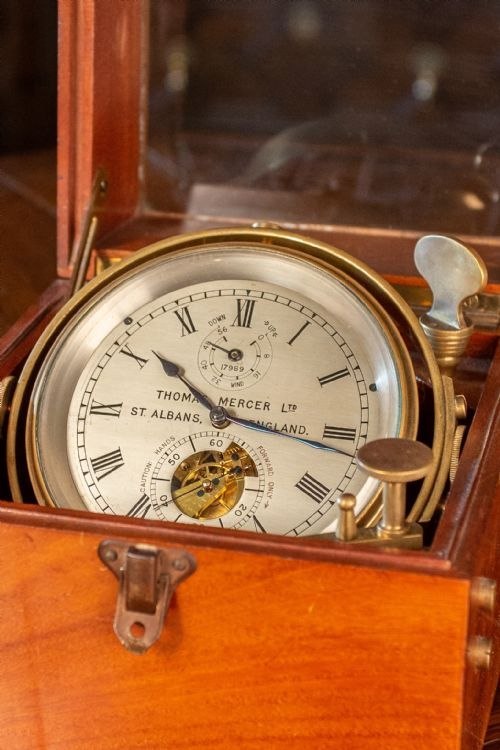
Marine chronometer
Thomas Mercer Two-Day Marine Chronometer, No. 17989
“This two-day marine chronometer by Thomas Mercer Ltd of St Albans is housed in a fitted wooden transport box with brass gimbals. The silvered dial features black Roman hour nume…”
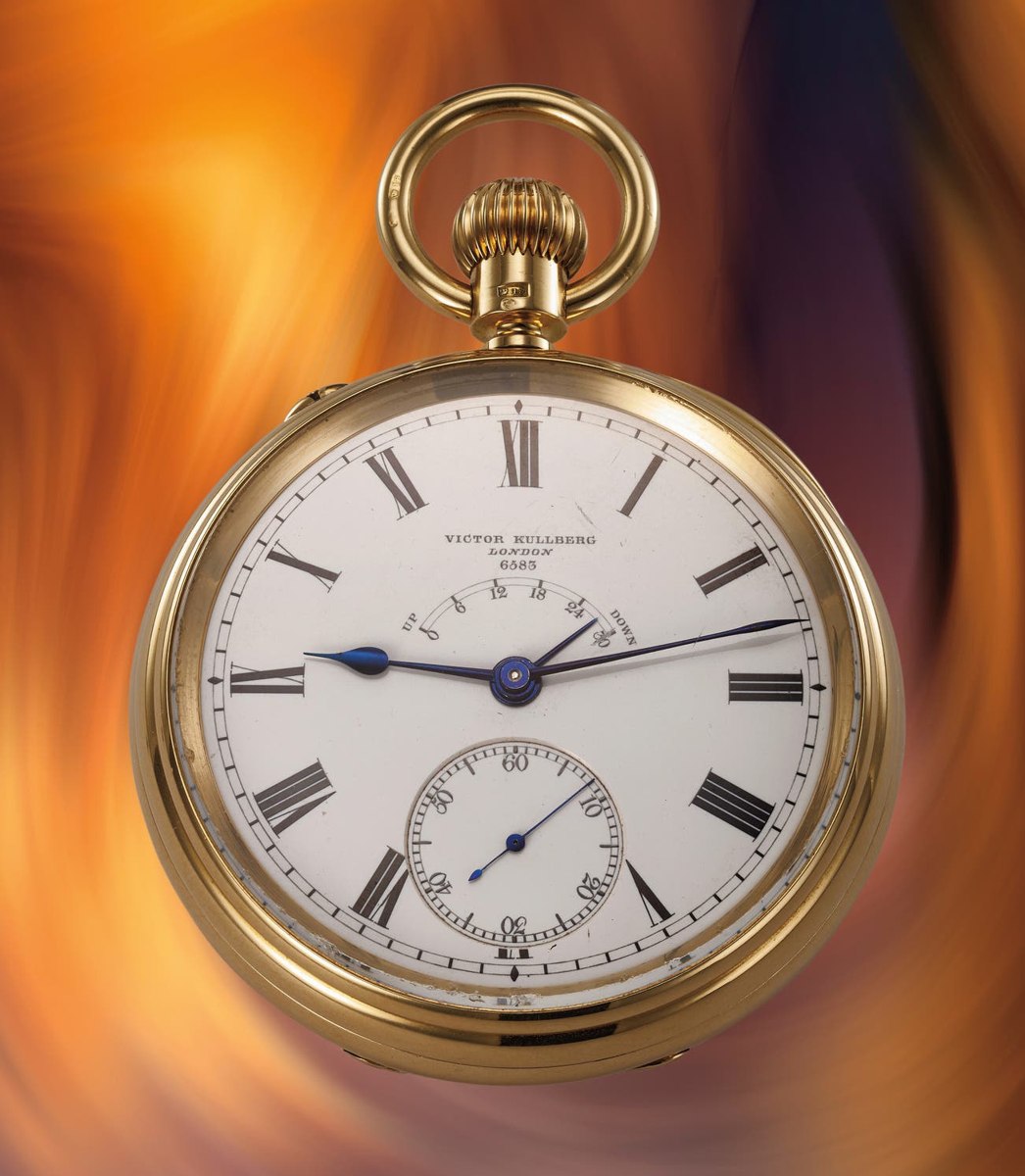
Pocket watch
Victor Kullberg One Minute Tourbillon Chronometer with Earnshaw Spring Detent Escapement
“This 18k yellow gold open-face pocket watch by Victor Kullberg measures 56mm in diameter and is described by the cataloguer as a one-minute tourbillon chronometer with an Earnsh…”
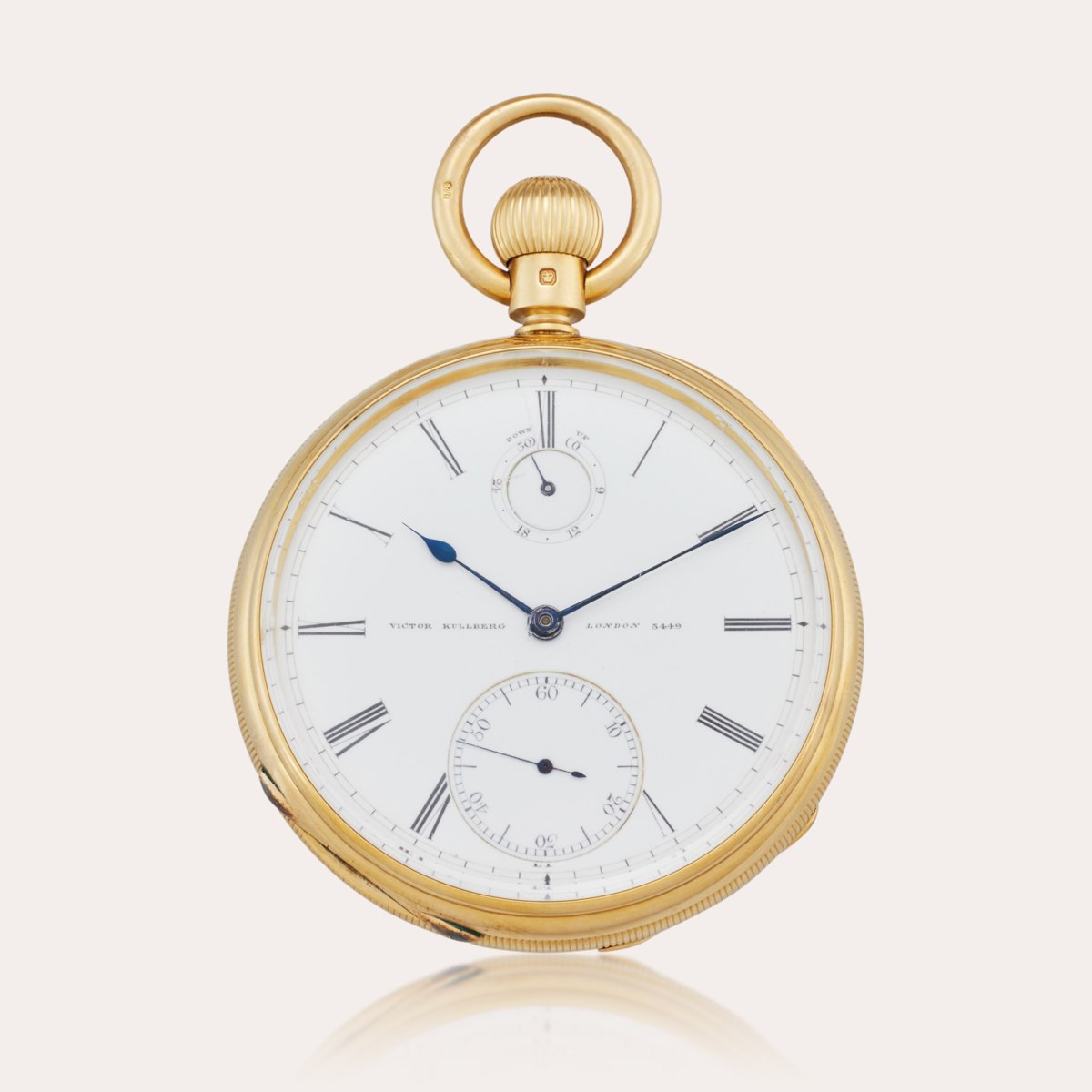
Pocket watch
Victor Kullberg yellow gold open-faced watch with up-and-down indication, No. 3449
“Victor Kullberg yellow gold open-faced watch with up-and-down indication, No. 3449”