
Skip to content
The Encyclopedia of Horology

Pocket watch · Verge pocket watch

Tos Johnson London Gold Pair Cased Verge Pocket Watch

Partially verified

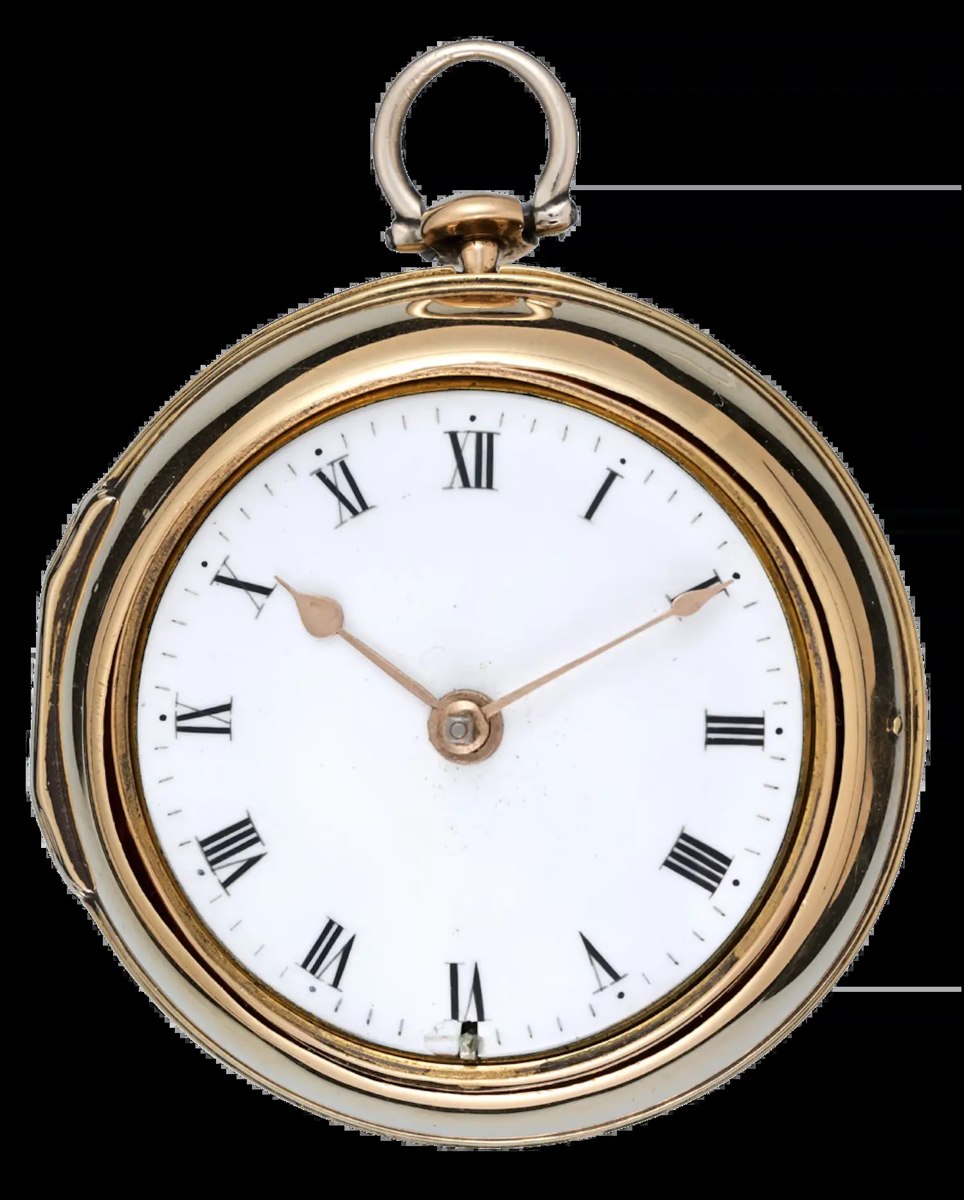
According to the source, this mid-18th-century English verge pocket watch is signed by Tos Johnson of London and hallmarked in London for 1751. It measures 49 mm in diameter and is housed in a pair case described as 22-carat gold, featuring an inner case with a shuttered winding aperture and a purpose-made plain gold outer case hallmarked London 1788. The restored white enamel dial presents Roman numerals and gold hands. The source further reports a full-plate fire-gilt movement with pierced pillars, an engraved balance cock set with a diamond endstone, and a fusee with chain drive.

Dial and case front view of the Tos Johnson gold pair cased verge pocket watch
Dial and case front view of the Tos Johnson gold pair cased verge pocket watch — Watch Museum. Rights pending — permission not yet requested. Original source

Catalogue identity

Source
watchmuseum.org
Category
Pocket watch · Verge pocket watch
Maker / attribution
Tos Johnson
Reference
Not recorded
Catalogue / lot identifier
Source URL identifies the listing
Source-reported date
1751
Country
United Kingdom

Source-reported attribution and specifications are not independent authentication. A listing does not establish present ownership, current display, availability or permission to reproduce.

Object description

Dial and Visual Presentation

Visual observation of the front shows a white enamel dial with black Roman numerals marking the hours, accompanied by an outer minute track marked with dots. A pair of gold-colored hands is fitted, featuring a spade-tipped hour hand.

A dial repair or localized imperfection is visible near the numeral VI position adjacent to the dial foot. The dial is set within a polished yellow-gold pair case displaying a round pendant and a contrasting silver-colored bow.

Evidence for this section
  • “White enamel dial with black Roman hour numerals and an outer minute track marked with dots”
  • “Pair of gold-colored hands, featuring a spade-tipped hour hand”
  • “Dial repair or small defect visible near the numeral VI position at the dial foot”
  • “Polished yellow-gold pair case with round pendant and contrasting silver-colored bow”

Case Construction and Discrepant Dating

The source describes the watch as measuring 49 mm in diameter and housed in a pair case described in the text as 22-carat gold. The inner case is reported to have a plain gold finish, a shutter to the winding aperture, a small gold pendant, and a bow bearing the maker's mark 'AC'.

The watch is reported as hallmarked in London in 1751, while the outer pair case is described as purpose-made, plain gold, and hallmarked in London in 1788. Notably, the dealer's summary metadata contradicts the descriptive text by listing the material as 'Materials Silver'.

Evidence for this section
  • “exquisite pair case made of 22 carat gold”
  • “inner pair case has a plain gold finish with a simple shutter to the winding aperture, a small gold pendant, and a bow with the maker's mark "AC"”
  • “outer pair case was purpose-made, plain gold and hallmarked in London in 1788”
  • “Materials Silver”

Reported Movement and Mechanism

Movement specifications are reported entirely by the source and are not visible in the provided exterior photograph. The source describes a full-plate fire-gilt movement signed 'Tos Johnson London'.

The listed mechanism comprises a fusee and chain with a worm and wheel barrel setup mounted between the plates, a plain three-arm steel balance with a blue steel spiral hairspring, and a verge escapement. Decorative elements reported include pierced gilt pillars, a pierced and engraved cock with a large diamond endstone set in polished steel, and a silver regulator disc mounted on a pierced and engraved foot and plate.

Evidence for this section
  • “Signed Tos Johnson London”
  • “full plate fire gilt movement features decorative pierced gilt pillars, a pierced and engraved cock, and a large diamond endstone in a polished steel setting”
  • “fusee and chain with a worm and wheel barrel setup between the plates, and a plain three-arm steel balance with a blue steel spiral hairspring”
  • “silver regulator disc is mounted on a pierced and engraved foot and plate”

Open research questions

  • What specific hallmarks and sponsor marks are present on the inner 1751 case versus the 1788 outer case?
  • Which silversmith or casemaker is represented by the 'AC' maker's mark on the bow?
  • Why does the seller's summary table specify 'Materials Silver' when the narrative explicitly describes 22-carat gold cases?

Source evidence

Recorded claims and source quotations for Tos Johnson London Gold Pair Cased Verge Pocket Watch
FieldSource-reported valueSource quotation
MakerTos Johnson London“Signed Tos Johnson London”
Hallmark Date1751“Hallmarked London 1751”
Diameter49 mm“Diameter 49 mm”
Case Material22-carat gold“exquisite pair case made of 22 carat gold”
Outer Case HallmarkLondon 1788“outer pair case was purpose-made, plain gold and hallmarked in London in 1788”
Drive and EscapementFusee and chain with verge escapement“fusee and chain with a worm and wheel barrel setup between the plates”
Bow Maker's MarkAC“bow with the maker's mark "AC"”
Balance AssemblyPlain three-arm steel balance with blue steel spiral hairspring“plain three-arm steel balance with a blue steel spiral hairspring”
EndstoneLarge diamond in polished steel setting“large diamond endstone in a polished steel setting”

Visible details

  • White enamel dial with black Roman hour numerals and an outer minute track marked with dots
  • Pair of gold-colored hands, featuring a spade-tipped hour hand
  • Polished yellow-gold pair case with round pendant and contrasting silver-colored bow
  • Dial repair or small defect visible near the numeral VI position at the dial foot

Research qualifications

  • Internal movement features are reported by the source but not visible in the provided photograph.
  • Source metadata lists 'Materials Silver' in the quick-spec table despite describing the pair case as 22-carat gold in the body text.
  • The outer pair case dates to 1788, while the watch itself is hallmarked 1751.

Photograph identity and source facts were screened before import; rights clearance remains pending.

Terms in this record

Glossary explanations for terms named in this object’s record.