
Skip to content
The Encyclopedia of Horology

Clock · Bracket clock

Late 19th Century Fusée Bracket Clock

Partially verified

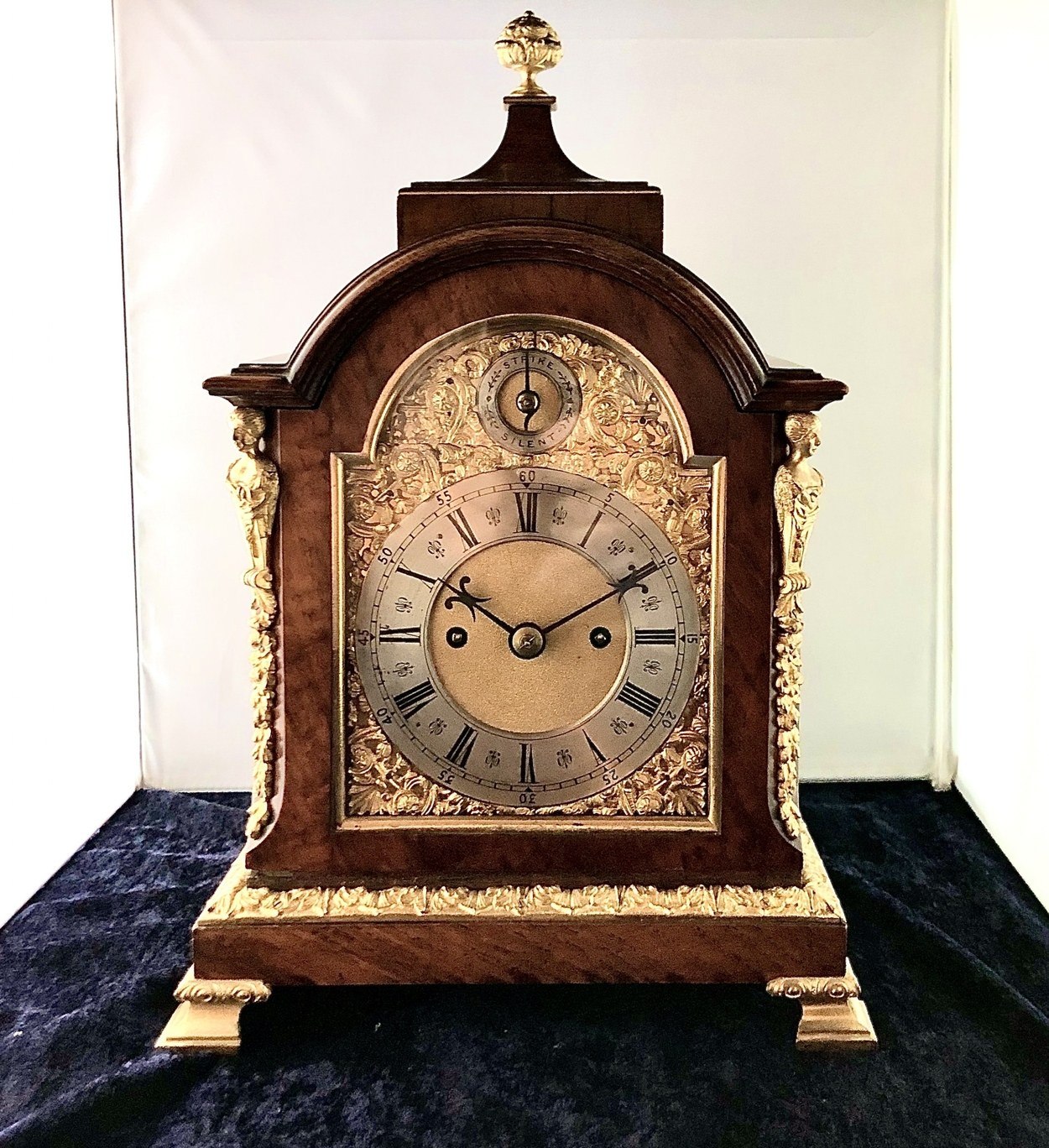
This late 19th-century bracket clock, dated circa 1880, is of English manufacture. It is constructed with an oak skeleton featuring a figured walnut veneer, topped with a pagoda-style arch and a gilded floral finial. The front door is adorned with gilded bronze caryatids, while the sides feature pierced gilded bronze panels. The base rests on gilded bronze feet with acanthus leaf decorative strips. The clock utilizes an eight-day, two-train chain-driven fusée movement that strikes on a coiled gong. The five-inch dial includes a silvered chapter ring with Roman numerals, blued steel hands, and gilded bronze spandrels. A subsidiary dial at the top allows for Strike/Silent selection. The clock stands 36 cm high, 24 cm wide, and 18 cm deep. According to the auction description, the item has been recently serviced and is in working condition, accompanied by door and winding keys.

Front view of the English bracket clock, showing the silvered dial, blued steel hands, strike/silent selector, and gilded bronze decorative elements.
Front view of the English bracket clock, showing the silvered dial, blued steel hands, strike/silent selector, and gilded bronze decorative elements. — Zamanito / Chequers Antiques. Rights pending — permission not yet requested. Original source

Catalogue identity

Source
zamanito.com
Category
Clock · Bracket clock
Maker / attribution
Not established
Reference
Not recorded
Catalogue / lot identifier
Source URL identifies the listing
Source-reported date
circa 1880
Source-reported place
England

Source-reported attribution and specifications are not independent authentication. A listing does not establish present ownership, current display, availability or permission to reproduce.

Object description

Case and Exterior Design

The clock features an oak frame finished with figured walnut veneer. The top displays a pagoda-shaped roof, accented by a gilded floral finial. The structural design incorporates gilded bronze elements, including decorative caryatids flanking the front door and pierced bronze panels on the sides.

The base is designed with an emphasis on decorative detail, featuring acanthus leaf patterns. The unit stands on molded gilded bronze feet. The auction description notes that the gilt finish on all cast bronze components is original.

Evidence for this section
  • “بدنه ساعت از اسکلت چوب بلوط با روکش چوب گردوی رگه‌دار تشکیل شده است”
  • “در بخش بالایی دارای طراحی قوسی و سقفی به فرم پاگودا (pagoda) همراه با یک تزئین برنزی زراندود به شکل گل (finial) است”
  • “آبکاری طلای تمامی قطعات برنزی ریخته‌گری‌شده فابریک و اصلی است”

Dial and Timekeeping

The five-inch dial is centered by a silvered chapter ring featuring Roman numerals and a minute track with five-minute markers. The time is displayed via blued steel hands. Decorative gilded bronze spandrels occupy the corners of the dial plate.

Operational controls include a subsidiary dial situated above the main clock face, providing a mechanism for switching between strike and silent modes. The timekeeping is managed by an eight-day, two-train chain fusée movement, which strikes on a coiled gong.

Evidence for this section
  • “صفحه ساعت ۵ اینچی با طوقه نقره‌اندود (silvered chapter ring)، ارقام رومی و مقیاس محیطی دقایق با نشانگرهای ۵ دقیقه‌ای طراحی شده است”
  • “در بالای صفحه نیز یک عقربه و صفحه مدرج کمکی برای انتخاب حالت نواختن زنگ یا حالت بی‌صدا (Strike/Silent) تعبیه شده است”
  • “موتور ساعت از نوع هشت‌روزه و دو قطاره زنجیری-حلزونی (fusée) است”

Condition and Attribution

The auction description reports that the clock has been fully serviced and reviewed. It is confirmed to be in working order and is supplied with the necessary winding and door keys. The piece is attributed to England and dated to approximately 1880.

The source provides specific guidance for collectors, recommending an independent evaluation regarding the integrity of the fusée system chains or wires, the authenticity of the gilding on the bronze elements, and the operational reliability of the striking mechanism.

Evidence for this section
  • “طبق توضیحات منبع، اخیراً به‌طور کامل سرویس و بازبینی شده و در وضعیت کارکرد کامل قرار دارد”

Open research questions

  • Are there any maker's marks on the movement backplate to confirm the manufacturer?
  • Is the current movement original to the case given the late 19th-century dating of an 18th-century style case?

Source evidence

Recorded claims and source quotations for Late 19th Century Fusée Bracket Clock
FieldSource-reported valueSource quotation
MakerEnglish“ساخت انگلستان”
Datecirca 1880“حدود ۱۸۸۰”
Movement type8-day fusee“موتور ساعت از نوع هشت‌روزه و دو قطاره زنجیری-حلزونی (fusée)”
Case materialsOak skeleton with walnut veneer“بدنه ساعت از اسکلت چوب بلوط با روکش چوب گردوی رگه‌دار تشکیل شده است”
Dial diameter5 inches“صفحه ساعت ۵ اینچی”
Dimensions36 x 24 x 18 cm“۳۶ سانتی‌متر ارتفاع، ۲۴ سانتی‌متر عرض و ۱۸ سانتی‌متر عمق”
Striking mechanismCoiled gong“ضربات زنگ را روی یک گنگ مارپیچ اجرا می‌کند”

Visible details

  • Silvered chapter ring with Roman numerals
  • Gilded bronze caryatids on the door frame
  • Strike/Silent subsidiary dial located above the main dial
  • Pagoda-style top with a floral finial

Research qualifications

  • Originality of the gilded bronze finish and chain/wire fusée system to be independently assessed
  • Functional status of the strike mechanism and strike/silent lever to be independently assessed

Photograph identity and source facts were screened before import; rights clearance remains pending.

Consulted source

A Fine Late 19th Century Small Fusée Bracket Clock

Reviewed 2026-11-02 · Record 218c52572c

Terms in this record

Glossary explanations for terms named in this object’s record.