
Glossary · Case & Dial
Spandrel
Decorative corner ornaments on a clock dial.
Explanation
Spandrels are the cast decorative ornaments fitted to the four corners of a square clock dial, outside the chapter ring. Their design changed over time — from simple cherub heads in the later 17th century to more elaborate rococo and foliate patterns in the 18th — so they help date longcase and bracket clocks, though dating by spandrels alone is approximate. Painted dials show painted corner decoration instead.
In the object catalogue
Catalogued objects whose own source record mentions “Spandrel”. The quoted line shows where; it is the seller’s or museum’s wording, not independent verification.
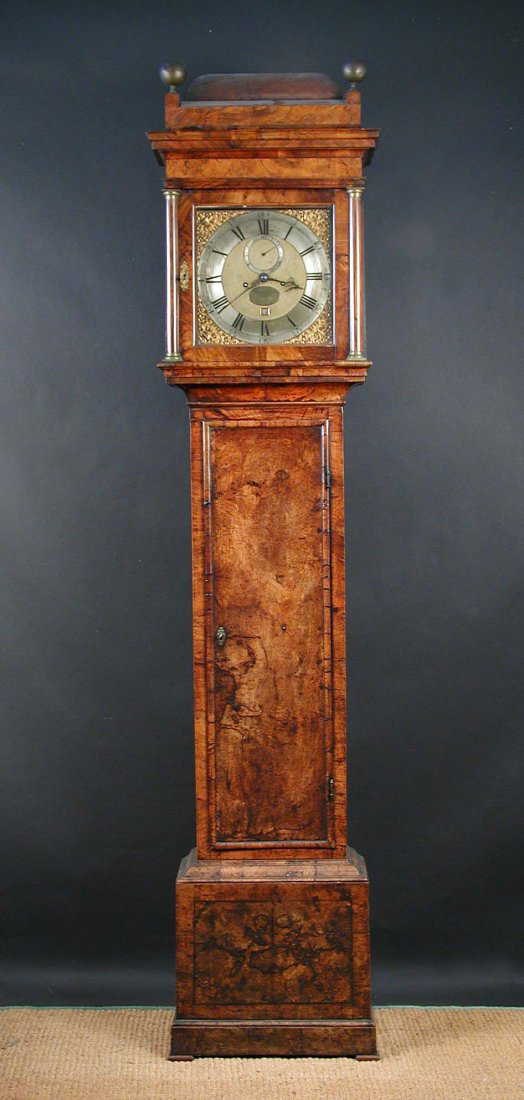
Clock
Benjamin Gray and Justin Vulliamy George II figured walnut longcase clock
“This George II longcase clock is signed on an oval dial plate by Benjamin Gray and Justin Vulliamy, London. Encased in figured walnut, the clock stands 225 cm tall and features …”
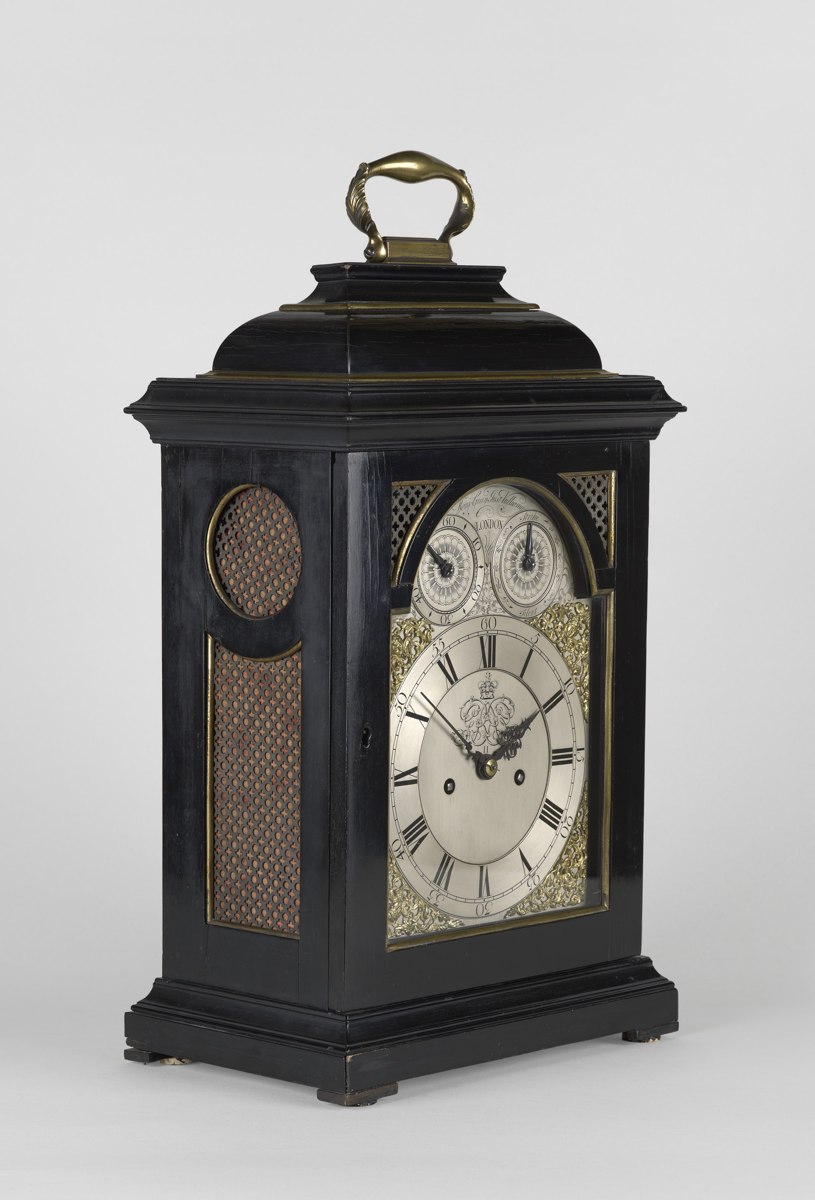
Clock
François-Justin Vulliamy bracket clock
“This bracket clock is held by the Royal Collection Trust and attributed to clockmaker François-Justin Vulliamy (1712–98). The object features an ebonised or dark-finished wooden…”
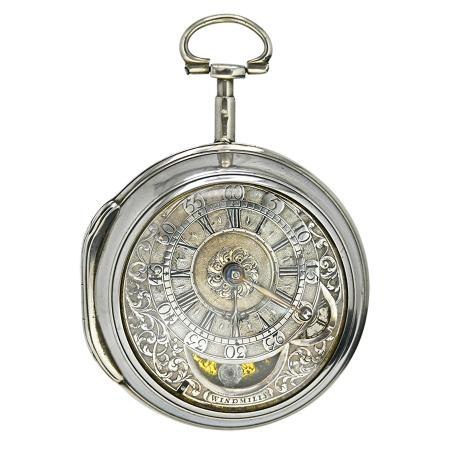
Pocket watch
English Consular Case Verge Fusée Pocket Watch by Windmills of London
“Elaborately engraved silver dial with Roman hour numerals, concentric outer Arabic five-minute numerals, and foliate scrollwork in the spandrels.”
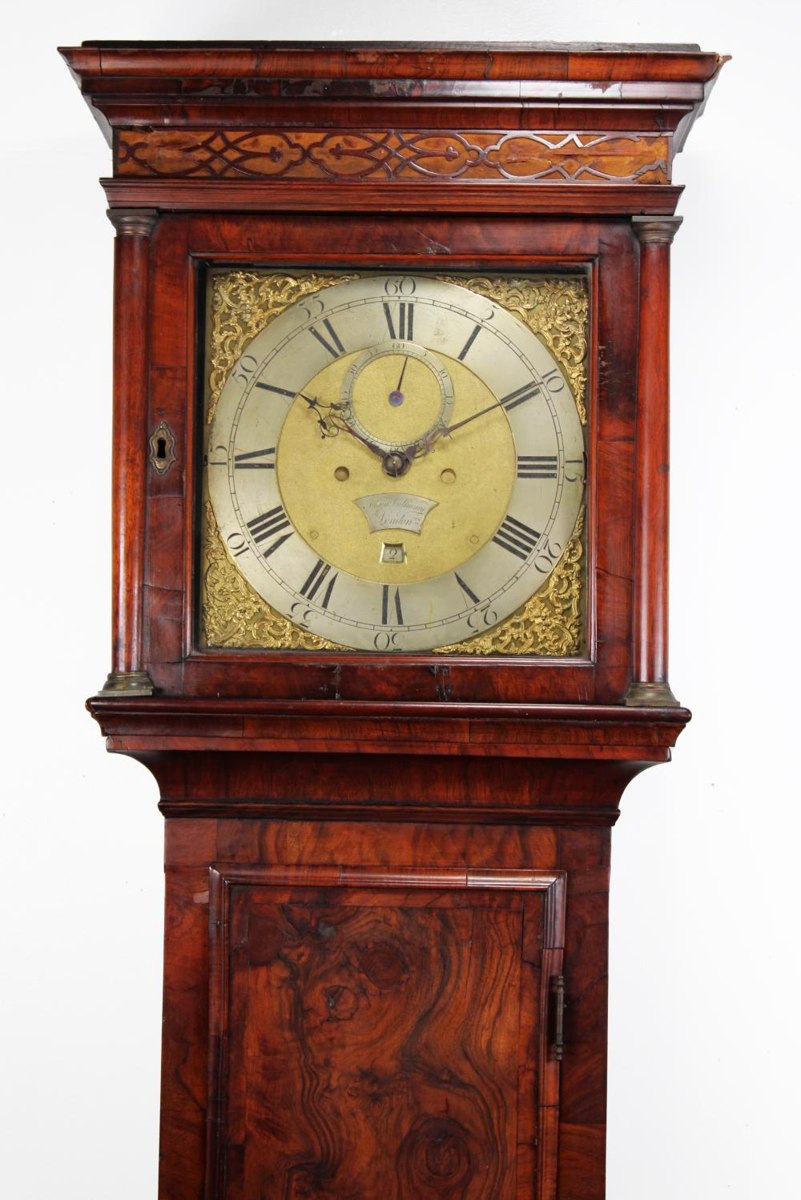
Clock
Justin Vulliamy Burl Walnut Grandfather Longcase Clock
“This English longcase clock features a burl walnut case housing an eight-day time and strike movement, as reported by the auction house. The dial incorporates a silvered chapter…”
Clock
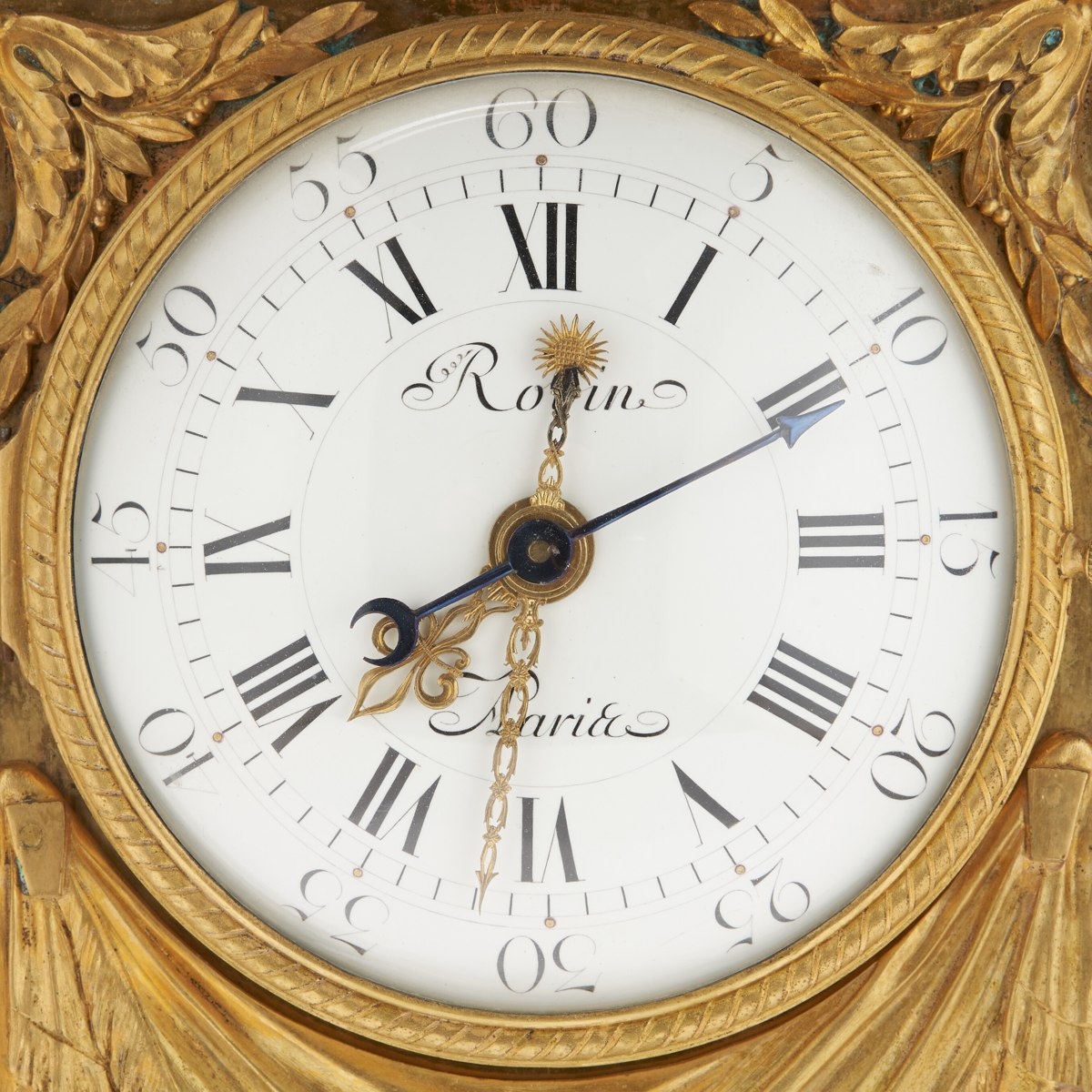
A Louis XVI Ormolu Mantel Clock, by Robert Robin
“According to Christie's, this Louis XVI ormolu mantel clock dates to circa 1780 and is signed by Parisian maker Robert Robin. The case is described as canted rectangular with gl…”
Clock
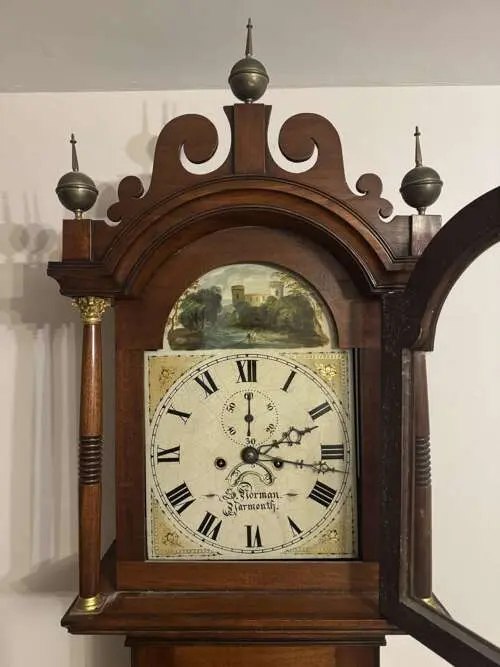
George III Mahogany Arch Dial Longcase Clock
“Arched dial exhibits craquelure throughout the painted face, with gilt scroll spandrel decoration in the corners.”