
Skip to content
The Encyclopedia of Horology

Movement · Unfinished keyless pocket watch movement in glazed display case

Charles Fasoldt Unfinished Keyless Movement

Partially verified

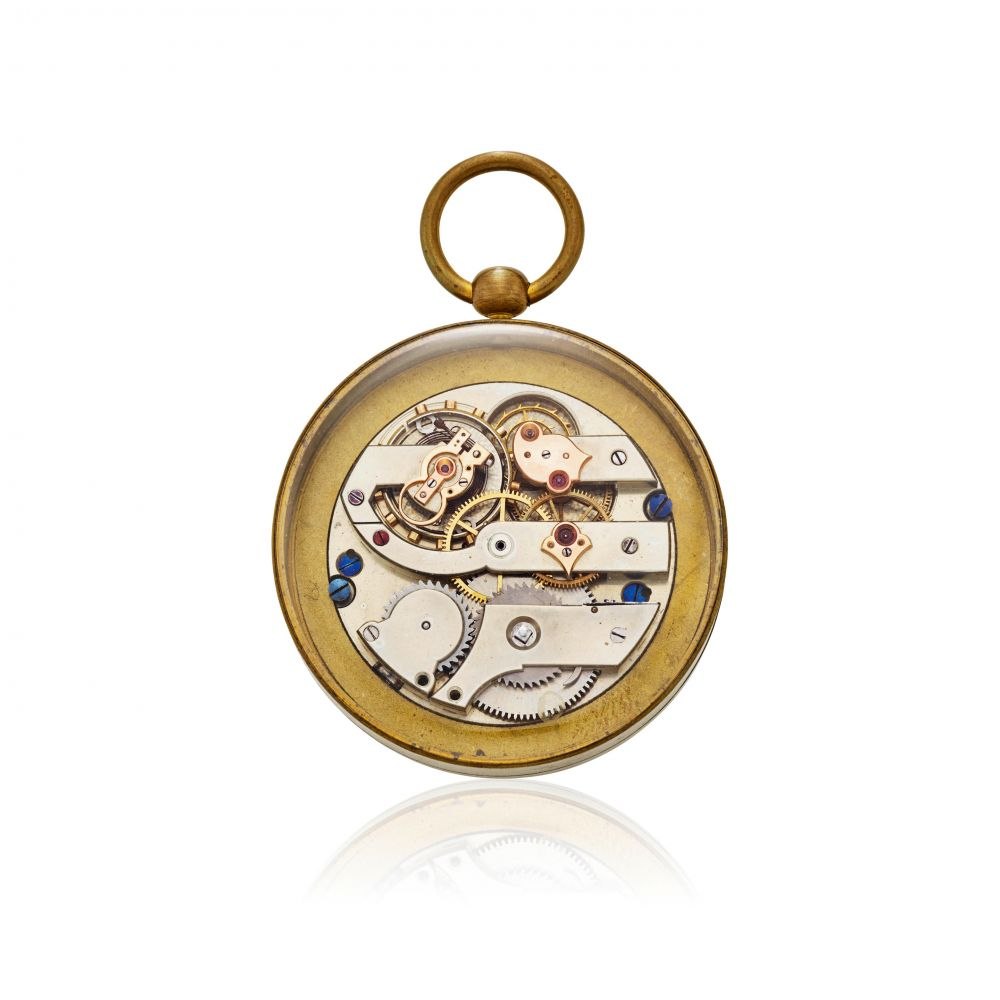
This horological object is an unsigned, unfinished, and incomplete keyless movement attributed by the source auction catalog to Charles Fasoldt of Albany, New York, dated to the 1880s. The 18-size mechanism features a nickel bridge layout, wolf's tooth winding, gold jewel settings, and Fasoldt's co-axial double wheel chronometer lever escapement with a bimetallic balance and overcoiled spring. Catalogued as lacking a winding arbor, center arbor, and motion work, it bears an incomplete stamped serial ending in '8' on the dial plate and has no dial. The movement is mounted inside a glazed gilt metal display case.

Movement view of the unfinished Charles Fasoldt keyless mechanism inside a glazed gilt metal display case
Movement view of the unfinished Charles Fasoldt keyless mechanism inside a glazed gilt metal display case — Bonhams. Rights pending — permission not yet requested. Original source

Catalogue identity

Source
www.collectorsquare.com
Category
Movement · Unfinished keyless pocket watch movement in glazed display case
Maker / attribution
Charles Fasoldt
Reference
Not recorded
Catalogue / lot identifier
2
Source-reported date
1880'S
Country
United States
Source-reported serial
??8

Source-reported attribution and specifications are not independent authentication. A listing does not establish present ownership, current display, availability or permission to reproduce.

Object description

Identity and Attribution

In the catalog description for Bonhams New York sale #26923 (Lot 2), this lot is listed under Charles Fasoldt of Albany, New York, as an "UNSIGNED, UNFINISHED, INCOMPLETE KEYLESS MOVEMENT" and dated to the 1880'S.

The catalog records an "incomplete serial number on dial plate,??8". The movement itself is described as unsigned in the lot title, leaving the attribution based on design characteristics and the cataloguer's classification rather than a signed signature plate.

Evidence for this section
  • “CHARLES FASOLDT, ALBANY, NEW YORK. UNSIGNED, UNFINISHED, INCOMPLETE KEYLESS MOVEMENT”
  • “Date: 1880'S”
  • “incomplete serial number on dial plate,??8”

Movement Architecture and Escapement

The movement is documented by the auctioneer as an "18-size nickel bridge pattern, wolf's tooth winding, gold jewel settings, Fasoldt's co-axial double wheel chronometer lever escapement, bimetallic balance, overcoiled spring, gold patent micrometer regulator".

Direct visual inspection of the movement shows the bridge side with nickel bridges secured by blued screws, alongside visible wolf's tooth winding teeth on the winding wheels.

Evidence for this section
  • “18-size nickel bridge pattern, wolf's tooth winding, gold jewel settings, Fasoldt's co-axial double wheel chronometer lever escapement, bimetallic balance, overcoiled spring, gold patent micrometer regulator”
  • “Visible wolf's tooth winding teeth and multiple blued screws securing the nickel bridges”

State of Completion and Presentation

The catalog specifically notes that the movement is "lacking winding arbor, center arbor, motion work" and records "Dial: None".

Rather than being housed in a standard watch pocket case, the lot is catalogued as "Case: Glazed gilt metal display case". Visual observation confirms the bridge side of the uncased movement is mounted inside a circular glazed metal container fitted with an upper bow.

Evidence for this section
  • “lacking winding arbor, center arbor, motion work”
  • “incomplete serial number on dial plate,??8,Dial: None,Case: Glazed gilt metal display case”
  • “Bridge side of an uncased movement enclosed within a circular glazed metal display container with a top bow”

Open research questions

  • Does the dial plate bear any additional partial stampings or caliber markings beyond the '??8' serial remnant recorded by the auctioneer?
  • Is the glazed gilt metal display case an original workshop exhibition container or a later modern mounting?
  • What specific dimensions correspond to the cataloguer's 18-size designation in this non-standard Fasoldt bridge movement?

Source evidence

Recorded claims and source quotations for Charles Fasoldt Unfinished Keyless Movement
FieldSource-reported valueSource quotation
Maker attributionCharles Fasoldt, Albany, New York“CHARLES FASOLDT, ALBANY, NEW YORK. UNSIGNED, UNFINISHED, INCOMPLETE KEYLESS MOVEMENT”
Date1880'S“Date: 1880'S”
Movement description18-size nickel bridge pattern, wolf's tooth winding, gold jewel settings“18-size nickel bridge pattern, wolf's tooth winding, gold jewel settings”
EscapementFasoldt's co-axial double wheel chronometer lever escapement“Fasoldt's co-axial double wheel chronometer lever escapement”
CaseGlazed gilt metal display case“Case: Glazed gilt metal display case”
DeficienciesLacking winding arbor, center arbor, motion work“lacking winding arbor, center arbor, motion work”
Auction lot numberLot 2“Lot ID : 2”
Auction sale date03/06/2021“Sale date : 03/06/2021”
Auction resultNot sold (estimate 3,000 - 5,000 USD)“Not sold ... ... ... Estimation: 3000 - 5000”

Visible details

  • Bridge side of an uncased movement enclosed within a circular glazed metal display container with a top bow
  • Visible wolf's tooth winding teeth and multiple blued screws securing the nickel bridges
  • Absence of an installed dial or hands, revealing raw wheel work and balance assembly

Research qualifications

  • Source reports the movement is unsigned, unfinished, and incomplete, lacking winding arbor, center arbor, and motion work
  • Dial plate and opposite side of the movement are not visible in the provided image
  • Full serial number is incomplete or obscured, recorded by the source as '??8'

Photograph identity and source facts were screened before import; rights clearance remains pending.

Consulted source

Charles Fasoldt watches second hand prices

Reviewed 2026-10-21 · Record b38744bed7

Terms in this record

Glossary explanations for terms named in this object’s record.