
Skip to content
The Encyclopedia of Horology

Tool · Arabic-inscribed astrolabe, Near East

Brass Astrolabe

Partially verified

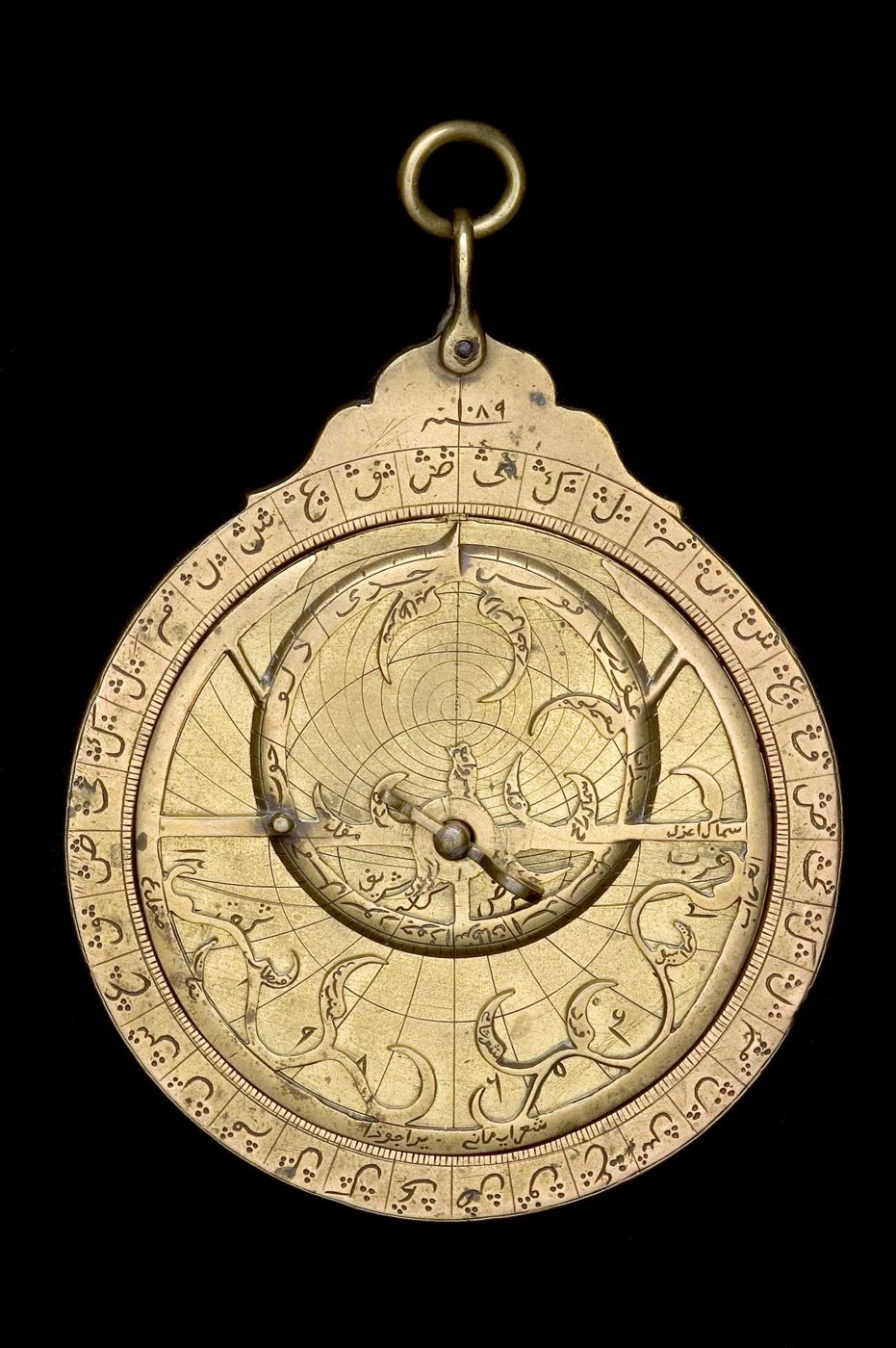
This brass astrolabe, designated inventory number 43559, is attributed to Turkey with a date of 1678 (A.H. 1089). The construction features a two-piece mater and limb assembly, with a simple throne attached by an integrated base. The instrument includes a foliate-type rete with zodiac labels, though it contains no stars. It is suspended by a simple round-section ring and an omega-shaped shackle. The back of the astrolabe is engraved with six scales, including altitude, sine/cosine, declination, shadow square, and cotangent scales. The instrument is equipped with four plates covering latitudes from 21° to 43° and features a double-ended original alidade. The device shows visible repairs with solder around the base of the limb and the lower left quadrant of the womb. The object was presented to the collection by Lewis Evans in 1924, having been acquired from Vitali Francis Frères in Algeria in 1911.

The front of the brass astrolabe (inventory 43559), showing the rete, zodiac labels, throne, and pin-and-horse attachment.
The front of the brass astrolabe (inventory 43559), showing the rete, zodiac labels, throne, and pin-and-horse attachment. — History of Science Museum, University of Oxford. Rights pending — permission not yet requested. Original source

Catalogue identity

Source
www.mhs.ox.ac.uk
Category
Tool · Arabic-inscribed astrolabe, Near East
Maker / attribution
Not established
Reference
Not recorded
Catalogue / lot identifier
43559
Source-reported date
1678 (A.H. 1089)
Source-reported place
Turkey

Source-reported attribution and specifications are not independent authentication. A listing does not establish present ownership, current display, availability or permission to reproduce.

Object description

Instrument Construction and Components

The astrolabe is constructed from brass and consists of a two-piece mater and limb assembly joined by soldering. The throne is a simple type, secured by an integrated base, and carries the engraved date of 1678. The instrument is suspended via an omega-shaped shackle attached to a simple, round-section ring.

The front of the device includes a foliate-type rete, which displays labels for the twelve zodiac signs but possesses no star markers. Four plates are provided, accommodating a range of latitudes from 21° to 43°.

Evidence for this section
  • “The mater and limb are of two pieces, soldered construction.”
  • “The throne is of the simple type”
  • “The rete contains 0 stars.”
  • “The rete is of the foliate (single knob) type.”

Back Scales and Alidade

The reverse of the astrolabe features six distinct scales utilized for astronomical calculation. These include altitude scales (0–90 degrees), sine/cosine scales, declination, a shadow square, and cotangent scales. The shadow square is engraved with feet and fingers measurements.

The alidade is double-ended and remains in original condition. It is a simple, rigid design without sights or notches, functioning as the primary sighting tool on the back of the instrument.

Evidence for this section
  • “The back contains 6 scales of the following types: Altitude; Sine/Cosine; Declination; Shadow square; Cotangent.”

Provenance and Condition

The instrument was donated to the collection by Lewis Evans in 1924, accessioned under number 1924-0/2006. Historical records indicate that Evans purchased the item in 1911 from the firm Vitali Francis Frères, based in Algeria.

The physical condition of the instrument shows signs of historic repair. Significant amounts of solder are present around the base of the limb and in the lower left quadrant of the womb, indicating that the instrument was previously repaired in that area.

Evidence for this section
  • “Presented by Lewis Evans in 1924”
  • “Evans bought it from Vitali Francis Frères, Algeria, in 1911.”
  • “Considerable amounts of solder can be seen around the base of the limb and in the lower left quadrant, where it was used to repair the instrument.”

Open research questions

  • What specific historical function did the solder repair in the lower left quadrant serve?
  • Given the lack of stars on the rete, was this instrument intended for specific local terrestrial use or is it an incomplete specimen?

Source evidence

Recorded claims and source quotations for Brass Astrolabe
FieldSource-reported valueSource quotation
Inventory number43559“Inventory no. 43559”
Date1678 (A.H. 1089)“Date 1678 (A.H. 1089)”
MaterialBrass“Material Brass”
Throne styleSimple type“The throne is of the simple type”
Number of plates4“There are 4 plates”
Construction methodTwo pieces, soldered“The mater and limb are of two pieces, soldered construction.”
Alidade typeDouble-ended“Alidade Double-ended.”

Visible details

  • Omega-shaped shackle
  • Simple, round cross-section ring
  • Visible solder repairs on the limb and womb
  • Foliate-type rete with no stars

Research qualifications

  • The origin is attributed to Turkey, but the source does not provide a specific maker's name.
  • The repair history is visible, but the specific timeframe of the documented solder application is not provided.

Photograph identity and source facts were screened before import; rights clearance remains pending.

Consulted source

Astrolabe, inventory 43559 (Turkey, 1678 (A.H. 1089))

Reviewed 2026-10-26 · Record c831a3d430

Terms in this record

Glossary explanations for terms named in this object’s record.