
Skip to content
The Encyclopedia of Horology

Tool · Arabic-inscribed astrolabe, Near East

Astrolabe by Ḥasan ibn ‘Alī

Partially verified

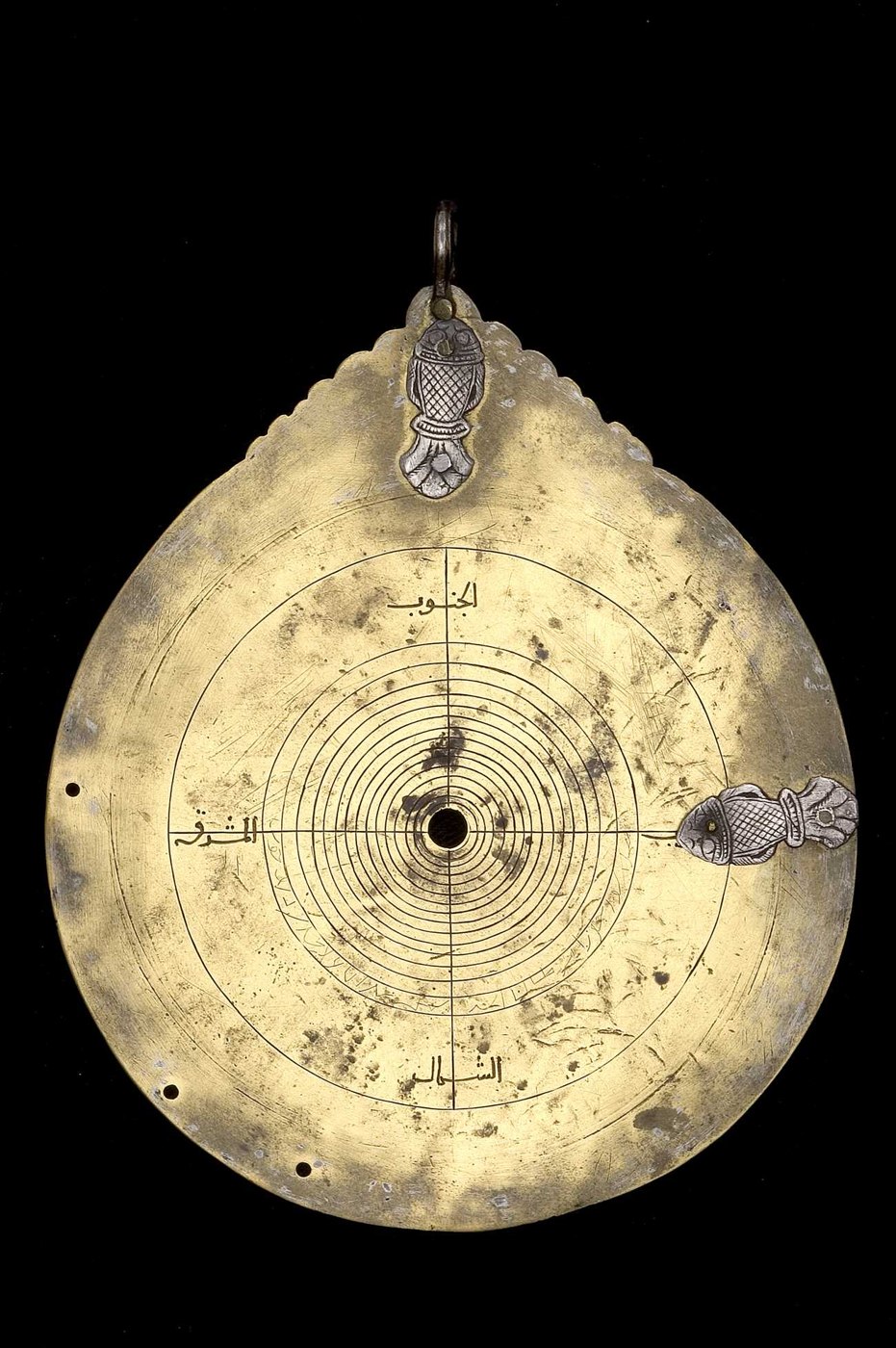
This astrolabe, identified by inventory number 49861, is a brass instrument attributed to the maker Ḥasan ibn ‘Alī, dated 1282/3, and manufactured in Cairo. The object features a broad Indo-Persian type throne attached to an integrated base, with a silver omega-type shackle. The instrument is characterized by a single surviving plate, referred to as the womb on the front side, which is engraved with sixteen concentric circles and retains silver fish ornaments held by rivets. It includes various astronomical scales, including altitude and sine/cosine, alongside tables for determining the degree of the sun and Coptic months. The instrument was acquired by the History of Science Museum, University of Oxford, following its presentation by Lewis Evans in 1924, who had previously purchased the item in London around 1880.

View of the astrolabe womb showing the Indo-Persian throne, silver shackle, and surviving silver fish ornaments.
View of the astrolabe womb showing the Indo-Persian throne, silver shackle, and surviving silver fish ornaments. — History of Science Museum, University of Oxford. Rights pending — permission not yet requested. Original source

Catalogue identity

Source
www.mhs.ox.ac.uk
Category
Tool · Arabic-inscribed astrolabe, Near East
Maker / attribution
Ḥasan ibn ‘Alī
Reference
Not recorded
Catalogue / lot identifier
49861
Source-reported date
1282/3
Source-reported place
Cairo

Source-reported attribution and specifications are not independent authentication. A listing does not establish present ownership, current display, availability or permission to reproduce.

Object description

Construction and Design

The astrolabe is constructed primarily from brass, featuring a distinctively broad, Indo-Persian style throne that is attached to an integrated base. The suspension mechanism consists of a silver shackle formed in an omega shape, which incorporates a small decorative square and additional ornament within its band.

The front of the instrument, or the womb, is comprised of a single surviving plate that features sixteen concentric circles engraved into its surface. Five holes are spaced around the edge of this plate; while some remain empty, two currently accommodate silver fish ornaments affixed by rivets, which may have served a functional or decorative purpose in relation to the original limb assembly.

Evidence for this section
  • “The throne is of the indo-persian, broad type made of brass attached with integrated base made of brass and omega type shackle made of silver”
  • “There are a series of sixteen concentric circles engraved on this side of the plate”
  • “Now, rivets pass through two of those holes and hold silver fish in place.”

Astronomical Scales and Tables

The back of the plate contains extensive astronomical data, including four distinct scales covering altitude, sine/cosine, and cotangent measurements. These scales are arranged in circular, concentric patterns, with the altitude scales occupying the upper quadrants and the cotangent scale situated in the lower right quadrant.

In addition to these mathematical scales, the back surface contains two tables. These tables are designed for specific astronomical calculations, including the determination of the degree of the sun and a listing of Coptic months. The original surface was silvered, though the report notes that this finish is now significantly abraded across the surface.

Evidence for this section
  • “The back contains 4 scales of the following types: Altitude; Sine/Cosine; Cotangent.”
  • “In addition to the scales on this plate, there are two tables: 'Know the degree of the sun' and a table of Coptic Months.”
  • “This side of the plate was silvered, most of which is now rubbing off.”

Provenance and Documentation

The object is catalogued under inventory number 49861 in the History of Science Museum at the University of Oxford. The accession record indicates it was presented to the museum by Lewis Evans in 1924. Evans had previously obtained the instrument in London approximately in 1880, during the early development of his private collection.

The documentation for the astrolabe is maintained by the museum's catalogue, which categorizes it as a 13th-century instrument from Cairo. Certain inscriptions located above the left-hand table and within the sine graphs remain recorded as pending interpretation.

Evidence for this section
  • “Presented by Lewis Evans in 1924”
  • “Evans bought it in London about 1880, in the early days of his collection.”
  • “The back is inscribed: with a marked as [inscriptions above left-hand table and in sine graphs]. [ pending ].”

Open research questions

  • What is the specific astronomical function of the silver fish ornaments currently mounted on the front plate?
  • Can the pending inscriptions be fully transcribed to provide further insight into the specific astronomical usage of this plate?

Source evidence

Recorded claims and source quotations for Astrolabe by Ḥasan ibn ‘Alī
FieldSource-reported valueSource quotation
MakerḤasan ibn ‘Alī“Maker Ḥasan ibn ‘Alī”
Date1282/3“Date 1282/3”
LocationCairo“Place Cairo”
MaterialBrass“Material Brass”
Inventory Number49861“Inventory number: 49861”
AcquisitionPresented by Lewis Evans in 1924“Presented by Lewis Evans in 1924”
ProvenanceEvans bought it in London about 1880“Evans bought it in London about 1880, in the early days of his collection.”

Visible details

  • Silvered surface on the back of the plate exhibiting significant wear
  • Omega-shaped silver shackle featuring a small decorative square
  • Silver fish ornaments secured by rivets on the front plate
  • Engraved concentric circles on the front face

Research qualifications

  • The exact original configuration of the limb rivets remains uncertain
  • The extent of silvering loss on the back is ongoing
  • The precise contents of certain inscriptions are marked as pending

Photograph identity and source facts were screened before import; rights clearance remains pending.

Consulted source

Astrolabe, inventory 49861 (Cairo, 1282/3)

Reviewed 2026-10-26 · Record f7b8ceae45

Terms in this record

Glossary explanations for terms named in this object’s record.