
Skip to content
The Encyclopedia of Horology

Tool · Arabic-inscribed astrolabe

Brass Astrolabe by 'Abd al-A'imma

Partially verified

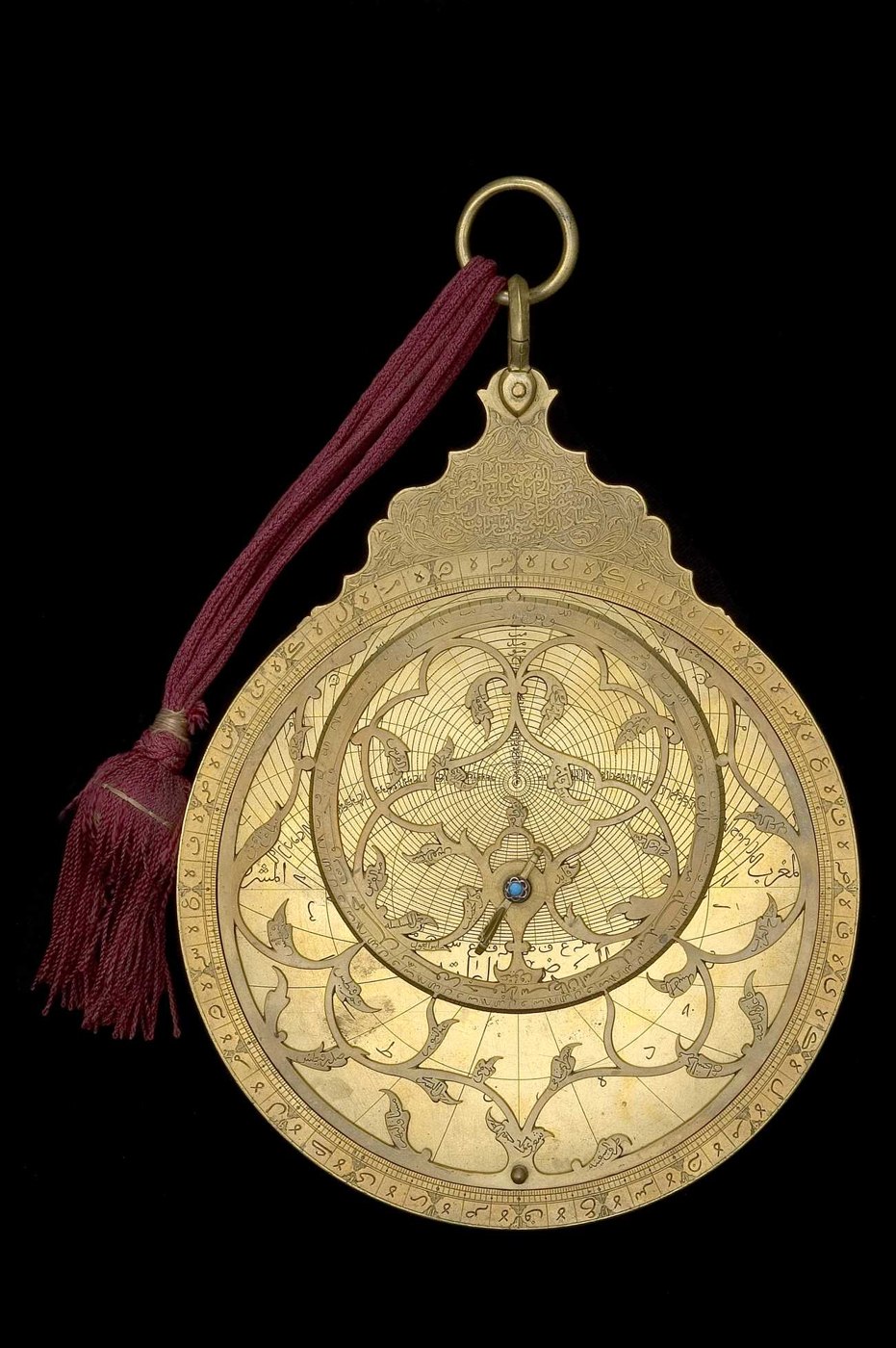
This brass astrolabe, catalogued as inventory number 40744, is attributed to the maker ‘Abd al-A’imma and dates to 1712/13 (A.H. 1124). The instrument features a one-piece mater and limb construction with an Indo-Persian style engraved throne. The back includes nine distinct scales, including shadow squares and sine/cosine calculations, with the maker's signature housed in a cartouche beneath the shadow square. The rete is of the foliate type, and the central pin is set with a turquoise stone. A calligraphic dedication on the throne identifies the original owner as Isma'īl Bey, the Jabbādār-bashī or director of the arsenal under the Shah of Persia. Acquired by the History of Science Museum through a presentation by Lewis Evans in 1924, the piece reflects the working standards of the early 18th-century Iṣfahān school, noted for its precise astronomical utility, intentionally rendered with a plainer finish than other works by the same maker.

A brass astrolabe, inventory 40744, made in Iṣfahān, 1712/13 (A.H. 1124) by 'Abd al-A'imma.
A brass astrolabe, inventory 40744, made in Iṣfahān, 1712/13 (A.H. 1124) by 'Abd al-A'imma. — History of Science Museum, University of Oxford. Rights pending — permission not yet requested. Original source

Catalogue identity

Source
www.mhs.ox.ac.uk
Category
Tool · Arabic-inscribed astrolabe
Maker / attribution
‘Abd al-A’imma
Reference
Not recorded
Catalogue / lot identifier
40744
Source-reported date
1712/13 (A.H. 1124)
Source-reported place
Iṣfahān

Source-reported attribution and specifications are not independent authentication. A listing does not establish present ownership, current display, availability or permission to reproduce.

Object description

Construction and Design

The astrolabe is constructed primarily of brass, featuring a one-piece mater and limb assembly. The design utilizes a tab system to secure the five included plates, which offer latitude ranges between 30 and 38 degrees. The throne is of the engraved Indo-Persian type and is secured via an integrated base.

The rete displays a foliate, single-knob configuration, and the instrument is assembled using a central pin and horse. A notable aesthetic detail is the turquoise stone set into the top of the pin, a detail interpreted as a personal signal of the original owner's wealth and status.

Evidence for this section
  • “The mater and limb are of one-piece construction.”
  • “The throne is of the indo-persian, engraved type”
  • “The top of the pin is decorated with turquoise.”

Inscriptions and Signatures

The instrument bears a formal maker's signature located within a cartouche situated beneath the shadow square on the back of the device. This signature includes a religious invocation, explicitly stating that the maker requires the mercy of his Lord.

A calligraphic inscription on the front of the throne provides evidence of the commission, naming Isma'īl Bey as the recipient. The text identifies his role as the director of the arsenal and notes his high standing with the Shah of Persia. The date is rendered as 1124 A.H. (1712/13 A.D.), despite the inclusion of an unexplained '001' sequence.

Evidence for this section
  • “Inscription in cartouche below shadow square.”
  • “Made by ʿAbd al-Aʾimmah, who needs the mercy of his Lord, the self-sufficient.”
  • “A calligraphic inscription on the front of the throne of this astrolabe records that it was made for Isma'īl Bey, the jabbādār-bashī”

Provenance and History

The astrolabe was acquired by the University of Oxford’s History of Science Museum following a presentation by Lewis Evans in 1924. Evans had previously purchased the instrument from a London dealer named J. Lowe in July 1922.

While the maker's signature usually omits a date, this specific instrument is dated through its dedication inscription, a characteristic noted in several other confirmed pieces by the same maker.

Evidence for this section
  • “Presented by Lewis Evans in 1924”
  • “Evans bought it from J. Lowe, a London dealer, in July 1922.”
  • “'Abd al-A'imma's genuine products (of which this is a fine example) are characterized by their astronomical correctness”

Open research questions

  • What is the significance of the '001' sequence appearing alongside the date 1124 on the throne?
  • Are there other extant instruments by 'Abd al-A'imma that share this specific plate latitude range?

Source evidence

Recorded claims and source quotations for Brass Astrolabe by 'Abd al-A'imma
FieldSource-reported valueSource quotation
Maker‘Abd al-A’imma“The maker of the astrolabe, the famous 'Abd al-A'imma, was working in the first twenty years of the 18th century.”
Date1712/13 (A.H. 1124)“Date 1712/13 (A.H. 1124)”
MaterialBrass“Material Brass”
Original OwnerIsma'īl Bey, Jabbādār-bashī“it was made for Isma'īl Bey, the jabbādār-bashī (director of the arsenal) and 'high-ranking confidante' of the shah of Persia.”
ProvenancePresented by Lewis Evans, 1924“Presented by Lewis Evans in 1924”
Signature TranslationMade by ʿAbd al-Aʾimmah, who needs the mercy of his Lord, the self-sufficient.“Made by ʿAbd al-Aʾimmah, who needs the mercy of his Lord, the self-sufficient.”
PlaceIṣfahān“Place Iṣfahān”

Visible details

  • Turquoise stone inlay at the top of the central pin.
  • Maker's signature in an ornamental cartouche on the back.
  • Engraved Indo-Persian style throne with a calligraphic dedication.
  • Double-ended alidade on the back of the instrument.

Research qualifications

  • The '001' portion of the inscription on the throne is not fully understood and may function as a space filler.
  • The presence of a turquoise stone is noted as a personal addition by the owner, rather than a standard feature of the maker's work.

Photograph identity and source facts were screened before import; rights clearance remains pending.

Consulted source

Astrolabe, inventory 40744 (Iṣfahān, 1712/13 (A.H.)

Reviewed 2026-10-26 · Record 70eadfceb0

Terms in this record

Glossary explanations for terms named in this object’s record.