
Skip to content
The Encyclopedia of Horology

Pocket watch · Duplex pocket watch

Bovet & Fleurier Chinese Market Duplex pocket watch

Partially verified

According to the seller, this key-wound and key-set pocket watch was produced for the Chinese market circa 1850 with a movement signed Bovet & Fleurier. The source states the movement features a gilt bridge design with carved polished decoration, enamel highlights, a crab tooth duplex escapement, a freestanding mainspring barrel, and a steel balance wheel with blued steel bat-wing weights. It is housed in a large silver-gilt case measuring 60 mm wide and 20 mm deep bearing London hallmarks for 1936. The white enamel dial is fitted with blued steel spoon hands and a central seconds hand.

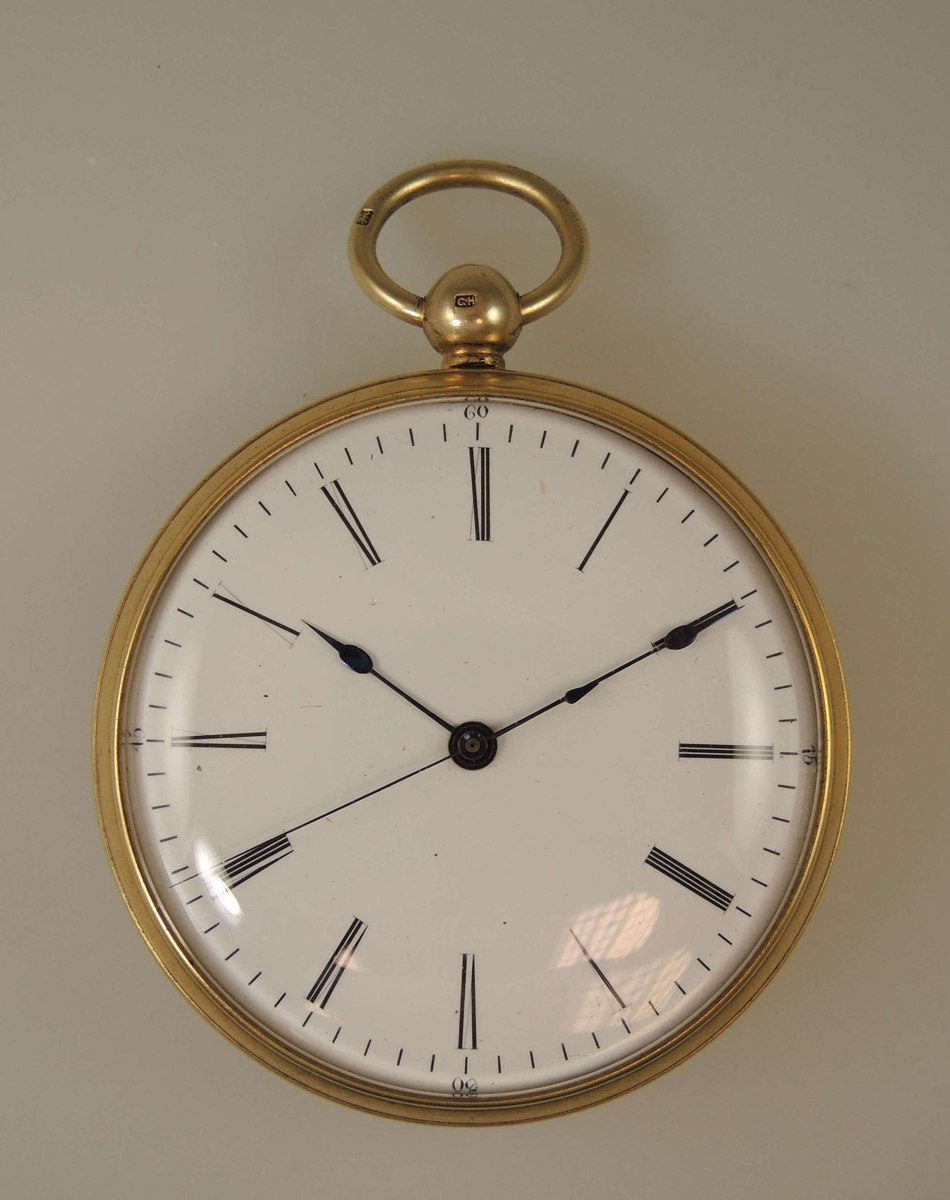
Dial and front view of the Bovet & Fleurier silver-gilt pocket watch
Dial and front view of the Bovet & Fleurier silver-gilt pocket watch — Atlam Watches via Antiques Boutique. Rights pending — permission not yet requested. Original source

Catalogue identity

Source
www.antiquesboutique.com
Category
Pocket watch · Duplex pocket watch
Maker / attribution
Bovet & Fleurier
Reference
Not recorded
Catalogue / lot identifier
4.300 (AB-130295)
Source-reported date
circa 1850
Country
Switzerland

Source-reported attribution and specifications are not independent authentication. A listing does not establish present ownership, current display, availability or permission to reproduce.

Object description

Dial and Front Presentation

The watch presents a white enamel dial with slender Roman numeral hour markers, an outer minute ring punctuated with Arabic numerals at 15, 30, 45, and 60, and a mineral glass cover. Time is indicated by a pair of blued steel hands with spoon-shaped terminals and a blued steel central seconds hand.

Visible from the front, the pendant and bow are rendered in gilt metal and show small stamped punches on the neck and ring. The exterior case bezel exhibits a smooth, plain polished finish.

Evidence for this section
  • “White enamel dial with slender Roman numeral hour markers and an outer minute track marked with Arabic numerals at 15, 30, 45, and 60.”
  • “the white enamel dial has a pair blue steel hands with attractive spoon ends and a blue steel centre seconds hand.”
  • “The watch has a mineral glass”
  • “Pendant and bow in gilt metal bearing visible small stamped maker or hallmark punches on the neck and ring.”
  • “The case has a smooth plain finish”

Reported Movement Characteristics

Because only the front dial face is depicted in the supplied photography, details regarding the movement rely on the seller's documentation. The mechanism is reported to be signed "Bovet & Fleurier" and dated circa 1850.

The caliber is described as a gilt bridge movement featuring a crab tooth duplex escapement, a freestanding mainspring barrel, and a steel balance wheel fitted with large blued steel bat-wing weights. The surfaces are stated to feature carved polished decoration against a brushed gilt ground with enamel accents. The watch is key-wound and key-set, accompanied by a key.

Evidence for this section
  • “The movement is signed “Bovet & Fleurier””
  • “This pocket watch was made for the Chinese market by Bovet & Fleurier circa 1850.”
  • “this beautiful gilt bridge movement has a crab tooth duplex escapement and a steel balance wheel with large blue steel “bat wing” weights.”
  • “The movement has a freestanding mainspring barrel and the whole movement is decorated with carved polished decoration against a brush gilt background and then highlighted in enamel.”
  • “The watch is key wound / key set and comes with a key”

Case Form and Hallmarking Discrepancy

The movement is housed in a large silver-gilt case measuring 60 mm in width by 20 mm in depth. According to the seller, the case construction includes a fixed front bezel, a hinged outer back, and a hinged inner bezel that is missing its glass cover.

The seller highlights a chronological tension between the circa 1850 movement and the case, which carries London hallmarks for 1936. Noting that Chinese market watch cases typically carry no hallmarks, the dealer hypothesizes that the watch was either recased in a later purpose-made housing or that the existing case received hallmarks in London in 1936.

Evidence for this section
  • “The watch measures 60mm wide x 20mm deep”
  • “The case has a hinged inner bezel, lacking a glass cover and has a hinged back and fixed bezel.”
  • “The watch comes in a massive silver gilt case which has hallmarks for London 1936.”
  • “So therefore either the watch has either been recased in this later purpose made case or the case was later hallmarked in 1936.”

Open research questions

  • What specific maker's sponsor mark and date letter stamps constitute the 1936 London hallmarks on the case interior?
  • Does physical inspection of the case interior show traces of altered movement retaining tabs or solder work indicating recasing versus original manufacture?
  • What specific Chinese character marks or caliber serial numbers, if any, are engraved on the movement plates?

Source evidence

Recorded claims and source quotations for Bovet & Fleurier Chinese Market Duplex pocket watch
FieldSource-reported valueSource quotation
Maker attributionBovet & Fleurier“The movement is signed “Bovet & Fleurier””
Datecirca 1850“This pocket watch was made for the Chinese market by Bovet & Fleurier circa 1850.”
EscapementCrab tooth duplex escapement“this beautiful gilt bridge movement has a crab tooth duplex escapement”
Case HallmarksLondon 1936“The watch comes in a massive silver gilt case which has hallmarks for London 1936.”
Dimensions60mm wide x 20mm deep“The watch measures 60mm wide x 20mm deep”
Dial descriptionWhite enamel dial with blue steel spoon hands“the white enamel dial has a pair blue steel hands with attractive spoon ends and a blue steel centre seconds hand.”
Case inner bezel conditionLacking glass cover“The case has a hinged inner bezel, lacking a glass cover”
AccessoriesAccompanied by a key“comes with a key”
Dealer item code4.300 (AB-130295)“Code 4.300 (AB-130295)”

Visible details

  • White enamel dial with slender Roman numeral hour markers and an outer minute track marked with Arabic numerals at 15, 30, 45, and 60.
  • Blued steel hands with spoon-shaped terminals and a thin central seconds hand.
  • Pendant and bow in gilt metal bearing visible small stamped maker or hallmark punches on the neck and ring.

Research qualifications

  • Dealer notes a discrepancy between the circa 1850 movement date and the 1936 London case hallmarks, suggesting recasing or late hallmarking.
  • The movement and inside case back are not visible in the front dial photograph; internal descriptions rely on source claims.

Photograph identity and source facts were screened before import; rights clearance remains pending.

Terms in this record

Glossary explanations for terms named in this object’s record.