
Skip to content
The Encyclopedia of Horology

Tool · Astrolabe

Astrolabe by Abd al-A'immah

Partially verified

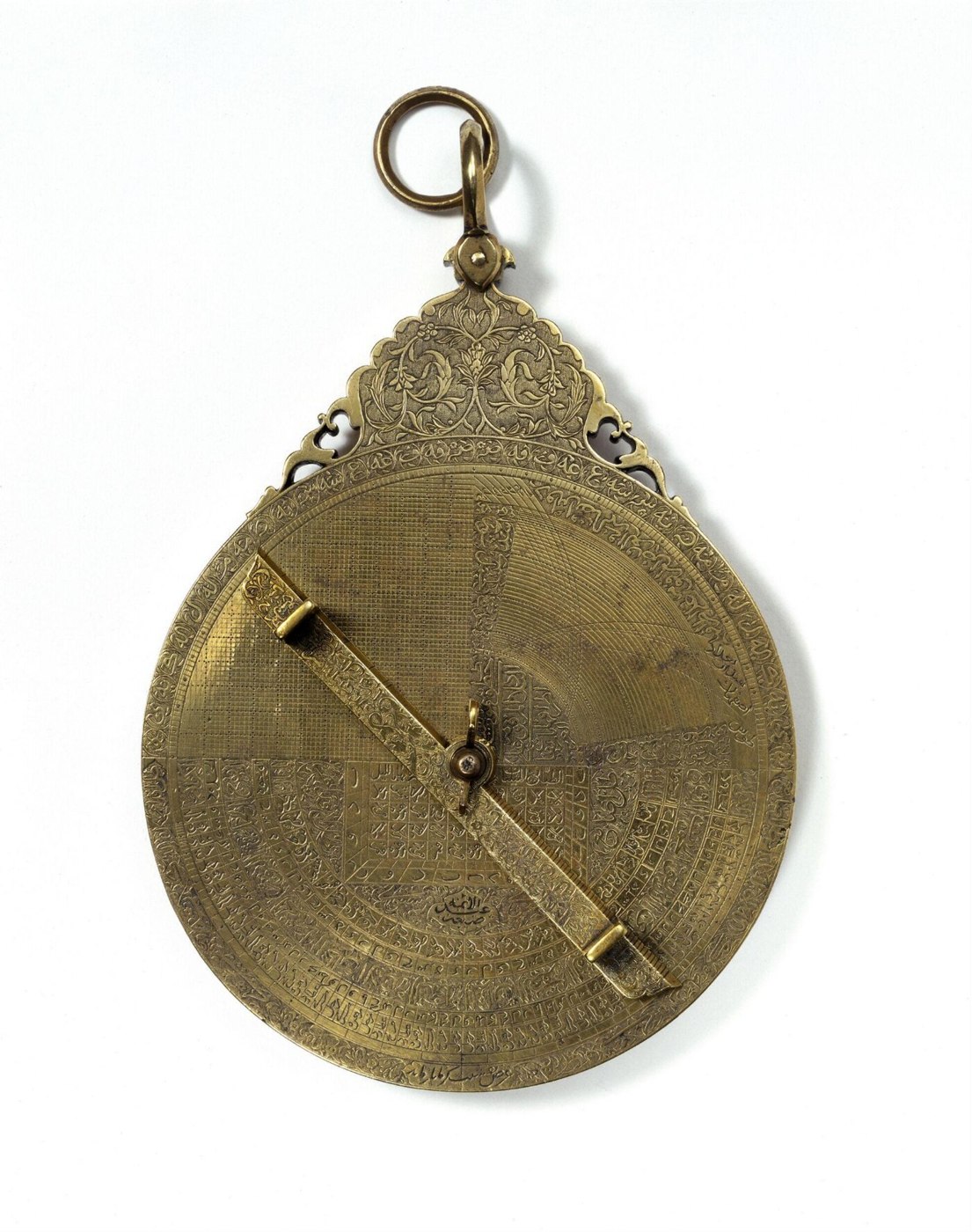
This brass astrolabe was produced in Isfahan, Iran, and is dated to 1715. It is signed by the maker, Abd al-A'immah, with the inscription located within a cartouche on the back of the instrument below the shadow square. The object measures 19.6 cm in height, 12.5 cm in width, and has a diameter of 11 cm. It is constructed from brass sheet that has been cut and engraved with decorative patterns and inscriptions. The design includes a rete, which is a rotating disk designed to map the stars using a series of pointers. The surface features intricate engravings and text, including Persian verses in naskh or nastaliq scripts. As a scientific instrument, it serves to facilitate astronomical calculations and observations, consistent with the production of similar instruments in 18th-century Iran where such devices were frequently associated with courtly practices.

The reverse of the astrolabe showing the shadow square, the alidade, and the maker's signature in a cartouche.
The reverse of the astrolabe showing the shadow square, the alidade, and the maker's signature in a cartouche. — Victoria and Albert Museum, London. Rights pending — permission not yet requested. Original source

Catalogue identity

Source
collections.vam.ac.uk
Category
Tool · Astrolabe
Maker / attribution
Abd al-A'immah
Reference
Not recorded
Catalogue / lot identifier
458-1888
Source-reported date
1715
Source-reported place
Iran

Source-reported attribution and specifications are not independent authentication. A listing does not establish present ownership, current display, availability or permission to reproduce.

Object description

Construction and Decoration

The instrument is composed of a brass sheet that has been shaped through cutting and subsequent engraving. The outer circular body supports a rotating rete, which incorporates patterns featuring vine scrolls and leaf-shaped pointers used for stellar mapping. The entire exterior surface, including the rims and the back, is finished with dense engraved patterns and calligraphic inscriptions.

The top of the astrolabe features a pierced, floral-engraved suspension element, referred to as the kursi or throne, which connects the main circular body to the suspension ring.

Evidence for this section
  • “Brass sheet, cut and engraved.”
  • “The retes of these astrolabes - that is, the part of the instrument that maps the stars, made up of a rotating disk with pointers - feature patterns of vine scrolls, bearing leaf-shaped star pointers.”

Signatures and Inscriptions

The instrument bears a signature identifying the maker as Abd al-A'immah. This inscription is positioned on the reverse of the astrolabe, specifically placed within a dedicated cartouche located below the shadow square.

These inscriptions are integrated into the geometric and ornamental borders surrounding the central calculation grids on the back and along the periphery of the device.

Evidence for this section
  • “'Abd al-Aimmah”
  • “Astrolabes from this period also often have a signature within a cartouche below the shadow square on the back.”

Scientific Components

The device functions as an astrolabe, a traditional instrument for astronomical measurement. Its primary components include the rete for stellar tracking and the alidade, or sighting rule, visible on the reverse. The back of the instrument incorporates a shadow square, a geometric tool used for height and distance calculations.

These elements allow for the measurement of celestial positions and timekeeping. The configuration of the grids and the pointers on the rete are essential to its intended use in calculating astronomical data, which remained a focus of instrument makers in Isfahan during the early 18th century.

Evidence for this section
  • “The retes of these astrolabes - that is, the part of the instrument that maps the stars, made up of a rotating disk with pointers - feature patterns of vine scrolls, bearing leaf-shaped star pointers.”
  • “Astrolabe, Iran (Isfahan), 1715.”

Open research questions

  • What specific astronomical data is engraved on the various plates associated with this instrument?
  • Does the current condition of the instrument show evidence of historical repairs or additions to the original engravings?

Source evidence

Recorded claims and source quotations for Astrolabe by Abd al-A'immah
FieldSource-reported valueSource quotation
MakerAbd al-A'immah“Abd al-A'immah (maker)”
LocationIsfahan, Iran“Iran (made); Isfahan (made)”
Dimensions19.6 cm x 12.5 cm x 11 cm“Height: 19.6 cm; Width: 12.5 cm; Diameter: 11 cm”
MaterialsBrass“Brass, cut and engraved”
Inscription LocationCartouche below shadow square“signature within a cartouche below the shadow square on the back.”

Visible details

  • The back features an alidade (sighting rule) pivoting at the center.
  • The top suspension assembly includes a decorated kursi (throne).
  • The reverse displays an engraved shadow square grid.
  • The circular rim is heavily inscribed with text.

Research qualifications

  • The source does not explicitly describe the condition of the metal surface or the completeness of all components.
  • The specific meaning of all inscriptions on the rim and rete is not fully translated in the provided record.

Photograph identity and source facts were screened before import; rights clearance remains pending.

Consulted source

Astrolabe

Reviewed 2026-10-26 · Record 7d74466f5b

Terms in this record

Glossary explanations for terms named in this object’s record.