
Magazine · Makers & history
The Golden Age of Accuracy: What Defines a Railroad Grade Pocket Watch?
The term 'railroad grade' is frequently misused as a synonym for quality, yet it refers to a precise, enforceable set of technical standards. These timepieces were the essential tools that ensured the safety and synchronization of North American railway operations during the 19th and early 20th centuries.
November 23, 2026 · 4 min read
AI-drafted from search research. Not yet editorially reviewed — check important facts against the cited sources.
Key takeaways
- Railroad grade was a mandatory technical specification, not a marketing term.
- Essential features included lever setting, high jewel counts, and precise balance regulation.
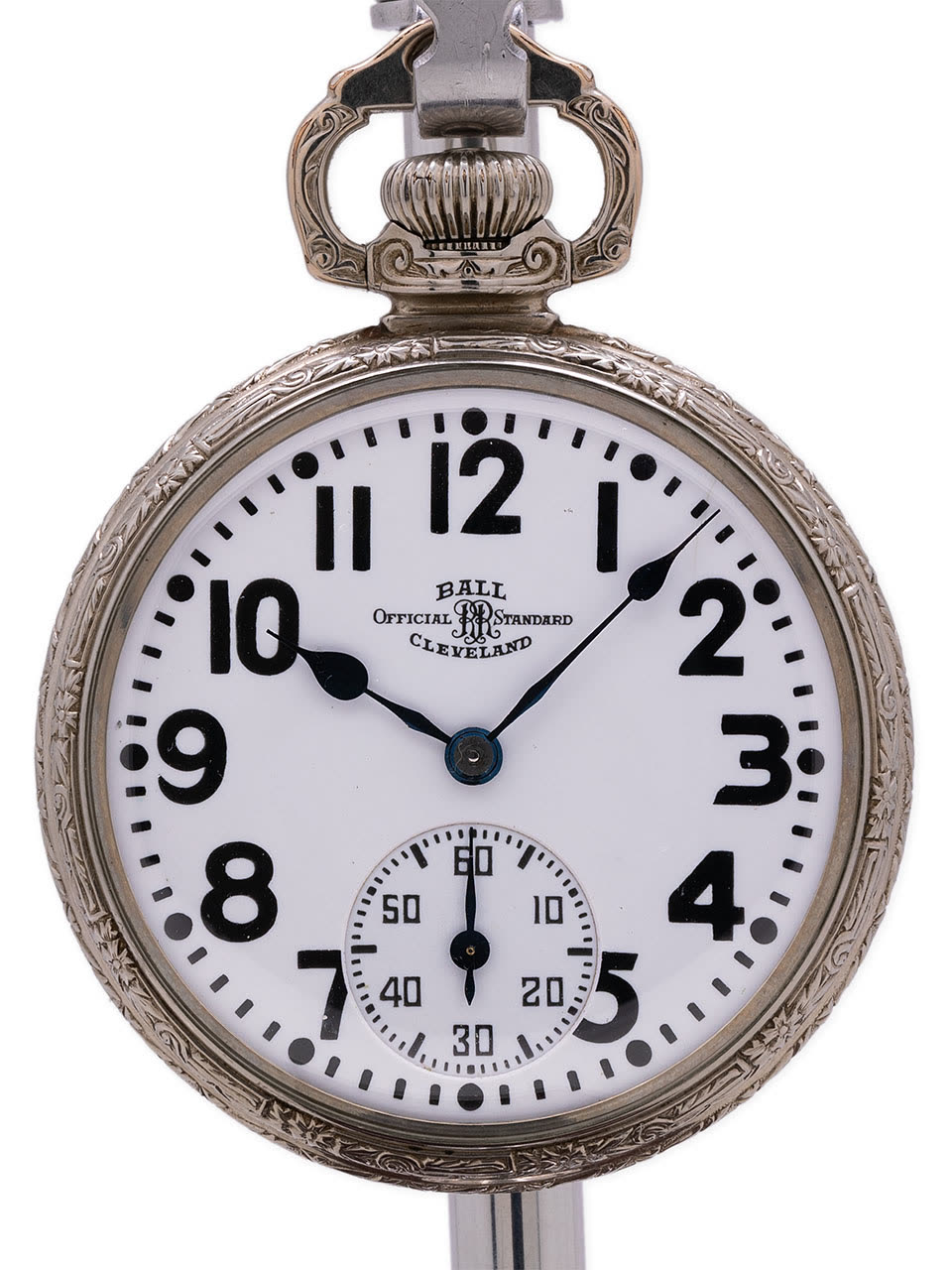
- Montgomery or bold Arabic dials were used to prevent reading errors.
- Watches were subject to regular, documented inspections by railway officials.
- A genuine railroad watch must be verified against specific grade requirements, not just appearance.
What is a railroad grade pocket watch?
In North America, a railroad pocket watch was not merely a high-quality timepiece; it was an officially sanctioned piece of critical infrastructure. The primary purpose of these watches was to prevent collisions and ensure the orderly movement of trains through strict adherence to a synchronized time standard. Unlike the decorative or slim dress pocket watches popular in the same era, these instruments were built for maximum readability and durability. A watch was only 'railroad grade' if it appeared on an approved list issued by a railroad company's time service department. You can learn more about the formal definition of this railroad grade in our glossary.
Standardized Dial and Case Markings
What makes a railroad pocket watch?
Understanding what makes a railroad-grade watch requires looking at the rigorous technical requirements imposed by the railway authorities. These standards evolved over time, but by the early 1900s, they were largely standardized. To qualify, a watch generally required a minimum of 17 jewels, a lever escapement, and adjustment to at least five positions and temperature. These adjustments ensured the watch kept consistent time whether it was sitting on a desk, being held in the hand, or carried in a pocket while the train was in motion. Detailed technical expectations are outlined in our article on what 'railroad grade' actually meant.
| Feature | Requirement |
|---|---|
| Jewels | 17 to 23 |
| Escapement | Lever |
| Setting | Lever-set (no accidental changes) |
| Dial | Open face, Arabic numerals |
| Adjustments | 5 or more positions, temperature |
How to identify a railroad pocket watch
Identifying these watches is a methodical process. First, check the pocket watch dials. Railroad standards almost exclusively required open-face configurations with clear, bold Arabic numerals. Many utilized a 'Montgomery dial'—a railroad dial featuring an individual minute marker for every minute, designed to eliminate any doubt when reading the time to the second. If you are examining a movement, look for evidence of high-grade construction, such as screwed-in gold settings for the jewels and a micro-regulator. Use our step-by-step checklist to evaluate the movement, case, and dial, remembering that these items should be original to one another; beware of a marriage where a fine movement has been placed in an incorrect or modern case.
Key components and their functions
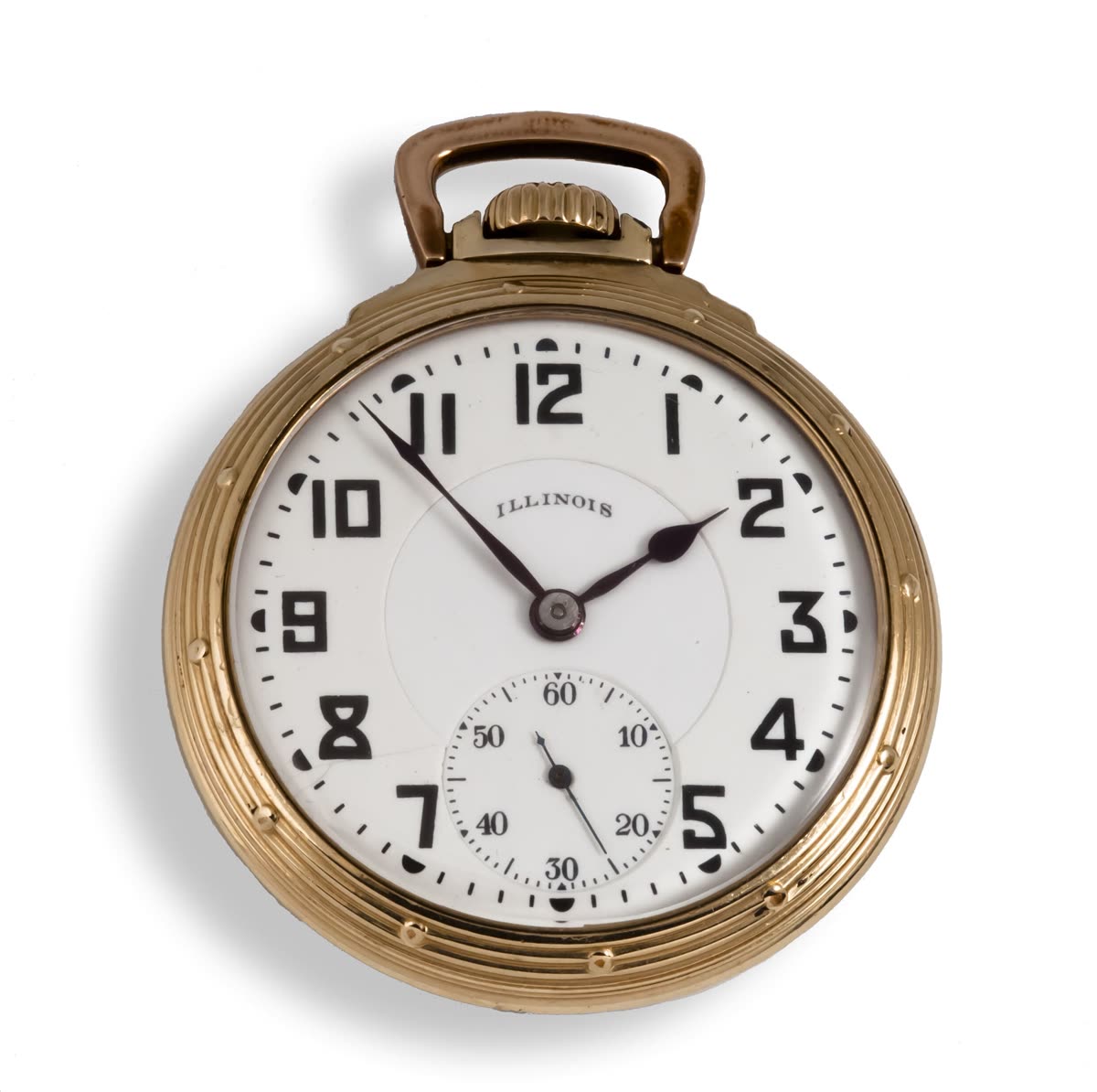
The mechanical heart of a railroad watch is the lever-escapement pocket watch mechanism. Unlike older or lower-grade systems, the detached lever escapement provides the precision necessary for rating. Furthermore, the 'lever set' mechanism is a critical safety feature: to change the time, the user must remove the front bezel of the case and move a small lever. This design prevents the time from being accidentally changed by pulling on the crown—a common issue with older keyless-works systems. Every aspect of the pocket watch hands was also optimized for speed, often utilizing bold, spade-shaped, or cathedral styles to provide instant visibility.
Conservation and Care
If you suspect your watch is in need of service, consult an horologist experienced in vintage American railroad movements. Avoid modern synthetic lubricants that may be incompatible with older pivot materials. For information on how to maintain the exterior of your watch safely, refer to our guide on how to clean a pocket watch safely.
Famous Movements and Manufacturers
The American railroad era was dominated by a few key manufacturers who specialized in these robust machines. The Illinois Bunn Special is perhaps the most famous, noted for its '60-hour' mainspring which allowed the watch to remain accurate for over two days on a single wind. Other stalwarts included Waltham, Elgin, and Hamilton. While these companies mass-produced parts, they maintained strict quality control over their flagship 'railroad grades.' Each grade name was synonymous with specific performance benchmarks.
History
Deeply tied to North American expansion.
Engineering
Minimum 17-jewel movements standard.
Accuracy
Adjusted to 5+ positions.
Micro-Metric Regulator Mechanisms
How to Verify Movement Authenticity
Authentication of a railroad pocket watch relies on corroborating the movement’s technical grade with the manufacturer’s documented specifications rather than relying on decorative features alone. Collectors should focus on the presence of specific 'bridge' designs that allow for the high jewel count and positional adjustments mandated by General Railroad Time Service committees.
| Feature | What it suggests | What to check next |
|---|---|---|
| Micrometer Regulator | Precision rate adjustment | Check for movement plate stamping indicating 'Adjusted to 5 Positions' |
| Double Roller Escapement | High reliability in transit | Verify engagement of the safety roller for timing stability |
| Gold-filled Case Stamps | Commercial-grade wear protection | Confirm case manufacturer matches period railroad-approved list |
| Lever Set mechanism | Prevention of accidental time change | Test the lever slide position for consistent hand-setting function |
What to record
- Movement serial number located on the main plate, confirming its production run.
- Jewel count engraving, ensuring it meets the minimum standard of 17 or higher.
- Specific bridge markings denoting the number of positions adjusted.
- Dial typography style (e.g., Arabic numerals) and presence of a sub-second track.
- Lever set vs. pendant set mechanism to confirm if the watch requires case opening to adjust time.
- Any visible service markings etched on the interior of the case back by watchmakers.
FAQs about Railroad Pocket Watches
Frequently asked questions
Why were railroad watches required to have 'lever set' mechanisms?
The lever set mechanism was implemented as a safety precaution. By requiring the user to unscrew the bezel or slide a lever to engage the hands, manufacturers ensured that the time could not be accidentally changed if the pendant (the stem) were bumped or snagged while in the pocket. This prevented critical time-setting errors that could lead to dangerous train collisions during the era of single-track operation.
Does a watch need to be in a railroad-approved case to be 'railroad grade'?
Technically, the 'grade' refers to the movement's build quality, such as its jewels and adjustments. However, railroad inspectors required watches to be housed in sturdy cases that were dustproof and moisture-resistant. If a genuine railroad movement is placed in an incorrect or non-standard case, it remains a 'railroad grade' movement but may not qualify as a 'railroad approved' watch for active duty.
Sources
- Pocket Watch Database — maker-specific movement serial and grade records, a secondary compilation
- Published railroad time-service rules and approved-watch lists (various roads)
- NAWCC publications on railroad time service and watch inspection
- NAWCC Bulletin articles on railroad timekeeping standards
- Published factory grade and serial literature (Hamilton, Elgin, Illinois, Waltham)
- Railway-specific time-service rules and approved-watch lists where available