
Magazine · Movements & mechanisms
How Atomic Clocks Work and Why They Define the Second
The atomic clock represents the pinnacle of modern timekeeping, shifting the standard of measurement from the celestial motion of planets to the immutable oscillations of atoms. By harnessing quantum physics, these devices provide the foundation for global synchronization, GPS navigation, and high-speed data networks.
November 24, 2026 · 4 min read
AI-drafted from search research. Not yet editorially reviewed — check important facts against the cited sources.
Key takeaways
- Atomic clocks use the resonance frequency of cesium atoms to define the SI second.
- They do not 'run' on electricity like a traditional clock but regulate time via quantum energy states.
- Consumer 'atomic clocks' are actually radio-controlled receivers synchronizing to atomic time.
- Extreme precision is required for modern infrastructure like GPS and financial markets.
- Maintenance of primary standards is handled by national laboratories, not private workshops.
How does an atomic clock work?
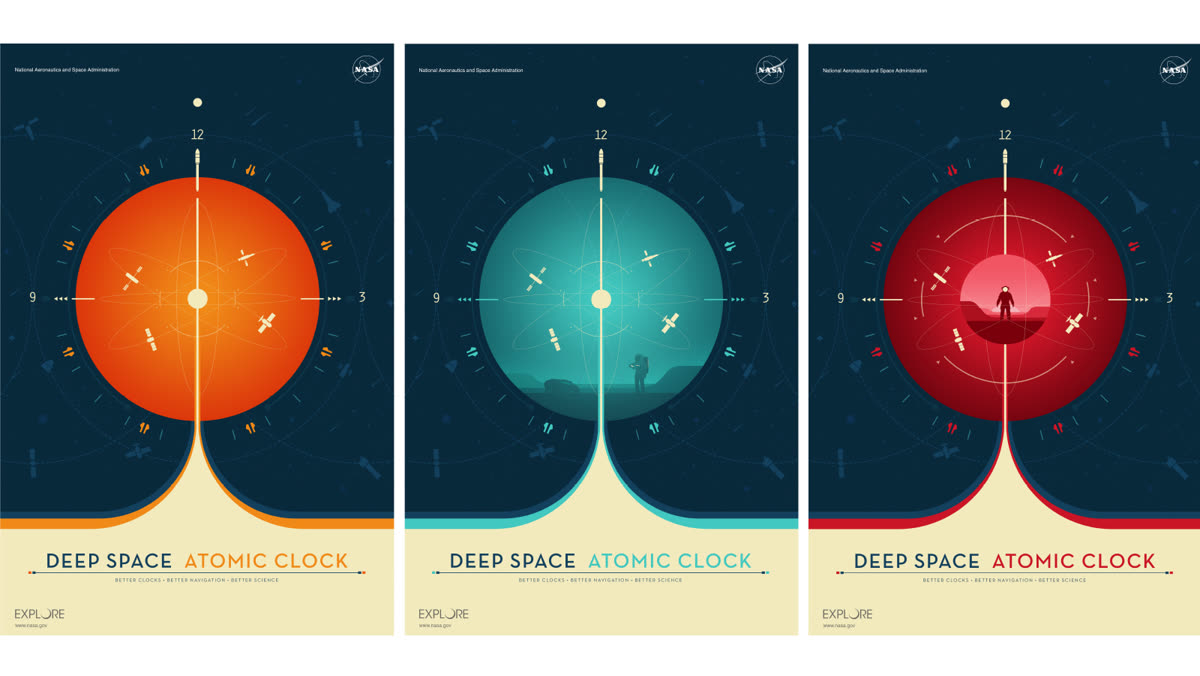
Unlike a traditional mechanical timepiece that relies on a balance wheel or a seconds pendulum to maintain its frequency, an atomic clock utilizes the internal electronic energy levels of an atom. In the most common type, a beam of cesium-133 atoms is passed through a magnetic field to filter for a specific energy state. These atoms are then exposed to microwave radiation. When the frequency of that radiation matches the specific resonant frequency of the cesium atom, the atoms undergo a state transition.
A detector then counts how many atoms have successfully changed their state. A feedback loop adjusts the frequency of the microwave source to ensure it remains perfectly locked onto this natural atomic resonance. This process ensures that the 'tick' of the clock is fundamentally tied to the properties of the atom itself rather than the mechanical state of a clockwork train. This level of stability is what scientists refer to as atomic time.
Understanding the 'Atomic Clock' in your home
If you have a digital clock on your wall that claims to be 'atomic,' it is important to distinguish this from the primary laboratory standards. These consumer devices are actually radio-controlled clocks. They contain a small antenna that listens for a time-code signal broadcast by government-operated radio stations, such as WWVB in Colorado. These stations receive their timing data from real atomic ensembles maintained by national standards laboratories.
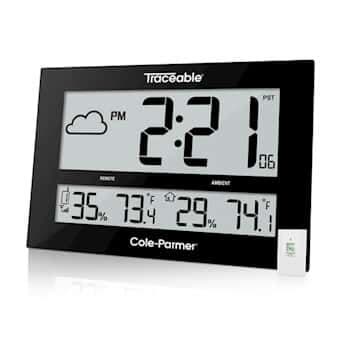
These household clocks perform a daily synchronization, usually in the middle of the night, to reset their internal crystal oscillators. While they are incredibly accurate for daily use, they are essentially receivers, not primary timekeepers. They lack the internal quantum physics apparatus to generate atomic time independently and must rely on external transmission to maintain their precision.
Why is atomic time the global standard?
For centuries, humanity defined time through astronomical observation, essentially tracking the Earth's rotation. However, as Landes notes in his seminal work on the evolution of timekeeping, the Earth’s rotation is not perfectly uniform; it is subject to subtle variations and long-term slowing. By the mid-20th century, the demand for scientific precision required a more stable constant. Atomic time replaced astronomical time as the ultimate arbiter because it remains unaffected by the wobbles, tides, and geological shifts that impact the planet.
The evolution from pendulum to atom
The history of timekeeping has been a quest for the perfect oscillator. In early horology, we relied on water clocks [L9] and later the seconds pendulum. These mechanical innovations were marvels of their time, but they were all subject to environmental factors like temperature, air pressure, and gravity. A mechanical watch or a high-end regulator can keep excellent time, but even the finest balance wheel is limited by its physical material properties and the viscosity of clock oil.
Is there a need for repair or maintenance?
If you are interested in historical timekeeping, your attention is better directed toward mechanical horology. The principles behind the hacking mechanism or deadbeat seconds provide a fascinating glimpse into how horologists tried to force mechanical systems to mimic the stability that atomic clocks later achieved naturally. Unlike atomic physics, mechanical horology is a craft you can study and practice with the right tools, provided you follow the conservation ethics of the trade.
Key terms in modern timekeeping
| Technology | Regulator | Primary Application |
|---|---|---|
| Pendulum Clock | Gravity/Pendulum | Home/Historic |
| Mechanical Watch | Balance Wheel | Personal/Heritage |
| Quartz Clock | Quartz Crystal | General Consumer |
| Atomic Clock | Cesium Atom | Science/Navigation |
How do you distinguish between true atomic time and radio-controlled timepieces?
Most household 'atomic' clocks are essentially radio receivers that synchronize with a time-signal broadcast from a primary atomic clock station. These devices do not contain a physical atomic resonator; rather, they perform a daily periodic correction of their internal quartz crystal oscillator based on the received time-code. Discrepancies between the device and true atomic time usually indicate signal interference or reception failure rather than a degradation of the timekeeping element itself.
| Feature | What it suggests | What to check next |
|---|---|---|
| Signal sync indicator | Successful reception | Verification of antenna orientation |
| Quartz drift | Frequency instability | Battery voltage stability |
| Static noise levels | Atmospheric interference | Radio frequency shielding |
| Time-code offset | Reception latency | Geographic signal propagation delay |
What to record
- Record the specific frequency (e.g., 60 kHz) of the radio-controlled signal.
- Document the time-sync status indicator icon and its last successful timestamp.
- Photograph the receiver antenna position relative to metal structures or EMI sources.
- Note any secondary time display or internal quartz-drift error margin if available.
- Identify the geographic proximity to the primary VLF (Very Low Frequency) transmitter.
- Log the battery health, as low voltage impacts the efficiency of the internal receiver circuit.
The future of precision
We are currently moving beyond cesium-based atomic clocks toward optical lattice clocks, which use lasers to trap atoms and measure transitions at optical frequencies. These devices are hundreds of times more accurate than the cesium standards that currently define the SI second. While the average person will never see one, their impact is profound. They are enabling new tests of fundamental physics, including attempts to detect dark matter and verify the constants of the universe.
Whether you are looking at an antique longcase clock or a modern smartphone synchronized to an atomic server, you are participating in a multi-millennial effort to measure the universe. The move from the mechanical seconds bit to the quantum atom is perhaps the most significant technological leap in our history, moving us from an era of approximate time to an era of absolute certainty.
Frequently asked questions
Where can I see the 'real' atomic clock time now?
You can view official atomic time through websites maintained by national institutes like NIST (in the USA) or the BIPM (international). These sites display time derived from a distributed network of atomic clocks rather than a single device.
How accurate is an atomic clock?
Modern cesium atomic clocks are so accurate they would neither gain nor lose a second over a period of millions of years. This extreme precision is what allows global GPS systems to calculate positions within centimeters.
Is a radio-controlled clock the same as a real atomic clock?
No. A radio-controlled clock is a standard quartz clock that receives a signal from a remote atomic clock station. It does not contain an atomic oscillator itself and will stop working if it loses signal connection.
What is atomic clock time with seconds?
This refers to Coordinated Universal Time (UTC), which incorporates leap seconds to stay aligned with the Earth's rotation. Atomic clocks provide the base 'ticks' for UTC, ensuring every second is measured with scientific consistency.
Can I buy an atomic clock for my home?
You can buy a 'radio-controlled' clock at many retailers, often labeled as an 'atomic clock.' They are excellent for home use but are not precision scientific instruments. They rely on local radio broadcast signals to remain accurate.
Why is it impossible to build a miniature atomic clock for a wristwatch?
While chip-scale atomic clocks (CSAC) exist for specialized industrial and military applications, their power consumption, heat generation, and vacuum-sealed chamber requirements are currently incompatible with the constraints of a mechanical or standard electronic wristwatch. The physical size of the physical resonator chamber remains the primary barrier to incorporating true atomic timekeeping into a wearable format, as it necessitates higher energy inputs than a standard battery can sustain over a reasonable service interval.
What happens if a radio-controlled clock fails to receive a signal?
If the radio signal is lost, the clock reverts to its secondary timing mode, relying on an internal quartz crystal oscillator. While highly accurate compared to mechanical oscillators, quartz crystals are subject to thermal drift and aging, meaning the clock will slowly deviate from true atomic time. The device will maintain its internal timekeeping until the next successful synchronization event resets its offset.
Sources
- Landes, D., Revolution in Time (rev. ed. 2000)
- Landes, D., Revolution in Time
- https://www.ahsoc.org/blog/bhi-clock-watch-conservation-and-restoration-forum-5th-september-2015/