Glossary · Mechanism
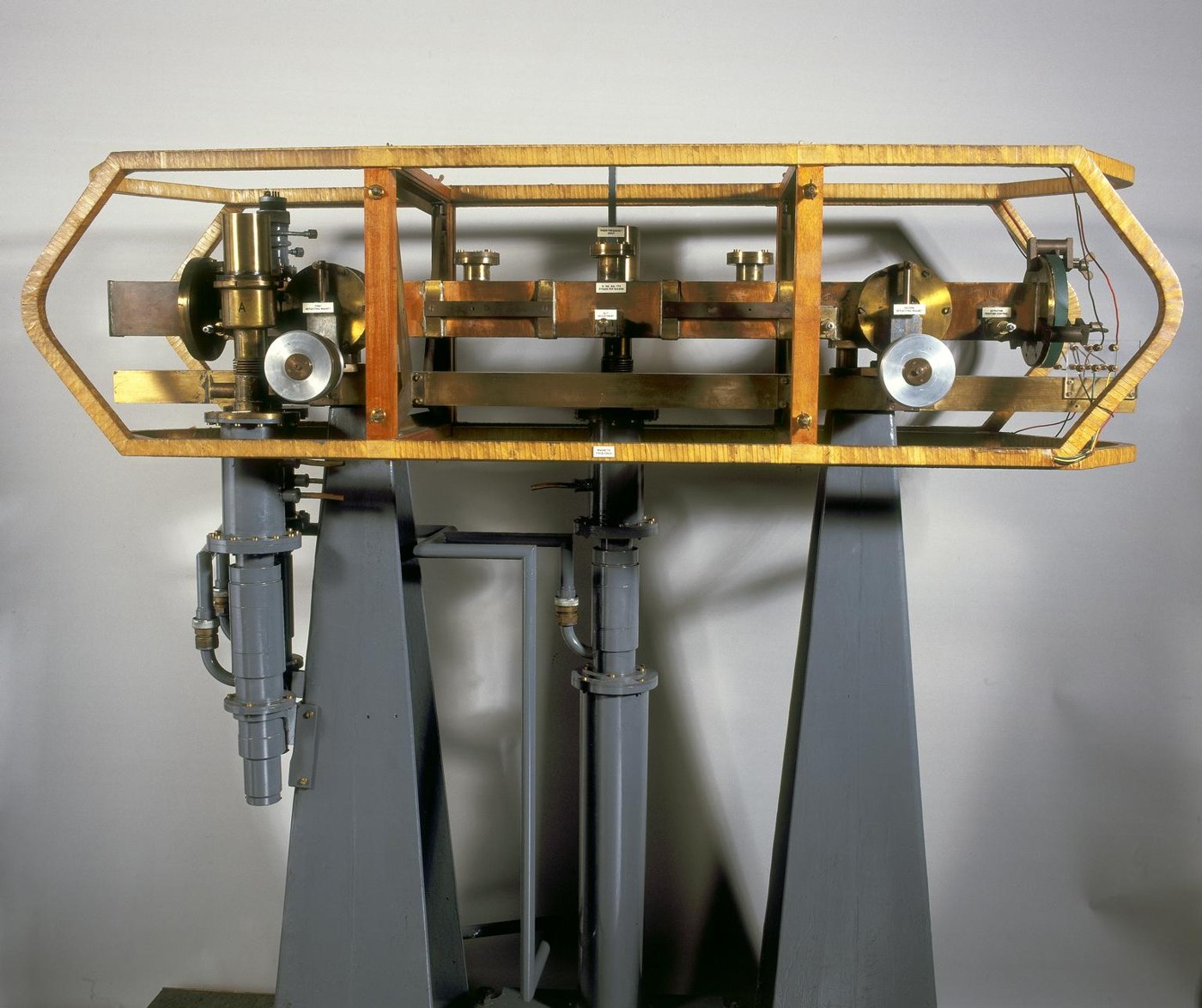
Atomic clock
A timekeeper regulated by the vibrations of atoms, usually Cesium.
Explanation
Atomic clocks define the second by the caesium-133 hyperfine transition (9,192,631,770 cycles), a definition adopted in 1967. Caesium fountain clocks realise the second to about 1 part in 10^15, and optical lattice clocks are better still. International Atomic Time (TAI) and UTC are computed from a worldwide ensemble of atomic clocks.
In the object catalogue
Catalogued objects whose own source record mentions “Atomic clock”. The quoted line shows where; it is the seller’s or museum’s wording, not independent verification.