
Glossary · Mechanism
Rope drive
Weight drive using rope over a spiked pulley.
Explanation
In a weight-driven clock the weight hangs from a line wound on a barrel or passing over a pulley. Eight-day longcase clocks traditionally used gut lines wound on grooved barrels; thirty-hour clocks used a rope or chain over a spiked pulley in the endless-rope arrangement.
Lines stretch, fray and dry out. A frayed line can break under load and drop the weight onto the case floor, so worn lines are normally renewed before a clock is put back into service. Replacement material should suit the barrel or pulley design.
What to record
- Inspect the line where it leaves the barrel and at the weight pulley.
- Check that the line lies neatly in the barrel grooves when wound.
Support the weight when removing or replacing a line.
In the object catalogue
Catalogued objects whose own source record mentions “Rope drive”. The quoted line shows where; it is the seller’s or museum’s wording, not independent verification.
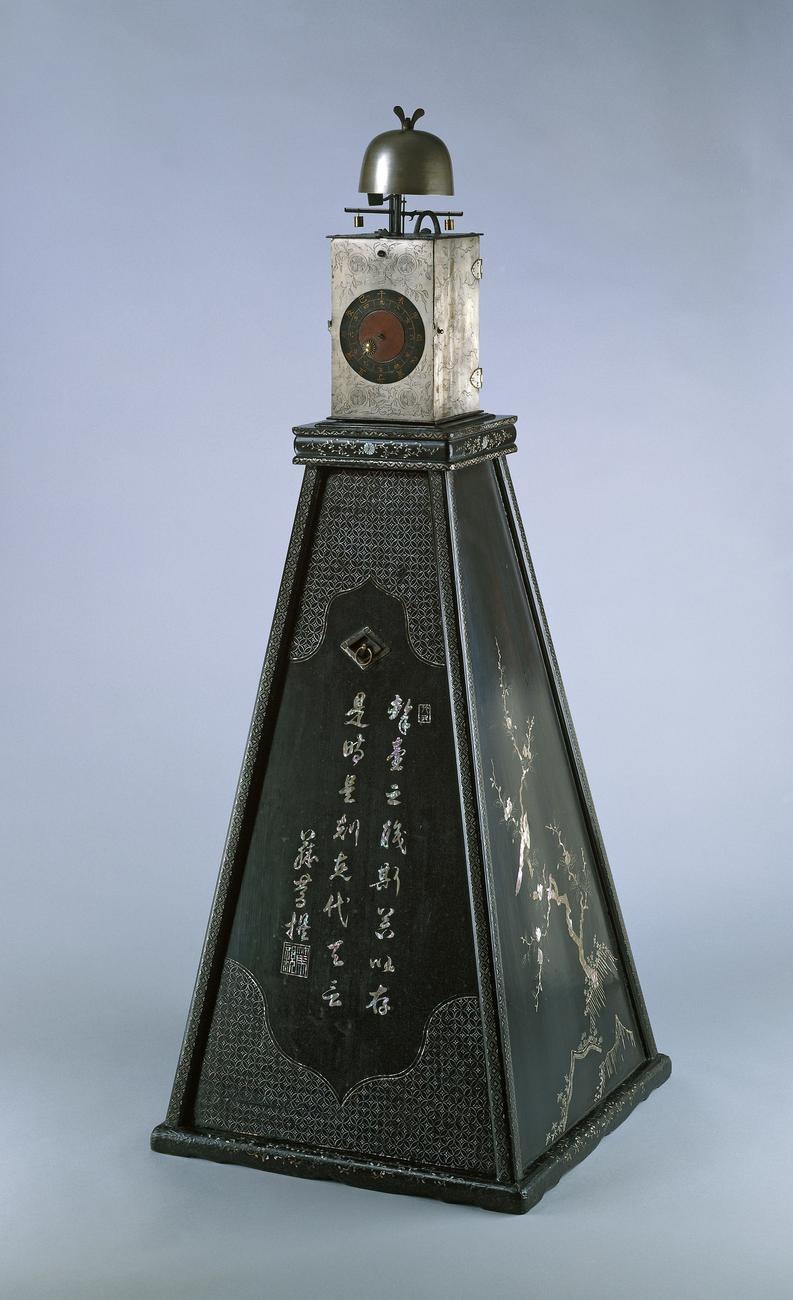
Clock
Japanese lantern clock on pyramidal stand
“This Japanese striking lantern clock, dated to circa 1700, is mounted atop a tall black-lacquered pyramidal base. Known as a Yagura-Dokei, the timepiece features a steel movemen…”
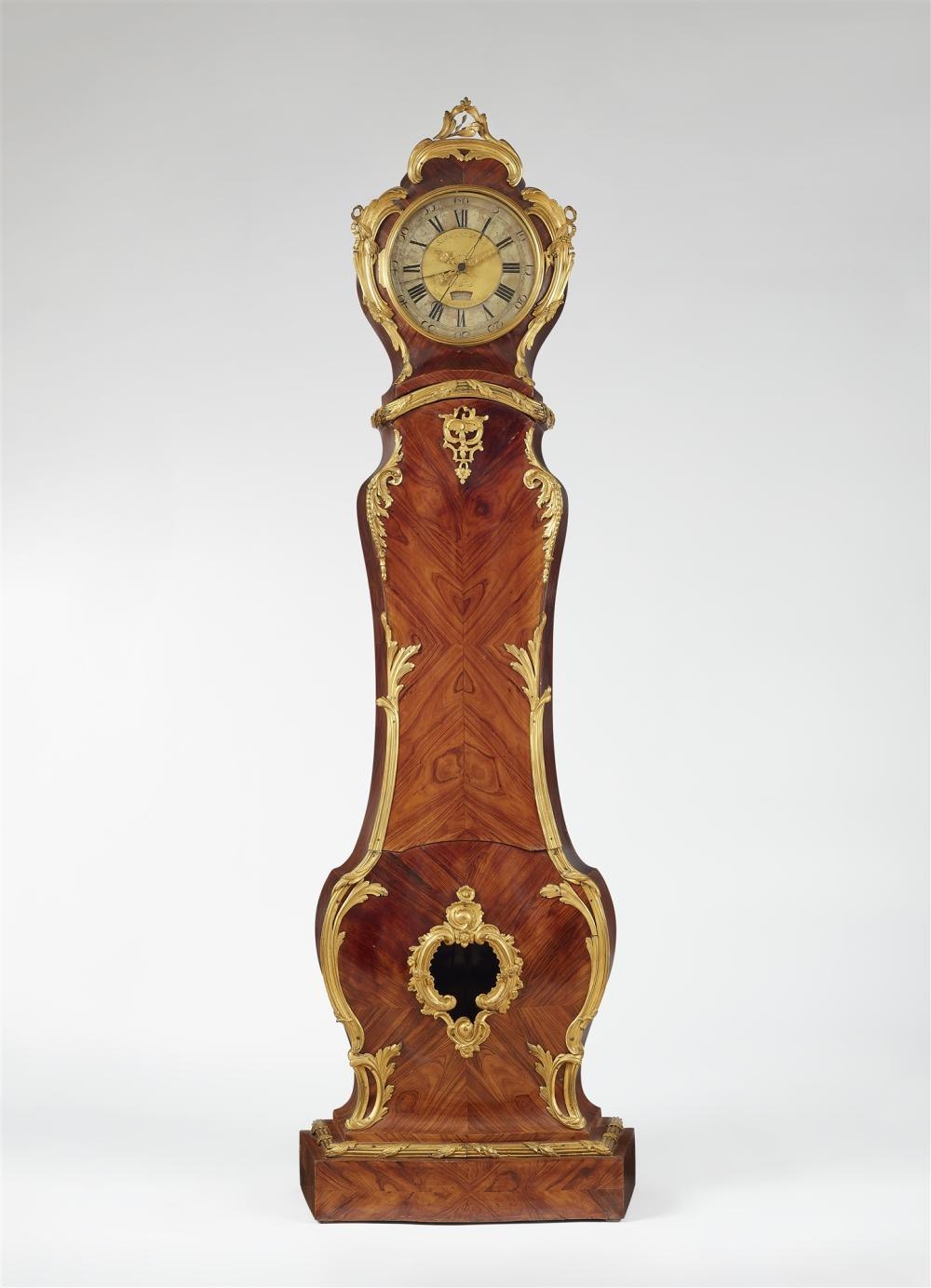
Clock
Louis XV style regulator clock
“This floor-standing regulator clock is attributed to cabinetmaker Balthazar Lieutaud, featuring a case crafted from rosewood veneer on oak with ormolu mountings. The silver and …”
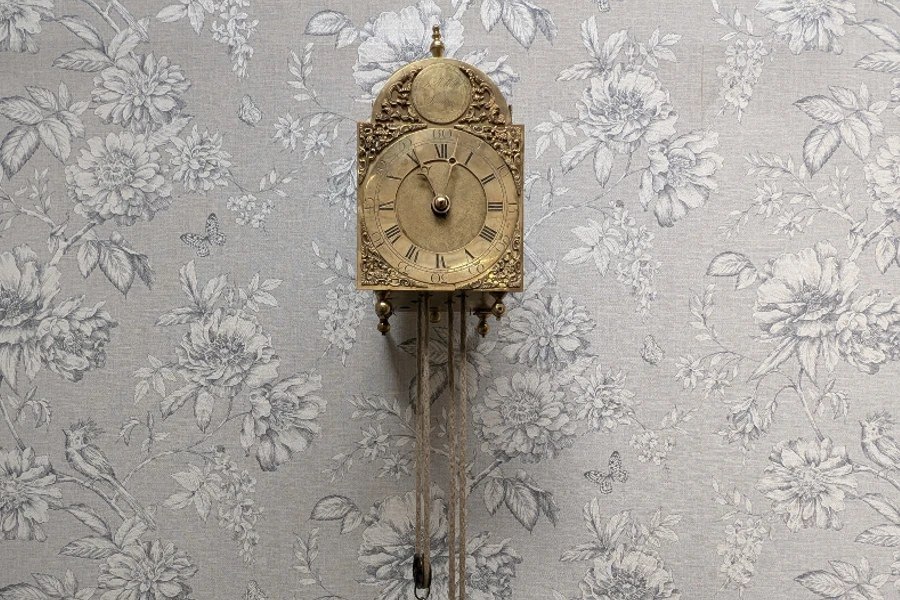
Clock
J Millies of London Lantern Clock
“Internal brass movement plates and rope drive system”