
Glossary · Case & Dial
Matted dial centre
A textured centre area on a brass clock dial.
Explanation
On brass clock dials of the late seventeenth and eighteenth centuries, the area inside the chapter ring was often given a matted texture by repeated punching. The texture contrasts with the silvered chapter ring and polished spandrels and helps the hands stand out.
Matting was done by hand and varies in fineness; very regular matting may be later machine work or restoration. Worn or polished-out matting reduces the dial's character, and re-matting is a significant restoration.
What to record
- Examine the matting under raking light for consistency and tool marks.
- Compare with documented dials by the same maker.
Do not polish a matted centre; cleaning should be gentle and left to a specialist.
In the object catalogue
Catalogued objects whose own source record mentions “Matted dial centre”. The quoted line shows where; it is the seller’s or museum’s wording, not independent verification.
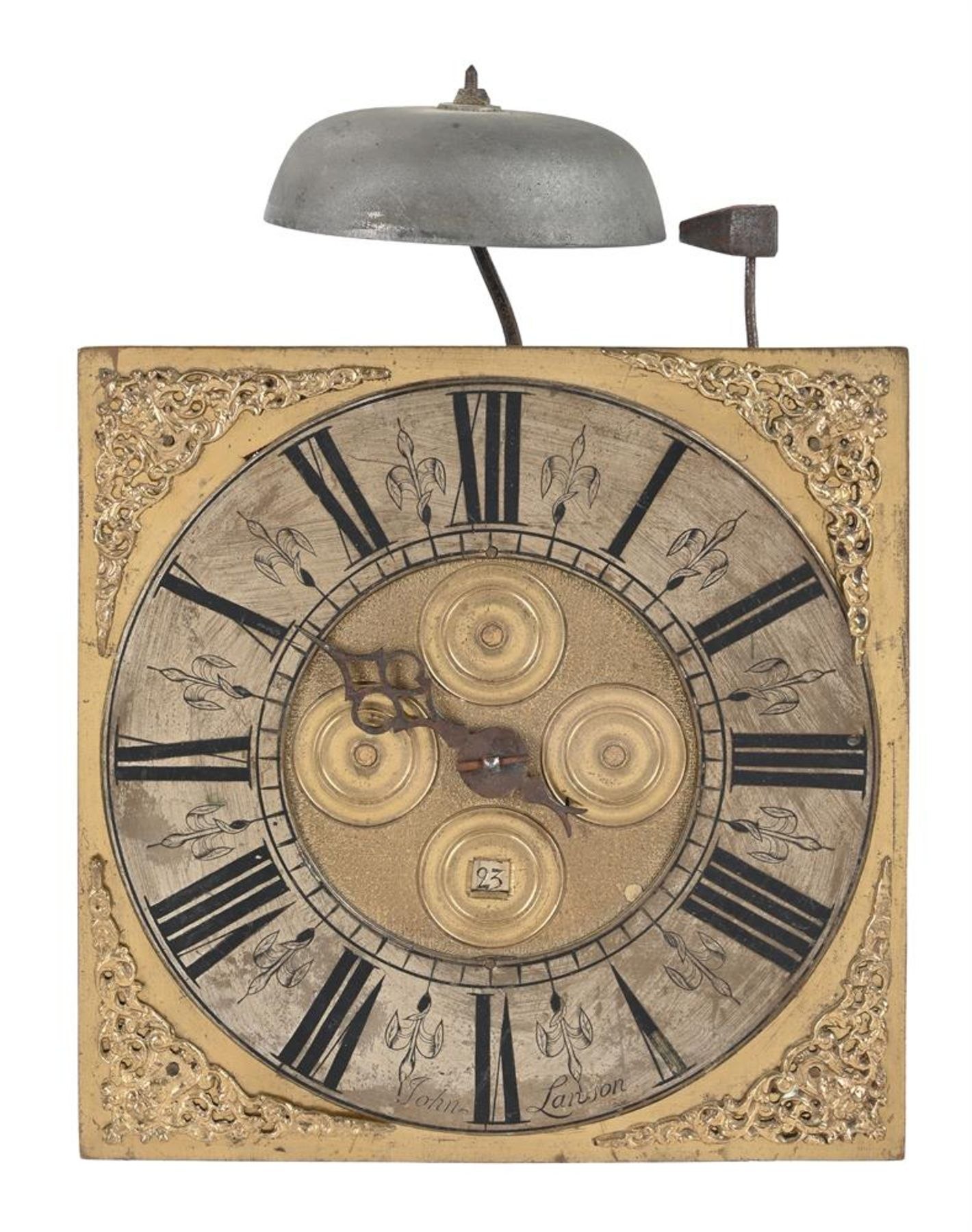
Movement
A George II thirty-hour longcase clock movement with eight-inch dial
“Matted dial centre decorated with four concentric ring-turned circular medallions, the lowest of which encloses a square calendar aperture showing numeral 23.”
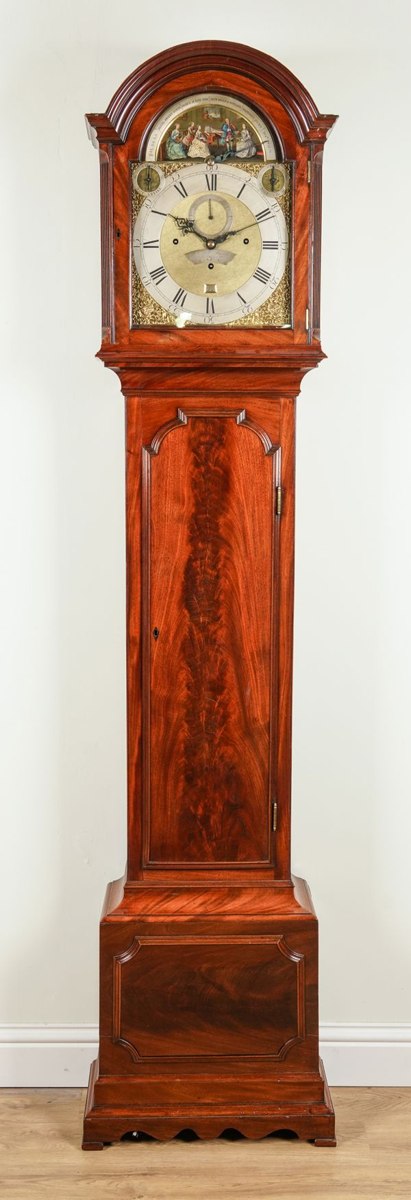
Clock
George III Mahogany Musical and Automaton Longcase Clock by Samuel Smith
“According to the auction catalogue, this George III mahogany longcase clock dates to circa 1780 and is signed by Samuel Smith of London. The case stands 232 cm high, featuring a…”